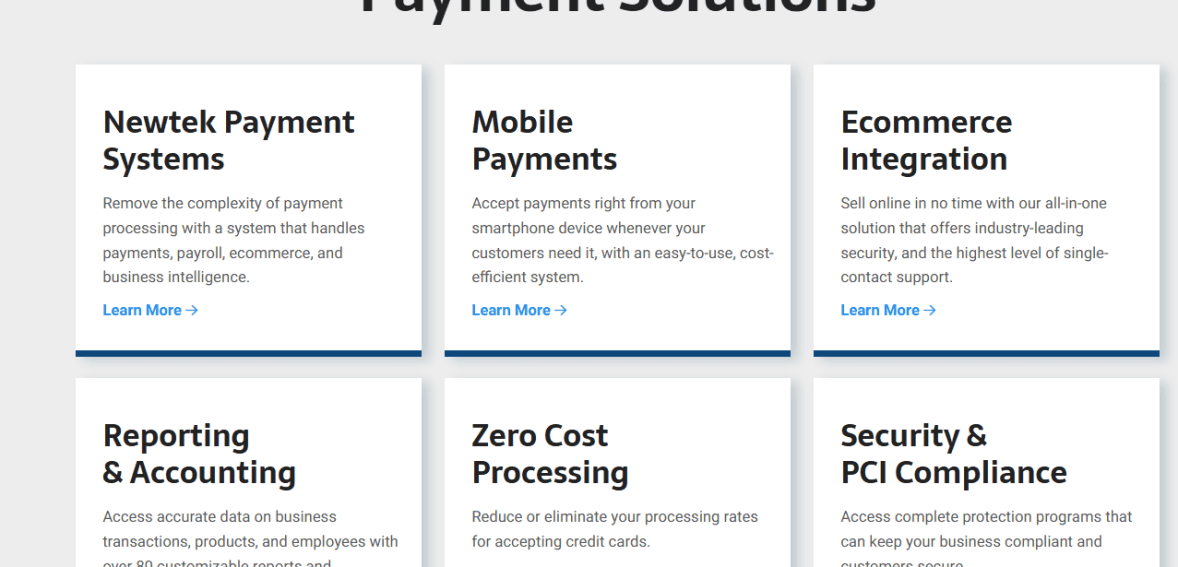

Tag Archives: credit card processing

Reliant Processing Services Review

Reliant Processing Services is the registered ISO and MSP name under which Reliant Merchant Services, Inc. operates as a credit card processing and merchant services provider. Based in Orange County, California, at 1820 W Orangewood Ave, Suite 105, the company is a registered ISO and MSP of Wells Fargo Bank, N.A., with processing infrastructure powered by First Data, now operating as Fiserv following a 2019 merger. The company is locally focused, small in scale by industry standards, and positions itself as a personal, relationship-driven alternative to the large national processors that dominate the market. Lets read more about Reliant Processing Services Review.


The company’s core message is straightforward; over 40 years of combined management experience, transparent pricing with no hidden fees, a free rate analysis for businesses considering switching, and a guarantee that they can save money compared to a merchant’s current processor. It serves local businesses, banks, and financial institutions in the Orange County region and surrounding areas, competing primarily on service quality and cost savings rather than technology depth or enterprise feature sets.


This review takes an honest look at what Reliant Processing Services actually offers, who it is best suited for, what merchants should understand about the underlying infrastructure they would be engaging with, and what due diligence is appropriate before signing up.

Company Background and Market Position | Reliant Processing Services Review


Reliant Processing Services operates as a small, independently owned ISO in the Southern California market. The company markets itself under the Reliant Merchant Services, Inc. brand, with Reliant Processing Services being the formal registered entity used in its Wells Fargo ISO/MSP designation. The distinction matters because merchants who sign up are entering a tri-party relationship: Reliant as the sales and relationship layer, Wells Fargo as the acquiring bank, and First Data (Fiserv) as the backend processor handling actual transaction processing.


This structure is common in the merchant services industry, where many small regional ISOs operate as resellers of larger processor infrastructure. Reliant’s role in this structure is to acquire merchants, provide local relationship management, and serve as the primary point of contact for day-to-day account needs. The actual processing infrastructure, risk management, and settlement functions sit with the backend organizations.


The company describes its management team as carrying over 40 years of combined industry experience and positions itself as a preferred source of credit card processing for local banks and financial institutions in the Orange County area. This local bank referral relationship is a meaningful distribution channel for a regional ISO, as merchants who bank locally and trust their financial institution’s recommendation are more likely to engage with the referred processor without extensive independent due diligence.


Reliant is a small operation with a local focus. Merchants evaluating the company should approach it as a regional boutique ISO rather than a national processor, with the service characteristics, pricing dynamics, and accountability structures that distinction implies.

Core Payment Processing Capabilities


Reliant Processing Services offers the standard suite of payment acceptance capabilities available through its Wells Fargo and First Data infrastructure. Credit and debit card acceptance covers Visa, Mastercard, Discover, and American Express across all major transaction environments. The platform supports in-person card-present transactions through physical terminals, card-not-present transactions through virtual terminals and eCommerce integrations, and mobile payment acceptance through smartphone-based solutions.


ACH and electronic check processing is available, allowing merchants to accept bank transfer payments alongside card transactions. Check guarantee services are also offered, reducing the risk of returned checks by verifying check validity at the point of acceptance and providing coverage for approved transactions that are subsequently dishonored.


Processing via eFunds allows for batch settlements as well as electronic fund distributions, and electronic fund distribution refers to the process through which merchants are paid their transaction funds after each day’s settlement process. The ability to have fast batch settlements is one such feature that is mentioned, in line with the capability of Wells Fargo merchant services in providing merchants next-day funding if they maintain their banking accounts with Wells Fargo. 


All possible forms of card acceptance hardware that could be offered via First Data are theoretically possible, from EMV Chip Card Terminals, PIN Pads, Check Readers to contactless card devices. However, the type of hardware provided to any particular merchant will entirely depend upon what is negotiated between Reliant and the merchant themselves.

Point-of-Sale Systems and Hardware


Through its First Data backend relationship, Reliant Processing Services has access to the full Clover product lineup for point-of-sale deployment. Clover is one of the most widely recognized POS platforms in the US small business market, offering a range of hardware from compact card readers to full countertop station configurations, supported by an app marketplace that extends functionality into inventory management, staff scheduling, reporting, and customer engagement.


The availability of Clover through Reliant is a genuine product strength in terms of what the hardware and software platform can do. Clover’s design and usability are well-regarded, and the app ecosystem gives merchants flexibility to build a POS configuration that matches their specific operational needs.


However, there are important considerations around how Clover is obtained and priced through an ISO relationship versus directly through Fiserv or other Clover resellers. Clover hardware prices and the associated monthly software fees can vary considerably depending on the reseller, and merchants who acquire Clover through an ISO like Reliant should verify the purchase price, software fee structure, and what happens to their Clover system if they change processors. Clover devices are tied to the processor through which they were activated, meaning switching processors renders an existing Clover system non-functional with the new provider, creating a hardware cost at exit that should factor into the total cost assessment of the relationship.


Leasing equipment is another choice that may be suggested by ISOs, although it is typically more advantageous for merchants to own their equipment. Long-term non-cancelable leases on equipment have been a major cause of merchant dissatisfaction across the industry, especially in the First Data system, in which First Data Global Leasing has attracted numerous complaints. When evaluating Reliant, merchants should inquire about any equipment leasing arrangements, the total costs involved with leasing the equipment for its entire life cycle, and how they compare to simply buying it.
Reliant Processing Services Review

Virtual Terminal and eCommerce Solutions


Reliant Processing Services supports virtual terminal functionality, which allows merchants to accept payment through any internet-connected computer without dedicated hardware. Virtual terminals are particularly useful for businesses that take phone orders, process mail orders, or handle remote sales where the customer is not physically present. Recurring charges and payment scheduling can be set up through the virtual terminal, making it useful for subscription-based services or installment billing arrangements.


Email invoicing and digital receipt delivery are available through the virtual terminal environment, providing a basic electronic billing capability without requiring a full eCommerce integration. For small service businesses that primarily operate through phone or in-person relationships, the virtual terminal often represents the entirety of their digital payment infrastructure.


eCommerce capabilities can be obtained from the First Data gateway structure, allowing for shopping cart integration, payment gateway access, and pay buttons for merchant online stores. The shopping carts and gateways that work with the services provided by First Data are dependent on the platform offered by First Data itself, not the ISO; therefore, it is imperative that the merchants check the functionality and availability of the software first.


In terms of eCommerce functionality, there are enough eCommerce capabilities offered through Reliant to allow for online sales, but not enough to give it an edge over other eCommerce payment solutions. Merchants looking for eCommerce solutions will most likely benefit more from using specialized eCommerce payment providers compared to the local ISO that is Reliant.

Mobile Payment Solutions


Mobile processing capability is offered through Reliant, enabling merchants to accept card payments through smartphones and tablets using card readers that connect to mobile devices. The solution supports credit and debit card swipe transactions, digital signature capture, and email receipt delivery, covering the functional baseline that most mobile merchants require.


The mobile solution is marketed under the iPay app umbrella through the First Data platform, with iPhone card swipers available as the primary hardware interface. This positions the mobile offering primarily for iOS users, which is a limitation worth noting for any merchant or staff member whose preferred device is Android-based.


When companies conduct most or all of their business in fixed locations, mobile payments serve as an extra feature and not necessarily a crucial one. Field services, market vendors, event operators, and merchants that frequently process transactions without using a fixed location for checkouts will benefit from mobile payments as it enables transaction processing via mobile phones without the use of a fixed terminal. 


The support for contactless payments and the acceptance of transactions through NFC can be verified with Reliant as these features will be based on the particular card reader hardware that will be used and whether there are updates made to the mobile app to make it possible to receive tap to pay transactions.

Pricing Structure and the Rate Analysis Process


Reliant Processing Services makes pricing transparency a central part of its marketing, promising straightforward pricing with no hidden fees and a free rate analysis that guarantees merchants will know exactly how much they will save before switching. This positioning is worth examining carefully because the company’s actual pricing is not published on its website, and the rate guarantee is a sales tool rather than a pre-committed price sheet.


The free rate analysis is a standard sales tactic used across the merchant services industry. A Reliant representative reviews a merchant’s current processing statements, identifies areas where costs are higher than necessary, and proposes a competing rate structure that demonstrates potential savings. This can be a genuinely useful exercise for merchants who have not reviewed their processing costs recently and may be paying avoidable fees. However, the rate presented in the analysis is the starting negotiation point for the Reliant relationship, not necessarily the final contracted rate, and merchants should request the full written fee schedule covering all monthly charges, per-transaction fees, batch fees, statement fees, and PCI compliance costs before signing anything.


As an ISO operating under First Data’s processing infrastructure, Reliant has access to interchange-plus pricing for eligible merchants, which is the most transparent and generally cost-competitive pricing model available. Merchants should specifically request interchange-plus pricing rather than accepting a tiered pricing structure, which typically results in higher effective costs by categorizing transactions into broad buckets rather than passing actual interchange costs through at cost.


The claim that the company will save a merchant money is impossible to verify without a specific quote, and merchants should benchmark any Reliant proposal against quotes from at least two other providers before committing.

The Wells Fargo and First Data Relationship


Because Reliant Processing Services is a registered ISO of Wells Fargo Bank powered by First Data, understanding the nature and implications of that infrastructure relationship is important for any merchant evaluating the platform. Reliant is the face of the merchant relationship, but the terms, risk management, and processing infrastructure sit with larger entities that have their own documented histories merchants should be aware of.


Wells Fargo Merchant Services has a documented track record of pricing complaints, with independent payment industry analysts consistently noting that its pricing tends toward the higher end of the market and that its use of tiered and bill-back pricing models can obscure the true transaction cost for merchants who do not scrutinize their statements carefully. A 2016 CFPB action found that Wells Fargo had opened unauthorized consumer accounts to meet internal sales targets, and subsequent internal investigations identified similar practices in the merchant services referral channel. The bank restructured its merchant services referral process following these findings.


First Data, currently operating as Fiserv, is one of the most well-known companies among the payment processors in the world. It is estimated to process around 45 percent of all the credit card transactions that happen in the US. This company has the size and resources that give its customers true reliability and processing capability. But the ISO network of First Data has a reputation of getting many complaints from merchants about the hidden fees, the non-cancelable equipment leasing from First Data Global Leasing, and hard time dealing with canceling processes when merchants leave.


Before entering any contractual agreement with Reliant, merchants should ask for a document that will indicate who takes care of different aspects of the service, whether it is billing, equipment returning, cancellations, chargebacks, etc.

Contract Terms and Merchant Agreements


Reliant Processing Services does not publish its contract terms publicly, which is standard practice in the ISO industry but means merchants must request and review full agreement documentation before committing. The contract terms that apply to any Reliant merchant account are determined by the combination of Reliant’s own service agreement and the underlying Wells Fargo merchant processing agreement, which carries its own terms and conditions.


Wells Fargo merchant services contracts have historically defaulted to three-year terms, though more recent accounts have seen increased flexibility, with some merchants reporting that three-year terms are no longer universally applied. The early termination fee structure at Wells Fargo has been notable: for merchants processing under $1 million annually, the ETF is $500, while for higher-volume merchants it can be $500 plus a multiple of the merchant’s most expensive monthly processing fee. This is a significantly higher potential exit cost than many competing processors charge, and merchants should confirm the specific ETF that applies to their account before signing.


Automatic renewal clauses are common practice and demand a notice of cancellation during a certain time frame prior to the renewal date in order to prevent automatic extension of the agreement for another contractual term period. The notice time frame is supposed to be specified in the agreement and scheduled well in advance. Notice of cancellation should be made via the designated writing procedure mentioned in the agreement and not via making calls exclusively to the sales representative, as oral cancellation notices have been a contentious matter within the industry without proper follow-up.


Merchant account agreement users must pay special attention to provisions regarding equipment, since the Wells Fargo/First Data relationship uses a different contractual arrangement called “First Data Global Leasing.”

Security and PCI Compliance


Through its Wells Fargo and First Data infrastructure, Reliant Processing Services provides access to payment security tools that meet standard industry compliance requirements. PCI DSS compliance support is available, helping merchants navigate the requirements for handling cardholder data securely. EMV chip card acceptance is supported through the terminal hardware available under the platform, which reduces the fraud liability associated with counterfeit card transactions at the POS.


Contactless payment acceptance through NFC-enabled terminals supports Apple Pay, Google Pay, Samsung Pay, and other mobile wallet transactions, reducing friction at checkout for customers who prefer not to handle physical cards. Tokenization and encryption are built into the First Data processing infrastructure, protecting cardholder data during transmission and reducing the sensitive data footprint within the merchant’s own systems.


PCI compliance fees are an area where merchants should request specific information upfront. Wells Fargo has historically not disclosed its PCI compliance fee structure publicly, and some merchants have reported unexpected PCI-related charges appearing on their statements. Requesting written confirmation of all PCI-related fees, including both the monthly compliance fee and any non-compliance penalty that would apply if annual compliance validation is not completed, is important before finalizing the account agreement.


For merchants who process card data in higher-risk environments, such as those with significant card-not-present volume, regular online transactions, or manual card entry, the security tools available through the platform provide a baseline level of protection but may not substitute for additional fraud management tools or a higher-tier PCI assessment process. Merchants in these categories should discuss their specific security requirements with Reliant rather than assuming the standard package addresses their needs.
Reliant Processing Services Review

ACH and Check Processing


In addition to card acceptance, Reliant Processing Services supports ACH payment processing and check-based payment solutions. ACH processing enables merchants to accept direct bank transfers, which carry lower transaction costs than card payments and are particularly valuable for businesses with higher average transaction values or recurring billing relationships where reducing per-transaction costs has a meaningful impact on overall margins.


Electronic check processing allows merchants to accept paper checks at the POS and convert them to electronic transactions for faster clearing, reducing the delay and handling associated with manual check deposit processes. Check guarantee services provide additional protection by verifying the validity of a check at acceptance and offering coverage for approved checks that are subsequently returned, shifting some of the risk of bad checks away from the merchant.


Remote deposit capture, while not explicitly listed on Reliant’s current website, is part of the broader First Data services suite and may be available for merchants who handle significant paper check volume and want to deposit checks electronically without visiting a bank branch. Merchants interested in this capability should ask Reliant specifically whether it is available and what the associated cost structure looks like.


For businesses that manage subscription billing or installment payment plans, recurring ACH capability through the virtual terminal provides a basic automation layer that reduces the manual effort of managing scheduled payments across a customer base.

Customer Support Model


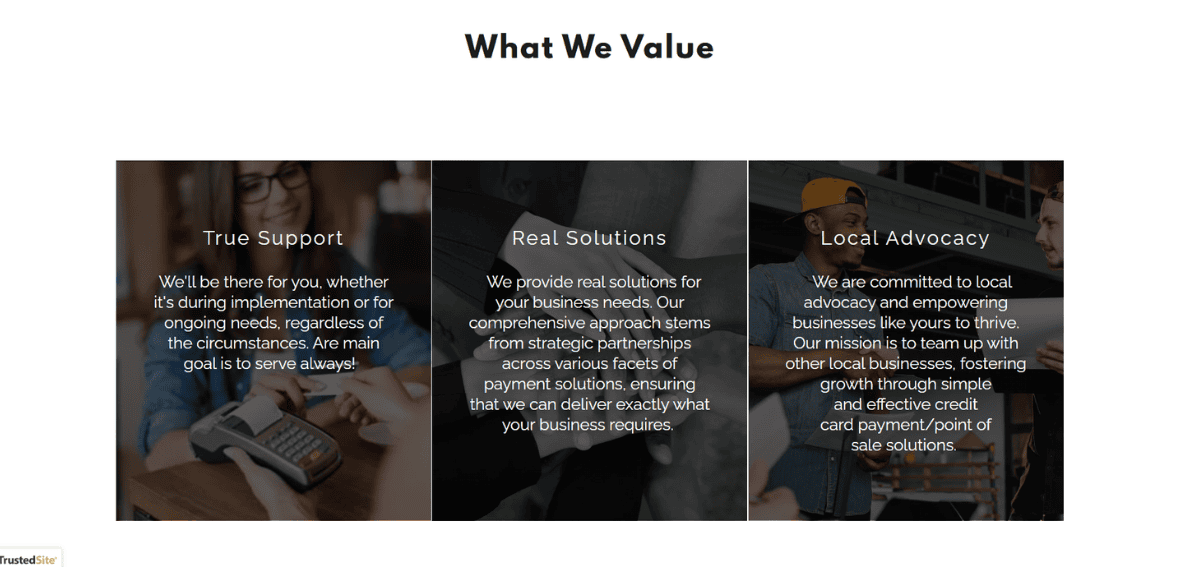
One of Reliant Processing Services’ most explicit differentiators relative to national processors is its emphasis on local, personal customer support. The company markets the ability to reach a real person who knows your account rather than an 800-number call center where each interaction starts from scratch. Merchant testimonials on the company website specifically reference the named account representative, Ryan, who is described as attending to accounts personally and being available during emergencies rather than routing merchants through general support queues.


This high-touch local model has genuine appeal for small businesses whose owners do not want to navigate large corporate support structures and who prefer the accountability of a known individual contact. When that model works well, as described in the testimonial from Natasha Gandhi-Rue citing eight years as a merchant and describing Ryan as a true business partner, it represents a meaningfully better support experience than what large national processors typically deliver.


The limitation of this model is its dependence on individual staff continuity. A local ISO relationship that is highly personalized to one representative creates service risk if that person leaves the organization or the account is transferred. Merchants should ask whether there is a documented succession plan for account management and whether the personal relationship they are building is with Reliant as an organization or with a specific individual whose departure would reset the relationship.


The company states 24/7 customer support availability, though for a small regional ISO this likely means access to the Wells Fargo and First Data support infrastructure for after-hours technical issues rather than direct availability of Reliant’s own team outside business hours. Merchants should clarify the specific support channels and hours that apply to their account.

Reporting and Statement Clarity


Reliant Processing Services promotes easy-to-read statements and reporting as a differentiator, which addresses a genuine pain point in the merchant services industry. Merchant processing statements are notoriously complex, particularly under tiered or bill-back pricing structures, and many merchants do not fully understand what they are paying for on a monthly basis.


The commitment to readable statements and reporting transparency is meaningful if delivered, but the actual clarity of reporting depends heavily on the pricing model applied to the account. Interchange-plus pricing, where each transaction’s cost is itemized as actual interchange plus a fixed markup, is inherently more readable than tiered or bill-back pricing, where transaction costs are bundled into broad categories that obscure the per-transaction economics. Merchants who are offered tiered pricing should be aware that even clearly formatted statements can make it difficult to assess whether the effective processing cost is competitive.


Online account access through the Wells Fargo and First Data platform provides digital transaction reporting, batch summaries, and settlement history. The depth and usability of these reports reflect the underlying platform capabilities rather than anything Reliant has built independently, and the reporting environment is broadly consistent with what other Wells Fargo and First Data ISOs provide.


For merchants who want to monitor their processing costs actively over time, maintaining a simple record of total monthly fees paid as a percentage of total transaction volume provides a useful benchmark that is independent of statement formatting and allows straightforward comparison if they ever evaluate alternative providers.

Strengths, Limitations, and Who It Is Best For


Reliant Processing Services occupies a clear and specific market position: a small, locally focused ISO serving small and medium-sized businesses in the Orange County area and surrounding region, competing on personal service quality and cost savings against larger, more impersonal national processors. The strengths of this model are real. Personal account management, local accessibility, the ability to speak with someone who knows your business rather than a rotating call center team, and a genuine commitment to demonstrating cost savings before asking for a commitment are all attributes that matter considerably to owner-operated small businesses.


The limitations are equally real and directly related to the company’s scale and infrastructure relationships. As a small ISO sitting on top of Wells Fargo and First Data infrastructure, Reliant has limited ability to differentiate on pricing structure or negotiate independently of the terms set by those larger entities. The documented histories of pricing complaints, contract term concerns, and equipment leasing issues associated with the Wells Fargo and First Data ecosystem apply to merchants signing through Reliant, even if Reliant itself is operating with good intentions. Technology depth, developer tooling, eCommerce sophistication, and multi-location enterprise capabilities are not meaningful strengths of this platform.


The merchant best suited to Reliant Processing Services is a locally operating small business in Southern California that values personal service relationships, processes primarily in-person card transactions, does not require sophisticated eCommerce or technology integrations, and wants the assurance of speaking with a local representative who is accountable for their account. Businesses with complex payment needs, high transaction volumes, significant eCommerce operations, or those who need advanced analytics and integration capabilities would be better served by a processor whose infrastructure and feature set are purpose-built for those requirements.

FAQs


Q1. What is the relationship between Reliant Processing Services and Reliant Merchant Services, Inc., and who is actually processing my transactions?


Reliant Processing Services is the registered ISO and MSP name under which Reliant Merchant Services, Inc. conducts its credit card processing business. The entity registered with Wells Fargo Bank, N.A. as an ISO and MSP is Reliant Processing Services, while the operating company that manages merchant relationships is Reliant Merchant Services, Inc. 


When you sign up for merchant services through Reliant, your transactions are processed through a three-party infrastructure: Reliant serves as your primary relationship and account management contact, Wells Fargo Bank is the acquiring bank that holds the merchant account, and First Data (now operating as Fiserv following its 2019 acquisition) is the backend processor that handles actual transaction authorization, clearing, and settlement. Understanding this structure is important because billing disputes, account cancellations, and equipment issues may involve any one or more of these three entities, and knowing which to contact for which type of issue can save significant time if a problem arises.


Q2. How should I evaluate the free rate analysis that Reliant offers before switching processors?


The free rate analysis is a useful starting point but should not be treated as the final word on whether switching to Reliant will save your business money. To evaluate it properly, gather your last three to six months of processing statements from your current provider, covering both transaction fees and all monthly charges, and calculate your total effective processing cost as a percentage of total volume processed.


When Reliant presents its analysis and proposed savings, ask for a written quote showing every fee that will apply to your account, including monthly service fees, statement fees, batch fees, PCI compliance fees, and any minimum monthly charges, in addition to the transaction rate. Request that the proposed pricing be on an interchange-plus basis rather than a tiered structure. 


Then request a similar written quote from at least one other processor and compare the all-in monthly cost projections at your current processing volume. The rate analysis is designed to make switching look attractive, and independent verification through competitive quotes ensures the savings projection is grounded in a genuinely competitive offer.


Q3. What should I know about equipment when signing up with Reliant Processing Services?


The most important thing to understand about payment equipment through any ISO operating in the First Data ecosystem is the difference between purchasing hardware outright and leasing it through First Data Global Leasing or a similar leasing entity. Purchasing hardware outright involves a one-time cost and leaves you with equipment you own free and clear. Leasing involves monthly payments over a multi-year term that is typically non-cancellable, meaning you are contractually obligated to make every payment regardless of whether you continue using the processor or not. 


The total cost of a leased terminal over a standard lease term often significantly exceeds the purchase price of the same hardware. If equipment leasing is presented as part of your Reliant account setup, ask for the total lease cost over the full term and compare it directly to the purchase price of the same device. Additionally, if you are being offered Clover hardware, be aware that Clover devices are locked to the processor through which they were activated. Switching processors after acquiring Clover equipment through Reliant would require new hardware from the incoming processor, adding an equipment cost to any future transition.

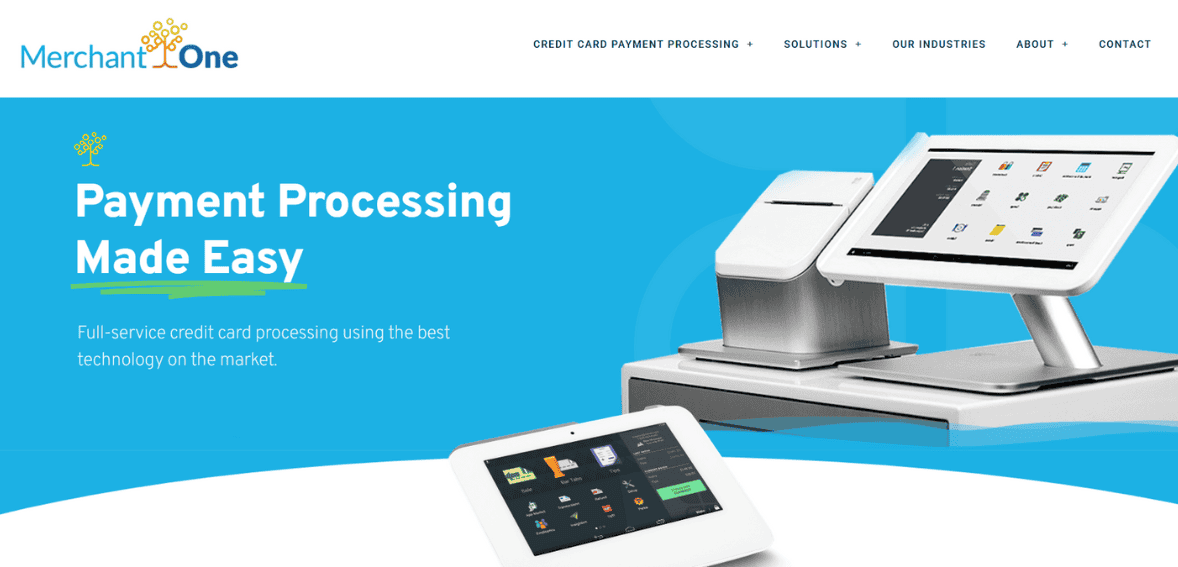
Merchant One Review

Merchant One Review

Merchant One is a well-established credit card processing company that provides businesses with a range of tools to manage transactions efficiently. Over the years, it has positioned itself as a payment solutions provider catering primarily to small and medium-sized enterprises, though it also works with larger organizations. Its value proposition lies in making electronic payments more accessible, whether through point-of-sale systems, ecommerce gateways, or mobile readers. Lets read more about Merchant One Review.


The payments industry has undergone tremendous change in the last two decades, with consumer preferences shifting from cash to card, and more recently, toward digital wallets. Companies like Merchant One have grown alongside this shift, offering technology and service bundles that simplify complex aspects of accepting payments. Instead of focusing exclusively on hardware or software, Merchant One combines both, creating an ecosystem that supports modern businesses.


While the company highlights flexibility and customer service as its strengths, it also operates in a crowded market where transparency and reliability are key decision-making factors for merchants. 

Company Background and History | Merchant One Review

Founded in 2002, Merchant One is headquartered in Miami, Florida, and has grown steadily to become a recognizable name in the payment processing industry. The company started with a goal to simplify how small businesses accept card payments at a time when setting up merchant accounts was often complicated and expensive. Over time, its client base expanded to include retailers, restaurants, service providers, and ecommerce businesses.


One of the reasons Merchant One has been able to maintain a presence in a highly competitive sector is its ability to adapt to new technologies and industry standards. From the introduction of EMV chip cards to the rise of mobile payments and contactless transactions, the company has consistently updated its offerings. By doing so, it has aligned itself with the expectations of both merchants and their customers.


Today, Merchant One claims to serve more than 350,000 businesses across different industries. This reach demonstrates not just longevity but also the ability to scale its operations. For many merchants, particularly those without large budgets, the appeal of a provider that understands the needs of smaller enterprises has been central to Merchant One’s growth. Its continued investment in partnerships and technology reinforces its role as a stable, mid-tier player in the U.S. payment ecosystem.

Partnership with Fiserv and Clover Systems

One of Merchant One’s biggest strengths is its partnership with Fiserv, a global leader in financial services technology. Fiserv provides the backbone infrastructure that enables secure and reliable transactions. For merchants, this partnership translates into confidence that their provider is backed by one of the most established names in the industry.


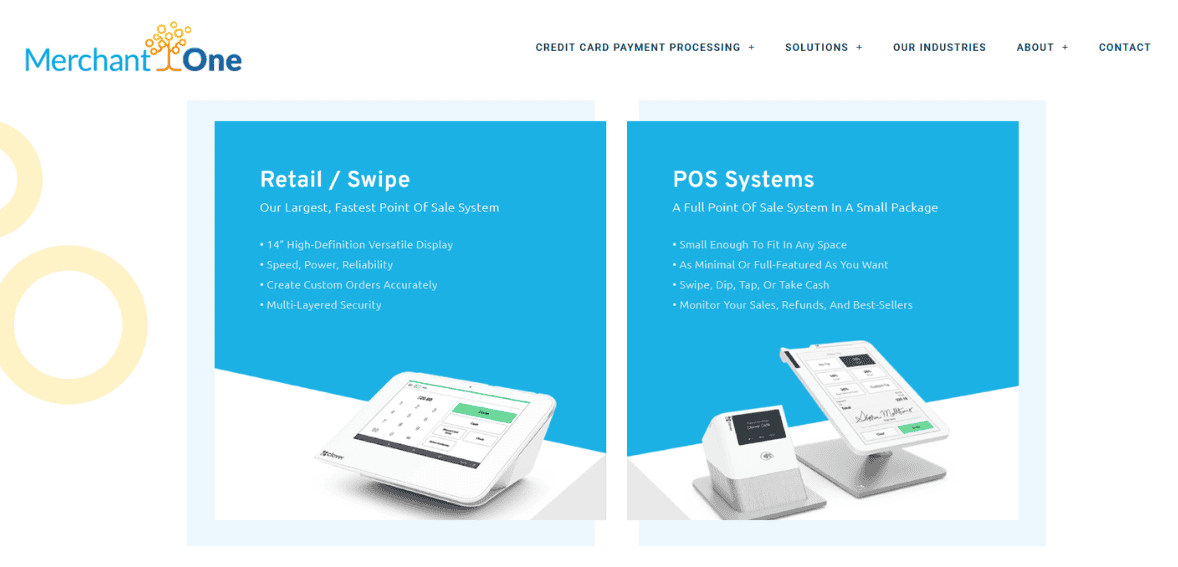
Through this relationship, Merchant One is able to offer Clover POS systems, which are among the most popular in the U.S. Clover hardware includes countertop terminals, mobile devices, and full POS stations that support everything from payment acceptance to inventory management. The availability of these systems gives Merchant One a competitive edge because it can provide tools that scale with a business’s growth.


Having access to Fiserv’s technology also ensures compliance with security regulations and the ability to handle large transaction volumes. This makes Merchant One suitable not just for small shops but also for mid-sized businesses with higher processing demands. While many independent sales organizations (ISOs) in the payment space struggle with credibility, Merchant One benefits from being tied to a trusted global processor. This affiliation reinforces reliability and helps mitigate concerns about operational risks.

Merchant One Review

Products and Services Overview

Merchant One’s portfolio covers a broad spectrum of payment solutions designed to serve different business models. At the core, it offers merchant accounts that allow businesses to accept credit and debit card payments. Beyond that, its services include:


Point-of-Sale Systems: A range of Clover terminals and stations for in-store payments.

Mobile Payment Tools: Card readers and mobile apps for accepting payments on the go.

Ecommerce Solutions: Secure payment gateways and virtual terminals for online businesses.

Recurring Billing: Options for subscription-based businesses to automate payments.

Gift Cards and Loyalty Programs: Tools that help merchants engage and retain customers.


The diversity of services shows that Merchant One is not restricted to traditional brick-and-mortar retail. It has made efforts to ensure ecommerce merchants and mobile service providers have access to the same infrastructure as physical stores. This breadth of offerings is a selling point for businesses that may evolve over time — for instance, a retailer adding an online store can expand within Merchant One’s ecosystem instead of switching providers.

Merchant One Pricing Structure

Pricing in the payment processing industry is often one of the most challenging areas for businesses to evaluate, and Merchant One is no exception. The company advertises competitive rates, though exact fees depend on business type, volume, and risk profile. Typical charges include interchange fees, per-transaction fees, and monthly service costs.


Merchant One has been noted for offering customized quotes, which means pricing is not always transparent upfront. For some businesses, this flexibility can be an advantage, as rates may be tailored to their specific processing needs. For others, the lack of standard pricing may feel opaque compared to flat-rate processors. Additionally, there have been reports of early termination fees and equipment lease agreements, which are important to clarify before signing a contract.


While Merchant One positions itself as an affordable option for small and medium-sized businesses, it is essential for merchants to read contracts carefully. Understanding monthly minimums, PCI compliance fees, and potential cancellation penalties is crucial. Like many traditional merchant service providers, its pricing model is more complex than newer fintech competitors, but it can be cost-effective for businesses processing significant volumes.

Hardware and Technology Options

A significant component of Merchant One’s value comes from its hardware offerings. By reselling Clover devices, it provides merchants with access to one of the most widely used POS ecosystems. Clover devices are known for their sleek design, reliability, and ability to integrate business management tools beyond payment acceptance.


Options include handheld readers like Clover Flex, countertop solutions like Clover Station, and simple mobile readers for businesses on the move. These devices are designed to handle a variety of payment types, including chip cards, contactless payments, and mobile wallets like Apple Pay and Google Pay.


The integration of technology extends to reporting and analytics. Many Clover devices come with built-in apps that help track sales, manage employees, and oversee inventory. This means that for businesses looking for more than just payment acceptance, Merchant One offers solutions that contribute to operational efficiency. While the hardware is an attractive feature, merchants should evaluate costs carefully, as device leases can add to long-term expenses.

Security and Compliance Standards

Security is a non-negotiable factor in payment processing, and Merchant One emphasizes compliance with industry standards. The company ensures that all accounts meet PCI DSS (Payment Card Industry Data Security Standard) requirements, which are designed to protect cardholder data.


Fraud prevention tools are also part of its services, offering merchants safeguards against chargebacks and suspicious transactions. Through its partnership with Fiserv, Merchant One can rely on advanced encryption and tokenization technologies that minimize risks during payment transmission.


However, compliance does come with associated costs. Merchants should confirm whether PCI compliance fees are part of their monthly charges. Failure to maintain compliance can result in penalties, so it is important that businesses understand their responsibilities. Overall, Merchant One delivers the level of security expected from a reputable provider, but merchants must stay proactive in ensuring ongoing compliance to avoid unexpected fees.

Onboarding and Application Process

Merchant One’s onboarding process is designed to be straightforward, though as with most merchant service providers, approval depends on business type and risk level. The application requires basic information such as business details, estimated transaction volumes, and processing history.


One of the company’s selling points is fast approvals. In many cases, accounts can be set up within 24 hours, allowing businesses to begin accepting payments quickly. This is particularly beneficial for new merchants who need to start operations without delays.


That said, some merchants have reported that the contract terms can be confusing at the outset. Clarity around pricing, equipment leases, and cancellation fees is essential before finalizing the application. Businesses should also be prepared for underwriting checks, which may take longer if the business falls into a higher-risk category. Overall, the process is competitive compared to other traditional providers but requires attention to detail from applicants.

User Experience and Ease of Use

Day-to-day usability is where Merchant One delivers tangible value for merchants. The systems provided, especially Clover POS, are known for intuitive interfaces that simplify training for employees. Features such as touchscreen navigation, integrated reporting, and digital receipts contribute to a smoother checkout process for customers.


For ecommerce merchants, the virtual terminal and gateway solutions are also designed with ease of use in mind. Businesses can process transactions online securely and manage them through centralized dashboards. Having consolidated reporting tools helps businesses monitor sales trends and customer behaviors, aiding better decision-making.


That said, some of the more advanced features may require additional apps or software, which can add to costs. While the base experience is user-friendly, merchants should evaluate whether they need premium add-ons or integrations. Overall, Merchant One provides a balance between functionality and simplicity, making it suitable for businesses without extensive technical expertise.

Customer Support and Service Quality

Customer support is a critical factor when choosing a payment processor, and Merchant One emphasizes its 24/7 availability. Merchants can access support via phone, email, and live chat, ensuring that technical issues or service interruptions are addressed quickly.


Many customers appreciate the responsiveness of Merchant One’s support team, especially during onboarding. However, reviews are mixed, with some merchants reporting difficulties in resolving billing disputes or contract-related concerns. This suggests that while the company has invested in accessible support channels, the quality of resolutions may vary depending on the issue.


For businesses that rely on uninterrupted payment processing, the assurance of around-the-clock support is a positive. Still, prospective merchants should research user experiences to understand potential challenges in areas like contract cancellations or fee disputes.

Merchant One Review

Reputation and Market Presence

Merchant One has built a sizable presence, serving over 350,000 businesses nationwide. Its affiliation with Fiserv adds credibility, while its longevity in the market signals stability. On platforms such as the Better Business Bureau (BBB), Merchant One holds accreditation, though ratings reflect a mix of positive and critical feedback.


Satisfied customers often highlight the reliability of payment systems and responsive onboarding support. On the other hand, complaints commonly revolve around contract terms, unexpected fees, or challenges with cancellation. These are not uncommon in the payment industry but are important considerations for merchants making a choice.


Market presence alone indicates that Merchant One is a trusted provider for many businesses. However, prospective clients should balance this reputation with a clear understanding of contractual obligations. Transparency remains a recurring theme when assessing the company’s overall image.

Advantages of Using Merchant One

Merchant One offers several benefits that appeal to a wide range of merchants. Its partnership with Fiserv provides access to secure, scalable infrastructure, while Clover POS systems offer modern hardware and business management tools. The ability to serve both in-store and online merchants makes it versatile.


Another advantage is the speed of account setup, which can be completed in as little as 24 hours. This is attractive for businesses needing to launch quickly. The company also provides 24/7 support, which is reassuring for merchants who cannot afford downtime.


Flexibility in services, such as recurring billing and loyalty programs, further enhances its appeal. For businesses that want more than basic payment acceptance, these add-ons provide opportunities to improve customer engagement. Ultimately, Merchant One’s strengths lie in its adaptability, industry credibility, and ability to provide a comprehensive package of solutions.

Limitations and Criticisms

Like many traditional payment processors, Merchant One has its drawbacks. One of the most common criticisms is the lack of transparent pricing. Customized quotes can make it difficult for businesses to compare rates upfront, and unexpected fees have been reported by some merchants.


Contract terms are another area of concern. Early termination fees and equipment lease agreements can lock businesses into longer commitments than anticipated. This may be challenging for newer businesses that need flexibility.


Customer service, while accessible, has received mixed reviews. Some merchants report excellent experiences, while others note difficulties in resolving disputes. The inconsistency highlights the need for businesses to carefully evaluate support quality.


Overall, Merchant One provides strong services but requires merchants to exercise diligence. Reading contracts thoroughly and asking detailed questions before signing can help mitigate many of the common complaints.

Who Should Consider Merchant One?

Merchant One is best suited for small to medium-sized businesses that need flexible payment options and reliable hardware. Retailers, restaurants, and service providers that value Clover POS systems may find Merchant One an attractive choice. Ecommerce businesses can also benefit from its secure gateways and virtual terminals.


However, businesses that prioritize flat-rate pricing and complete transparency may find newer fintech providers more appealing. Merchant One’s model is more traditional, which works well for merchants processing higher volumes but may feel restrictive for startups or businesses with uncertain cash flow.


In summary, Merchant One is a strong option for businesses seeking a balance between established infrastructure and versatile services. Those willing to navigate its contracts and pricing structures may find it to be a long-term partner in payment processing.

Conclusion and Final Thoughts

Merchant One has established itself as a reputable provider in the competitive payment processing market. Its partnership with Fiserv and use of Clover POS systems ensure that merchants receive reliable, modern tools. The breadth of services, from in-store payments to ecommerce and mobile processing, highlights its versatility.


At the same time, the company’s limitations in transparency and contract flexibility are important considerations. Businesses must weigh the benefits of secure, scalable infrastructure against the potential challenges of fees and long-term agreements.


For many merchants, Merchant One provides a dependable way to accept payments and manage business operations. With careful evaluation of terms, it can serve as a valuable partner in navigating today’s complex payment landscape.

FAQs

Q1. Does Merchant One require a long-term contract?

Yes, Merchant One typically requires a contract that may include early termination fees. While some merchants report flexibility, it is essential to review terms carefully to understand the commitment involved.

Q2. What types of businesses benefit most from Merchant One?

Merchant One is well suited for retailers, restaurants, service providers, and ecommerce businesses. It is particularly useful for small to medium-sized companies that need a mix of in-store and online payment tools.

Q3. How does Merchant One compare with newer fintech providers?

Compared to fintech companies offering flat-rate pricing, Merchant One provides more traditional, customized pricing. This can be cost-effective for higher-volume businesses but may lack transparency for smaller merchants. Its advantage lies in its established infrastructure and partnership with Fiserv.

Chase Payment Solutions

Chase Payment Solutions Review

Chase is one of the largest banks in the United States, with millions of card holders and a massive small-business footprint. When a business signs up for Chase payment solutions, they are tapped on that scale – especially analytics obtained from Chase cards and banking networks. This provider pursues the most different customer insight, a free analytics suit that converts raw transactions data into customer intelligence. The platform also brings a range of modern virtual terminal (Orbital), a series of POS hardware options (including restaurants and retail systems), and unique offering for strong mobile capabilities and healthcare with tap to pay on iPhone, also through HIPAA-Compliant payment.

This review discuss about Chase payment solutions. Let us understand in detail.

Ease Of Use

Chase Payment Solutions

Because it sits inside the widespread business ecosystem of Chase, the dashboard can feel more complicated than payment apps. Tools may live in separate Chase portals – cases, banking, analytics – sometimes requiring additional clicks. Flip side is a modern, well organized interface: clear menu, predictable navigation, and consistent styling once users learn the layout. Most teams should quickly go on the ship, especially if they already use Chase Business Banking.

In short, not the simplest UI in the category, but logical and learning. The width of the features explains the additional navigation.

Standout Feature: Chase Customer Insights

This is the main reason many reviewers rate Chase Payment Solutions highly. Standard payment processors provide payout summaries and basic sales reports. Customer Insights goes much further:

  • Sale performance: Daily sales tool, trend and average ticket size.
  • Cohorts: New vs. returning customers, frequency, and reports.
  • Demographic: Customer age, income, gender and location collected scenes (eg, zip code).
  • Behavior pattern: Where customers come from (geographically), when they shop (day/time), and how they buy (in-store versus online).
  • Benchmarking: Comparison against similar businesses in the field to identify strength and gaps.

These insight can run solid tasks: staffing adjustments based on time-boxed promo, traffic curves, neighborhood advertisements, and inventory decisions reported by basket composition during peak hours. Some processors match this depth of business intelligence without any additional cost, which is why many label Chase payment solutions solution as the strongest option for data-operated traders.

Virtual Terminal: Orbital

Chase Payment Solutions

Chase’s Orbital virtual terminal allows manual key-entry of card-not-present transactions (phone order, mail order) and recurring billing as well as secured card-on-file storage. Built-in fraud controls—AVS/CVV checks and other risk screening—mitigate unauthorized use. Orbital also accepts a range of payment methods, ranging from credit and debit to ACH, allowing teams consolidate credit card and bank transfer payment without additional hardware. For businesses with a sizeable remote billing workflow (wholesale orders, professional services, repair shops), this is a robust option.

POS Hardware and Industry Systems

Chase payment solutions offers a range of in-person solutions:

  • Portable terminal ($499): For countertop or curbside workflows.
  • QuickAccept readers: Base $49, reader $99, or bundle for $129. These pair with the Chase Mobile app for chip, swipe, and Tap to Pay on iPhone.
  • Restaurant POS: TouchBistro systems sold through Chase for front-of-house, menu management, and kitchen flows.
  • Retail POS: Silver Essentials by NCR Voyix, suitable for single- and multi-store retailers with inventory and reporting needs.

The hardware integrates with the Chase Business Complete Banking for a systematic disposal. Traders who like various POS brands can still process through Chase gateway or connect through supported integration.

Mobile Payments Offered By Chase Payment Solutions

Mobile payments are a requirement for pop-ups, service firms, and line-busting. The Chase Mobile application addresses all aspects of the use case:

  • Tap to Pay on iPhone: No additional hardware required.
  • Manual key-entry and payment links: For remote or on-the-spot invoices.
  • In-app invoicing: Create and send professional invoices directly.
  • Real-time tracking: See transactions and payouts as they occur.

When paired with a Chase business checking account, merchants can access no-fee same-day deposits—a meaningful cash-flow advantage over many third-party providers.

HIPAA-Compliant Healthcare Payments (InstaMed)

Chase Payment Solutions

Chase payment solutions is reportedly unique among the large processors, since it has partnered with InstaMed to provide HIPAA compliant payments. The system allows for collections in office as well as online bill pay and e-statements. Practices can save cards on file for these recurring charges, along with the ability to accept credit, debit, and ACH. For clinics, dental offices and specialty practices, this can streamline collections, enhance the patient payment experience and help meet regulations.

Merchant Account & Gateway Options

Chase provides genuine merchant accounts with its own secure gateway—no extra configuration for most card-present and eCommerce flows. Chase resells Authorize.net for teams already standardized on other gateways, providing continuity with existing integrations and settling and reporting within the Chase ecosystem. It mitigates switching frictions for larger firms.

Pricing

Chase’s published flat-rate pricing:

  • In-person (with card reader): 6% + $0.10 
  • Online (eCommerce): 9% + $0.25 
  • Manually keyed: 5% + $0.10 

There are no monthly processing fees, and analytics (Customer Insights) plus same-day deposits with a Chase business checking account come at no extra charge. Larger businesses can request interchange-plus pricing, which may be more economical at scale.

Potential additional fees:

  • Early termination: If free equipment is provided, the contract may include an ETF for early cancellation.
  • Third-party/agent markups: Chase sells directly and via independent agents. Some agents add fees; merchants should review agent contracts carefully and consider applying directly through Chase if extras appear.
  • Chargebacks: Chase may charge $25–$100 per incident.

Customer Support

Chase offers phone support 24 hours a day, seven days a week, and an extensive Merchant Support Center on the Web, with articles on how to do most anything, free skills courses, and “The Unshakeables” podcast. Having a wide selection of content is a plus but some reviewers report being put on hold for long periods of time during high-traffic times. As with any large institution, though, experiences differ depending on the queue and issue type. Onboarding teams generally find that implementation guidance is thorough, and banking integration questions are easier to resolve when both payments and checking are under one roof.

Pros and Cons of Chase Payment Solutions

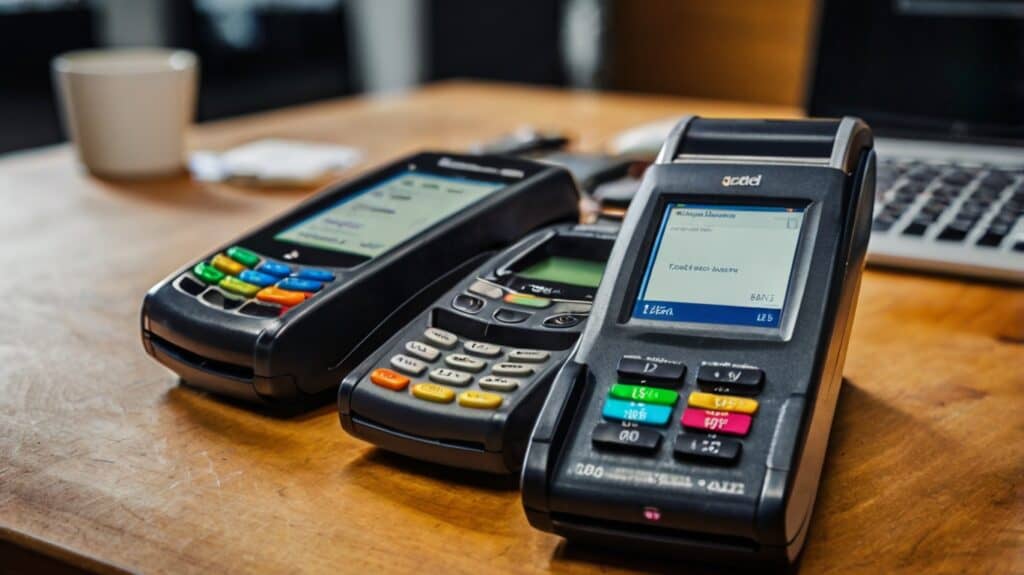
a pair of electronic devices on a table

Pros

  • Exceptional Customer Insights analytics at no extra cost.
  • Same-day deposits to Chase business checking, with no fees.
  • Broad product lineup: virtual terminal, mobile, countertop, restaurant and retail POS.
  • HIPAA-compliant solution via InstaMed (rare among major processors).
  • Flexible gateway options, including Authorize.net resale.

Cons

  • Flat-rate pricing can be higher than subscription or interchange-plus competitors.
  • Dashboard can feel complex across the broader Chase ecosystem.
  • Some benefits tied to Chase checking.
  • Potential ETF with free equipment; chargeback fees apply.
  • Reports of long hold times in some support queues.

Final Thoughts

As a leader in payments, Chase Payment Solutions is no slouch: solid acquiring, powerful in-person and digital solutions, as well as analytics that truly matter, unlike most other competitors. It is not the least expensive processor cost–especially at flat rates–but business intelligence, same-day funding, and bundling banking and payments can balance the cost. Larger firms could obtain more favorable terms, while smaller firms should balance the additional cost with the information and cash-flow quickening benefits.

For those merchants who are actually going to use the data, targeted campaigns, staffing by traffic pattern, product mix optimization, Chase payment solutions can actually pay for itself. If the primary goal is even lower processing costs, a subscription processor or negotiated interchange-plus plan may be preferable. Regardless, Chase is a top contender with its feature depth, healthcare compliance option, and analytics leadership—particularly for merchants already in the Chase ecosystem.

Frequently Asked Questions

  1. Why do firearm merchants experience higher transaction decline rates compared to other industries?

Firearm merchants operate in a high-risk category with stricter regulations, complex shipping rules, and increased scrutiny from banks and card issuers. These factors trigger additional fraud checks, compliance holds, and issuer-level declines.

  1. What’s the difference between a soft decline and a hard decline?

A soft decline is temporary—such as insufficient funds or a temporary bank hold—and can often be resolved by retrying or offering an alternative payment method. A hard decline is permanent for that transaction, often due to stolen cards, expired cards, or issuer policy blocks.

  1. Can using multiple payment processors reduce decline rates?

Yes. Multi-acquirer or multi-gateway setups allow routing declined transactions to another processor for a retry, improving approval rates while maintaining compliance.

  1. How can checkout design impact transaction approval rates?

A clear, mobile-friendly, single-page checkout with minimal required fields reduces user errors and abandoned carts. Making CVV and AVS entry easy and error-free can help prevent mismatches that lead to declines.

  1. Are there alternative payment methods that work well for firearm sales?

Yes. Where legally permitted, ACH/eCheck, debit cards, and select trusted wallets can bypass some card network restrictions and improve transaction success rates.

Ref: https://www.business.com/reviews/chase-merchant-services/


ProMerchant Review

ProMerchant Review

ProMerchant is a US based payment processor designed for simplicity, speed and transparency. They cater to small to mid-sized businesses, especially those looking for a hassle free alternative to the big legacy payment processors. With fast approvals and responsive service ProMerchant has gained popularity among merchants who value clarity in contracts and flexibility in pricing. Lets read more about ProMerchant Review.


Unlike many processors that rely heavily on automation ProMerchant has a human led application and support process. Business owners work directly with representatives who guide them through the approval and onboarding process which can be a big plus for entrepreneurs who are new to merchant services. This hands on model combined with month to month contracts makes the provider a great fit for new or growing businesses.


Not as techy as some of the bigger names ProMerchant doesn’t try to be everything to everyone. Instead they focus on providing reliable merchant accounts, basic hardware and software solutions and strong customer service. They bank on transparency rather than over promising features.

Account Setup and Approval Process | ProMerchant Review

One of the most appreciated aspects of ProMerchant is its quick and straightforward approval process. The application can be completed online or over the phone, and most merchants receive a decision within 24 to 48 hours. Unlike providers that rely on rigid, algorithm-based approval systems, ProMerchant assigns a real person to evaluate each application individually. This personalized approach helps businesses that may not have a strong processing history or fall outside the “ideal” profile for traditional processors.


There’s no extensive documentation required to get started. ProMerchant typically asks for basic business details, ownership information, and a voided check or bank verification to link accounts. For higher-risk categories, such as travel or nutraceuticals, additional information may be requested, but this is handled on a case-by-case basis.


Importantly, ProMerchant doesn’t lock merchants into long-term contracts. Most accounts are offered on a month-to-month basis, and there are no setup fees or application fees. This flexibility is ideal for startups or seasonal businesses that may want to test a payment processor without committing financially upfront.


That said, since approvals are manually reviewed, there’s a degree of subjectivity. Some businesses may be declined based on risk level or previous chargeback history, though ProMerchant tends to be more accommodating than high-volume processors. While it may not be a perfect fit for every industry, its accessible approval model is a standout feature for merchants seeking a personalized onboarding experience.

Product and Service Overview

ProMerchant offers a range of payment solutions for different business models – brick-and-mortar, mobile and online. At the heart of it all is the traditional merchant account which allows you to accept major credit and debit cards. This can be paired with in-person card readers, virtual terminals and ecommerce integrations depending on your business needs.


For physical retail or service businesses ProMerchant offers countertop terminals and mobile card readers. These devices can process EMV chip cards, magnetic stripe cards and contactless payments like Apple Pay and Google Pay. The mobile solutions are iOS and Android compatible so whether you’re a home repair business or a food truck you have the flexibility to go wherever your business takes you.


Online businesses can use ProMerchant’s virtual terminal or integrate payment gateways into their ecommerce stores. The virtual terminal allows for manual card entry, invoicing and recurring billing – all through a secure browser based interface. It may not have all the bells and whistles of advanced automation or analytics dashboards but it gets the job done for basic payment needs.


If you accept checks ProMerchant also offers ACH transactions so you can do recurring bank debits for things like memberships or subscription services. There’s no fancy proprietary software or app ecosystem but it’s functional for businesses that prioritize simplicity and compliance over tech heavy features. Overall, ProMerchant delivers a well-rounded, reliable suite of tools tailored for essential payment processing without unnecessary add-ons.

ProMerchant Review

Pricing Structure and Contract Terms

ProMerchant stands out for its transparency in pricing. The company offers two options: interchange-plus pricing and flat-rate pricing. You choose based on your volume and complexity. Both options have no hidden fees so you know what you’re paying for.


With interchange-plus you pay the wholesale cost of each transaction (set by Visa, Mastercard, etc.) plus a small fixed markup. Good for businesses with consistent monthly volume and lower risk. Flat-rate is good for newer businesses that want simplified accounting. ProMerchant does not require long term contracts. Most merchants are on month to month agreements with no early termination fee. Most of the industry requires 3 year contracts with early termination fees. This gives you the flexibility to try the service without being locked in for years or paying penalties to get out.


There are no setup fees, no PCI compliance fees, and no monthly minimums. That said, pricing may vary depending on the business type, processing volume, and chosen plan. While the lack of upfront fees is attractive, it’s still wise for merchants to request a full fee disclosure during onboarding.


Compared to larger processors, ProMerchant’s pricing is competitive and refreshingly straightforward. While it may not always be the absolute cheapest, the absence of complex surcharges and surprise costs offers real value.

Payment Processing Features

When it comes to core payment functionality, ProMerchant covers the essentials well. It enables businesses to accept all major credit and debit cards, both in-person and online. Transactions are processed securely with end-to-end encryption and full PCI DSS compliance. The company also supports ACH processing for businesses that prefer direct bank transfers, which is useful for subscription models or high-ticket transactions.


One useful feature is the virtual terminal, which allows merchants to accept payments by phone or through a web browser. This is particularly helpful for service providers and B2B businesses that don’t operate through physical storefronts or ecommerce platforms. Within the terminal, merchants can also set up recurring billing, issue digital invoices, and track payment history.


ProMerchant’s mobile processing tools are designed for flexibility. Merchants can pair card readers with smartphones or tablets, enabling secure swipes, chip reads, or tap-to-pay transactions. These are especially useful for businesses that operate at events, markets, or in the field.


Though ProMerchant doesn’t offer an advanced proprietary analytics dashboard, it does provide basic reporting and reconciliation tools. These include transaction summaries, batch reports, and deposit tracking. Overall, ProMerchant focuses on delivering secure, functional, and reliable payment processing without unnecessary complexity. While it may not include cutting-edge innovations or integrations out of the box, it covers the ground most small businesses need to operate efficiently.

Hardware and Software Options

ProMerchant offers a selection of standard payment hardware suited for both retail and mobile businesses. This includes countertop terminals compatible with EMV, NFC, and magstripe cards. These terminals are sourced from reliable manufacturers like Verifone or Ingenico, which are widely used across the industry.


Mobile card readers are also available and can be paired with a smartphone or tablet. These devices allow merchants to accept payments on the go, with support for chip and contactless payments. This is especially useful for businesses like food trucks, mobile vendors, or in-home services. The mobile setup is simple and can be operated via an app or browser-based interface.


For ecommerce businesses or those operating remotely, ProMerchant’s virtual terminal acts as a software-based alternative to hardware. It doesn’t require any installation and runs directly through a secure online portal. Businesses can key in card details manually, set up recurring payments, and generate digital invoices.


One limitation is the lack of proprietary software or an all-in-one POS system. Unlike some providers that bundle inventory management or employee tracking tools with their hardware, ProMerchant sticks to the basics. This can be seen as either a strength or a drawback, depending on the business’s needs. In short, ProMerchant’s hardware and software offerings are dependable and straightforward. They’re best suited for businesses that want secure, functional tools without unnecessary bells and whistles.

Ecommerce Capabilities

ProMerchant offers a solid foundation for ecommerce businesses, though it may not be the most advanced platform in the market. Merchants looking to accept payments online can integrate with popular shopping carts and platforms using third-party gateways like Authorize.net. While ProMerchant does not offer its own proprietary shopping cart system, it provides the flexibility to connect with existing ecommerce solutions.


The company’s virtual terminal also supports invoicing and remote payments, allowing service businesses or freelancers to send payment links or take card information over the phone. While not as robust as full ecommerce suites, this functionality is sufficient for many online-first businesses or hybrid models.


Security is a strong point; ProMerchant ensures that all online transactions are processed with PCI compliance, tokenization, and SSL encryption. These features protect sensitive data and reduce the risk of fraud. There’s also support for recurring billing and subscriptions, which is valuable for ecommerce companies with membership or subscription models.


That said, ProMerchant may not be ideal for large-scale ecommerce operations that require advanced features like abandoned cart recovery, customer loyalty integration, or in-depth sales analytics. It’s designed for simplicity and works best for small to medium-sized online stores. If your business primarily sells online but doesn’t require complex ecommerce features, ProMerchant’s integration options and virtual terminal provide a secure and functional payment solution.

ProMerchant Review

Customer Support and Service Quality

Customer service is one of the best parts of ProMerchant. Unlike many providers who route you through automated systems or big call centers, ProMerchant assigns a dedicated account rep to each merchant. This person becomes your main point of contact for onboarding, troubleshooting and day to day account management.


Support is available by phone and email during business hours and response times are usually quick. Many customers love the personal touch of support especially when dealing with transaction, chargeback or technical setup issues.


During onboarding, ProMerchant reps will walk you through the account setup process, help configure the hardware and explain pricing. This is super helpful for small business owners who may not be familiar with payment processing or industry practices. But ProMerchant doesn’t offer 24/7 live support or a large self-help knowledge base. If you’re a business that operates late hours or needs real-time technical support, this might be a limitation.


Still, the majority of reviews highlight customer service as a strong point. The proactive, one-on-one approach sets ProMerchant apart from larger processors that prioritize volume over relationship-building. For businesses that value responsiveness and continuity in their service experience, ProMerchant delivers a high level of satisfaction.

Pros and Cons

Like any provider, ProMerchant has its strengths and weaknesses. One of the biggest advantages is its transparent, no-contract pricing. Businesses are not locked into long-term agreements, and there are no hidden fees or early termination penalties. This makes ProMerchant a low-risk option for merchants exploring new processing relationships.


Another major pro is the personal customer service. Having a dedicated representative is a rarity in the payment industry, especially for smaller businesses. This ensures more consistent communication and quicker resolutions when issues arise. ProMerchant is also accommodating newer businesses and some high-risk categories. The manual underwriting process allows for flexibility that many automated platforms don’t offer.


On the downside, ProMerchant lacks some of the bells and whistles seen in competitors’ platforms. There is no proprietary POS system, limited analytics tools, and fewer integrations with third-party business software. It also does not support 24/7 customer service, which may be a drawback for businesses operating outside normal hours. Overall, ProMerchant is a solid option for merchants who prioritize clarity, service, and ease of use over technological innovation.

Who Should Use ProMerchant?

ProMerchant is perfect for small to medium sized businesses that want a simple, supportive payment processor. It’s great for startups, service providers and retailers who are fed up with confusing contracts, hidden fees or unresponsive support from bigger processors. Businesses that operate in-person – whether in a retail location or mobile environment – will love the hardware and mobile solutions. Those with lean ecommerce operations will find the virtual terminal and gateway integration sufficient.


It’s also a good fit for business owners who want to work with a real person throughout the payment processing journey. From setup to support, the company offers a level of personal service that many competitors don’t. But businesses that need deep integration with POS systems, inventory tools or CRM platforms will find ProMerchant too basic. Those that need 24/7 support or international payment processing may want to look elsewhere. If your business needs a dependable, low-friction way to accept payments with the comfort of no long-term commitment, ProMerchant is a strong contender worth evaluating.

FAQs

Q1: Does ProMerchant accept high-risk businesses?

A: ProMerchant reviews applications on a case-by-case basis. While it is not a dedicated high-risk provider, it does work with some industries that traditional processors reject.

Q2: Is there a long-term contract or cancellation fee?

A: No, ProMerchant offers month-to-month agreements with no early termination fees, making it a flexible option for small businesses.

Q3: Can I integrate ProMerchant with my existing POS or shopping cart?

A: Yes, ProMerchant supports many third-party integrations through common gateways like Authorize.net. Compatibility should be confirmed during onboarding.

Newtek Merchant Solutions Review

Newtek Merchant Solutions Review

Newtek Merchant Solutions is part of NewtekOne, a company that supports small and mid-sized businesses. While NewtekOne offers many services including lending, payroll and IT solutions, the merchant services division is focused on helping businesses accept, manage and process payments. Lets read more about Newtek Merchant Solutions Review.


This solution stands out by being flexible across different payment types, retail, online and mobile. For businesses already using Newtek’s other services, the merchant services feel like a natural extension, easy to integrate and a cohesive back office experience.


Newtek may not be a household name like some of the bigger payment processors, but its strength is in personalization. The service is designed for smaller businesses by bundling reliable payment processing with operational tools, a complete and approachable solution for growing businesses.

Core Payment Processing Features | Newtek Merchant Solutions Review

At its core, Newtek Merchant Solutions offers credit and debit card processing. The platform supports all major card networks Visa, Mastercard, Discover and American Express. Whether you have a physical storefront, a mobile setup or an online portal, Newtek has the tools to make secure transactions possible.


Features like authorization, batch processing and settlement are included. The system is scalable from a few transactions a day to high volume. Contactless payment methods like Apple Pay and Google Pay are also supported so you can offer your customers modern checkout experiences.


While the platform doesn’t push the boundaries of innovation, its commitment to industry standards is reliable. It’s focused on functionality over novelty, which can be a big plus for businesses that want consistency over experimental features.

Newtek Merchant Solutions Review

POS Solutions

Newtek provides several POS hardware and software combinations suitable for in-store operations. These range from simple countertop terminals to more advanced systems that include employee and inventory management features. The solutions are particularly well-suited for restaurants, retail stores, and service-based businesses.


The hardware offered is sourced from reputable third-party vendors, ensuring compatibility with EMV chip cards and contactless payments. Businesses can choose between wired and wireless terminals depending on layout needs. On the software side, Newtek’s POS systems include tools for tracking sales, printing receipts, and managing basic customer data.


Integration with back-office functions like inventory or accounting is possible, though it may require some additional configuration. While it may not rival industry-specific POS suites, it does deliver the essentials needed for day-to-day retail operations.

E-Commerce and Online Payment Tools

Newtek supports online payments through a suite of tools tailored to digital businesses. These include hosted checkout pages, virtual terminals, and integrations with e-commerce platforms. The virtual terminal enables manual card entry for remote payments, ideal for phone or email orders. The hosted checkout pages offer secure, branded experiences without the need for merchants to store sensitive data.


While Newtek offers compatibility with platforms like WooCommerce and Magento, integration may require extra setup or developer involvement. The tools are PCI-compliant and include encryption features to protect transaction data.


For businesses with straightforward online sales needs, Newtek’s offering is sufficient. Those requiring custom checkout flows, deep analytics, or complex subscription models may need to integrate additional third-party services.

Mobile Payment Support

Newtek’s mobile payment options are built for flexibility. Small business owners, mobile service providers, and event vendors can use portable card readers that connect to smartphones via Bluetooth or audio jack. These readers support swipe, chip, and contactless transactions, making them versatile for various situations.


The accompanying mobile app allows users to input amounts, view basic transaction logs, and send digital receipts. While the tools are easy to use and reliable, they do not offer extensive features like inventory tracking or CRM capabilities.


This solution is ideal for mobile-first operations that need a simple, lightweight tool to collect payments. Businesses with more robust mobile needs may need to supplement the system with additional platforms.

Newtek Merchant Solutions Review

Invoicing and Recurring Billing

For businesses with subscription services or recurring billing models, Newtek has simple tools to create and send invoices and set up automated payments. Invoices can be customized and sent via email with embedded payment links that accept card payments.


Recurring billing allows businesses to set up schedules for automatic charges on a weekly, monthly or custom basis. The system stores payment data so you don’t have to re-enter info each cycle.


These are user friendly and will work for most small business needs. But they don’t have advanced features like tiered billing plans or usage based pricing. Businesses that need those will need to look into specialized billing platforms.

Integration with Business Tools

Newtek has basic integration with software like QuickBooks so you can sync transaction data for financial reporting. If you already use Newtek’s payroll or insurance services, the ecosystem integration will create operational efficiency.


While helpful, Newtek’s integration options aren’t as robust as platforms with open APIs or large app marketplaces. Customization options are limited and businesses with complex workflows will need to use third party middleware to connect all systems.


For small to mid-sized businesses using common tools, Newtek has enough connectivity to centralize data without being too complicated.

Security and Compliance Measures

Security is a cornerstone of Newtek’s merchant services. The platform adheres to PCI DSS requirements and employs encryption and tokenization to safeguard transaction data. This means that sensitive information is protected during both transmission and storage.


It also includes fraud prevention tools such as CVV and AVS checks and offers merchant guidance on maintaining PCI compliance. While the platform does not offer proprietary fraud detection algorithms, the existing tools are reliable and familiar to most users.


These features ensure a secure payment environment, which is especially important for small businesses without dedicated IT security resources.

Reporting and Analytics Dashboard

Newtek includes a reporting interface that tracks daily transactions, sales history, chargebacks, and other key performance indicators. The dashboard is simple and intuitive, designed for business owners who want quick access to financial data without learning complex analytics software.


Reports can be filtered by time frame, payment method, or location, making it easier to understand trends. Though the reporting features support basic financial analysis and accounting preparation, they are not meant for advanced forecasting or business intelligence.


This tool works well for routine oversight and performance reviews. Businesses needing predictive analytics or deeper customer insights may require additional software.

Customer Support and Service Structure

Customer service is one of Newtek’s strong suits. Support is offered by phone and email during business hours and you deal with a dedicated service rep, not a help desk.


Newtek also provides some basic documentation and onboarding help which is great for first time users. 24/7 support isn’t standard but the hands on approach is consistent.


For merchants who value direct communication and human help this service model is an advantage over larger platforms with long response times and impersonal interfaces.

Screenshot-2025-07-03-014737-768x394 1

Pricing Transparency and Fees

Newtek’s pricing is not published which can be frustrating for businesses that want instant quotes or price comparisons. Pricing is custom based on industry type, transaction volume and risk level.


Fees may include interchange costs, monthly service fees, statement fees and equipment rentals. Some merchants will be on a flat rate model, others will be on an interchange plus model. Early termination fees or long term contracts may apply depending on the agreement.


While negotiable terms are possible the lack of transparency can be a barrier for businesses that are not familiar with merchant account pricing. Prospective users should review contracts closely and ask direct questions about additional fees and pricing models.

Pros and Cons of Newtek Merchant Solutions

Newtek’s biggest strengths include its tailored approach to small businesses and its connection to the broader NewtekOne ecosystem. Bundled services like payroll and lending help simplify operations. The platform also offers stable payment tools and customer support with a human touch.


However, the limited integration options and lack of cutting-edge features may not meet the needs of larger or tech-savvy businesses. Pricing opacity is another potential drawback, especially for those seeking straightforward cost structures.


Businesses prioritizing reliability and relationship-driven service will find value in Newtek. Those seeking advanced technology or deep customization may find the platform less suitable.

Ideal Business Types for Newtek

Newtek Merchant Solutions is designed for small and mid-sized businesses. Retail stores, professional service providers, and e-commerce shops with basic requirements are well-positioned to benefit. Its invoicing and recurring billing tools are useful for consultants, membership services, and healthcare providers.


Merchants already using Newtek’s other services will enjoy better integration and streamlined operations. On the other hand, businesses in highly technical industries or with complex payment workflows might need more specialized solutions.


Newtek fits best where usability and trust are more important than having the latest innovations.

Final Verdict

Newtek Merchant Solutions offers reliable, user-friendly payment services ideal for small businesses. Its strengths include solid customer support, essential tools, and integration with NewtekOne. While not the most flexible or tech-advanced, it meets core business needs. Improved pricing transparency and integration options could enhance its competitive appeal further.

FAQs

Q1: Does Newtek Merchant Solutions support high-risk businesses?


Newtek typically focuses on standard-risk industries. High-risk businesses should contact Newtek directly to assess eligibility and underwriting options.


Q2: Can Newtek integrate with my e-commerce platform?


Yes, it supports integration with several popular platforms. However, setup may require plugins or technical assistance to ensure compatibility.


Q3: Is a long-term contract required?


Contract terms can vary. Some merchants may get month-to-month agreements, while others may face longer commitments. Be sure to clarify all terms before signing.