Tag Archives: POS systems

Chase Payment Solutions

Chase Payment Solutions Review

Chase is one of the largest banks in the United States, with millions of card holders and a massive small-business footprint. When a business signs up for Chase payment solutions, they are tapped on that scale – especially analytics obtained from Chase cards and banking networks. This provider pursues the most different customer insight, a free analytics suit that converts raw transactions data into customer intelligence. The platform also brings a range of modern virtual terminal (Orbital), a series of POS hardware options (including restaurants and retail systems), and unique offering for strong mobile capabilities and healthcare with tap to pay on iPhone, also through HIPAA-Compliant payment.

This review discuss about Chase payment solutions. Let us understand in detail.

Ease Of Use

Chase Payment Solutions

Because it sits inside the widespread business ecosystem of Chase, the dashboard can feel more complicated than payment apps. Tools may live in separate Chase portals – cases, banking, analytics – sometimes requiring additional clicks. Flip side is a modern, well organized interface: clear menu, predictable navigation, and consistent styling once users learn the layout. Most teams should quickly go on the ship, especially if they already use Chase Business Banking.

In short, not the simplest UI in the category, but logical and learning. The width of the features explains the additional navigation.

Standout Feature: Chase Customer Insights

This is the main reason many reviewers rate Chase Payment Solutions highly. Standard payment processors provide payout summaries and basic sales reports. Customer Insights goes much further:

  • Sale performance: Daily sales tool, trend and average ticket size.
  • Cohorts: New vs. returning customers, frequency, and reports.
  • Demographic: Customer age, income, gender and location collected scenes (eg, zip code).
  • Behavior pattern: Where customers come from (geographically), when they shop (day/time), and how they buy (in-store versus online).
  • Benchmarking: Comparison against similar businesses in the field to identify strength and gaps.

These insight can run solid tasks: staffing adjustments based on time-boxed promo, traffic curves, neighborhood advertisements, and inventory decisions reported by basket composition during peak hours. Some processors match this depth of business intelligence without any additional cost, which is why many label Chase payment solutions solution as the strongest option for data-operated traders.

Virtual Terminal: Orbital
Chase Payment Solutions

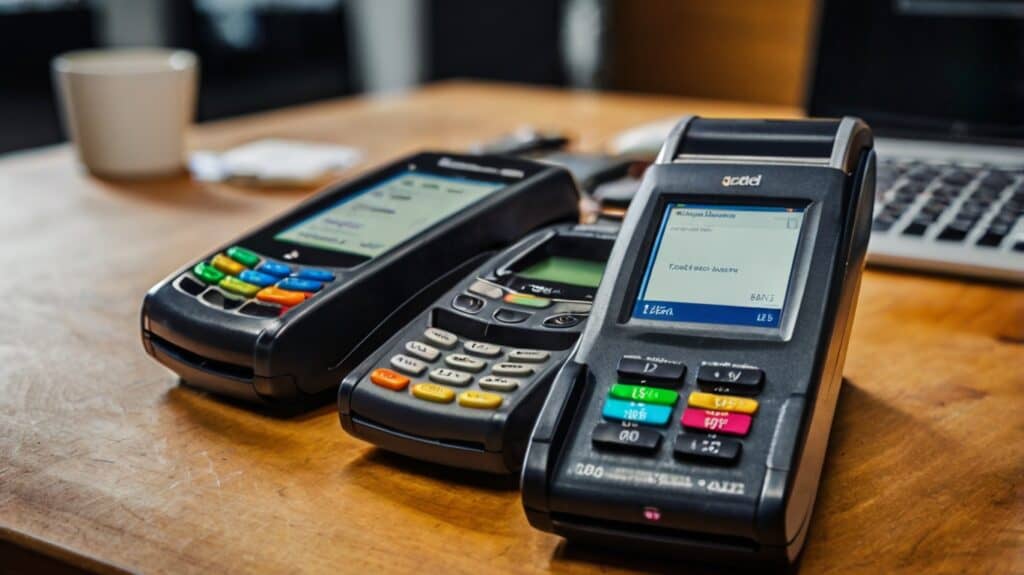
Chase’s Orbital virtual terminal allows manual key-entry of card-not-present transactions (phone order, mail order) and recurring billing as well as secured card-on-file storage. Built-in fraud controls—AVS/CVV checks and other risk screening—mitigate unauthorized use. Orbital also accepts a range of payment methods, ranging from credit and debit to ACH, allowing teams consolidate credit card and bank transfer payment without additional hardware. For businesses with a sizeable remote billing workflow (wholesale orders, professional services, repair shops), this is a robust option.

POS Hardware and Industry Systems

Chase payment solutions offers a range of in-person solutions:

  • Portable terminal ($499): For countertop or curbside workflows.
  • QuickAccept readers: Base $49, reader $99, or bundle for $129. These pair with the Chase Mobile app for chip, swipe, and Tap to Pay on iPhone.
  • Restaurant POS: TouchBistro systems sold through Chase for front-of-house, menu management, and kitchen flows.
  • Retail POS: Silver Essentials by NCR Voyix, suitable for single- and multi-store retailers with inventory and reporting needs.

The hardware integrates with the Chase Business Complete Banking for a systematic disposal. Traders who like various POS brands can still process through Chase gateway or connect through supported integration.

Mobile Payments Offered By Chase Payment Solutions

Mobile payments are a requirement for pop-ups, service firms, and line-busting. The Chase Mobile application addresses all aspects of the use case:

  • Tap to Pay on iPhone: No additional hardware required.
  • Manual key-entry and payment links: For remote or on-the-spot invoices.
  • In-app invoicing: Create and send professional invoices directly.
  • Real-time tracking: See transactions and payouts as they occur.

When paired with a Chase business checking account, merchants can access no-fee same-day deposits—a meaningful cash-flow advantage over many third-party providers.

HIPAA-Compliant Healthcare Payments (InstaMed)
Chase Payment Solutions

Chase payment solutions is reportedly unique among the large processors, since it has partnered with InstaMed to provide HIPAA compliant payments. The system allows for collections in office as well as online bill pay and e-statements. Practices can save cards on file for these recurring charges, along with the ability to accept credit, debit, and ACH. For clinics, dental offices and specialty practices, this can streamline collections, enhance the patient payment experience and help meet regulations.

Merchant Account & Gateway Options

Chase provides genuine merchant accounts with its own secure gateway—no extra configuration for most card-present and eCommerce flows. Chase resells Authorize.net for teams already standardized on other gateways, providing continuity with existing integrations and settling and reporting within the Chase ecosystem. It mitigates switching frictions for larger firms.

Pricing

Chase’s published flat-rate pricing:

  • In-person (with card reader): 6% + $0.10 
  • Online (eCommerce): 9% + $0.25 
  • Manually keyed: 5% + $0.10 

There are no monthly processing fees, and analytics (Customer Insights) plus same-day deposits with a Chase business checking account come at no extra charge. Larger businesses can request interchange-plus pricing, which may be more economical at scale.

Potential additional fees:

  • Early termination: If free equipment is provided, the contract may include an ETF for early cancellation.
  • Third-party/agent markups: Chase sells directly and via independent agents. Some agents add fees; merchants should review agent contracts carefully and consider applying directly through Chase if extras appear.
  • Chargebacks: Chase may charge $25–$100 per incident.

Customer Support

Chase offers phone support 24 hours a day, seven days a week, and an extensive Merchant Support Center on the Web, with articles on how to do most anything, free skills courses, and “The Unshakeables” podcast. Having a wide selection of content is a plus but some reviewers report being put on hold for long periods of time during high-traffic times. As with any large institution, though, experiences differ depending on the queue and issue type. Onboarding teams generally find that implementation guidance is thorough, and banking integration questions are easier to resolve when both payments and checking are under one roof.

Pros and Cons of Chase Payment Solutions

a pair of electronic devices on a table

Pros

  • Exceptional Customer Insights analytics at no extra cost.
  • Same-day deposits to Chase business checking, with no fees.
  • Broad product lineup: virtual terminal, mobile, countertop, restaurant and retail POS.
  • HIPAA-compliant solution via InstaMed (rare among major processors).
  • Flexible gateway options, including Authorize.net resale.

Cons

  • Flat-rate pricing can be higher than subscription or interchange-plus competitors.
  • Dashboard can feel complex across the broader Chase ecosystem.
  • Some benefits tied to Chase checking.
  • Potential ETF with free equipment; chargeback fees apply.
  • Reports of long hold times in some support queues.

Final Thoughts

As a leader in payments, Chase Payment Solutions is no slouch: solid acquiring, powerful in-person and digital solutions, as well as analytics that truly matter, unlike most other competitors. It is not the least expensive processor cost–especially at flat rates–but business intelligence, same-day funding, and bundling banking and payments can balance the cost. Larger firms could obtain more favorable terms, while smaller firms should balance the additional cost with the information and cash-flow quickening benefits.

For those merchants who are actually going to use the data, targeted campaigns, staffing by traffic pattern, product mix optimization, Chase payment solutions can actually pay for itself. If the primary goal is even lower processing costs, a subscription processor or negotiated interchange-plus plan may be preferable. Regardless, Chase is a top contender with its feature depth, healthcare compliance option, and analytics leadership—particularly for merchants already in the Chase ecosystem.

Frequently Asked Questions

  1. Why do firearm merchants experience higher transaction decline rates compared to other industries?

Firearm merchants operate in a high-risk category with stricter regulations, complex shipping rules, and increased scrutiny from banks and card issuers. These factors trigger additional fraud checks, compliance holds, and issuer-level declines.

  1. What’s the difference between a soft decline and a hard decline?

A soft decline is temporary—such as insufficient funds or a temporary bank hold—and can often be resolved by retrying or offering an alternative payment method. A hard decline is permanent for that transaction, often due to stolen cards, expired cards, or issuer policy blocks.

  1. Can using multiple payment processors reduce decline rates?

Yes. Multi-acquirer or multi-gateway setups allow routing declined transactions to another processor for a retry, improving approval rates while maintaining compliance.

  1. How can checkout design impact transaction approval rates?

A clear, mobile-friendly, single-page checkout with minimal required fields reduces user errors and abandoned carts. Making CVV and AVS entry easy and error-free can help prevent mismatches that lead to declines.

  1. Are there alternative payment methods that work well for firearm sales?

Yes. Where legally permitted, ACH/eCheck, debit cards, and select trusted wallets can bypass some card network restrictions and improve transaction success rates.

Ref: https://www.business.com/reviews/chase-merchant-services/



Shift4 Payments Review

Shift4 Payments Review

Shift4 Payments is a US based fintech company that has a commerce platform that supports thousands of merchants across industries such as hospitality, retail, lodging, stadiums, restaurants and eCommerce. Founded in 1999 by Jared Isaacman (who launched the company at 16) Shift4 has grown into a public company with a large portfolio. In 2025 it is led by CEO Taylor Lauber with Isaacman as Executive Chairman. Based in Allentown, PA Shift4 owns its entire technology stack. This includes payment gateways, POS systems, acquiring services and software solutions. Owning the entire infrastructure allows Shift4 to streamline operations and reduce dependency on 3rd party vendors so merchants have a unified experience. Lets read more about Shift4 Payments Review.


Shift4 has grown aggressively through acquisitions. Notable purchases include VenueNext (stadium tech), 3dcart (now Shift4Shop), The Giving Block (for crypto donations) and Finaro (for international payments). These moves have taken Shift4 from a US focused payment provider to a global, vertically integrated technology company. Despite all the offerings Shift4 has received criticism from some merchants for unclear pricing and contract terms. Still it’s a great choice for enterprise merchants who want to have all their commerce operations managed by one vendor.

Core Payment Processing Solutions | Shift4 Payments Review

At the heart of Shift4’s service is secure, end-to-end payment processing across various channels. The platform handles large transaction volumes through its proprietary acquiring and gateway systems, supporting in-store, mobile, and online sales with robust speed and reliability. The platform accepts major payment types including EMV, magnetic stripe, contactless (Apple Pay, Google Pay), ACH, QR code payments, and crypto transactions via The Giving Block. It also supports subscription billing and secure card tokenization for recurring charges.


Because Shift4 owns the technology used to process payments, it can offer faster transaction settlement, real-time reporting, and deeper customizations. This vertical integration reduces reliance on external services, cutting down latency and operational inefficiencies. Shift4’s infrastructure is also optimized for omnichannel use. Merchants can manage physical and digital sales in one backend system, improving reconciliation and ensuring a consistent user experience. Its eCommerce arm, Shift4Shop, includes tools for fraud management, checkout optimization, and API access.


That said, Shift4 does not list standard pricing publicly. Merchants receive custom quotes based on their needs, so detailed review of contract terms is essential. For businesses seeking a powerful and unified payment system, Shift4 is among the most capable platforms available.

POS and Hardware Offerings

Under the SkyTab brand, It provides a comprehensive POS hardware suite designed for hospitality, retail, and large-scale venues. The lineup includes SkyTab Workstation (countertop), SkyTab Mobile (handheld), SkyTab Glass (software-only Android version), and kitchen display units; all equipped with Wi-Fi and 4G LTE connectivity for consistent uptime.


SkyTab is more than POS hardware; it’s a full business management tool. Restaurant-specific functions include tableside ordering, menu updates, tipping, and delivery apps. Retail features include barcode scanning, inventory alerts, and pricing tools with loyalty options. The system uses an Android-based OS with a modern, responsive UI. Regular over-the-air updates keep devices current without the need for manual installations. Hardware supports EMV and mobile payments and connects seamlessly with Shift4’s gift card and loyalty programs.


Shift4’s POS equipment integrates directly with its payment and reporting systems. However, this creates a potential lock-in issue; migrating to another provider could require hardware replacement or incur extra fees. For businesses wanting a single-provider system with full integration, SkyTab offers flexibility and strong enterprise-grade performance with centralized support.

Software Ecosystem and Integrations

It has built a large software portfolio through organic growth and strategic acquisitions. Shift4Shop, formerly 3dcart, is its flagship eCommerce platform that helps merchants launch online stores with built-in payments, marketing tools, SEO, CRM and analytics – making it a competitor to Shopify. Its POS software has advanced features like inventory control, staff management, customer insights and custom reports. Each solution is vertical specific – restaurants get kitchen routing, retailers get barcode tools and multi-location features.


A big differentiator is Shift4’s robust API and integration ecosystem. It connects to popular third-party platforms like Oracle MICROS, NCR Aloha, Agilysys and property management systems making it perfect for complex retail, lodging and entertainment operations. Large venues get mobile ordering and fan engagement through VenueNext, nonprofits and educational institutions get The Giving Block for crypto and fiat donations.


While the suite is flexible, onboarding may be complex for smaller teams without dedicated IT. Initial setup may require assistance. But the feature depth and flexibility makes Shift4’s software infrastructure good for long term digital strategy.


Shift4 Payments Review

Security and Compliance

Security is a core focus for Shift4, which provides enterprise-grade protection and regulatory compliance tools. The company is PCI DSS Level 1 certified and uses P2PE to secure cardholder data during transactions. Tokenization services replace actual card data with random identifiers, allowing safe storage for recurring billing and loyalty programs without storing real numbers. This dual approach; encryption and tokenization; helps reduce breach risks. End-to-end encryption is standard across all channels; SkyTab, eCommerce, or third-party integrations; ensuring secure handling from swipe to settlement.


Additional tools include AVS and CVV validation, fraud scoring, and chargeback management. These help merchants identify risks and respond quickly to disputes. With Finaro’s acquisition, Shift4 now meets broader international compliance needs, including GDPR. This gives merchants peace of mind when operating globally. While the platform is highly secure, successful implementation depends on merchant participation. Businesses still need to maintain internal controls and educate staff on best practices for payment security.

Pricing Structure and Contract Terms

One of Shift4’s most scrutinized areas is its lack of transparent pricing. It does not publish fees online, instead providing tailored quotes based on merchant size, industry, and volume. It often markets “free” POS hardware bundled with long-term contracts. These arrangements usually require exclusive transaction processing with Shift4 for the contract duration (3–5 years), or merchants must pay buyout or early exit fees.


Costs can include processing rates, per-transaction fees, PCI charges, batch fees, and monthly minimums; though these vary by client. Some users report unexpected costs or difficulty clarifying details during negotiations. Larger merchants may benefit from this model due to their bargaining power. Smaller businesses may struggle to understand the full cost implications, especially if they expand locations or upgrade systems.


Before signing, merchants should request a complete breakdown of all recurring and one-time charges. Those considering “free” equipment should understand the terms tied to that offer, including volume commitments and cancellation clauses.

Customer Support and Onboarding

It offers 24/7 US-based support via phone and email to all customers. Additional help comes through tutorials, onboarding content and knowledge base resources online. New customers start with hardware setup and initial configuration. Restaurants and retailers get hands-on help for menu creation, staff permissions and system connections. Many merchants report great onboarding experiences especially with authorized resellers.


Customer service is mixed. Larger customers get faster response times and dedicated managers. Small business customers sometimes get delays or department hand-offs when resolving complex issues. The SkyTab interface is easy for staff to learn. Managers get mobile tools to oversee operations during onboarding or changes.


Multi-location businesses or those that need special integrations may have longer setup times. Consistent communication with implementation teams is key to minimizing delays. Overall Shift4’s onboarding is structured and scalable but service levels vary by business size and support tier.


Shift4 Payments Review

Shift4’s Value-Added Features

In addition to core processing it offers several add-on tools for marketing, loyalty and analytics. These features help merchants build customer relationships and make better decisions. The loyalty platform allows businesses to reward customers with discounts, point systems or seasonal perks. Gift card functionality – digital and physical – is integrated into the POS system for seamless use and tracking.


Managers can use Shift4’s business intelligence tools to monitor labor costs, sales performance and inventory metrics. Dashboards are accessible from any device for real-time insights. For restaurants QR code menus and online ordering streamline service and increase efficiency. These tools improve the guest experience and boost order volume.


Shift4Shop also supports campaign marketing, cart recovery, and multichannel eCommerce. Businesses can manage listings across social, marketplaces, and their own websites. Additionally, The Giving Block facilitates crypto donations for nonprofits and education sectors, expanding giving options in an increasingly digital donor landscape.


While many features are standard, others may require activation or plan upgrades. Businesses should verify what’s included to ensure alignment with expectations.

Pros and Cons of Using Shift4

Pros

End-to-end ownership of hardware, gateway, software, and acquiring

Industry-specific tools for hospitality, entertainment, retail, and nonprofits

Unified experience across mobile, online, and in-store

Expanded global capabilities through Finaro

Built-in extras like loyalty, crypto support, and advanced analytics

Cons

No public pricing; custom quotes can hide total costs

Smaller merchants may receive slower support

Hardware is closely tied to ecosystem, limiting switch options

Setup complexity may challenge less tech-savvy teams

Shift4 shines when used as a holistic platform, but commitment and understanding of terms are vital.

Ideal Business Types for Shift4

It works best for medium to large businesses with high transaction volume and complex operational needs. It’s a strong fit for restaurants, hospitality chains, sports venues, and entertainment businesses that need integrated POS, reporting, and mobile features.


Event-based businesses benefit from VenueNext’s capabilities, while mission-based organizations can leverage The Giving Block. Retailers wanting seamless online and in-store tools will appreciate the Shift4Shop-SkyTab combination. Businesses with international plans can explore Finaro’s multi-currency processing. Smaller companies may find Shift4 too layered or contract-heavy. Simpler platforms with flat pricing could be better suited for them.

FAQs

Q1: Is Shift4 good for small businesses?


Shift4 is built for larger operations. Its complex setup and contract terms may be too much for small businesses or startups.


Q2: Can I use Shift4 without its hardware?


Partially. While integrations are available with third-party systems, the platform performs best with Shift4’s own SkyTab hardware.


Q3: Does Shift4 support international payments?

Yes. Since acquiring Finaro in 2023, Shift4 supports global transactions, including multi-currency processing across Europe and other markets.