
Tag Archives: payment technology

FortisPay Review

FortisPay is a payment technology company that has traveled a meaningful distance from its origins as a traditional merchant services provider. Founded in 1998 under the name Cambridge Payment Systems and headquartered in Novi, Michigan, the company rebranded as Fortis Payment Systems before settling on the FortisPay identity it operates under today. Under the leadership of CEO Greg Cohen, Fortis has deliberately repositioned itself away from generalist credit card processing toward a more focused mission: delivering embedded payments for software platforms, ISVs, ERP systems, and mid-market to enterprise businesses. Lets read more about FortisPay Review.


That strategic pivot has been accelerated through a series of acquisitions, including Blue Dog Business Services in 2020, Swype at Work and EpicPay in 2021, Change Merchant Solutions in 2021, and Payment Logistics in 2022. Each acquisition has added vertical-specific expertise, technology capabilities, or geographic reach to the Fortis platform. The company now operates as a registered ISO of Wells Fargo Bank and processes billions of dollars annually across industries including healthcare, hospitality, retail, construction, manufacturing, and professional services.


This review takes a grounded, honest look at what FortisPay actually delivers, covering its technology, verticals, developer tools, pricing, contract terms, and the patterns in merchant feedback that are important context for anyone evaluating the platform.

Company Background and Market Position | FortisPay Review

FortisPay’s evolution over more than two decades reflects a company that has repeatedly refined its identity in response to market conditions and strategic opportunity. The Cambridge Payment Systems origins placed the company in the traditional merchant acquiring space, serving small and medium-sized businesses through standard processing relationships. The subsequent rebrand to Fortis and the accelerated acquisition strategy that followed reflects a deliberate shift toward embedded payments and software platform partnerships.


The acquisition of Payment Logistics in 2022 was particularly strategic. Payment Logistics had spent 19 years building payment technology specifically for specialty retail and hospitality markets, with deep expertise in Oracle Hospitality OPERA and Oracle Retail Xstore integrations. Bringing that capability into Fortis gave the company validated Oracle integration expertise, a credential that carries real weight in enterprise hospitality and retail procurement decisions.


Greg Cohen, who leads the company as CEO, is an experienced payments industry executive whose public commentary at industry events like ETA TRANSACT reflects genuine strategic thinking about the direction of embedded payments and commerce. The leadership team also includes EVP Timmy Nafso and SVP of Product and Innovation Kevin Shamoun, who has represented Fortis on AI and payments technology panels at major industry conferences.


From a market positioning standpoint, Fortis competes primarily in the embedded payments and ISV partnership space, where it goes head-to-head with providers like Stripe, Braintree, and NMI rather than with traditional ISO-based processors. The company explicitly targets software companies, ERP providers, and enterprise platforms that want to embed frictionless payment acceptance into their own products.

Core Payment Processing Capabilities

At its foundation, FortisPay provides full-service payment processing covering credit cards, debit cards, ACH, and eCheck payments across in-store, online, and mobile environments. The platform handles standard authorization, clearing, and settlement workflows, with processing infrastructure backed by Wells Fargo Bank as the acquiring bank.


Credit and debit card acceptance spans all major card networks, with support for EMV chip cards, contactless payments, and magnetic stripe transactions. ACH processing supports both one-time and recurring payments, making it suitable for subscription billing, invoicing, and B2B payment flows where the lower transaction cost of ACH is preferable to card interchange. The distinction between eChecks, which are single-transaction bank transfers, and ACH, which supports recurring use, is maintained within the platform to give merchants appropriate flexibility for different payment scenarios.


Virtual Terminal is one of the features offered in this product, allowing customers to manually take payments via a computer using no additional devices other than just a computer itself. It is especially important for those organizations that provide phone ordering and professional services or need to enter transaction information on an occasional basis.


ACH functionality of the service was positively commented upon by the customers of the solution, highlighting its transparency regarding anticipated settlements. For instance, one of the G2 reviewers mentioned the benefit of knowing when ACH deposits would be made. On the other hand, one of the limitations associated with this service mentioned by the same group of customers is the existence of holds for transactions over $20,000.

Embedded Payments and the ISV Partner Program

The clearest expression of FortisPay’s current strategic identity is its embedded payments offering for independent software vendors and platform companies. This is where the company has invested most aggressively, and it represents the most differentiated part of its value proposition relative to traditional processor competitors.


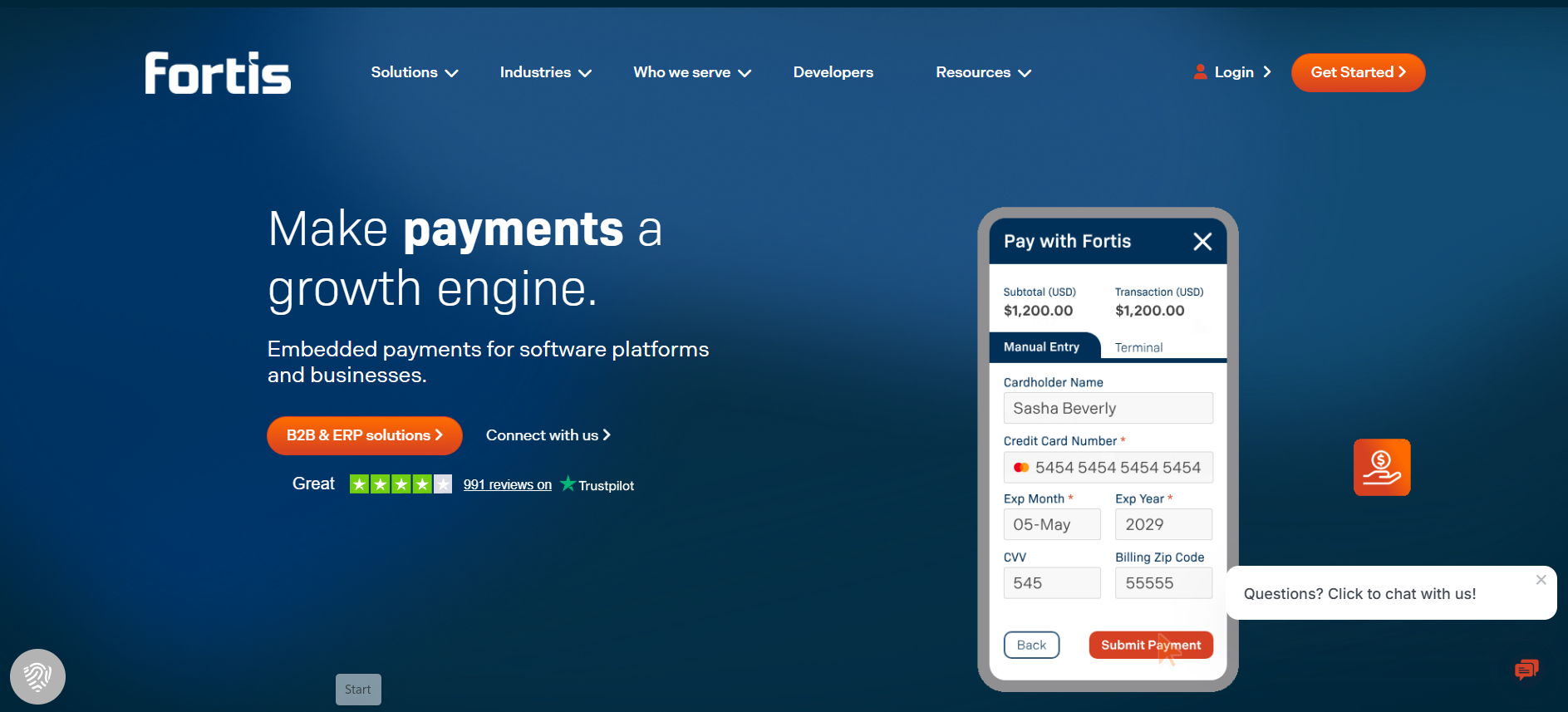
The ISV partner program allows software companies to embed payment acceptance directly into their platforms, removing the need for their end-customers to manage separate processor relationships. Fortis handles the acquiring, compliance, and processing infrastructure in the background while the ISV’s customers experience payments as a native feature of the software they already use. The partner model also includes revenue-sharing arrangements, allowing ISVs to earn a share of the transaction revenue generated by their embedded payment deployments.


The revenue-sharing aspect of this product is a considerable factor for software providers considering payment partnerships. Instead of only being able to pay for payment functionality, the ISV is able to leverage its payment integration to create another revenue stream for itself. If the software platform is able to generate enough transactions, then this could prove to be quite an economic shift.


Fortis has made efforts to develop formal integrations between its payments system and other enterprise-level software systems in order to add credibility to its payment solution. One such example of this is the Oracle Validated Integration Expertise Certification for both Oracle Hospitality OPERA and Oracle Retail Xstore. This shows that Fortis’ payment integration has been successfully vetted by Oracle to function properly within their software ecosystem.
FortisPay Review

eveloper Tools and API Infrastructure

For ISVs and developers evaluating FortisPay, the quality of the API and developer tooling is often the deciding factor. Fortis has invested meaningfully in this area, and the developer experience is one of the platform’s recognized strengths.

The Fortis API has been recognized as a Best of Breed system since 2018 across multiple evaluation cycles, reflecting sustained investment in API quality rather than a one-time effort. The developer portal includes a comprehensive set of resources: step-by-step tutorials, full SDK generation, Postman collections for testing, a request inspector, sample code in multiple languages, real-time code consoles that allow in-browser testing, and a team collaboration dashboard. This is a developer environment built with the expectation that teams will be doing serious integration work, not just basic connection testing.


Availability of the full software development kit is an important differentiator. Using an SDK makes it possible to develop custom integration solutions much faster than if only API was available. With the help of the sandbox environment, developers can test their solutions for integration with Stripe ahead of time and prevent mistakes at the production stage.


The end-to-end API onboarding with e-sign and auto-configuration features make the process of merchant onboarding streamlined for ISVs managing hundreds of sub-merchants simultaneously. Such automated infrastructure is crucial for software platforms since it provides them with the ability to onboard customers automatically without having to manually underwrite each merchant account.


An ability to integrate Tap to Pay on iPhone features announced for 2025 is an important benefit for developers as well as ISVs. It allows them to create a solution for accepting payments directly from the iPhone without the need for extra equipment, making it valuable for mobile business owners and the hospitality industry.

Vertical Market Focus and Industry Solutions

One of FortisPay’s clearest differentiators from generalist processors is its depth of focus across specific vertical markets. Rather than building generic payment tools and applying them broadly, Fortis has developed industry-specific solutions and partnerships for healthcare, hospitality, retail, construction, manufacturing, and professional services.


In healthcare, Fortis targets practices that sit between the hospital-scale EHR deployments and basic standalone processors, including chiropractors, mental health clinics, physiotherapists, and specialty medical practices. The platform supports patient payment portals, text-to-pay, mobile payment notifications, and online billing, reflecting the shift in patient payment behavior away from mail-based billing. Integration with healthcare software systems including the Genesis EHR platform has been specifically mentioned in positive user reviews, which validates the depth of these integrations rather than leaving them as theoretical claims.


In the hospitality sector, the Oracle OPERA implementation and collaboration with platforms such as Visual Matrix and Union POS represent actual enterprise-level implementation knowledge. The firm has actively collaborated with Best Western Hotels & Resorts during regional conferences, which is indicative of its strategic focus on lodging in addition to food service offerings.


Regarding construction and manufacturing industries, Fortis has generated sector-focused content and solutions involving AR automation, rapid invoicing to cash cycle, and ERP integration, with Sage Recommended Solutions certification denoting verified integration with Sage ERP software. Such industry-specific initiatives are significant due to the unique payment issues faced by construction and manufacturing industries, especially with respect to lengthy billing periods and retainage.

Payment Gateway and Omnichannel Capabilities

FortisPay’s gateway infrastructure supports omnichannel payment acceptance across in-store, online, mobile, and text-based channels. This breadth of coverage allows businesses to meet customers wherever they prefer to pay without managing separate gateway relationships for different sales channels.


Web payments functionality allows businesses to collect payments at the point of booking or appointment scheduling, which is particularly useful for healthcare practices that want to capture payment information before a visit rather than chasing receivables after the fact. The ability to integrate payment collection into the patient intake or appointment booking workflow has a direct impact on collections rates and cash flow timing.


Text-to-pay and email invoicing extend payment acceptance into asynchronous channels, allowing merchants to send payment links directly to customers who can complete transactions on their own devices without requiring a dedicated app or a specific browser environment. For service businesses managing distributed billing across a customer base, these channels reduce the friction between invoice and payment.


The platform also supports advanced invoicing workflows, including scheduled payments, recurring billing, and installment plans. These capabilities are particularly relevant for businesses in professional services, healthcare, and B2B environments where single-transaction billing models do not reflect how revenue is actually collected.


Fortis Capital, introduced as part of the platform’s expanded commerce suite, provides short-term financing for small businesses and merchants, covering working capital needs for bills, payroll, and inventory with same-day funding availability. This extends Fortis’s role beyond payment acceptance toward broader financial services, following a pattern seen across several payments platforms that have recognized the adjacent opportunity in merchant financing.

Hospitality and Retail Specialization

Fortis’s acquisition of Payment Logistics and its achieved Oracle Validated Integration status have made hospitality and retail among its strongest vertical capabilities. These are not surface-level integrations. The Oracle OPERA integration for hotel property management systems and the Oracle Retail Xstore integration for POS environments reflect deep technical work validated by Oracle’s own review process.


For hotel operators using OPERA as their property management system, having a payment processor that is natively integrated rather than relying on middleware or workarounds reduces both technical risk and day-to-day operational friction. Payment data flows directly between the POS or PMS and the processor without manual intervention, improving reconciliation accuracy and reducing the administrative overhead associated with managing separate systems.


The partnership with Visual Matrix, a hotel operating system provider, further demonstrates Fortis’s investment in the hospitality sector beyond just Oracle-based environments. Covering multiple hotel technology ecosystems rather than a single vendor gives Fortis broader applicability across the diverse landscape of property management tools used by independent hotels and smaller chains.


For retail environments, the Xstore integration supports enterprise retail POS deployments at the scale where Oracle’s tooling is typically found. Fortis has also supported Tap to Pay on iPhone implementations specifically for hospitality environments, citing reduced transaction times and hardware savings for high-volume venues where every second at POS has direct revenue implications.

Pricing Structure and Fees

Pricing at FortisPay follows the pattern common among embedded payments and B2B-focused processors, rates are customized per merchant and not published publicly. This requires direct engagement with the sales team to obtain a quote, which is a standard friction point for merchants who want to compare providers before entering a sales conversation.


Fortis does offer interchange-plus pricing, marketed under the Select+ product name for higher-volume merchants. Interchange-plus is the more transparent and generally more cost-effective pricing model, passing card network costs through at actual interchange rates and adding a fixed processor markup rather than using the opaque tiered pricing approach that many competitors apply.


Known fee data from independent reviews indicates a $75 application fee and a $25 chargeback fee. Contract terms for standard merchant accounts appear to be structured around one-year commitments with an early termination fee of $99 if canceled before the term ends. This is considerably shorter and less financially punitive than the three-year contracts with $495 termination fees common among some competitors, which is a meaningful practical difference for merchants evaluating commitment risk.


Monthly fees apply, though the specific amounts vary by account type and product selection. Some user reviews have noted billing continuing after account closure as a recurring complaint, which is a pattern merchants should guard against by obtaining written confirmation of cancellation and monitoring their bank accounts after exiting. Merchants should request a complete written fee schedule before activation, covering all monthly charges, per-transaction fees, and any fees specific to the features or integrations they plan to use.

Contract Terms and Merchant Agreements

Contract terms at FortisPay appear to be less onerous than those of some competing processors, particularly with respect to term length and early termination fees. The one-year contract term and $99 early termination fee represent a more manageable commitment structure than the multi-year agreements with several-hundred-dollar exit fees that have generated significant controversy at other providers.


However, the acquisition history of Fortis introduces a specific complication that merchants should be aware of. Several reviews from merchants who were originally with Blue Dog Business Services or other acquired brands were transferred to Fortis’s terms without full clarity about the implications of that transition, including fee changes and the application of early termination provisions under a new contract they did not explicitly sign. One reviewer specifically noted that fees increased after the Blue Dog acquisition and that a PCI compliance fee was applied retroactively, creating a dispute about which entity’s contract terms applied.


This transition-related friction is not unusual when a processor is acquired, but it is worth understanding for any merchant engaging with Fortis today: the company may acquire or integrate additional providers going forward, and the terms of any such integration could affect existing merchant accounts. Merchants should specifically ask whether the agreement they sign contains any provisions addressing what happens to contract terms in the event of future acquisitions or rebranding.


Cancellation process clarity is important to establish upfront. Independent reviews indicate that some merchants experienced continued billing after believing they had successfully canceled, making written confirmation of cancellation and post-cancellation bank monitoring essential steps.

Security and Compliance

FortisPay’s security infrastructure covers the standard requirements for modern payment processing and extends them in ways relevant to its enterprise and healthcare client base. The platform is PCI DSS compliant, which is the baseline requirement for any processor handling cardholder data at scale.


Tokenization and encryption are standard features across the transaction lifecycle, ensuring that sensitive payment data is protected both in transit and at rest. For embedded payments deployments where the ISV or software partner is handling payment flows within their own application environment, the security architecture is designed to limit the scope of PCI compliance requirements that fall on the software developer rather than on Fortis, reducing the compliance burden on partner organizations.


For healthcare clients specifically, the combination of PCI compliance with HIPAA-aware payment workflows is an important consideration. While payment processing and protected health information operate under different regulatory frameworks, the integration of payment collection into clinical or patient-facing software requires careful attention to data handling boundaries. Fortis’s published healthcare content acknowledges this complexity, though merchants in regulated healthcare environments should verify the specific compliance posture of any integrated solution with their own compliance team.


The platform also addresses chargeback management, with published guidance around chargeback prevention, dispute resolution, and fraud reduction across its hospitality and retail verticals. The dedicated chargeback support role mentioned in positive user reviews suggests a structured approach to dispute resolution rather than a generic back-office function.

Reporting and Analytics

FortisPay provides reporting and analytics capabilities through its merchant dashboard, which allows businesses to view transaction history, track settlement activity, and generate customized financial reports. The reporting environment has received generally positive feedback in user reviews, with merchants noting that the dashboard is intuitive to navigate and that transaction notifications are timely and informative.


The platform supports real-time transaction monitoring, which is particularly valuable for businesses managing payment activity across multiple locations or payment channels simultaneously. The ability to see payment status as transactions occur rather than waiting for end-of-day reconciliation gives finance teams and operations managers more immediate visibility into cash flow.


For ISV partners, the reporting infrastructure extends into the embedded payments environment, giving software companies visibility into the transaction activity of their own customer base. This consolidated reporting capability supports the revenue-sharing calculations that underpin the ISV partner program and gives platform operators the data they need to manage their payment portfolio actively.


Advanced reporting features including AR aging reports, invoice-to-cash cycle analysis, and integration with ERP reporting environments have been areas of active product development, particularly as Fortis has deepened its relationships with Sage and other ERP platforms. The goal, as expressed in the company’s published content, is to move reconciliation from a backward-looking accounting exercise to a real-time visibility tool integrated into the broader financial management workflow.
FortisPay Review

Customer Support

Customer support at FortisPay presents a mixed picture that reflects the company’s dual identity: a growing technology platform with enterprise ambitions, and a merchant services provider navigating the service challenges that come with rapid expansion through acquisition.


On the positive side, Trustpilot reviews from verified users in 2025 and 2026 consistently mention specific support representatives by name and describe interactions characterized by genuine knowledge and responsiveness. A chiropractic practice review praised the simplicity of the system and quality of support. A review from a business using Fortis for ACH processing highlighted a support representative who thoroughly explained fee structures and payment options. These are the kinds of specific, named, positive interactions that suggest genuine service quality at the individual level.


The negative side is also documented. Some Trustpilot reviews describe being transferred between subsidiary companies when calling for technical support, with hold times exceeding 40 minutes before being disconnected. One reviewer noted an issue that required dealing with an older processor entity under the Fortis umbrella, suggesting that the integration of acquired businesses into a unified support experience has not been fully completed. This fragmentation is a predictable consequence of rapid acquisition-led growth and is an area the company will need to continue addressing as its portfolio of acquired entities matures.


Merchants engaging with Fortis should establish clear support escalation paths before they need them, understand which entity is responsible for which components of their service, and confirm that there is a single primary contact point for account management rather than relying on routing through multiple subsidiaries.

Strengths, Limitations, and Who It’s Best For

FortisPay is a genuinely capable platform that has made a credible transition from traditional merchant services toward embedded payments leadership. Its API quality, Oracle Validated Integration credentials, vertical-specific depth in healthcare and hospitality, ISV revenue-sharing model, and developer-first tooling are real differentiators that compare favorably against many competitors in the embedded payments space. The one-year contract term and relatively modest early termination fee are practical advantages over processors that demand three-year commitments with significantly higher exit costs.


The limitations are real and worth acknowledging honestly. Pricing transparency requires a sales conversation, which creates friction for merchants who want to self-serve through the evaluation process. Support quality is uneven, with the fragmentation across acquired entities creating inconsistent experiences for merchants who land in different parts of the organization. Continued billing after cancellation appears as a recurring complaint pattern, suggesting that the account closure process requires clearer management. The iOS-only mobile app limits Android users from accessing full mobile payment functionality, which is a gap that narrows the platform’s reach in certain markets.


The merchant most likely to benefit from FortisPay is a software company, ISV, or ERP provider looking for an embedded payments partner with strong API tooling, enterprise integration credentials, and a revenue-sharing model. Mid-market businesses in healthcare, hospitality, construction, or manufacturing that need a processor with genuine vertical expertise rather than a generic acquiring relationship will also find real value. Smaller merchants with simple, standalone payment processing needs may be better served by providers whose offerings are more directly sized to their operational complexity, though FortisPay’s shorter contract terms make evaluation less risky than with some alternatives.

FAQs

Q1. What makes FortisPay different from a standard payment processor, and is it suitable for businesses that are not software companies?


FortisPay’s primary strategic focus is on embedded payments for software platforms and ISVs, which distinguishes it from processors that primarily serve merchants directly. However, the platform also serves mid-market and enterprise businesses directly, particularly in healthcare, hospitality, retail, construction, and manufacturing.


Non-software businesses can benefit from FortisPay’s vertical-specific features, AR automation tools, and omnichannel payment capabilities without needing to be a software company themselves. The platform is best suited for businesses that have meaningful payment complexity, whether that is recurring billing, B2B invoicing, ERP integration, or high-volume transaction environments, rather than businesses with simple, low-volume card acceptance needs.


Q2. How does FortisPay handle the transition for merchants who were previously with one of its acquired companies, such as Blue Dog Business Services?


Merchants who were originally onboarded through an acquired entity, such as Blue Dog Business Services or EpicPay, have in some cases experienced disruption during the transition to FortisPay’s systems, including fee changes and contract term questions. The company has acknowledged these concerns in public responses to reviews and stated that it reaches out to affected merchants through its support team.


Merchants in this situation should request clear documentation of their current contract terms under the Fortis entity, confirm that the pricing and fee structure matches what they agreed to, and establish a direct contact point within FortisPay’s corporate support team rather than relying on legacy contact information from the acquired brand. If there are discrepancies between the original agreement and current billing, those disputes should be raised in writing with a request for formal resolution.


Q3. Is FortisPay a good fit for healthcare practices, and what specific payment features does it offer for that sector?


FortisPay has invested specifically in healthcare payment capabilities and is a credible option for medical practices, particularly those in non-hospital settings such as chiropractic, mental health, physiotherapy, and specialty medical. The platform supports patient payment portals, web payments collected at the point of appointment booking, text-to-pay, and email payment links, covering the digital payment methods that research indicates patients use most and that are associated with faster payment rates.


Integration with healthcare software systems including the Genesis EHR platform provides the embedded payment experience that reduces manual billing steps for practice staff. The revenue-sharing model available to healthcare ISVs also means that practice management software companies can embed Fortis payments and earn revenue from those transactions. Practices should verify that the specific EHR or practice management software they use is supported through a current Fortis integration before committing to the platform.


BillingTree Review

BillingTree positions itself as a payment technology platform built for organizations that need structure, compliance, and reliability rather than quick setup or impulse-based payments. Instead of focusing on high-volume retail or ecommerce transactions, the platform is designed for businesses that manage recurring obligations, regulated payments, or large volumes of invoice-driven collections. This positioning immediately sets it apart from many mainstream payment processors that prioritize speed and simplicity over operational control. Lets read more about BillingTree Review.


At its core, BillingTree focuses on helping organizations centralize payments while maintaining a strong emphasis on security, transparency, and regulatory alignment. The platform supports multiple payment channels and is often used by entities that must adhere to strict internal policies or external compliance requirements. This makes it relevant for industries where payment failures, data issues, or audit gaps can have serious consequences.


Rather than acting as a standalone checkout solution, BillingTree functions more as an infrastructure layer within a broader financial workflow. Its tools are built to support finance teams, compliance officers, and operations managers just as much as they support customers making payments. This approach can feel heavier than lightweight payment apps, but it is intentional and often necessary for its target users.


Overall, BillingTree serves organizations that value predictability, documentation, and risk management over fast onboarding or consumer-focused features. For businesses operating in structured environments, this focus can be a significant advantage.

Core Payment Processing Capabilities | BillingTree Review

BillingTree provides support for multiple payment methods, including credit and debit cards, ACH transfers, and electronic checks. These options allow organizations to offer flexibility to payers while maintaining consistent back-end controls. The platform is designed to handle both one-time and recurring transactions, making it suitable for billing cycles that extend over months or years.


One of the notable aspects of BillingTree’s processing approach is its suitability for scheduled and installment-based payments. Rather than emphasizing spontaneous checkout flows, it supports predictable payment timelines aligned with invoices, statements, or service agreements. This is particularly useful for organizations that manage fixed payment obligations or long-term accounts.


ACH processing is a key component of the platform and is often favored by businesses that need lower processing costs or that manage recurring payments at scale. Electronic check functionality further expands payment access for customers who prefer bank-based transfers over card transactions.


BillingTree’s processing tools are integrated into broader workflows rather than functioning as isolated transaction points. This allows payment data to feed into reporting, reconciliation, and compliance systems with fewer gaps. While the platform may not offer the instant gratification of consumer-focused payment tools, its processing capabilities prioritize reliability, accuracy, and consistency, which are essential for regulated or high-accountability environments.

Focus on Compliance, Security, and Risk Management

Compliance and risk management are central to BillingTree’s value proposition. The platform is designed for organizations that operate under regulatory scrutiny and cannot afford lapses in data protection or payment governance. Rather than treating compliance as an add-on, BillingTree embeds it into payment workflows and system design.


Security measures are structured to protect sensitive payment data and reduce exposure to fraud or unauthorized access. This includes adherence to industry standards for payment data handling and secure transaction processing. For organizations subject to audits or internal controls, this structured approach can simplify oversight and documentation.

BillingTree also supports tools and processes that reduce operational risk. Features related to transaction monitoring, access controls, and audit trails help organizations maintain visibility into who initiated payments, when they occurred, and how they were processed. This is particularly valuable for businesses where multiple teams or departments interact with the payment system.


While this compliance-first mindset may introduce additional steps compared to lighter payment solutions, it aligns well with organizations that prioritize long-term stability and accountability. For businesses operating in regulated sectors or handling sensitive customer data, BillingTree’s security and risk management focus can be a key differentiator rather than a limitation.

Billing and Invoicing Tools

BillingTree’s billing and invoicing tools are designed to support structured, repeatable payment workflows rather than ad-hoc billing. The platform allows organizations to generate invoices aligned with payment schedules, account structures, or service agreements. This makes it well suited for businesses that rely on formal billing processes.


Automation plays a meaningful role in reducing manual effort. Invoices can be scheduled, tracked, and linked directly to payment options, allowing customers to complete payments without additional administrative steps. This integration helps reduce delays caused by disconnected billing and payment systems.


BillingTree’s invoicing approach emphasizes accuracy and consistency. Rather than offering extensive customization for design aesthetics, it focuses on ensuring billing data is clear, traceable, and aligned with internal records. For organizations handling large volumes of invoices, this can reduce errors and reconciliation challenges.


The platform also supports payment reminders and recurring billing cycles, which are critical for maintaining cash flow in structured payment environments. These tools help organizations maintain discipline without creating unnecessary friction for customers. Overall, BillingTree’s billing and invoicing tools may feel less flexible than consumer-focused platforms, but they are built for operational reliability. For businesses where billing accuracy and audit readiness matter, this approach provides tangible value.

Payment Portals and Customer Experience

BillingTree offers hosted payment portals designed to provide customers with secure, straightforward access to payment options. These portals are built with usability in mind, but they prioritize clarity and security over visual customization or marketing-driven design elements. From a customer perspective, the portals are functional and focused. Users can view outstanding balances, select payment methods, and complete transactions without navigating complex workflows. This simplicity reduces confusion and minimizes errors during the payment process.


Customization options are typically geared toward branding consistency and functional requirements rather than full design freedom. For many organizations, this strikes a balance between professionalism and operational control. The portals are accessible across devices, allowing customers to make payments from desktops or mobile devices as needed.


BillingTree’s approach to customer experience emphasizes trust and predictability. Rather than encouraging impulse payments, the portals support deliberate, informed transactions aligned with billing statements or agreements. This is particularly appropriate for industries where payments are tied to contractual obligations or recurring services. While these portals may not appeal to businesses seeking highly branded or promotional checkout experiences, they are well suited for organizations that prioritize clarity, security, and reliability for their customers.

Integration Options and API Access

BillingTree offers integration options designed to fit into existing enterprise systems rather than replacing them. The platform supports connectivity with accounting software, customer management systems, and other internal tools that organizations rely on to manage finances and operations. API access plays an important role in enabling customization and scalability. Organizations with development resources can use APIs to build tailored payment workflows, automate data exchange, or integrate BillingTree into proprietary systems. This flexibility allows the platform to adapt to complex operational requirements.


Unlike plug-and-play payment tools aimed at small businesses, BillingTree’s integration approach assumes a more technical environment. Setup may require coordination between finance, IT, and operations teams, but this upfront effort can lead to tighter system alignment over time. Integrations also support better reporting and reconciliation by ensuring payment data flows consistently across platforms. This reduces manual exports, duplicate data entry, and reconciliation delays. Overall, BillingTree’s integration capabilities are best suited for organizations that value long-term system cohesion over rapid deployment. For businesses willing to invest in proper setup, these tools can support more efficient and controlled payment ecosystems.

Reporting, Analytics, and Transaction Visibility

BillingTree provides reporting tools designed to give organizations a clear view of payment activity across accounts and time periods. These reports support operational monitoring, reconciliation, and compliance reviews without requiring extensive manual intervention.


Transaction visibility is a key strength. Users can track payments, identify trends, and investigate discrepancies with detailed records that link transactions back to invoices or customer accounts. This level of detail is particularly important for organizations subject to audits or internal financial reviews. Reporting tools are typically structured rather than exploratory. Instead of advanced visualization or predictive analytics, the focus is on accuracy, completeness, and traceability. This aligns well with finance teams that need dependable data rather than experimental insights.


Export options and system integrations allow reports to be shared across departments or incorporated into broader financial workflows. This supports collaboration between accounting, operations, and compliance teams. While the analytics capabilities may feel conservative compared to modern business intelligence tools, they serve the core needs of BillingTree’s target users. For organizations prioritizing dependable reporting over advanced data exploration, these tools offer practical and reliable support.

BillingTree Review

Industry Use Cases and Target Business Types

BillingTree is commonly used by organizations that manage structured, recurring, or regulated payments. These include sectors such as healthcare administration, utilities, education services, and government-adjacent operations. The platform’s design reflects the needs of these environments rather than consumer retail. These organizations often manage large account volumes, long-term payment arrangements, and strict compliance requirements. BillingTree’s tools support these needs by emphasizing consistency, auditability, and controlled access.


Rather than tailoring features to a single industry, BillingTree provides a flexible framework that can be adapted to different operational models. This allows it to serve diverse organizations with similar payment challenges. Businesses that rely on impulse purchases, rapid checkout flows, or heavy marketing integration may find BillingTree less aligned with their goals. Its strengths lie in payment governance rather than conversion optimization. For organizations that view payments as part of a broader administrative process rather than a sales channel, BillingTree’s industry fit is strong and clearly defined.

User Interface and Ease of Use

The BillingTree interface is designed with functional clarity rather than visual flair. Dashboards present essential information in an organized manner, allowing users to access payment data, reports, and administrative tools without unnecessary complexity. Navigation is straightforward, though the learning curve may be steeper for users accustomed to lightweight payment apps. This is largely due to the platform’s breadth of controls and settings, which reflect its enterprise-oriented design.


Administrative users benefit from structured menus and role-based access, which help maintain internal controls. Customer-facing interfaces are simpler, focusing on payment completion rather than account management complexity. While the interface may not feel modern in a consumer sense, it is practical and reliable. For organizations prioritizing operational clarity over aesthetics, this design choice supports daily use without distraction. Overall, BillingTree’s usability aligns with its target audience. It favors consistency and control over experimentation and visual customization.

Pricing Structure and Cost Transparency

BillingTree usually adjusts its pricing model to match the size, transaction volume, and complexity of operations of an organization. Instead of providing flat rate pricing, the charges depend on the usage patterns and service requirements. This method can make it difficult to estimate the upfront cost, especially for smaller organizations. However, it enables pricing to be based on actual operational needs instead of imposing generic fees. This structure often fits better with budgeting and forecasting for bigger or regulated organizations. 


Expenses are associated with specific services and volumes rather than sudden transaction spikes that are hard to predict. Although BillingTree may not be the cheapest option for simple payment needs, its pricing reflects the added value of compliance, reporting, and support infrastructure. Cost transparency becomes better when an organization interacts directly with the platform and clearly defines its requirements. For companies that want predictable, service-based pricing rather than transaction-only fees, this model can be a good compromise.

Customer Support and Account Management

BillingTree positions itself as a customer support and account management centric service provider rather than a self service platform. Usually, organizations engage with dedicated contacts during the onboarding phase and throughout their journey, which facilitates the alignment of the platform with internal workflows. The support channels are generally direct communication options that enable organizations to resolve technical or operational issues quickly. It is especially significant for businesses whose payment disruptions can lead to serious consequences. 


BillingTree, instead of giving instant chat support to end users, concentrates on fixing administrative and system level issues. This is consistent with its enterprise focus and the requirements of its typical customers. Account management support can help in system configuration, reporting setup, and compliance considerations. This continued relationship can be beneficial to organizations with changing payment needs. Although this support model might seem heavier than app-based platforms, it is very compatible with organizations that prioritize stability and long term partnership over transactional support interactions.

Scalability and Long-Term Suitability

BillingTree aims to support a surge in transaction volume, account intricacy, and regulatory requirements. Its organized layout enables entities to grow their payment operations without having to revamp their core workflows. When companies prosper, the platform is still capable of handling more users, accounts, and integrations without significant inconvenience. Therefore, it is a good fit for entities that are either planning extended growth or increased operational complexity. 


The term “scalability” is also relevant for the areas of compliance and reporting. In case of changes in regulatory requirements, the focus on documentation and controls by BillingTree can be a source of comfort to organizations. Nonetheless, scalability has its drawbacks. The platform might be deemed as overkill by small organizations or those having straightforward payment requirements. Its full potential is unlocked when there is operational complexity. For those businesses that are on the lookout for a payment system infrastructure that will last rather than a temporary solution, BillingTree is the answer in terms of stability and reliability.

Strengths and Potential Limitations

BillingTree’s strengths lie in its focus on compliance, structured workflows, and operational reliability. These features make it well suited for regulated or process-driven organizations. Its limitations stem from the same focus. Businesses seeking fast setup, low-cost entry, or consumer-centric payment experiences may find the platform less appealing. The learning curve and integration effort may also deter smaller teams without dedicated technical or finance resources. Ultimately, BillingTree trades simplicity for control. For the right organizations, this tradeoff is justified.

Final Verdict: Who BillingTree Is Best Suited For

BillingTree is best suited for organizations that view payments as part of a regulated or mission-critical operation. Its tools support reliability, accountability, and long-term stability rather than rapid experimentation. Businesses operating in structured environments will likely find its approach well aligned with their needs.

FAQs

What types of businesses benefit most from BillingTree?

Organizations with recurring, regulated, or high-accountability payment requirements benefit the most from BillingTree’s structured approach.

Does BillingTree support both card and ACH payments?

Yes, the platform supports card payments, ACH transfers, and electronic checks to accommodate different payer preferences.

Is BillingTree suitable for organizations with complex compliance needs?

BillingTree is specifically designed to support organizations that must meet strict compliance, security, and reporting requirements.

Ingenico Review

Ingenico Review

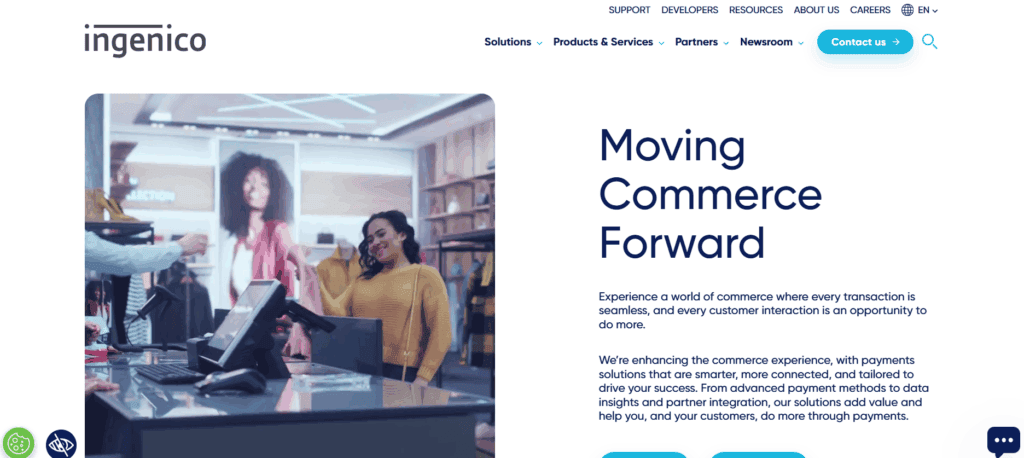
Ingenico has been a key player in the payment technology sector since its founding in France during the 1980s. Initially recognized for its hardware-focused offerings, the company has grown into a significant force in the broader payments ecosystem. With operations spanning more than 170 countries, Ingenico handles millions of transactions daily across industries such as retail, banking, hospitality, and transportation. Lets read more about Ingenico Review.


The brand has long enjoyed the trust of merchants thanks to its extensive use in physical payment systems. Formerly a part of Worldline until 2023, Ingenico is still growing while holding fast to its core competency: dependable card-present solutions. Working as a link between digital systems and physical terminals, Ingenico differs from many contemporary fintech companies that only concentrate on software. This puts the business in a position to serve as a key supplier for companies looking for scalable and safe payment infrastructure.


Though it faces competition from newer digital-first platforms, Ingenico remains a preferred choice for enterprise-scale businesses seeking robust, compliant, and globally accepted payment solutions.

A Broad Product Suite Covering Hardware and Software | Ingenico Review

Ingenico’s product lineup is engineered to meet a variety of merchant needs across different transaction settings. Its hardware range includes terminal families like Lane, Move, Desk, and the Android-based Axium series. These are tailored for everything from stationary retail counters to mobile and unattended environments.


Security and performance are central to Ingenico’s design. Most terminals feature EMV chip compatibility, NFC for contactless payments, and strong encryption. The Axium line, built on Android OS, reflects Ingenico’s shift toward enabling app-based commerce. These terminals support more than just transactions, they offer loyalty integrations, business applications, and analytics features.


Software tools complement the hardware, including estate management systems, configuration platforms, and APIs. These enable merchants to remotely monitor and manage devices at scale, which is particularly valuable for multi-location operations. While this integrated ecosystem provides convenience and consistency, it may limit flexibility for businesses that prefer open systems or more modular approaches. Overall, the product suite is dependable, secure, and well-suited for complex environments.


Ingenico Review

Security and Compliance as a Core Value

Security has been central to Ingenico’s offerings for decades. All devices comply with PCI PTS standards, ensuring they are tamper-resistant and capable of securely processing transactions. This is critical for merchants operating in sectors where compliance and trust are non-negotiable.


Ingenico supports both end-to-end encryption and point-to-point encryption. These technologies ensure that payment data is protected throughout its journey, from the terminal to the payment processor. P2PE, in particular, reduces PCI DSS compliance scope for merchants by encrypting card data immediately upon entry.


Another crucial feature is tokenisation, which substitutes secure tokens for private card information. In omnichannel settings, where a customer’s card may be used on several platforms, this is extremely helpful. Regular security patches and updates are also applied to Android-based devices. Merchants must, however, make sure that their operational procedures uphold these safeguards. Although Ingenico provides a solid technical basis, merchant diligence is also essential to the larger security ecosystem.

Omnichannel Commerce and Digital Enablement

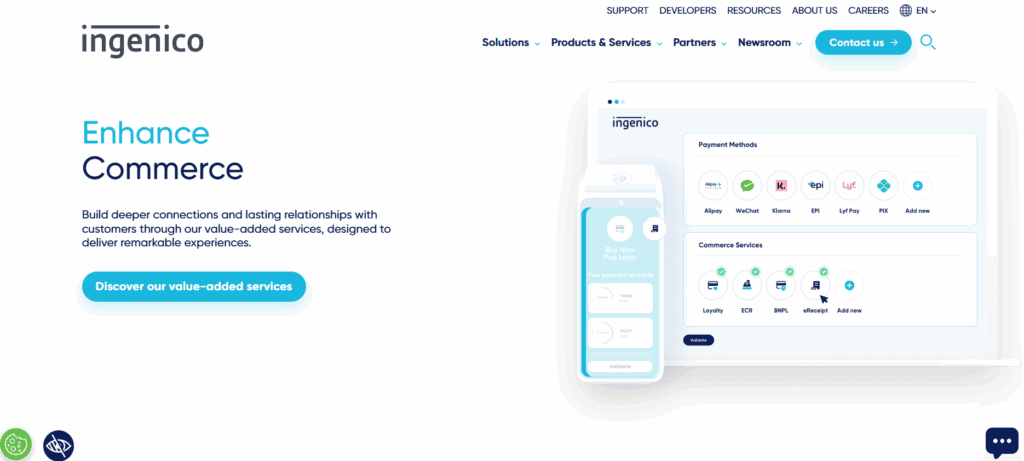
Ingenico has expanded beyond hardware to support unified payment experiences across in-store, mobile, and online channels. Its omnichannel capabilities are built around cloud-based services and APIs that connect various payment touchpoints into a single system. One of the standout tools is Ingenico’s estate management platform, which allows for remote monitoring and updating of terminals. This is especially beneficial for businesses with wide retail footprints, where consistency and uptime are vital.


Ingenico also offers developer kits and APIs that enable integration with loyalty programs, CRMs, and eCommerce platforms. The Axium series furthers this with the ability to run apps directly on the terminal, allowing tasks like inventory lookup or customer engagement alongside payment processing. Although Ingenico’s progress in digital integration is solid, it lags behind some newer platforms in areas like AI and personalization. Still, for businesses seeking operational continuity and unified commerce, Ingenico provides a dependable and structured framework.

Industry-Specific Solutions for High-Volume Use

Ingenico’s value grows significantly when viewed through the lens of industry-specific solutions. Its technology is tailored to meet the needs of different sectors, including retail, hospitality, healthcare, transportation, and financial services. In retail, Ingenico supports high-speed processing and integrates with major POS platforms. For quick-service restaurants or small-format retail, mobile terminals allow for efficient order-taking and payment collection. In the hospitality sector, features like tipping and dynamic currency conversion are integrated for seamless guest transactions.


Rugged devices that are made for high-use or outdoor environments are advantageous for transportation and unattended systems. Secure patient billing and privacy are the main concerns of healthcare deployments. In the financial industry, Ingenico terminals are often found in ATMs, bank branches, and kiosk settings. These customised solutions offer a great deal of functionality, but they also have a platform structure that might not be as flexible for smaller or non-traditional business models. Ingenico is a good fit for the enterprise market, but it might not be as suitable for micro-merchants.

Global Operations and Local Adaptability

Ingenico’s reach is undeniably global. With solutions operating in more than 170 countries, the company is positioned to support multinational corporations and local merchants alike. Its ability to accommodate regional payment methods and certifications gives it an edge in global commerce. Devices support both international card schemes and local payment networks, making them suitable for cross-border commerce and in-country use. Ingenico’s infrastructure is supported by a network of partners including ISVs, banks, and system integrators.


This partner model extends support for installation, maintenance, and compliance. Localized support materials and updates help businesses remain aligned with country-specific regulations. However, the level of service may vary depending on the region and the partner’s capabilities. While the global footprint and adaptability are strong advantages, some inconsistencies in support and deployment can emerge. Businesses operating in regions with limited partner infrastructure may face slower service or integration timelines.


Ingenico Review

A Measured but Consistent Approach to Innovation

While many newer payment providers focus on rapid feature rollouts, Ingenico adopts a more measured approach to innovation. The company focuses on long-term reliability, compliance, and interoperability rather than frequent experimental updates.


The adoption of Android OS in the Axium product line is a noteworthy evolution. These terminals support business apps and smart features, enabling retailers to do more with their POS systems. App-based features like surveys, inventory management, and CRM integration are now possible directly from the payment device.


In keeping with the trend towards software-defined experiences, Ingenico is also making investments in cloud services and terminal-as-a-service models. However, Ingenico’s innovations put stability ahead of trend adoption, in contrast to agile fintech startups. Because of this, large businesses would benefit more from it than startups seeking rapid iteration.

Usability and Merchant Experience

From a usability perspective, Ingenico has consistently delivered devices that balance function and form. Terminals are ergonomically designed, with clear interfaces and responsive keypads or touchscreens. This improves transaction speed and reduces friction at checkout. The Axium series introduces enhanced displays and app compatibility, offering a more dynamic interaction point for merchants and customers. Pre-loaded configurations simplify setup, and remote management tools ease the process of updates and maintenance.


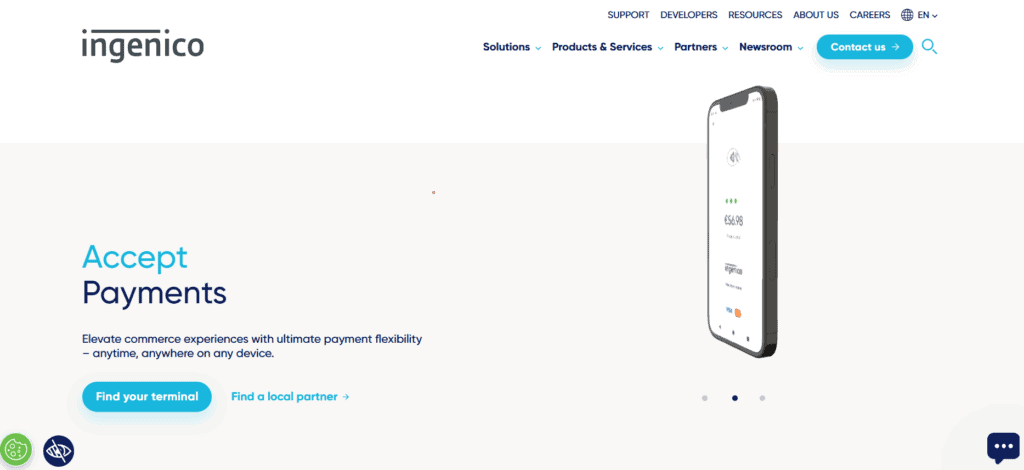
From the customer’s point of view, Ingenico devices support fast tap-and-go experiences, mobile wallet compatibility, and multilingual interfaces. However, older models still in circulation may not deliver the same responsive feel as newer devices. While usability is generally high, some merchants may encounter limitations in customizing workflows or branding due to proprietary software layers. Overall, it strikes a solid balance between ease of use and durability.

Pricing Structures and Integration Models

Ingenico ReviewIngenico’s pricing is largely determined through its network of partners and resellers. There is no universal price listing, and costs can vary based on device type, service level, region, and included software. This can make it challenging for businesses to estimate expenses without going through a partner.


The business offers leasing as well as outright purchases. Enterprise clients looking for predictability favour its terminal-as-a-service model, which bundles hardware, updates, and support into one package. Generally, SDKs and APIs are used to integrate with POS systems and other platforms. Despite their strength, these integrations are usually partner-dependent, and smaller merchants may find onboarding more difficult. Partnerships play a major role in Ingenico’s market approach. This enables scale but also adds a layer between the end user and the technology provider, which can complicate support and customization.

Market Relevance and Competitive Outlook

Ingenico continues to hold a strong position in the global payments market. It is trusted by enterprises and financial institutions that prioritize scale, security, and long-term dependability. Its diverse terminal portfolio, global compatibility, and compliance leadership ensure it remains a serious contender in the space.


However, its limited agility, opaque pricing, and conservative innovation approach may not appeal to newer businesses or those seeking rapid customisation. Fintech disruptors with open platforms and flexible APIs might appeal more to this market. However, this has no impact on Ingenico’s reputation as a dependable, enterprise-level solution. It is particularly well-suited for high-volume merchants, regulated industries, and multinational corporations that need a dependable, secure platform.


FAQs


Is Ingenico compatible with third-party payment gateways?


Yes. Ingenico terminals can be integrated with third-party platforms through SDKs and APIs. However, compatibility depends on the specific terminal and integration provider.


Does Ingenico support mobile wallet and contactless payments?


Yes. Most Ingenico terminals include NFC capabilities for accepting Apple Pay, Google Pay, Samsung Pay, and contactless cards.


Can Ingenico terminals be used for self-service or unattended environments?


Yes. Ingenico offers ruggedized terminals designed for kiosks, parking systems, and vending machines, with features suitable for 24/7 operation.