
Tag Archives: payment solutions

WePay Review

WePay Review

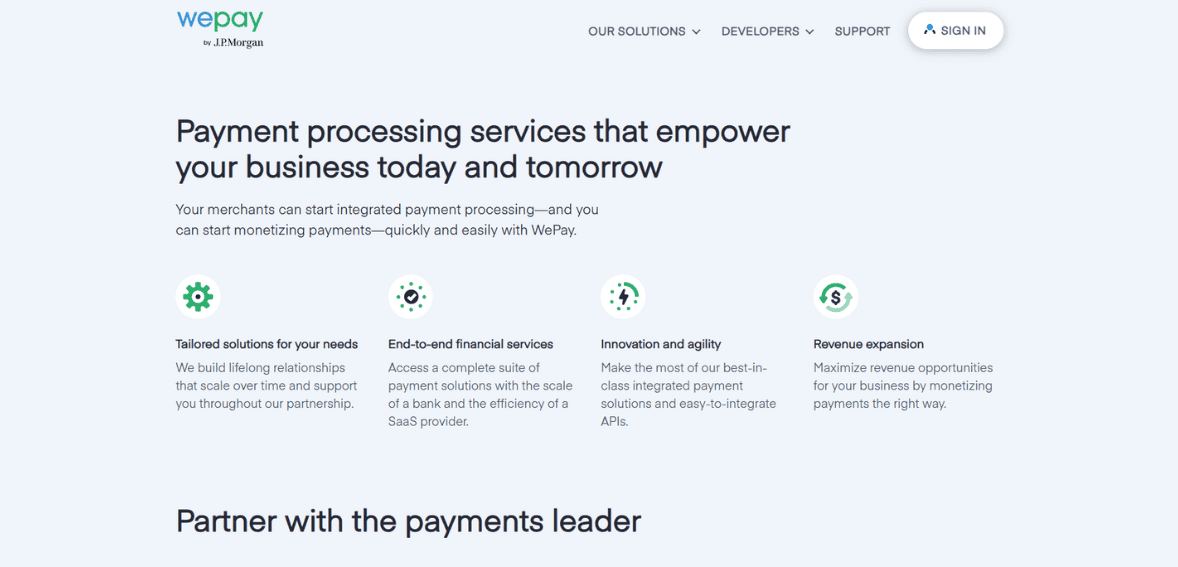
WePay, founded in 2008 by Rich Aberman and Bill Clerico, is a US based payment service provider that offers integrated and customizable payment solutions. Built around its API driven approach WePay primarily serves platform businesses, marketplaces, crowdfunding sites and small business software providers. In 2017 the company was acquired by JPMorgan Chase expanding its reach and solidifying its position in the financial services space. Lets read more about WePay Review.


In today’s digital economy processors like WePay are essential in supporting smooth electronic transactions between businesses and their customers. They handle all types of payments; credit cards, debit cards and digital wallets; ensuring secure and efficient fund transfers. Beyond payments they also play a critical role in customer trust by providing reliable authorization, authentication and settlement processes.


Processors also offer strong security measures like encryption and fraud detection to protect sensitive financial data and help businesses comply with industry standards. They support multiple currencies and payment methods so businesses can go global and serve diverse customer bases.

Company Background: WePay History and Growth

The idea for WePay came from a personal challenge. When Aberman couldn’t collect money from friends for his brother’s bachelor party he realized there needed to be a better way to collect money from multiple people. Partnering with Clerico the two created WePay to make collecting money from multiple people easier.


In its early days WePay focused on group payments and event ticketing. Over time the company shifted to serving platform based businesses with integrated payment solutions. This allowed WePay to work with marketplaces, crowdfunding platforms and SaaS providers and offer tailored services through its APIs.


JPMorgan Chase acquired WePay in October 2017 for over $220 million. The acquisition aimed to give small businesses access to Chase’s resources through software partners while preserving WePay’s innovative Silicon Valley culture. As part of JPMorgan Chase WePay is a payments innovation hub giving partners and merchants access to Chase’s large small business client base.


Today it continues to serve platforms with customizable API based payment solutions. Clients like GoFundMe, Meetup and FreshBooks rely on WePay’s ability to provide seamless branded payment experiences that match their operational needs.

Key Features: Enhancing Payment Solutions with WePay | WePay Review

WePay is designed with platform-based businesses in mind, offering features that streamline transactions while prioritizing security and flexibility.


Integrated Payment Processing: Payments can be embedded directly within a platform’s service, avoiding external redirects and simplifying user experience.


Customizable User Experience: Through APIs, businesses can design branded checkout pages, emails, and communications, ensuring consistency across all interactions.


Fraud Detection and Risk Management: With machine learning and data analysis, it actively monitors for suspicious activity, providing merchants with a secure environment.


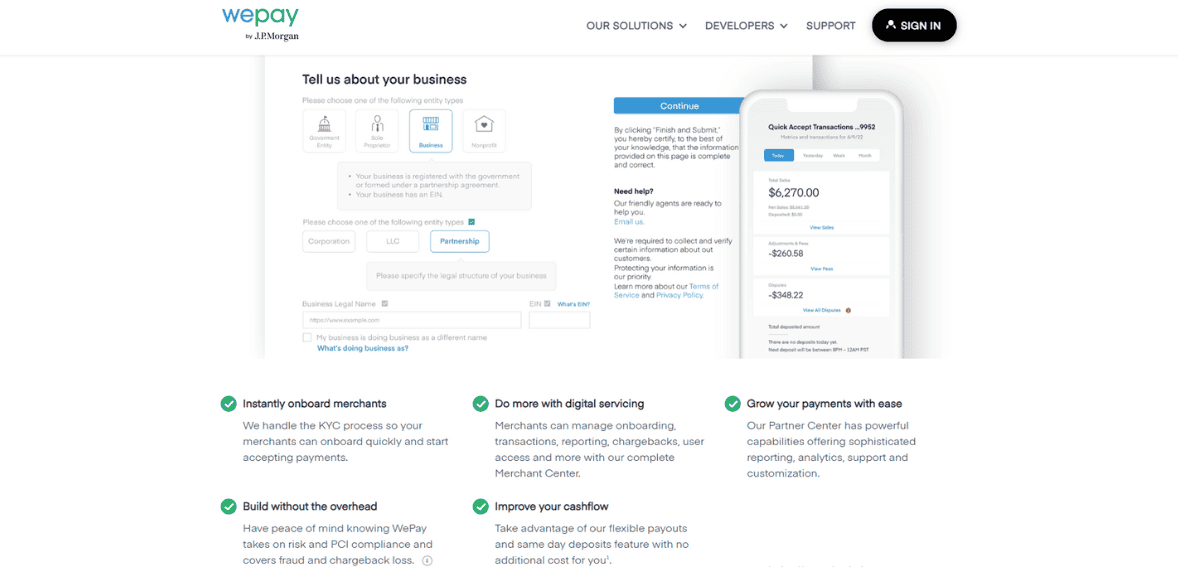
Instant Merchant Onboarding: Automated verifications and compliance checks help businesses begin processing payments quickly.


Flexible Payout Options: Same-day deposits and adaptable schedules support healthy cash flow management.


Mobile and Wallet Support: Compatibility with Apple Pay, Google Pay, and mobile transactions meets the growing demand for digital-first payments.


These tools allow WePay to deliver flexible and secure solutions that meet the diverse needs of modern, platform-driven businesses.
WePay Review

Pricing Structure: Understanding WePay’s Cost Framework

WePay structures its offerings under three tiers; Link, Clear, and Core; each catering to different business requirements.


WePay Link: An entry-level option, Link allows merchants to accept payments through Chase Integrated Payments. It carries standard fees of 2.9% plus $0.25 per transaction and requires minimal integration work.


WePay Clear: A step up from Link, Clear allows for deeper integration into platforms, offering customization and risk management features. Pricing is set on a case-by-case basis.


WePay Core: Targeted at larger facilitators, Core delivers full control over user experience and lifecycle management, with fees negotiated individually.


Platforms also have the option to set their own merchant pricing by applying markups to WePay’s rates, creating an additional revenue stream. However, Clear and Core lack publicly available pricing details, which has led to concerns about transparency.

Integration and Compatibility: Seamless Payment Solutions

It emphasizes easy integration and wide compatibility, making it attractive to developers and platforms alike.

Its developer-focused APIs, with documentation in multiple programming languages, allow customization for different applications. This flexibility ensures smooth payment experiences across mobile and desktop platforms. Additionally, it supports mPOS systems for in-person transactions, broadening its usability.


Digital wallet compatibility with Apple Pay and Google Pay further enhances convenience, aligning with customer expectations for modern payment methods. This adaptability makes it suitable for platforms spanning marketplaces, crowdfunding, and SaaS.
WePay Review

Security and Compliance: Safeguarding Transactions

Security is at the core of WePay’s operations.


Fraud Prevention: The platform uses machine learning to detect irregular patterns, blocking unauthorized activity.


PCI DSS Compliance: As a Level 1 PCI DSS-certified provider, it undergoes regular independent audits to maintain strict security standards.


Encryption: Data in transit is secured with RSA 2048-bit keys and SHA-256 certificates, while stored data uses AES 256-bit encryption with unique keys.


By combining regulatory compliance with advanced fraud detection, It provides a secure and reliable environment for both merchants and customers.

Customer Support and User Experience

It offers support primarily through email and its online Help Center, which provides articles and guides on key topics. The “Customer Delight” team operates Monday through Friday, from 6 am to 6 pm PST. Feedback on support is mixed. Some users appreciate the available documentation, while others find the reliance on email; without phone support; slows down response times. Concerns about resolution speed and communication options are recurring themes.


From an experience standpoint, It is designed for simplicity. Merchants benefit from a smooth onboarding process, while end-users enjoy straightforward checkouts without redirection to external sites. This ease of use supports both customer satisfaction and business efficiency.

Pros and Cons

Pros


Developer-friendly APIs for seamless integration.

Customizable, branded payment experiences.

No setup or monthly fees.


Cons


Limited direct access for small businesses (only available through partner platforms).

Lack of transparent pricing for advanced tiers.

Limited support channels, with reliance on email.

Alternatives to WePay


Businesses comparing WePay should also consider Stripe, PayPal Payments Pro, and Braintree:


Stripe: Known for its robust APIs and wide range of supported payment methods, Stripe offers transparent pricing (2.9% + $0.30 per transaction) with no monthly fees. Its global reach and subscription billing features make it ideal for tech-savvy businesses.


PayPal Payments Pro: Offers customizable checkout options and broad brand recognition, but requires a $30 monthly fee plus transaction fees. Its global presence makes it appealing to businesses targeting international customers.


Braintree: A PayPal-owned service supporting multiple payment methods, including Venmo and Bitcoin, Braintree charges 2.9% + $0.30 per transaction with no monthly fees. Its flexibility makes it attractive to businesses seeking a wide range of payment options.


Compared with these competitors, It  stands out for its tight integration with JPMorgan Chase and platform-first strategy, though its limited transparency and support may deter some users.

Conclusion

It is best suited for platform-based businesses seeking integrated, customizable, and secure payment solutions. Its API-driven approach and Chase affiliation give it strong credibility, while its features support smooth transactions and fraud prevention. However, potential clients should weigh concerns about pricing transparency and customer support against its strengths. For marketplaces, crowdfunding platforms, and SaaS providers, it remains a compelling option in the competitive payment processing landscape.

FAQs

Can individual small businesses use WePay directly?

No. Small businesses typically access WePay through partner platforms or ISVs rather than engaging with WePay directly.

What types of platforms work best with WePay?

It integrates most effectively with crowdfunding platforms, marketplaces, and SaaS providers, where embedded payment functionality is crucial.

Does WePay support international payments?

It’s international support is limited to merchants in the U.S. and Canada. While it accepts payments from most global cards, availability depends on the platform partner.

Sage Payment Solutions (Paya) Review

Sage Payment Solutions (Paya) Review

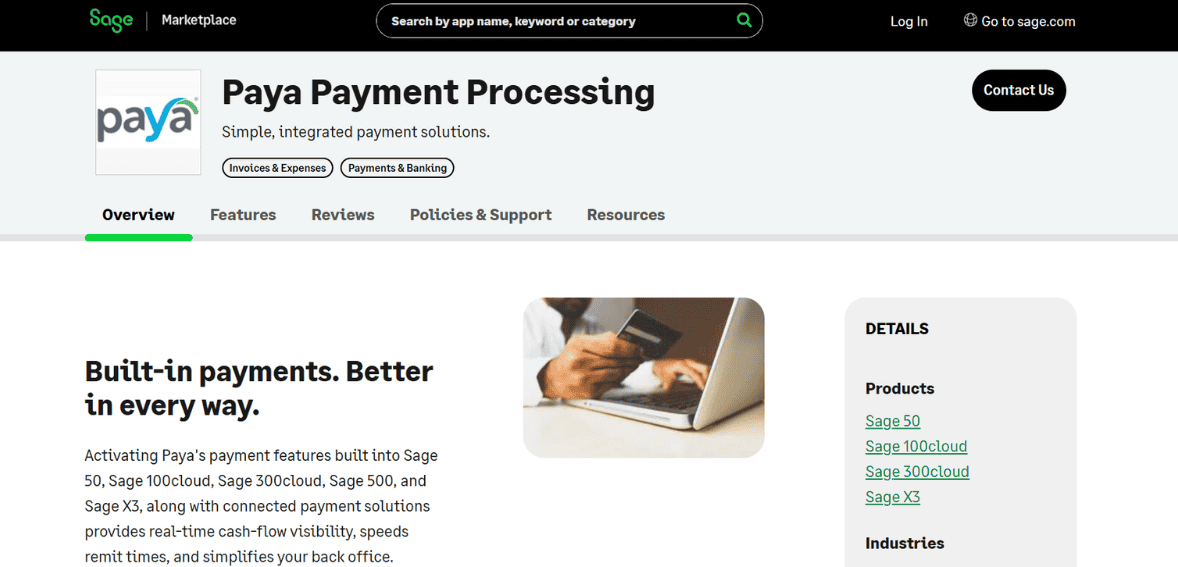
Sage Payment Solutions began as part of The Sage Group, a global business software provider with a strong foothold in accounting and enterprise solutions. Initially tailored to serve the North American market, Sage Payment Solutions offered integrated payment processing tools to small and midsize businesses, particularly those already using Sage accounting software. The service aimed to streamline how businesses accepted and managed payments across various channels. Lets read more about Sage Payment Solutions (Paya) Review.


In 2017, a significant shift occurred when private equity firm GTCR acquired Sage Payment Solutions for $260 million. This move marked the beginning of the platform’s transformation, culminating in a complete rebrand to “Paya” in early 2018. The rebranding wasn’t just cosmetic. It aligned with a broader goal of positioning the company as a standalone payment technology provider with a sharper focus on innovation and flexibility.


Under the Paya brand, the company expanded its product lineup and emphasized modern cloud-based tools. It started targeting a broader range of industries, including education, healthcare, nonprofits, and field services. This strategic repositioning helped Paya stand apart from legacy payment processors by offering more vertical-specific solutions.


In 2023, Paya was acquired by Nuvei, a global payments technology company, further strengthening its infrastructure and product capabilities. While Paya retains operational autonomy, the acquisition is expected to open new international opportunities. Overall, the company’s journey from a software-dependent processor to a standalone, API-driven platform shows a clear evolution driven by changing market needs.

Core Services and Product Offerings | Sage Payment Solutions (Paya) Review

Paya offers payment processing for online and offline businesses. This includes credit and debit card processing, ACH transfers, eChecks and mobile payments. Businesses can process payments through countertop terminals, mobile devices, virtual terminals and integrated systems.


One of Paya’s main features is its proprietary payment gateway, Paya Connect which powers most of its payment processing. It allows merchants to process payments securely and access additional tools such as tokenization, reporting dashboards and customer data management. Paya also offers recurring billing making it a great solution for subscription based businesses and service providers. Merchants can create custom billing cycles, manage automatic payments and send digital invoices to customers.


The virtual terminal is another key feature which allows merchants to process payments through any internet connected device without needing physical hardware. This is great for service based businesses or remote billing situations. Paya’s solutions are designed to be flexible and industry-agnostic, but the company has clearly made a push to cater to niche industries. Healthcare, education, government, and nonprofit sectors benefit from specialized workflows and features that align with their regulatory and reporting needs.


Overall, Paya’s service range aims to balance simplicity for small businesses with customization for more complex organizations. It’s not the most feature-heavy platform in the market, but it offers enough tools to support a diverse range of payment needs without overwhelming the user.

Payment Gateway: Paya Connect

Paya Connect is the backbone of Paya’s payment processing technology. As a cloud-based platform, it acts as both a payment gateway and a merchant control center, giving users the ability to handle transactions, set up integrations, and manage billing within a single interface.


One of the platform’s strengths is its open API framework, which allows developers to build custom payment experiences or embed payment functionality directly into existing applications. This flexibility is particularly useful for software vendors or businesses with in-house IT teams looking to streamline payment workflows.


Security is central to Paya Connect’s design. It uses tokenization and encryption to safeguard sensitive payment information, along with built-in tools to manage fraud and maintain PCI compliance. Role-based access controls can also be configured to limit who sees what within the system, which helps businesses manage internal data access responsibly.


Paya Connect also supports advanced features such as real-time transaction monitoring, custom reporting, and customer data storage. These tools allow merchants to track trends, identify failed transactions, and manage customer profiles, all from a central dashboard. The platform is built to support both one-time and recurring payments, making it ideal for businesses that bill on different cycles. Despite its technical capabilities, Paya Connect is generally well-reviewed for its ease of use, offering a clean interface and intuitive navigation.


While it may not offer every feature found in enterprise-level platforms, Paya Connect provides a solid foundation for businesses that value both control and simplicity in their payment processing infrastructure.

eCommerce and POS Integrations

Paya supports many integrations across online and in-store. For eCommerce merchants we connect to Shopify, Magento, BigCommerce and WooCommerce. These integrations give you seamless checkout, real-time payment confirmation and automatic syncing of customer and order data.


For physical POS systems Paya supports many terminal types and POS software suites. Merchants can choose from countertop models, mobile card readers and full-featured POS systems depending on their business needs. This flexibility lets retailers and service providers design payment workflows that fit their environment.


Paya’s payment gateway is designed for omnichannel commerce so businesses can unify their payment systems across online and offline channels. This can simplify reporting, inventory management and customer tracking. For developers and software providers Paya Connect’s API allows custom integration into 3rd party applications. This is especially helpful for businesses that use industry specific platforms like practice management software in healthcare or donor platforms in non profit sectors.


Although the platform handles most standard eCommerce and POS use cases, it lacks some of the plug-and-play integration depth found in competitors like Stripe or Square. Businesses with advanced or unique integration needs may require development resources to fully utilize Paya’s capabilities. In summary, Paya provides solid integration options for standard retail and service environments, but businesses should assess their customization needs before committing.

Sage Payment Solutions (Paya) Review

Recurring Billing and Invoicing Features

Paya offers practical recurring billing and invoicing tools that are especially useful for businesses with subscription models or long-term service contracts. Through the Paya Connect platform, merchants can schedule automatic payments on daily, weekly, monthly, or custom cycles. This automation reduces administrative burden and minimizes missed payments.


Invoices can be generated directly within the platform and sent via email, often with embedded payment links for ease of collection. These invoices are customizable, allowing businesses to include branding, detailed service descriptions, and payment terms. The system also supports partial payments and tax configurations, which is a plus for businesses managing complex billing structures.


Merchants can monitor invoice status in real time, viewing which payments are pending, completed, or overdue. Automated reminders can be sent to customers before or after due dates, which helps improve collection rates without the need for manual follow-ups.


The recurring billing system supports both card-based and ACH payments, giving customers flexibility in how they pay. For businesses operating in regulated industries, this tool also maintains compliance by storing payment authorization securely and logging audit trails.


While Paya’s invoicing tools are functional and reliable, they are more utility-driven than design-focused. Businesses looking for sleek, customer-facing invoicing experiences may find Paya’s interface a bit plain compared to competitors that prioritize user experience. Still, for functionality and consistency, the recurring billing and invoicing features are a core strength of the platform, especially for service-based businesses.

Security, Compliance, and Risk Management

Security and compliance is non-negotiable when it comes to payment processing and Paya takes it seriously. The platform is PCI-DSS compliant and has a range of built in features to reduce fraud and protect customer data.

One of the biggest protections Paya offers is tokenization, which replaces sensitive card details with encrypted placeholders. This reduces the risk of data breaches and means merchants never have to handle raw card data. Coupled with P2PE Paya provides a secure transaction environment for online and in-person payments.


Paya Connect also has real time transaction monitoring and fraud prevention tools. These tools detect suspicious activity, flag potential chargebacks and apply transaction limits or filters. Merchants can configure risk rules by industry, region or payment type. For merchants in regulated industries like healthcare or nonprofit, Paya has audit logs and role based access controls, so administrators can assign permissions based on job responsibilities. This is especially useful for larger businesses where payment data is accessed by multiple departments.


In terms of compliance documentation, Paya provides tools to help businesses generate reports for tax, audit, or regulatory needs. These tools are especially helpful during financial reviews or external audits. Overall, Paya’s security and compliance infrastructure is robust and aligns well with industry standards. It doesn’t introduce groundbreaking security innovation, but it covers all critical bases effectively.

Usability and Merchant Experience

The user experience within Paya Connect is designed to be practical and straightforward. The dashboard offers a clean layout with clear navigation, allowing users to access key functions like transaction history, invoicing, and customer profiles without needing a steep learning curve.


Setting up a new account is generally simple. The onboarding process includes step-by-step guidance, and the initial configuration of payment methods, invoicing settings, and user roles can be completed quickly. Businesses without IT teams often find this accessibility helpful, especially if they’re transitioning from manual or legacy systems.


Once operational, merchants can track real-time payments, view transaction summaries, and pull reports directly from the dashboard. The ability to search by customer, invoice, or payment method makes day-to-day management convenient. The system also supports mobile-friendly access, although it lacks a dedicated merchant mobile app. This may be a drawback for merchants who require mobile-first interfaces or need to accept payments in the field regularly.


User reviews commonly highlight the platform’s consistency and reliability, though some note that the interface could benefit from design updates or more personalization options. Compared to some modern fintech tools, Paya Connect may feel utilitarian, but it avoids clutter and prioritizes function over flash. For businesses that prefer minimal learning curves and functional stability, Paya delivers a solid user experience without overwhelming features.

Customer Support and Service Options

Customer service plays a critical role in the payment industry, especially when dealing with issues like chargebacks, integration hiccups, or payment delays. Paya offers support through multiple channels, including phone, email, and an online ticketing system. Business hours are standard, with phone support available Monday through Friday. Emergency technical issues may receive attention faster, but merchants with after-hours needs may find the support window somewhat limiting.


Paya also provides a knowledge base with articles, how-to guides, and troubleshooting steps. While these resources are helpful, they are more functional than in-depth. Users looking for detailed API documentation or advanced configuration tips may find the support library somewhat thin. Onboarding assistance is available, and many merchants receive personalized help during setup. For businesses that require more involved integration or data migration, Paya does offer consultation and support packages.


User feedback on support is mixed. Some merchants report quick response times and helpful agents, while others have cited delays or inconsistent communication. Like many mid-size payment platforms, the support experience can vary depending on the complexity of the issue and the size of the merchant account. Overall, Paya’s customer service is reliable for day-to-day needs but could benefit from stronger documentation and broader hours of support.

Pricing Structure and Contract Terms

Pricing transparency can be a challenge in the payment processing world and Paya is no exception. They offer customized pricing based on a merchant’s volume, industry and risk profile. So upfront pricing is not always available without talking to a sales rep. Typical cost components are per transaction fee, monthly account fee, gateway fees and possibly fees for add on features like recurring billing or PCI compliance support. The structure is industry standard but it can be hard for new businesses to estimate their total monthly cost upfront.


Contracts vary, some merchants are offered month to month plans while others are tied to annual agreements. Early termination fees may apply depending on the plan chosen so be sure to read the fine print. Paya doesn’t position themselves as a low cost provider and businesses shouldn’t expect rock bottom rates. They offer value through flexibility and industry specific features. But prospective users should negotiate fees and ask about all potential charges before signing up.


In conclusion, Paya’s pricing model is serviceable but not fully transparent. Businesses that prioritize cost predictability may find better clarity with flat-rate processors, while those needing more customization might find Paya’s flexible approach worth the trade-off.


Sage Payment Solutions (Paya) Review

Ideal Use Cases and Limitations

Paya is best suited for small to midsize businesses that need flexible payment tools without requiring enterprise-level complexity. Industries like healthcare, field services, nonprofits, and education benefit from its features like recurring billing, ACH support, and invoicing.


Its strength lies in customizable workflows, integration capabilities, and security features that align well with regulated or service-based sectors. Businesses that already have accounting software or client management tools and need to integrate payment processing into those systems will appreciate the developer-friendly API environment.


However, there are some limitations. Businesses with high transaction volume or those looking for real-time analytics, mobile-first capabilities, or global payment expansion might find the platform’s depth limited. Additionally, the lack of upfront pricing and potential long-term contracts may be a drawback for startups or budget-conscious businesses.


Another consideration is user interface. While reliable, Paya Connect may feel outdated compared to competitors that offer more modern UI/UX or mobile-native tools. In summary, Paya is a solid choice for businesses seeking functional, secure, and moderately customizable payment solutions. It is not the most innovative platform in the market, but it balances reliability and adaptability well for organizations with niche needs.

Frequently Asked Questions

1. Is Paya (formerly Sage Payment Solutions) suitable for small businesses?

Yes, Paya is suitable for small to midsize businesses, particularly those that need recurring billing, invoicing, and ACH payments. However, pricing should be reviewed carefully.

2. What types of payment methods does Paya support?

Paya supports credit cards, debit cards, ACH transfers, eChecks, and mobile payments. It also works with online platforms and POS systems.

3. Does Paya offer strong security features?

Yes, Paya includes tokenization, encryption, PCI compliance tools, and fraud prevention features. It meets standard industry security requirements.

Pineapple Payments Review

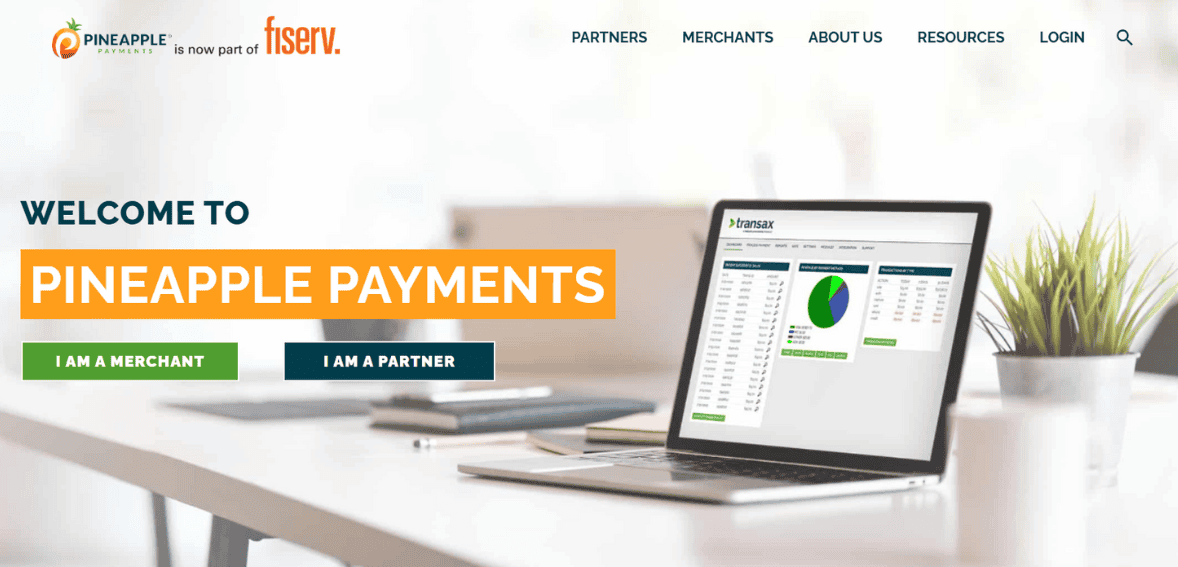
Pineapple Payments is a Pittsburgh based payment processor that started in 2016 with a mission to provide flexible and modern payment solutions for businesses of all sizes. Built to bridge traditional processing infrastructure with new technology the company gained early traction through partnerships with TSYS and First Data. This gave them credibility and a reliable processing backbone. Lets read more about Pineapple Payments Review.


They serve a wide range of industries including retail, healthcare, non-profits and professional services. They support in-person, online and mobile payment methods so merchants can centralize their payment workflows without switching between multiple providers. Their tools are great for businesses looking for a seamless omnichannel experience.


In 2021 Pineapple Payments was acquired by Fiserv, a financial services giant. This move positioned the company for further growth by aligning them with a global payment processing leader. The acquisition also expanded Pineapple’s reach and product offerings so they could have more robust integrations and long term platform stability.


Overall, Pineapple Payments presents itself as a tech-forward option for merchants looking to simplify payments without sacrificing reliability. It may not have the household name recognition of Square or Stripe, but its focus on custom solutions and strong infrastructure makes it a legitimate contender for businesses that need both flexibility and dedicated support. For merchants who prioritize service and scalability, Pineapple Payments offers a balance of innovation and dependability.

Key Features and Capabilities | Pineapple Payments Review

Pineapple Payments provides a broad suite of payment tools tailored to meet the diverse needs of modern businesses. Its services extend beyond basic credit card processing to include features that enhance operational efficiency and customer experience. Whether you’re accepting payments online, in-store, or on-the-go, the platform offers solutions that are designed to work in tandem.


One of its standout capabilities is its omnichannel integration. Businesses can process payments through a point-of-sale terminal, a virtual gateway, or a mobile device, all while managing their transactions from a unified dashboard. This centralized approach benefits businesses that operate across multiple touchpoints, like those with both retail and eCommerce operations.


The platform also supports recurring billing, secure invoicing, ACH transfers, and tokenization. These tools are particularly helpful for service-based industries, subscription businesses, and healthcare providers that depend on reliable and secure payment flows. Another highlight is its flexibility with integrations. Pineapple Payments can plug into third-party platforms like Salesforce, Magento, and WooCommerce, allowing businesses to maintain their existing systems without a complete overhaul. It also offers API access for businesses with more customized requirements.


While Pineapple Payments is feature-rich, it stops short of offering deep vertical-specific tools, such as restaurant management software or salon scheduling systems. It is best positioned as a generalist payment provider with a strong focus on transaction management and system compatibility. For businesses seeking core payment functionality with the ability to expand and customize, Pineapple Payments offers a compelling mix of tools and technology.

Payment Processing Technology

Pineapple Payments combines its own software with back-end integrations from big processors to give you a solid and scalable tech stack. By partnering with TSYS and First Data, we give you access to secure and proven infrastructure and modern interfaces and developer-friendly options. We support multiple payment environments: in-store, online, mobile and virtual. This is key for businesses that are hybrid or omnichannel. For example, a retailer with a physical POS can also sync their data with an online store and see real-time analytics across both.


API access is another big part of our tech offering. We give you APIs for businesses that want to build custom payment workflows or integrate payment processing into their existing platforms. This is especially useful for SaaS providers or businesses with complex backend systems. Additionally, Pineapple Payments uses tokenization and encryption to ensure PCI compliance and data protection. These security measures help reduce the scope of compliance responsibilities for merchants while keeping transaction data safe from breaches or misuse.


However, the platform’s reliance on third-party processors means that some technical limitations may stem from its partners rather than Pineapple’s own systems. This may affect feature availability or support response times in certain scenarios. In essence, Pineapple Payments delivers a modern payment infrastructure built on dependable foundations. While it doesn’t build every piece of the puzzle itself, it assembles the components into a tech stack that works effectively for most business environments.

Point-of-Sale and Hardware Options

Pineapple Payments offers a range of point-of-sale hardware and terminal solutions to meet different business needs. Whether you’re operating a storefront, a mobile business, or a service-based company, the hardware options are designed to enable quick and secure transactions across environments.


The company supports well-known terminals such as Clover, Dejavoo, and PAX, providing merchants with flexibility in choosing devices that fit their operational model. Businesses can opt for countertop terminals, mobile card readers, or integrated POS systems based on their sales volume and physical setup. All hardware supports EMV chip cards, magstripe, and NFC payments like Apple Pay and Google Pay.


One of the platform’s strengths lies in its support for omnichannel operations. For example, a business can use a mobile reader in the field and sync those transactions with their in-store records. This cohesion is critical for accurate reporting and inventory tracking. Installation and setup are generally straightforward, with most terminals pre-configured for plug-and-play use. Pineapple also provides support for hardware troubleshooting and replacement, which adds to its appeal for businesses without in-house IT teams.


However, the hardware offerings are primarily focused on general retail and service industries. Businesses in highly specialized niches may require additional third-party software to complete their POS needs, particularly in areas like hospitality or event management. Overall, Pineapple Payments delivers dependable, secure, and flexible POS options that support a variety of business models while ensuring ease of use and compatibility.

Pineapple Payments Review

eCommerce and Gateway Solutions

Pineapple Payments has eCommerce tools for businesses that sell online. Our payment gateway is easy to integrate with most shopping cart systems so customers have a seamless checkout experience. Whether your site is on Shopify, WooCommerce, Magento or a custom CMS, we have flexibility and compatibility.


Key features include hosted payment pages, recurring billing and customer tokenization for faster repeat transactions. These are great for subscription based businesses, nonprofits accepting donations or any business model that relies on customer retention and ease of repeat payments.


As for security the platform meets PCI DSS standards and has fraud protection tools like CVV validation, AVS checks and address verification. These help reduce chargebacks and build customer trust during online transactions. The virtual terminal allows businesses to take payments over the phone or via email without a physical POS. This is great for B2B services, healthcare providers or businesses with manual invoicing workflows.


API documentation is available for developers who want to customize the checkout experience or integrate the gateway into their existing apps. While not as advanced as Stripe in developer tools, Pineapple’s APIs are functional and provide enough flexibility for most use cases. Overall, Pineapple Payments delivers a well-rounded suite of online tools that make it easier for businesses to accept and manage payments across web and mobile platforms.

Partner Programs and White Labeling

One of the lesser-known but strategically significant areas of Pineapple Payments is its focus on partnerships. The company offers a range of programs tailored to Independent Software Vendors, Value-Added Resellers, and Independent Sales Organizations looking to offer branded payment solutions to their clients.


Through its white-labeling capabilities, partners can integrate Pineapple’s payment infrastructure under their own brand, creating a seamless experience for end-users while managing their own client relationships. This is particularly useful for software providers that want to embed payment functionality without building it from scratch.


Revenue-sharing agreements and flexible onboarding processes are other strong points of the partnership model. Pineapple provides sales support, residual reporting, and co-branded marketing assets to help partners grow their portfolios. The company also offers dedicated account management for partner channels, which adds to the appeal for businesses that value high-touch support.


Integration tools and APIs are made available to help partners develop and customize the payment experience for their customer base. Whether it’s embedding a checkout form or syncing transaction data with a CRM, Pineapple aims to be a collaborative partner rather than just a vendor.


While this program may not be relevant for every business, it’s an important advantage for companies in the payments or software ecosystem. Pineapple’s ability to scale its solutions through partnerships strengthens its position as a flexible and forward-looking provider.

Customer Support and Service Experience

Customer support is a significant consideration when evaluating any payment processor, and Pineapple Payments tends to score well in this area. The company offers multiple support channels, including phone, email, and live chat, and is known for providing dedicated account managers to many of its clients.


Unlike some processors that push users toward self-service portals or outsourced help desks, Pineapple aims to offer more personalized service. Small and mid-sized businesses often appreciate this hands-on approach, especially during setup or when troubleshooting hardware or integration issues. User feedback indicates that the support team is generally responsive and knowledgeable, particularly in helping merchants navigate technical concerns or compliance questions. Pineapple’s customer-first reputation is one of its stronger differentiators compared to larger, more impersonal processors.


That said, some aspects of customer support, especially issues that relate to backend partners like First Data, can be subject to delays or process constraints. Because Pineapple sometimes acts as a middleware layer rather than the direct processor, resolution timelines may vary depending on the complexity of the problem.


Still, for most day-to-day concerns, the platform offers fast and competent assistance. The availability of dedicated onboarding support is also a plus for new users who may be unfamiliar with merchant accounts or payment integrations. For businesses that value human support and want a provider that doesn’t rely entirely on automated systems, Pineapple Payments offers a dependable service experience.

Pineapple Payments Review

Pricing Structure and Transparency

Pineapple Payments doesn’t list flat rate pricing on their website as they offer custom quotes based on business size, volume and risk profile. So pricing transparency can vary depending on the sales process and the plan negotiated. They typically operate on an interchange plus pricing model which is more cost effective for businesses that process higher volumes. This model separates the card network fees from the processor’s markup so you can see where the costs are.


Other fees may include monthly service fees, PCI compliance fees and early termination penalties depending on the merchant agreement. While many businesses say Pineapple is fair in their pricing, not having a standard rate sheet can make it harder to compare to other providers at the beginning. Onboarding and consultation is free and in some cases hardware may be included at a discount or no upfront cost depending on the contract. Customization and flexibility in pricing is a strong point especially for businesses with specific requirements or those that process high volumes.


In summary, while the pricing model is competitive and negotiable, prospective users should carefully review the merchant agreement. Asking for a detailed breakdown and clarification of all potential charges during the onboarding phase is essential for avoiding surprises later.

Pros and Cons of Using Pineapple Payments

Pineapple Payments has several notable strengths that make it a strong contender for many businesses. One of its most appreciated qualities is its omnichannel capability. Whether you’re operating online, offline, or across both, Pineapple provides tools that help unify your payment operations. Another key advantage is its partnership model, offering APIs and white-labeling options for software providers. This level of customization is not as common in mid-tier processors, giving Pineapple an edge for businesses with technical resources.


Customer support is another plus. The company provides responsive service, onboarding assistance, and dedicated account managers for many merchants. This is especially valuable for businesses without in-house payment expertise. However, Pineapple Payments is not without its limitations. Its pricing is not entirely transparent, and potential users need to go through a consultation process to receive a custom quote. This can make initial comparisons more complex for businesses shopping around.


Additionally, since it relies on backend partners like TSYS or First Data, some features and service timelines may be influenced by those networks. This could be a limitation for businesses wanting a single-source provider.

Finally, while the platform works well for most industries, it may not have deep vertical integrations for specialized use cases like restaurants, salons, or appointment-based businesses. Overall, Pineapple Payments is best suited for businesses seeking flexibility, reliable technology, and personalized service, especially those operating across multiple channels.

Ideal Business Types for Pineapple Payments

Pineapple Payments is designed for many types of businesses but is best suited for those who need a flexible omnichannel solution and service driven support. This includes small to mid-sized businesses that want to consolidate online and in-person payments under one roof.


Retailers with both brick-and-mortar and eCommerce channels will love the centralized transaction dashboard and integrated reporting. Service providers such as healthcare professionals, law firms and B2B vendors will find value in the invoicing, recurring billing and virtual terminal.


Nonprofits and educational institutions will find the platform useful for secure online donation or tuition portals. The tokenization and recurring billing tools make it easy to process repeat payments securely which is key to donor retention and subscription based services.


Pineapple’s custom API access and white label capabilities make it a great choice for software providers and ISVs looking to add payment processing to their platform. However, it may be less ideal for very small businesses or solopreneurs who need a fast, plug-and-play solution with flat-rate pricing. It is also not a great fit for high-risk businesses, as approval is typically based on risk category and processing history. For growing businesses seeking scalability and personalized service, Pineapple Payments offers a strong middle ground between basic processors and full-scale enterprise systems.

Frequently Asked Questions

Q1: Is Pineapple Payments suitable for high-risk businesses?

A: Pineapple Payments generally focuses on low to moderate-risk industries. High-risk merchants may face additional scrutiny during underwriting and are advised to consult directly with the sales team.

Q2: Can Pineapple Payments integrate with custom software or CRM systems?

A: Yes, the platform provides APIs and integration support for custom software, CRMs, and eCommerce platforms. Compatibility should be verified on a case-by-case basis.

Q3: Does Pineapple Payments support international payments?

A: Pineapple Payments is primarily focused on U.S.-based businesses. International capabilities may be limited, especially for cross-border merchant accounts.