
Tag Archives: payment processing

Datacap Systems Review

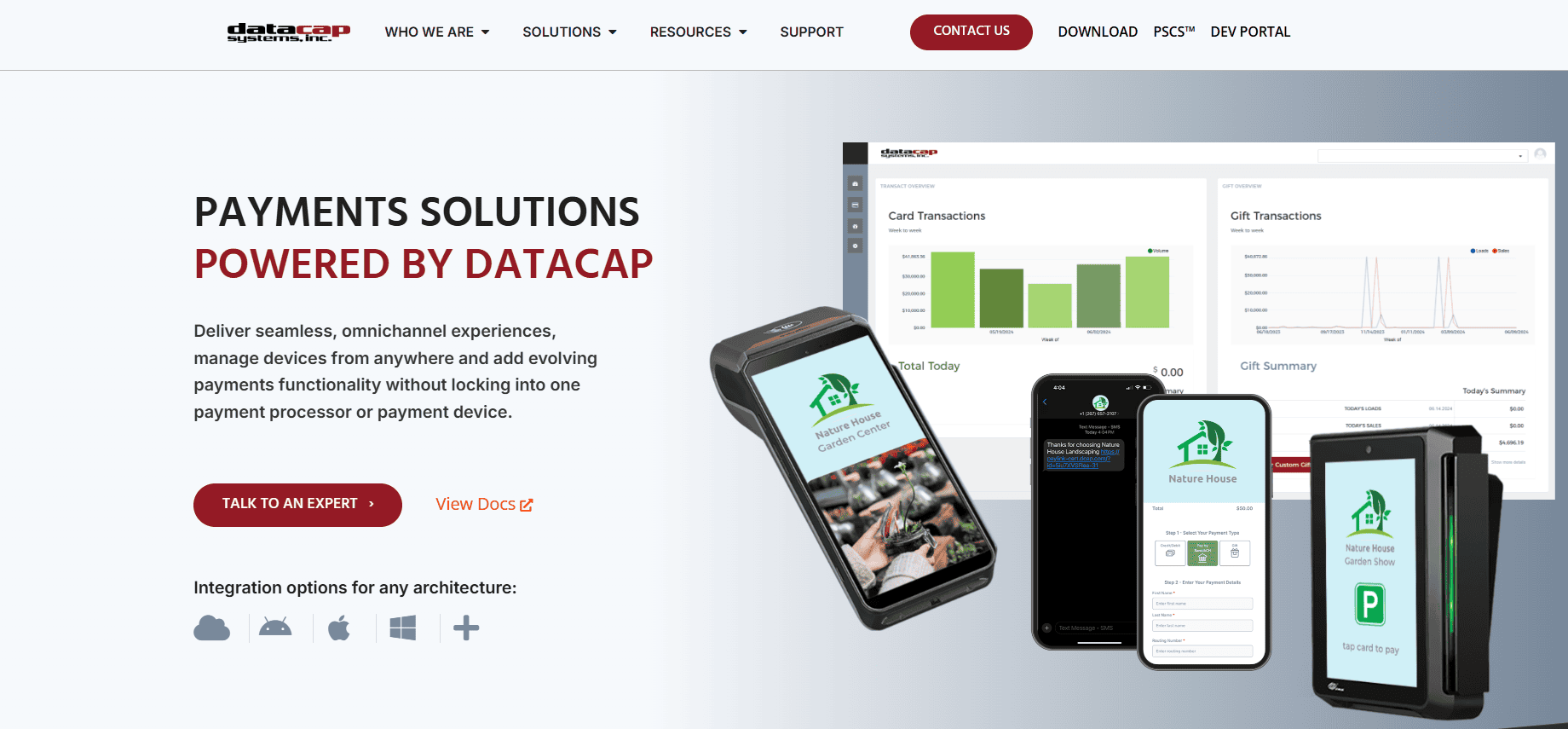
Datacap Systems is a payment integration technology provider that operates behind the scenes of many digital payment environments. Unlike traditional payment processors that directly handle transactions between merchants and banks, Datacap focuses on simplifying how software applications connect with payment devices and gateways. Its primary role is to act as a bridge between business software, POS systems, and multiple payment processors, allowing transactions to flow smoothly without requiring custom integrations for each setup. Lets read more about Datacap Systems Review.


Over time, the payment ecosystem has become increasingly fragmented, with businesses needing to support various devices, processors, and payment methods simultaneously. Datacap addresses this complexity by offering middleware solutions that unify these connections. Instead of building separate integrations for every payment processor or terminal, businesses can rely on Datacap’s platform to handle those connections centrally. This significantly reduces development effort and ongoing maintenance.


From a market standpoint, Datacap occupies a niche but essential position. It does not compete directly with payment processors or fintech apps but instead enhances their usability for businesses and developers. Its value lies in enabling flexibility and scalability in payment systems, especially for organizations that need consistent payment experiences across multiple environments. As digital payments continue to evolve, platforms like Datacap become increasingly relevant for managing complexity efficiently.

What Datacap Systems Offers at a Glance | Datacap Systems Review

Datacap Systems primarily offers payment integration solutions that simplify the connection between business applications and payment processing infrastructure. Its core offerings revolve around middleware products that enable communication between POS systems, payment terminals, and processors. This allows businesses to process transactions without needing to manage separate integrations for each hardware or software combination.


At a high level, Datacap provides tools that support both card-present and card-not-present transactions. It also enables businesses to accept various payment types, including credit cards, debit cards, EMV chip cards, and contactless payments. The platform is designed to work across multiple environments, including retail stores, healthcare facilities, and service-based businesses, making it versatile in its application.


One of the defining aspects of Datacap’s offering is its processor-agnostic approach. Businesses are not locked into a single payment processor and can switch or support multiple processors as needed. This flexibility can be valuable for companies that want to negotiate better rates or expand into different regions. Additionally, Datacap supports a wide range of payment devices, which helps businesses avoid being tied to specific hardware vendors.


Overall, the platform is positioned as an enabler rather than a direct service provider. It does not replace payment processors but enhances how businesses interact with them. This makes it particularly useful for software companies and enterprises that require scalable and adaptable payment integration solutions.

Understanding Datacap’s Payment Integration Technology

Datacap’s core strength lies in its ability to simplify complex payment integrations through a middleware-based architecture. Instead of requiring direct connections between software applications and each payment processor or device, Datacap acts as an intermediary layer that standardizes communication. This means that once a business integrates with Datacap, it can connect to multiple processors and devices without additional development work.


The technology works by creating a unified interface that handles transaction requests and responses. When a payment is initiated, the business application sends the request to Datacap’s system, which then routes it to the appropriate processor or device. This abstraction removes the need for developers to understand the technical specifics of each processor’s API or hardware protocol.


Another important aspect of Datacap’s integration technology is its support for both local and cloud-based environments. Businesses can choose how they want to deploy the system based on their operational needs. This flexibility allows organizations to maintain control over their payment infrastructure while still benefiting from centralized management.


While the concept of middleware is not new, Datacap’s implementation focuses on reducing integration time and improving reliability. By handling much of the complexity internally, it allows developers to focus on building core business features rather than managing payment logic. However, the effectiveness of this approach can depend on how well it aligns with a company’s existing systems and technical capabilities.
Datacap Systems Review

Key Features That Define Datacap Systems

Datacap Systems includes a range of features designed to make payment integration more efficient and adaptable. One of its most notable features is its ability to support multiple payment channels within a single platform. Businesses can handle in-store, online, and mobile payments without needing separate integration frameworks, which helps maintain consistency across customer touchpoints.


Another important feature is device compatibility. Datacap supports a wide variety of payment terminals and hardware devices, allowing businesses to choose equipment that fits their needs rather than being restricted to a specific vendor. This flexibility can be particularly useful for organizations that operate across multiple locations with different hardware requirements.


Security is also a key component of the platform. Datacap incorporates encryption and tokenization features to protect sensitive payment data during transactions. These measures help reduce the risk of data breaches and support compliance with industry standards. Additionally, the platform offers transaction management capabilities that allow businesses to monitor and control payment activity in real time.


While these features provide clear benefits, it is important to note that their value depends on how they are implemented within a business’s existing systems. Some organizations may require additional customization to fully leverage these capabilities. Overall, Datacap’s feature set is focused on flexibility and scalability rather than offering a one-size-fits-all solution.

Supported Payment Methods and Devices

Datacap Systems is designed to support a broad range of payment methods, reflecting the diverse ways customers prefer to pay today. It enables businesses to process traditional credit and debit card transactions, as well as newer methods such as EMV chip payments and contactless transactions. This ensures compatibility with modern payment expectations while maintaining support for legacy systems.


In addition to card-present transactions, Datacap also facilitates card-not-present payments, which are commonly used in online and phone-based transactions. This dual capability allows businesses to operate across both physical and digital channels without needing separate payment systems. The ability to handle multiple payment types within a single platform can simplify operations and reduce fragmentation.


When it comes to hardware, Datacap supports a wide range of payment devices from different manufacturers. This includes countertop terminals, mobile card readers, and integrated POS systems. By not being tied to a specific hardware provider, businesses have more freedom to select devices based on cost, functionality, and user experience.


However, compatibility can vary depending on the specific processor and device combination being used. Businesses may need to verify that their preferred hardware is fully supported within their chosen configuration. Overall, Datacap’s broad support for payment methods and devices is one of its strengths, particularly for organizations that require flexibility in their payment infrastructure.

Datacap’s Approach to Security and Compliance

Security is a critical aspect of any payment system, and Datacap Systems addresses this through a combination of encryption, tokenization, and compliance support. These measures are designed to protect sensitive cardholder data during transactions and reduce the risk of unauthorized access. By handling much of the security logic within its platform, Datacap helps businesses maintain a safer payment environment.


One of the key elements of its security approach is tokenization, which replaces sensitive card data with a unique identifier that can be used for future transactions. This reduces the amount of sensitive information stored within business systems, lowering the potential impact of data breaches. Encryption is also used to secure data as it moves between devices, applications, and processors.


Datacap supports compliance with industry standards such as PCI DSS, which is essential for any business handling payment data. While the platform can assist with compliance, it does not eliminate the need for businesses to follow best practices in their own systems. Security is a shared responsibility, and organizations must ensure that their internal processes align with compliance requirements.


Overall, Datacap provides a solid foundation for secure payment processing, but its effectiveness depends on how well it is implemented and managed. Businesses should view it as part of a broader security strategy rather than a standalone solution.

Benefits of Using Datacap for Businesses

One of the primary benefits of using Datacap Systems is the reduction in integration complexity. By providing a unified interface for multiple payment processors and devices, it eliminates the need for businesses to build and maintain separate integrations. This can save time and resources, particularly for companies with limited development capacity.


Another advantage is flexibility. Businesses are not locked into a single processor or hardware provider, which allows them to adapt to changing needs or negotiate better terms. This can be particularly valuable in industries where payment requirements vary across locations or customer segments. The ability to support multiple payment methods also enhances the overall customer experience.


Scalability is another key benefit. As businesses grow, their payment infrastructure needs to expand accordingly. Datacap’s architecture allows for this growth without requiring significant changes to the underlying system. This makes it a suitable option for organizations that anticipate future expansion.


However, these benefits come with certain trade-offs. The platform may require initial setup and configuration that can be complex for some users. Additionally, businesses must ensure that their internal systems are compatible with Datacap’s approach. While it offers clear advantages, it may not be the best fit for every organization.

Industries That Benefit Most from Datacap Systems

Datacap Systems is particularly useful for industries that rely on flexible and scalable payment solutions. Retail businesses are one of the primary beneficiaries, as they often need to manage multiple payment devices and processors across different locations. Datacap’s ability to unify these systems can simplify operations and improve consistency.


Healthcare is another sector where Datacap is commonly used. Payment processes in healthcare environments can be complex, involving both in-person and remote transactions. Datacap helps streamline these processes by providing a consistent integration layer that supports various payment methods and compliance requirements.


Hospitality and service-based industries also benefit from Datacap’s capabilities. These businesses often need to handle payments in different contexts, such as front desk transactions, online bookings, and mobile payments. Having a single platform to manage these interactions can improve efficiency and reduce errors.


Software providers and SaaS companies are another key user group. By integrating Datacap into their applications, they can offer payment functionality to their customers without building it from scratch. While the platform is versatile, its suitability depends on the specific needs and scale of the business.

Integration Flexibility and Developer Experience

Datacap Systems is designed with developers in mind, offering tools and frameworks that simplify the integration process. Its middleware approach allows developers to connect their applications to multiple payment processors through a single integration. This reduces the need to learn and manage different APIs for each processor.


The platform provides documentation and development resources to guide implementation. While these resources can be helpful, the overall experience may vary depending on the developer’s familiarity with payment systems. For teams with prior experience, Datacap can significantly speed up development. For others, there may be a learning curve.

Flexibility is a key aspect of the developer experience. Datacap supports different deployment models, including local and cloud-based setups, which allows developers to choose the approach that best fits their application. This adaptability can be valuable for businesses with unique technical requirements.


However, integration is not entirely plug-and-play. Developers may need to invest time in understanding how Datacap interacts with their existing systems. While it simplifies many aspects of payment integration, it still requires careful planning and implementation. Overall, the platform offers a balanced combination of flexibility and functionality for development teams.

Compatibility with POS Systems and Software Platforms

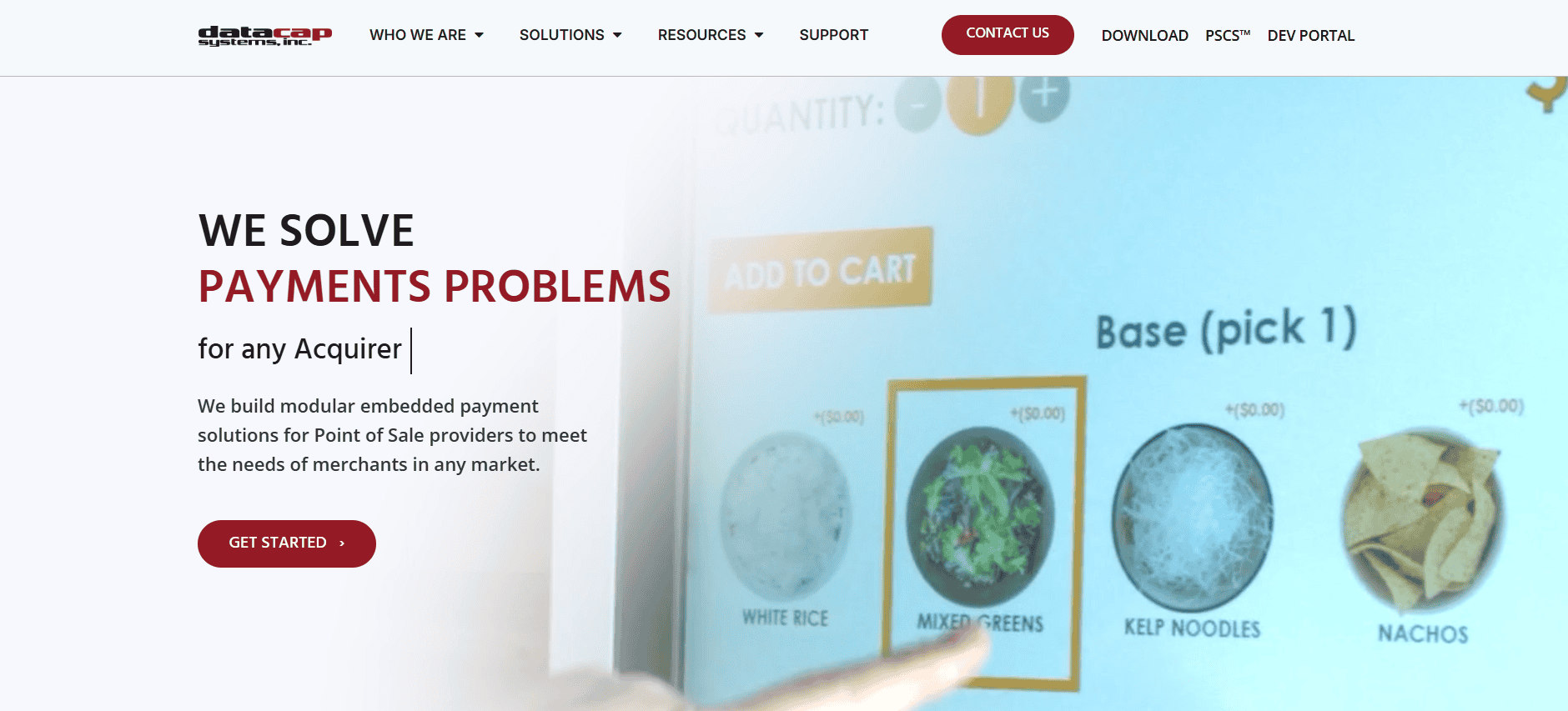
Datacap Systems is built to integrate with a wide range of POS systems and business software platforms. This compatibility is one of its core strengths, as it allows businesses to incorporate payment functionality without replacing their existing systems. By acting as a middleware layer, Datacap enables communication between software applications and payment devices.


The platform has the ability to integrate with both legacy and modern POS systems. This is vital, especially for businesses that have invested heavily in legacy systems. It ensures that the business does not have to spend more money on system overhauls. It also has the ability to integrate with software applications, thus making it applicable for a wide range of purposes.


Although the compatibility of Datacap’s system is good, it does not mean that it can work with all POS systems or software. Businesses have the obligation of checking if the system they are using or the software they have acquired can work with Datacap. It might require some level of customization, which might take longer.


Datacap’s compatibility makes it a viable option for businesses looking to enhance their payment systems. It has the ability to work with existing systems, which makes it a great option. However, businesses have the obligation of checking the compatibility of the system.
Datacap Systems Review

Pricing Structure and Cost Considerations

Datacap Systems does not follow a simple, transparent pricing model that is easily accessible to all users. Instead, its pricing typically depends on factors such as the type of integration, the number of devices, and the specific services required. This means that businesses often need to request a quote to understand the full cost.


The cost may include licensing fees, set-up fees, and support fees. In some cases, the cost may be high, especially for small businesses. However, this may not be the case for large businesses, as they will benefit from the simplicity of integration and flexibility.


It is also vital to consider indirect costs. Businesses will need to consider the resources used in developing Datacap. These will include training and system changes, which will affect the cost. Businesses will need to consider the cost of ownership.


The fact that Datacap does not provide transparent pricing is a disadvantage. However, this gives Datacap the advantage of providing custom solutions. This will be suitable for businesses with complex needs. However, this will not be suitable for businesses with simple needs.

Pros and Cons of Datacap Systems

Datacap Systems offers several advantages, particularly in terms of flexibility and integration efficiency. Its ability to connect multiple payment processors and devices through a single interface can significantly reduce development effort. This makes it a strong option for businesses that require scalable payment solutions across different environments.


Another positive aspect is its support for a wide range of payment methods and hardware. This allows businesses to adapt to changing customer preferences without being restricted by their payment infrastructure. The platform’s focus on security and compliance also adds to its reliability.


However, there are also some limitations to consider. The initial setup can be complex, especially for businesses without dedicated technical resources. The lack of transparent pricing may also be a concern for some organizations. Additionally, while the platform is flexible, it may require customization to fully meet specific needs.


Overall, Datacap provides a robust solution for payment integration, but it is not without its challenges. Businesses should carefully evaluate both the benefits and drawbacks before making a decision.

Datacap Systems vs Other Payment Integration Solutions

When comparing Datacap Systems to other options for payment integration, Datacap Systems stands out because of its focus on middleware. Other options provide direct payment processing services, while Datacap Systems provides services for connection and integration. This makes Datacap Systems more attractive to businesses that require more flexibility rather than just a bundled service.


Functionality-wise, Datacap Systems is comparable to other options for payment integration. However, Datacap Systems stands out because it is processor-agnostic, which makes it more attractive to businesses that require more control over their payment strategies and costs.


On the other hand, other options for payment integration are more attractive because they provide more user-friendly interfaces and easier setup procedures. Businesses that require more ease of use rather than flexibility may prefer other options for payment integration. Other options also provide more transparent pricing structures, which makes them more attractive to businesses.


In conclusion, Datacap Systems is just another option for payment integration, and its suitability for a business would depend on the requirements and needs of that business. However, for businesses that require more flexibility and scalability in their payment integration options, Datacap Systems would be a good choice.

Is Datacap Systems the Right Choice for Your Business?

Determining whether Datacap Systems is the right choice depends on several factors, including the size of the business, its technical capabilities, and its payment requirements. For organizations that need to manage multiple payment processors and devices, Datacap can provide a streamlined and scalable solution.


Businesses with in-house development teams are more likely to benefit from Datacap’s flexibility. They can leverage its integration capabilities to build customized payment experiences that align with their specific needs. For these organizations, the initial setup effort may be justified by long-term efficiency gains.


Smaller businesses or those with limited technical resources may find the platform more challenging to implement. In such cases, simpler payment solutions with built-in processing may be more practical. It is important to consider both the short-term and long-term implications of adopting a platform like Datacap.


Overall, Datacap is best suited for businesses that prioritize flexibility and scalability over simplicity. It offers significant advantages for the right use case but may not be the ideal solution for every organization.

Conclusion: Final Verdict on Datacap Systems

Datacap Systems provides a unique approach to payment integration by focusing on flexibility and interoperability rather than direct payment processing. Its middleware-based architecture simplifies the connection between software applications, payment devices, and processors, making it a valuable tool for businesses with complex payment needs. The platform offers several clear benefits, including reduced integration complexity, support for multiple payment methods, and scalability.


However, these advantages come with certain challenges, such as implementation complexity and less transparent pricing. Businesses must weigh these factors carefully when considering adoption. Overall, Datacap Systems is a strong option for organizations that require adaptable and scalable payment solutions. It may not be the simplest choice, but for the right use case, it can provide significant long-term value.

FAQs

Q1: What makes Datacap Systems different from traditional payment processors?

Datacap does not process payments directly but acts as a middleware layer that connects business software with payment processors and devices. This allows for more flexible integrations.

Q2: Does Datacap support multiple payment processors and gateways?

Yes, Datacap is processor-agnostic, meaning it can connect to multiple payment processors, giving businesses more flexibility in choosing providers.

Q3: Is Datacap Systems suitable for small businesses or only enterprises?

While it can be used by small businesses, it is generally more suitable for mid-sized to large organizations with complex payment integration needs and technical resources.

Clover Network Review

Clover Network Review

The Clover Network is not only a point of sale but also an ecosystem that encompasses the entire point of sale device and the operating systems, the payment systems, and third-party applications, all in one. This makes it easier for a business to manage all its transactions while at the same time controlling the entire business from a single platform. Instead of separating the transactions from the business operations, the Clover Network comes as an all-in-one package where everything runs in the same system. Lets read more about Clover Network Review.


At its heart, Clover works on proprietary equipment that utilizes an independently designed operating system, with payment processing integrated directly into that system. Services are run through this system, synched with a cloud-based dashboard, and are immediately accessible for additional forms of analysis and tracking. Considering that Clover works this way, it can be said that this platform is relatively easy to use and set up, especially for a business that values ease over flexibility. However, it’s important to consider Clover with an understanding of open and managed systems, as this helps merchants determine if it appropriately aligns with their business priorities.

Core Hardware Options Available in the Clover Ecosystem | Clover Network Review

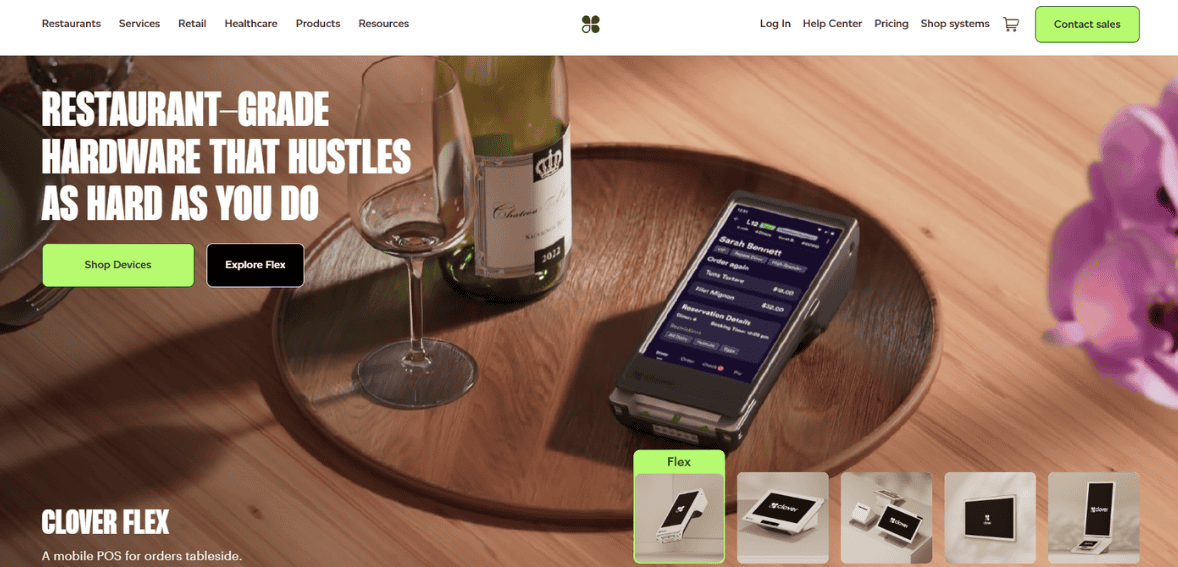
Overall, the hardware offerings from Clover are one of the strongest selling points of the platform, specifically because of the various business configurations available. These range from basic countertop equipment to comprehensive registers, each created with differing needs in mind. Clover Mini is an option geared towards smaller countertop space and smaller volumes of checkouts needed, whereas the Clover Flex is geared toward portability for line busting, service-based businesses, etc. The Clover Station assists as a more standard replacement for registers with a display facing the consumer and a screen facing the employee.


All Clover devices have a pattern of design and user experience which promotes ease of training when multiple device types are used within a business environment. The design of the devices itself is of good quality and modern-looking, but it must also be noted that it is proprietary, with any replacements having to be sourced within the Clover environment as well. This will prove advantageous to a business that prefers a plug-and-play environment but a disadvantage to those who prefer a more independent approach to the sourcing of hardware.

Payment Processing Capabilities and Supported Payment Methods

Clover also offers a variety of payment options, including EMV chip cards, magnetic stripe cards, contactless payments, and mobile wallet payments like Apple Pay and Google Pay. This is to ensure that businesses are not inadvertently excluding customers because of outdated payment systems. The payment process is fast, and receipts are also provided accordingly.


The limitation won’t be in relationship with payment but rather in the degree of elasticity involved. When using Clover’s basic configuration scheme, accepted processing relationship types are mandatory, which may limit negotiations regarding fee structures within a merchant transaction. Viable businesses needing simpler setup are likely to be willing to make this trade-off. For those needing large transactions and whose basis point differences can easily add up to significant differences, this may manifest as a future cost factor. Processing via Clover is secure but should not be examined in isolation from total cost.

Clover Software Platform and Operating System Experience

Clover’s operating system is designed for simplicity rather than depth. Menus are intuitive, button layouts are visually clear, and daily tasks like ringing up sales, issuing refunds, or closing batches can be learned quickly. This makes Clover approachable for staff with limited POS experience and reduces onboarding friction.


That ease of use does come with constraints. Advanced customization, conditional workflows, or niche operational logic may require third-party apps or may not be possible at all. Clover prioritizes a consistent experience across businesses, which works well for standardized retail or food service environments. Businesses with unique service models should evaluate whether Clover’s structured approach aligns with how they actually operate day to day.

App Marketplace and Customization Flexibility

Clover’s App Market extends the platform beyond its native features by offering apps for loyalty programs, accounting integrations, marketing tools, online ordering, and more. These apps allow businesses to layer functionality without switching systems. Many merchants rely heavily on apps to fill gaps in reporting, menu complexity, or customer engagement.


The downside is that apps introduce both cost and dependency. Most third-party apps carry monthly fees, and quality varies by developer. Over time, businesses may find their monthly software spend increasing as more features are added incrementally. While the app ecosystem provides flexibility, it is not a substitute for robust native functionality, and merchants should factor these recurring costs into long-term planning.

Inventory Management and Product Catalog Tools

Clover’s inventory tools are adequate for small to mid-sized businesses managing straightforward product catalogs. Merchants can create items, apply modifiers, track stock levels, and receive low-inventory alerts. For many retail stores and cafes, this level of functionality is sufficient and easy to maintain without dedicated inventory staff.


However, businesses with complex inventory needs may find limitations. Advanced features like multi-warehouse tracking, raw material management, or deep supplier analytics are not native strengths. While apps can extend functionality, inventory-heavy operations should carefully test whether Clover’s structure supports their workflow before committing fully.

Employee Management and Permissions

Employee management within Clover focuses on access control and accountability rather than full workforce management. Owners can create employee profiles, assign roles, restrict permissions, and track activity tied to individual logins. This supports basic oversight and helps prevent errors or misuse at the register level. Time tracking and payroll integrations exist but typically require add-ons or external software connections. Clover’s employee tools work best when used as part of a broader operational stack rather than a standalone workforce solution. For small teams, this approach is often sufficient. For larger staff with complex scheduling and compliance needs, supplementary systems are usually required.

Clover Network Review

Reporting, Analytics, and Business Insights

Clover provides a clean set of standard reports covering sales summaries, tax collection, payment types, and employee performance. These reports are easy to access and useful for day-to-day oversight. Many small business owners find real-time visibility helpful for monitoring trends without exporting data constantly. Depth becomes an issue as businesses scale. Custom reporting, predictive insights, and deeper segmentation typically require paid apps. While Clover does not hide reporting entirely behind paywalls, merchants seeking advanced analytics should expect to supplement native reports or invest time in exports and integrations.

Multilocation and Franchise Management Capabilities

Clover can support multilocation businesses, allowing centralized oversight across stores with consistent menus and reporting structures. This works well for small chains and franchises that value uniformity. Data syncing across locations is generally reliable, and managers can compare performance easily. For larger enterprises, Clover’s limitations become more apparent. Complex permission hierarchies, regional pricing variations, and advanced back-office controls may be harder to implement. It is best viewed as a small-to-mid multilocation solution rather than a true enterprise POS.

Pricing Structure and Ongoing Costs

Clover’s pricing includes hardware purchases or leases, software subscriptions, payment processing fees, and optional app costs. While entry pricing can appear reasonable, the true cost often becomes clearer after factoring in monthly software tiers and add-ons. Merchants frequently underestimate cumulative costs, particularly when scaling or adding features over time. Clover is not inherently expensive, but it rewards careful budgeting and fee transparency. Evaluating total monthly spend rather than just initial pricing is critical.

Contract Terms, Merchant Account Setup, and Support Model

Onboarding with Clover is generally straightforward, though merchant account terms vary depending on provider relationships. Support is centralized, which simplifies troubleshooting but can sometimes feel impersonal. Service quality tends to be consistent rather than exceptional. Merchants should pay close attention to contract length, early termination terms, and hardware financing arrangements. It itself is stable, but the surrounding agreements deserve careful review.

Security, Compliance, and Data Protection

Clover meets standard PCI compliance requirements and uses encryption to protect transaction data. User permissions and access logs add internal security controls, and updates are managed centrally to reduce risk exposure. From a practical standpoint, Clover provides adequate security for most small and mid-sized businesses. Enterprises with strict compliance needs should still conduct their own assessments and ensure policies align with internal standards.

Industries That Benefit Most From the Clover Network

Clover performs best in environments where operational needs are standardized, transactions are frequent, and simplicity outweighs deep customization. Retail, quick-service dining, and service-based businesses often fit well within Clover’s design philosophy. Industries requiring highly specialized workflows or custom integrations may feel constrained. It excels when used as intended rather than forced into edge-case scenarios.

Key Limitations and Common Complaints Merchants Should Know

Common concerns include processor lock-in, rising costs from add-ons, and limitations in reporting depth. These are not deal-breakers for every business, but they are recurring themes worth weighing carefully. Clover is reliable, modern, and easy to use, but it is not universally flexible. Understanding these limitations upfront helps align expectations and avoid frustration later.

Clover Network Review

Setup Process, Onboarding, and Learning Curve

Getting started with Clover Network is generally straightforward, especially compared to more modular or enterprise-oriented POS systems. Hardware arrives largely preconfigured, and the initial setup focuses on signing into the merchant account, connecting peripherals, and loading products or menus. For many small businesses, this process can be completed within a single day without requiring technical assistance, which is a meaningful advantage for owners who want minimal downtime.


The learning curve for staff is relatively gentle due to the visual interface and consistent design across devices. Common tasks like ringing up sales, applying discounts, or processing refunds are easy to grasp even for employees with limited POS experience. That said, the onboarding experience becomes more complex as businesses move beyond basic use. Configuring permissions, connecting third-party apps, or syncing accounting software requires more time and attention. Clover works best when owners are willing to invest effort upfront in configuration, rather than treating setup as a purely plug-and-play exercise. Businesses that expect advanced workflows out of the box may need to adjust expectations or plan for additional setup time.

Offline Mode and Business Continuity Considerations

Clover offers limited offline functionality that allows businesses to continue accepting payments during short internet outages. When operating offline, transactions are stored locally and processed once connectivity is restored. This feature can be reassuring for businesses operating in areas with unstable networks or during peak hours when outages are especially disruptive.


However, offline mode has practical limitations that merchants should understand clearly. Not all transaction types are supported offline, and there is always some risk associated with accepting payments without real-time authorization. If a transaction fails after reconnection, the merchant may be left responsible for the loss. For this reason, offline functionality should be viewed as a temporary backup rather than a full contingency system. Clover’s approach is adequate for short disruptions but not designed to support extended offline operation. Businesses that rely heavily on uninterrupted transaction processing may still want to invest in redundant internet connections or operational safeguards beyond what Clover alone provides.

Customer Experience and Checkout Flow

From the customer’s perspective, Clover delivers a modern and familiar checkout experience. Touchscreen displays, clear itemization, and support for contactless payments help transactions feel fast and intuitive. Customer-facing screens on certain devices allow buyers to view totals, add tips, and complete payments independently, which can reduce friction during busy periods.


The strength of Clover’s checkout flow lies in its consistency. Regardless of business type, the payment experience feels standardized and predictable. While this is positive for speed and usability, it may feel somewhat generic for brands seeking a highly customized front-end experience. Clover prioritizes reliability and ease over branding flexibility. For many merchants, this trade-off is acceptable. For others, particularly those in premium or experiential spaces, the lack of deep customization in the checkout flow may be a small but notable limitation.

Scalability Over Time and Long-Term Platform Fit

Clover is often adopted by businesses in early or growth stages, but its long-term fit varies depending on how complex operations become. As transaction volume increases, it remains technically stable, and performance does not typically degrade. Where challenges emerge is in operational depth rather than raw capacity.


As businesses grow, they often require more advanced reporting, deeper inventory logic, and greater control over pricing, roles, and integrations. While Clover can scale to a point using apps and add-ons, the platform is not infinitely flexible. Merchants sometimes reach a stage where the cost and complexity of stacking apps outweigh the benefits of staying within the ecosystem. Clover works best when growth is steady and operational needs remain relatively standardized. Businesses anticipating highly customized expansion or enterprise-level controls should periodically reassess whether Clover continues to align with their long-term strategy.

FAQs

Is Clover Network suitable for small businesses just starting out?

It can work well for small businesses that value ease of setup and predictable workflows, though costs should be evaluated carefully as features are added.

Can Clover be used with third-party payment processors?

It  typically requires approved processing arrangements, limiting flexibility compared to open POS systems.

How does Clover compare to other all-in-one POS systems?

It emphasizes simplicity and ecosystem consistency, while some competitors focus more on customization or processing independence.

Clearent Review

Clearent is a US-based payment processing company that focuses primarily on small to mid-sized businesses seeking a full-service merchant account rather than a purely self-serve payments platform. Founded in the mid-2000s and headquartered in St. Louis, Missouri, the company positions itself as a processor that prioritizes transparency, relationship-based account management, and direct communication with merchants. Lets read more about Clearent Review.


Unlike large-scale payment aggregators that rely on standardized pricing and minimal human interaction, Clearent operates on a more traditional merchant account model. This means businesses are underwritten individually and assigned a dedicated account rather than being grouped into a shared payments pool. For many merchants, this can result in more predictable account stability, especially for businesses with higher transaction volumes or industry-specific requirements.


Clearent’s strategy appears to focus on being a technology-forward but service-oriented processor. It promotes modern payment acceptance options while emphasizing features such as detailed reporting, configurable pricing, and hands-on support. This approach typically appeals to merchants who value clarity in their processing costs and want a point of contact when issues arise.


At the same time, this operating model can introduce more complexity during onboarding compared to instant-approval platforms. Pricing is not standardized across all merchants, and terms may vary based on business profile, processing history, and negotiation. As a result, Clearent tends to be better suited for merchants who are willing to engage in the setup process and review documentation carefully, rather than those looking for immediate, plug-and-play payment acceptance.

Core Payment Processing Services | Clearent Review

Clearent offers a comprehensive set of core payment processing services designed to support both in-person and card-not-present transactions. At the foundation, this includes acceptance of major credit and debit cards, along with support for EMV chip transactions, contactless payments, and mobile wallets where compatible hardware is used. These capabilities allow merchants to meet basic consumer payment expectations across retail, service, and professional environments.


In addition to standard card processing, Clearent supports ACH payment options and recurring billing functionality. ACH can be particularly useful for businesses that handle repeat invoicing, subscription-style services, or higher-value transactions where card processing fees may be less economical. Recurring billing tools help automate payments while reducing manual follow-ups, which can improve cash flow consistency for merchants with predictable revenue cycles.


Clearent also enables keyed and e-commerce transactions, allowing businesses to accept payments remotely. While it is not primarily marketed as an e-commerce-first processor, its card-not-present capabilities are sufficient for merchants with moderate online or phone-based sales needs. Businesses operating in hybrid environments, such as brick-and-mortar stores offering online ordering or invoicing, can typically support both channels through the same merchant account.


Overall, Clearent’s core processing services are in line with what most merchants expect from a full-service processor. The offering does not stand out as radically innovative, but it is broad, functional, and suitable for businesses that require dependable, multi-channel payment acceptance without shifting between multiple providers.

POS Hardware and Device Options

Clearent supports a range of POS hardware options to accommodate different business environments. These include traditional countertop terminals, mobile card readers, and integrated POS systems compatible with partner software platforms. By offering multiple hardware pathways, Clearent allows merchants to select solutions that align with their operational workflows rather than forcing a single device ecosystem.


Countertop terminals are generally best suited for fixed-location businesses like retail and service counters, where reliability and speed are essential. Card readers and wireless terminals are ideal for businesses that require payments to be made on the go, such as trade businesses, event vendors, or restaurants. Clearent’s hardware offerings are intended to be compatible with EMV chip cards and contactless payments, ensuring that they meet the latest security requirements.


Hardware can be bought outright or leased/rented, depending on the merchant agreement. Although this provides flexibility and can save money, merchants must be aware of the long-term costs associated with leasing hardware. In the long run, leasing hardware can be more expensive than buying it outright.


Clearent generally integrates hardware with its processing platform rather than restricting merchants to proprietary devices. This openness is beneficial for businesses that plan to switch software systems or expand their operations. However, compatibility details should be verified in advance, as not all terminals support every POS application or feature set. Hardware flexibility is a strength, but it requires upfront diligence from merchants.

Software Platform and Merchant Tools

Clearent provides merchants with access to a software platform designed to manage transactions, reporting, and account activity. The merchant portal serves as a centralized hub for viewing payment data, monitoring settlement activity, and accessing analytical insights. For many business owners, this visibility into daily operations is essential for reconciliation, forecasting, and decision-making.


The reporting tools typically include transaction-level details, batch summaries, and trend analysis across defined periods. Merchants can use this data to identify peak sales times, track payment method preferences, and monitor chargeback or refund activity. While the interface prioritizes function over aesthetics, it is generally straightforward and accessible to users without advanced technical backgrounds.


The Clearent platform also offers functionality related to configuration settings such as user permissions and export of reporting data, which can be beneficial for businesses with multiple employees responsible for financial-related tasks. 


However, the software functionality is more practical and less focused on consumer technology trends. Businesses requiring sophisticated customer relationship management, marketing automation, or highly customizable dashboard solutions may need to leverage third-party software solutions integrated into the platform. The Clearent software platform provides a strong operational foundation but is not a comprehensive business management solution. Businesses using the Clearent platform should have realistic expectations related to the software’s primary purpose of facilitating payments and reporting.

Pricing Model and Fee Structure

Clearent generally operates on a customized pricing model, meaning transaction rates and fees are tailored based on the merchant’s business type, processing volume, and risk profile. This approach allows for flexibility but also means pricing is not publicly standardized. Merchants are typically quoted rates during the sales process rather than selecting from preset plans.


Most Clearent accounts are structured around interchange-based pricing, where the underlying card network fees are passed through directly, with Clearent adding a markup. This model is often viewed as more transparent than tiered pricing, as it allows merchants to see how much they are paying above base interchange costs. However, the actual markup can vary significantly and should be reviewed carefully.


In addition to transaction rates, merchants may encounter monthly account fees, statement fees, PCI compliance fees, and incidental charges related to chargebacks or retrieval requests. These fees are common within traditional merchant account agreements but can be overlooked if not clearly explained upfront.


Clearent’s pricing flexibility can be an advantage for established businesses with consistent volume, as rates may be negotiated more favorably over time. For smaller merchants or startups, however, the lack of published pricing requires diligence to ensure costs remain competitive. Reviewing the full fee schedule and understanding how rates may change as the business grows is essential before signing an agreement.

Contract Length and Cancellation Terms

Clearent typically operates under formal merchant agreements that outline contract length, renewal conditions, and termination policies. Unlike month-to-month aggregators, these agreements may include multi-year terms and automatic renewal clauses. As a result, merchants should pay close attention to the duration and exit provisions outlined in their contracts.


Early termination charges may be applicable if the merchant chooses to terminate the service before the end of the agreed contract period. The charges are designed to compensate for the expenses associated with setting up the service and account servicing. However, these charges may become a source of irritation for merchants who want flexibility in their contracts. The specifics of the early termination charges may depend on the contract agreed upon during the setup process.


Another aspect of contracts that merchants need to be cautious about is automatic renewal. If a contract is renewed for another term without notice, merchants may find themselves tied down to a contract for a longer period than they anticipated. It is essential to understand the notice period and renewal schedule to avoid such situations.


However, some merchants have found that Clearent is willing to renegotiate contracts under certain conditions, especially for long-standing merchants. This willingness to adapt is a reflection of Clearent’s relationship-based business model. However, merchants should not make assumptions about contracts and should seek clarification about termination terms in advance.

PayAnywhere Review

Security Standards and Compliance

Security is a central requirement for any payment processor, and Clearent incorporates industry-standard safeguards to protect sensitive cardholder data. Its systems are designed to support PCI DSS compliance, which is mandatory for businesses that process card payments. Compliance involves meeting technical and procedural requirements to minimize the risk of data breaches.


Clearent supports encryption and tokenization technologies that prevent raw card data from being exposed during transactions. EMV chip processing and contactless payment support further enhance security by reducing reliance on vulnerable magnetic stripe transactions. These measures help lower fraud risk and protect both merchants and customers.


Merchants are typically responsible for completing annual PCI compliance questionnaires, though Clearent provides guidance and tools to facilitate the process. Failure to maintain compliance can result in non-compliance fees, making it important for merchants to stay informed about their obligations. While Clearent’s security infrastructure aligns with current standards, compliance still requires active participation from merchants. Businesses that use integrated POS systems or third-party software must ensure those components are also compliant. Clearent provides a secure processing foundation, but end-to-end security depends on the broader payment environment configured by the merchant.

Industry Vertical Focus and Use Cases

Clearent serves a wide range of industries, with particular strength in traditional retail, professional services, healthcare-adjacent businesses, and hospitality environments. Its merchant account model and reporting tools are well suited to businesses that value detailed financial visibility and predictable processing behavior.


Retail businesses can benefit from the stability of in-person processing, while service-oriented businesses may appreciate billing and invoicing solutions. In a healthcare or wellness business, the account system provided by Clearent can help facilitate a regulated industry that demands uptime and high compliance standards.


That being said, Clearent may not be the best choice for businesses that are strictly online or need advanced e-commerce functionality. Although Clearent does handle online payments, a strictly online business may benefit from a more specialized solution. Clearent’s vertical-agnostic design enables it to handle many industries, but it does not specialize in anything too niche. Businesses with very specific needs should determine if the existing integrations and functionality are sufficient without further development.

Integration Capabilities and APIs

Clearent offers integration capabilities that allow its processing services to work alongside various POS systems, accounting tools, and business software platforms. These integrations are typically achieved through certified software partners or API connections that handle transaction data securely.


For software developers and tech-savvy companies, API connectivity allows for customized payment processing and system integration. This is especially helpful for companies creating their own proprietary checkout solutions or operational software. Although API documentation is available, actual implementation may require technical knowledge.


The approach of Clearent to integration is more about compatibility than exclusivity. This gives merchants the flexibility to use more than one software environment, which is always helpful in case of evolving business needs. However, the complexity of integration may depend on the software environment and the level of desired functionality. It is always important for businesses to check the availability of integration support, especially when switching from an existing processor.

Customer Support and Account Management

Customer support is a key part of Clearent’s offering. Many merchants are assigned account managers they can specifically contact. This relationship-focused approach is different from anonymous ticket support offered by some larger processors. Support options will typically include phone and email support during business hours, with escalation options for critical problems. Merchants who prefer direct communication may find this support structure a major benefit, especially during initial setup or technical support.


The level of customer support can also vary based on account size and regional hiring. Support response times and effectiveness may vary based on workload and problem type. While many merchants appreciate having a specific person to contact, results are still dependent on individual experiences. Clearent’s support structure is well-suited to merchants who value relationship-focused support. Merchants who expect 24/7 support or immediate chat responses should check availability before signing up.

Transparency and Sales Practices

Clearent emphasizes transparency, particularly around interchange-based pricing and fee disclosure. Sales representatives typically walk merchants through pricing structures and contract terms during onboarding. This approach can foster trust when executed thoroughly.


That said, transparency depends heavily on how clearly terms are presented and documented. Like many processors, Clearent relies on customized proposals rather than standardized public pricing. Merchants should request written clarification of rates, fees, and contract conditions to ensure understanding. Sales practices may vary by representative, making it important for merchants to ask detailed questions and review agreements independently. Clearent’s willingness to explain pricing is a positive indicator, but due diligence remains essential.

Pros and Cons of Using Clearent

Clearent’s strengths include flexible pricing structures, traditional merchant accounts, and relationship-driven support. Its processing infrastructure is reliable, and its reporting tools meet the needs of most established businesses. Potential drawbacks include contract commitments, variable pricing transparency during sales discussions, and limited specialization for advanced e-commerce environments. Merchants seeking simplicity over customization may find the setup process more involved than expected.

How Clearent Compares to Other Payment Processors

Compared to payment aggregators, Clearent offers greater account stability and individualized service. Compared to other traditional processors, it stands out for its emphasis on transparency and merchant relationships. However, it does not compete aggressively on ultra-low advertised pricing or consumer-style interfaces. Its appeal lies in balance rather than extremes.

Final Verdict: Who Clearent Is Best For

Clearent is best suited for small to mid-sized businesses that want a stable merchant account, clear processing structures, and access to dedicated support. Merchants willing to review contracts and engage during onboarding are more likely to benefit. Businesses seeking instant setup, published pricing, or advanced e-commerce features may find alternative platforms more aligned with their needs.

Frequently Asked Questions

Does Clearent require long-term contracts?

Clearent commonly uses fixed-term agreements, though specific terms vary by merchant and should be confirmed in writing.

Is Clearent suitable for small businesses?

It can be, particularly for businesses with consistent volume and a preference for personalized support.

Does Clearent support both in-store and online payments?

Yes, Clearent supports in-person, mobile, and online transactions through a single merchant account.

Century Business Solutions Review

Century Business Solutions Review

Century Business Solutions operates in a competitive segment of the payments and merchant services industry, offering a mix of payment processing, POS systems, and related business tools. Like many providers in this space, the company positions itself as a full-service solution for businesses that want to accept payments across physical, online, and mobile environments. Rather than focusing exclusively on one industry, its offerings are designed to support a broad range of operational setups. Lets read more about Century Business Solutions Review.


For merchants evaluating payment processors, Century Business Solutions typically appeals to those looking for bundled services under one provider. This includes payment acceptance, equipment, compliance support, and account management. The company has established itself over time by working with small to mid-sized businesses, particularly those that value hands-on onboarding and structured support rather than fully self-serve platforms.

Overview of Century Business Solutions | Century Business Solutions Review

Century Business Solutions operates as a merchant services provider offering payment processing and business management tools to companies across various industries. Its core value proposition is centered on simplifying payment acceptance while providing additional operational support through POS systems and integrated solutions. The company typically works with businesses that require both card-present and card-not-present payment capabilities.


Instead of being a strictly digital and self-service processor, Century Business Solutions takes a more traditional route as a merchant account provider. This means that businesses typically go through an application process that involves underwriting, contract review, and account setup with direct support. This can be a benefit for some merchants, especially those who are not familiar with the requirements of payment processing. However, it can also be less flexible than other payment solutions.


Century Business Solutions provides payment solutions for retail, restaurant, service-oriented, and professional businesses. The company’s strategy often involves customizing payment solutions according to transaction volume, type of business, and complexity of operations instead of providing a standard package. This can be an advantage but also requires careful review of the offer to understand all the terms and responsibilities.


From a market perspective, Century Business Solutions functions within the mid-tier segment of payment processors. It is not positioned as a low-cost DIY provider, nor as a niche enterprise-only solution. Instead, it focuses on businesses that want a combination of support, stability, and customizable payment infrastructure. Understanding this positioning is important because it shapes expectations around pricing models, support quality, and contract commitments. Merchants considering Century Business Solutions should view it as a long-term service partner rather than a short-term or transactional payment tool.

Core Services Offered by Century Business Solutions

Century Business Solutions offers a set of core services designed to cover most payment acceptance needs for operating businesses. At the center of its offerings is merchant account services, allowing businesses to accept credit and debit card payments both in-store and remotely. These services typically include transaction processing, settlement, and reporting.


In addition to the essential payment processing, the company offers POS solutions, online payment gateways, and other business solutions that facilitate business operations. These solutions may include reporting software, inventory management solutions through POS systems, and integration with existing software solutions based on the configuration.


One of the most interesting aspects of Century Business Solutions is the fact that it offers a bundled solution. Many of the solutions are offered together as part of a comprehensive merchant services solution. This can be a great advantage for businesses that want to work with a single provider for payment processing, hardware, and support. However, it also means that merchants need to be aware of what is included in the standard solution and what may be an additional cost.


The company also offers services related to compliance, such as PCI support, which is a critical component of secure payment processing. While PCI compliance is a necessary component of payment processing across the industry, the level of support and assistance can vary, making this an important consideration for merchants who do not have the necessary expertise in-house.


Overall, the service offering is comprehensive rather than specialized. It is designed to meet common business needs rather than serve as a cutting-edge or niche payment platform. Businesses seeking stability and breadth may find this appealing, while those seeking advanced customization or developer-focused tools may need to assess compatibility carefully.

Payment Processing Capabilities

Payment processing is the foundational service offered by Century Business Solutions. The company supports standard card-present transactions, including chip cards, magnetic stripe, and contactless payments, as well as card-not-present transactions for phone, invoice, or online payments. Settlement timelines generally align with industry norms, though actual funding speed can vary based on merchant profile and banking arrangements.


Century Business Solutions processes major card brands and supports recurring billing setups where applicable. For service-based businesses or subscription models, this capability can be useful, but merchants should verify whether additional configuration or fees apply for recurring transactions.


One area that is worth mentioning is that customized processing terms are usually preferred over standardized ones. The rates may fluctuate based on the volume of transactions, average ticket value, risk level, and processing behavior.

Reliability and availability are critical in payment processing, and Century Business Solutions functions within the framework of the existing card network infrastructure. Although no payment processor is completely resistant to occasional downtime, a business can generally expect the same level of transaction processing as other popular payment processors.


In terms of functionality, the processing experience is simple and unremarkable. Businesses seeking novel payment solutions or sophisticated developer APIs may find this solution to be too traditional. Nevertheless, for businesses that value reliable and universally accepted payment functionality, Century Business Solutions offers a traditional, functional processing environment that meets standard business expectations.

Century Business Solutions Review

POS Solutions

Century Business Solutions offers POS systems designed to handle in-store transactions and basic operational tasks. These systems typically include hardware such as terminals, receipt printers, and payment peripherals, along with software for transaction management and reporting. POS options may vary depending on business type, with different configurations for retail, hospitality, or service environments.


The POS systems are intended to support daily business operations rather than act as advanced management platforms. Features commonly include sales tracking, basic inventory management, employee access controls, and receipt generation. For many small and mid-sized businesses, these features are sufficient for day-to-day needs.


Ease of use is a common consideration for POS adoption. Century Business Solutions generally emphasizes systems that do not require extensive technical expertise, which can reduce training time for staff. However, customization options may be more limited compared to fully modular or open POS platforms.


Merchants should also consider hardware ownership versus leasing when evaluating POS options. Leasing can reduce upfront costs but may increase long-term expenses. It is important to understand equipment terms clearly, as POS hardware commitments can affect flexibility if business needs change. Overall, the POS solutions offered by Century Business Solutions are functional and practical rather than cutting-edge. They are best suited for businesses seeking reliable transaction handling and basic operational support without the complexity of highly customizable or software-intensive POS ecosystems.

E-Commerce and Online Payment Solutions

Century Business Solutions provides tools for businesses that accept online payments, including payment gateways and integrations for e-commerce platforms. These solutions support standard online transaction flows such as checkout pages, hosted payment forms, and secure card data handling. For businesses operating both physical and online channels, the ability to manage payments under one provider can simplify reconciliation and reporting. However, merchants should confirm how seamlessly online and in-store transactions integrate within reporting systems.


The online payment functionality is, in general, intended to address typical use cases rather than complex e-commerce customization. Online businesses with typical online stores or payment processing via invoices might find the functionality sufficient. However, businesses with complex checkout functionality, extensive API customization, or multi-currency optimization should evaluate limitations early on.


Security is an essential aspect of online payments. Century Business Solutions implements typical encryption and security best practices to ensure the security of transaction information. Hosted payment solutions can simplify the merchant’s compliance process, although this might be achieved at the expense of design flexibility. In general, the e-commerce solution is centered around reliability and security rather than innovation. It might be an excellent choice for businesses emphasizing simplicity and consistency across payment methods, but not necessarily ideal for rapidly growing e-commerce businesses seeking highly customizable checkout experiences.

Industry Coverage and Business Types Served

Century Business Solutions works with a wide range of industries, including retail, food service, healthcare-related services, professional services, and certain higher-risk sectors. This broad coverage reflects the company’s flexible underwriting approach and customizable service structure. Businesses with predictable transaction patterns and stable operating models are typically well-aligned with the company’s offerings. Industries that require both in-person and remote payment acceptance can benefit from unified service management.


However, industry flexibility does not guarantee universal suitability. Each industry carries different compliance requirements, risk profiles, and transaction behaviors. Merchants should ensure that the processor’s experience aligns with their specific operational needs rather than relying on general coverage claims.


The company’s willingness to work with varied industries can be an advantage, especially for businesses that struggle to find processors due to perceived risk levels. That said, higher-risk industries often face higher fees or stricter contract terms, which should be carefully reviewed. In practice, Century Business Solutions appears best suited for established businesses that want a structured, managed payment environment rather than startups or experimental business models that require rapid iteration.

Pricing Structure and Fee Transparency

Pricing in Century Business Solutions is usually customized and not standardized. This means that merchants can expect pricing to be either interchange plus pricing or tiered pricing, depending on their contract. Additional fees that merchants may need to pay include monthly service fees, PCI compliance fees, gateway fees, or statement fees.


Customized pricing can be beneficial in that it allows merchants to align their pricing with their business volume. However, it can also be complex. It may be difficult for merchants to estimate the effective rate of pricing without a detailed breakdown. This means that merchants should ask for explanations of all fees that apply to them and how they are affected by the volume of transactions. Transparency is highly dependent on documentation and communication. Businesses should carefully examine all proposals before signing any contract, especially when it comes to additional fees. In general, pricing is not necessarily high or low in the industry but requires careful attention.

Century Business Solutions Review

Contract Terms and Merchant Agreements

Contracts with Century Business Solutions usually involve defined terms, which may include minimum commitment periods and early termination clauses. These contracts are typical of traditional merchant service providers and differ from month-to-month models offered by some newer platforms.


Merchants should pay close attention to contract duration, renewal terms, and termination fees. Equipment leasing agreements, if included, may have separate obligations. While long-term contracts can provide rate stability and service continuity, they reduce flexibility. Businesses anticipating rapid changes should weigh this carefully. Understanding contractual obligations upfront helps avoid dissatisfaction later. This is an area where careful review is essential.

Hardware and Equipment Options

Century Business Solutions provides a range of payment hardware options, including terminals and POS devices. Hardware compatibility generally covers EMV and contactless standards. Merchants must decide whether to purchase or lease equipment. Ownership typically offers greater long-term value, while leasing reduces upfront costs but can increase total expense. Equipment flexibility is adequate for most traditional setups, but compatibility with third-party systems should be verified. Hardware decisions often have lasting implications, making this a key evaluation area.

Customer Support and Account Management

Customer support is a key differentiator for many merchants. Century Business Solutions offers direct account management and technical support, which can be valuable for businesses that prefer human assistance. Response quality may vary depending on issue complexity and support channels. Merchants should clarify support availability and escalation processes. For businesses that value guided onboarding and ongoing assistance, this model is appealing. Those preferring minimal interaction may find it less efficient.

Security, Compliance, and Risk Management

Security and compliance are standard components of Century Business Solutions’ services. PCI compliance support helps merchants meet regulatory requirements. Risk management includes fraud monitoring and chargeback handling, though merchants remain responsible for dispute resolution. Compliance support reduces administrative burden, but accountability ultimately rests with the merchant.

Strengths and Limitations

Pros

Offers a broad range of services including payment processing, POS systems, online payments, and merchant accounts under one provider


Supports both card-present and card-not-present transactions, making it suitable for omnichannel businesses


Provides direct account management and human-led onboarding, which can be helpful for businesses new to payment processing


Works with multiple industries, including some that may face challenges with underwriting at other providers


Includes PCI compliance guidance and standard security measures as part of its service offering


POS systems and hardware are generally straightforward to operate and suitable for day-to-day business use

Cons

Pricing is typically customized, which can make it harder to compare costs upfront without careful review


Contracts may include long-term commitments or early termination fees, reducing flexibility for some businesses


Equipment leasing options can result in higher long-term costs compared to purchasing hardware outright


POS and e-commerce tools focus on core functionality and may feel limited for businesses seeking advanced customization


Online payment integrations may not be as flexible or developer-friendly as modern, API-first platforms


Best suited for established operations, which may make it less attractive to startups or rapidly evolving business models

Comparison With Other Merchant Service Providers

Compared to self-service processors, Century Business Solutions offers more guidance but less flexibility. Compared to enterprise providers, it offers accessibility without deep customization. It occupies a middle-ground position in the market.

Who Should Consider Century Business Solutions

Century Business Solutions is best suited for established businesses seeking structured payment services and consistent support. It may be less ideal for startups or tech-driven brands requiring rapid change.

FAQs

Is Century Business Solutions good for small businesses?

It can be, particularly for small businesses that value support, though pricing and contracts should be reviewed carefully.

Can Century Business Solutions handle both online and in-store payments?

Yes, it supports both, but integration depth may vary by setup.

What should merchants review before signing?

Pricing details, contract length, equipment terms, and support scope should be reviewed thoroughly.

Cardknox Review

Cardknox Review

Cardknox is a payment gateway platform that focuses on providing secure, flexible, and developer-oriented payment processing infrastructure. Rather than positioning itself as an all-in-one merchant solution, Cardknox primarily operates as a backend payments layer that integrates into existing systems, applications, and workflows. This distinction matters, because the platform is often evaluated not by its interface alone, but by how effectively it enables payments within third-party software and custom environments. Lets read more about Cardknox Review.


The payments landscape has become increasingly fragmented, with businesses needing to support multiple payment methods, compliance standards, and deployment models. Cardknox operates in this context by offering a gateway that emphasizes API access, tokenization, and secure transaction handling across industries such as healthcare, SaaS, retail, and professional services. Its model is less about out-of-the-box storefronts and more about adaptability.

Overview of Cardknox as a Payment Gateway | Cardknox Review

At its core, Cardknox functions as a payment gateway that securely transmits transaction data between merchants, payment processors, and acquiring banks. It does not replace a merchant account or processor, but instead sits between front-end applications and the financial institutions that authorize and settle transactions. This separation is typical of modern gateway architecture and allows Cardknox to remain processor-agnostic.


The platform supports both card-present and card-not-present transactions, making it relevant for online payments as well as in-person or hybrid environments. Its role is focused on handling sensitive payment data securely, routing transactions efficiently, and returning authorization responses with minimal latency. This positioning aligns more closely with infrastructure providers than consumer-facing payment brands.


Because Cardknox is not tightly coupled to a single processor, businesses often gain flexibility in choosing or switching processors while keeping the same gateway layer. That can be beneficial for scaling organizations or ISVs that operate across regions or verticals. However, it also means that full implementation often involves coordinating between multiple vendors, which can increase setup complexity.


Overall, Cardknox presents itself as a utility-driven gateway rather than a bundled commerce solution. This approach appeals most to businesses that already have defined systems and need a reliable, compliant way to process payments within them.

Core Payment Processing Features

Cardknox supports a range of standard payment processing capabilities that most modern gateways are expected to provide. These include credit and debit card transactions, ACH payments, recurring billing, and stored payment credentials through tokenization. The platform is designed to handle both one-time and ongoing payment workflows, which makes it adaptable across different business models.


Tokenization is a central feature of Cardknox’s offering. Instead of storing sensitive card data within a merchant’s environment, payment details are converted into tokens that can be reused for future transactions without exposing raw card numbers. This reduces security risk and simplifies compliance requirements for merchants handling repeat payments or subscriptions.


The gateway also supports authorization, capture, refunds, and voids as discrete actions. This separation is useful for businesses that need more control over settlement timing or order fulfillment logic. Recurring billing tools allow payments to be scheduled and managed programmatically, which is particularly relevant for SaaS platforms and service-based businesses.


While these features are not unique in isolation, Cardknox distinguishes itself through consistency and integration depth rather than novelty. The platform does not attempt to add complex consumer-facing features, but instead focuses on executing core payment actions reliably and securely within broader systems.

Security, Compliance, and Risk Management

Security and compliance are core to the value offered by Cardknox, especially in sectors dealing with sensitive customer information. Cardknox is built to facilitate PCI compliance by reducing the risk of cardholder data exposure in merchant environments. Tokenization and encryption are major components of this effort.


Cardknox helps reduce the scope of PCI compliance for merchants by processing payment information and sending tokens back instead of actual card information. This can greatly reduce the PCI audit and security review process burden for merchants. This is especially beneficial for companies that lack in-house security experts.


Cardknox also implements secure transmission protocols and offers other features that can help prevent unauthorized access or data breaches. Although fraud prevention services are available, Cardknox is more focused on infrastructure security than on behavioral fraud analysis. Most merchants are likely to use processor-level or third-party fraud services in addition to the gateway provided by Cardknox.


From a risk management perspective, Cardknox provides a solid baseline rather than a comprehensive fraud management suite. This aligns with its role as a gateway rather than a risk optimization platform. Businesses with elevated fraud exposure should evaluate how Cardknox fits into a broader security strategy rather than viewing it as a standalone solution.

API and Developer-Friendly Architecture

One of Cardknox’s defining characteristics is its emphasis on API-driven integration. The platform is built to be embedded into applications rather than used primarily through a standalone dashboard. For developers, this means direct access to payment functionality through documented endpoints and SDKs.


The API structure is designed to be relatively straightforward, with clear methods for transactions, token creation, recurring billing, and reporting. This makes it suitable for custom development across web, desktop, and mobile environments. For software providers building payment capabilities into their products, this flexibility is a significant consideration.


Documentation quality plays a major role in developer adoption, and Cardknox generally provides structured reference materials and examples. That said, implementation still requires technical expertise, particularly when coordinating with processors or handling edge cases like partial authorizations or failed transactions.


The developer-first approach benefits teams that want control and customization, but it may feel complex for non-technical users. Cardknox appears intentionally optimized for environments where developers are part of the deployment process, rather than for merchants seeking a simple plug-and-play payment button.

Cardknox Review

Supported Integrations and Platforms

Cardknox is intended to work well with many different systems, rather than being part of a closed system. The gateway can work with POS systems, custom web applications, ERP software, and industry-specific software, depending on the implementation. For businesses in vertical markets such as healthcare, education, or professional services, this is a significant advantage because it enables Cardknox to be integrated into existing systems without requiring significant changes. The gateway can handle online payments and offline payments using compatible hardware and software configurations.


Because integrations are often done through APIs, rather than being done with pre-existing connectors, the amount of work required can vary. Some systems may have pre-existing connectors available through partners, while others may require custom development. This is the key to understanding the positioning of Cardknox. Rather than competing with e-commerce platforms that are ready to go out of the box, Cardknox is positioned to be flexible with many different systems. Businesses with complex payment systems are more likely to find this useful than those who want to get started right away.

Cardknox for ISVs and Software Platforms

Independent software vendors represent a key audience for Cardknox. The platform is structured to support embedded payments, where transactions occur directly within third-party software rather than through external checkout pages. This model allows ISVs to offer a more seamless user experience. Cardknox enables ISVs to integrate payments as a native feature, often under their own branding. This can create additional revenue streams and strengthen customer retention. The gateway’s processor-agnostic design also allows ISVs to adapt to different markets or client requirements.


However, embedding payments carries operational responsibilities. ISVs must handle onboarding, support coordination, and sometimes compliance guidance for their clients. Cardknox provides the infrastructure, but the overall success of an embedded model depends on how well the ISV manages these layers. For software companies with a clear payments strategy and technical capacity, Cardknox offers a flexible foundation. For those new to payments, the learning curve may be steeper compared to fully managed payment platforms.

Payment Experience for Merchants and Customers

From the merchant and customer point of view, the user experience of the payment process made possible by Cardknox is mostly dependent on the implementation of the gateway. Since the gateway is usually integrated into custom interfaces, the user experience is more dependent on the application than the gateway.


If properly implemented, Cardknox can enable fast authorization and sound transaction processing. Customers will not have any reason to interact with the gateway, which is usually the case with infrastructure-level payment solutions. Functionality and consistency are more important than looks in such solutions.


For the merchant, refunding, looking up transactions, and reconciliation of transactions are usually done through dashboards or reporting tools. The functionality of the user experience at this level depends on the implementation and systems in place. Cardknox does not have a specific user experience, which can be both a good and a bad thing. Businesses that want complete control over the experience can do so to the letter, while others may require additional tools for a standardized interface.

Pricing Model and Fee Structure

Cardknox’s pricing model generally follows a gateway-based structure rather than an all-inclusive flat rate. Fees may include gateway charges, transaction fees, and processor-related costs, depending on the setup. This layered pricing can be more flexible but also more complex to evaluate upfront.


Because Cardknox works alongside processors, total costs vary based on negotiated processing rates and transaction volumes. For higher-volume merchants or ISVs, this can create opportunities for cost optimization. For smaller businesses, the pricing structure may feel less predictable compared to bundled solutions.


Transparency depends on how agreements are structured and which partners are involved. Prospective users benefit from carefully reviewing all fee components rather than focusing solely on headline rates. Cardknox’s pricing approach aligns with its infrastructure focus. It is not designed to be the cheapest option for simple use cases, but rather a scalable solution where costs align with operational needs.

Reporting, Analytics, and Transaction Management

It offers the ability to view transaction information, which can be used for reconciliation and operational purposes. The ability to view transaction history, status, and settlement information is available as needed for accounting and support purposes.


The reporting functionality is more functional in nature and less advanced. The reporting functionality is intended to offer insight into payment activity rather than behavioral data. In many cases, this level of reporting functionality is adequate, especially when used in conjunction with other accounting or analytical software.


The ability to access data through APIs enables organizations to retrieve transaction data and import it into their own dashboards or reporting software. This is useful for organizations that like to manage data centrally across systems. While Cardknox is not an analytics software solution, it does offer the basic data necessary for sound financial management.

Scalability and Performance for Growing Businesses

Scalability is a key consideration for payment infrastructure, and Cardknox is built to support growing transaction volumes. Its architecture is intended to handle increased load without requiring fundamental changes to integration logic.


For businesses expanding across locations or customer segments, the gateway’s processor flexibility can simplify scaling. Performance is generally stable, though real-world results depend on integration quality and network conditions. Cardknox’s scalability strengths are most visible in environments where payments are embedded into software platforms that grow over time. The gateway can scale alongside these platforms without forcing migration to new systems.

Customer Support and Onboarding Experience

Onboarding with Cardknox typically involves coordination between technical teams, processors, and support staff. This process can be smooth when roles are clearly defined, but it may take longer than onboarding with consumer-focused payment platforms.


Customer support is oriented toward resolving technical and operational issues rather than guiding non-technical users. Documentation plays a major role, and response quality often depends on the complexity of the request. For organizations with internal expertise, this support model is generally adequate. Less technical merchants may require additional assistance from partners or integrators.

Pros and Limitations of Cardknox

Cardknox’s strengths lie in flexibility, security, and developer-centric design. It works well as a payment infrastructure layer for complex or embedded payment environments. Limitations include a steeper learning curve and less emphasis on out-of-the-box user experience. It may not be ideal for businesses seeking rapid setup with minimal configuration. Understanding these trade-offs is essential when evaluating Cardknox for long-term use.

Who Should Consider Cardknox

Cardknox is best suited for ISVs, SaaS platforms, and businesses with technical resources. It aligns well with organizations that value control, customization, and scalable infrastructure. Smaller merchants or those seeking simplicity may find alternative models more approachable. It performs best when treated as a foundational payment layer rather than a complete commerce solution.

FAQs

Is Cardknox suitable for small businesses?

It can be, but smaller businesses without technical support may find setup and management more complex than turnkey solutions.

Does Cardknox require developer involvement?

In most cases, yes. The platform is designed for API-based integration and benefits from technical implementation.

Is Cardknox a full payment processor?

No. Cardknox functions as a payment gateway and works alongside merchant accounts and processors.

BridgePay Network Solutions Review

BridgePay Network Solutions operates in a specialized layer of the payments ecosystem, focusing primarily on payment gateway infrastructure rather than direct merchant account provisioning. Unlike providers that market themselves directly to small businesses with bundled pricing and onboarding packages, BridgePay positions itself as a backend technology enabler. Its services are often embedded into point-of-sale systems, enterprise software platforms, and processor relationships rather than sold standalone. Lets read more about BridgePay Network Solutions Review.


These days, payment processing is becoming more modular. There are several interrelated systems that businesses use for making payments, reporting, hardware, and compliance. It is in this backdrop that BridgePay acts as a middleware component that facilitates the flow of money between payment devices, software solutions, and processing relationships. In many ways, BridgePay does not represent a product category that a business purchases but a feature that is included within the overall product.


This analysis has been written for readers who desire insight into the functional nature of BridgePay, and not just an overview of its features. It is aimed at the targeted demographic of ISV’s, payment facilitators, enterprise merchants, and ISO partners researching payment gateway infrastructure solutions. It may contain points that do not apply as directly for small business owners looking for an all-in-one processor.

Company Background and Market Position | BridgePay Network Solutions Review

BridgePay Network Solutions establishes its identity on the back of enabling payment connections rather than becoming a competitor to the existing payment processors and the service providers. The business model built by BridgePay Network Solutions definitely establishes it as a company under the payment technology category of the infrastructure segment.


In the world of payments, this means that this role is neither customer-centric nor retail-facing. This means that BridgePay does not usually tout its flat-rate pricing or easy enrollment process to merchants. It partners with processors, acquirers, ISVs, and POS providers, whose business depends on the reliability offered by the gateway layer. Therefore, in this case, BridgePay is more visible to the tech community and those in the world of payments than to customers.


The existence of this company in the market indicates the rising need for gateway flexibility. Retailers are responding to the demands of omnichannel businesses. They are also seeking overall transaction management in store, online, and mobile. The approach of BridgePay to focus on gateway compatibility helps it meet this need without trying to be known as a brand of payments.


However, this role also limits its direct market visibility. BridgePay’s success is often measured by the reliability of systems built on top of it rather than by brand recognition. For some organizations, this is a strength, as it allows customization and white-labeling. For others, especially smaller merchants, it can create confusion about accountability when multiple vendors are involved. Overall, BridgePay occupies a stable but clearly defined niche as a backend payments enabler, serving partners that prioritize flexibility and control over simplicity and direct vendor relationships.

Core Payment Gateway Architecture

At the center of BridgePay Network Solutions is its payment gateway architecture, which is designed to act as a routing and translation layer between payment endpoints and processors. Rather than replacing processors or acquiring banks, BridgePay facilitates communication among these components, ensuring that transaction data is transmitted securely and consistently.


The architecture supports both card-present and card-not-present transactions, allowing BridgePay to operate across retail, hospitality, and digital commerce environments. Its gateway logic manages authorization requests, responses, error handling, and settlement communication without directly controlling pricing or underwriting decisions. This separation reinforces BridgePay’s infrastructure-first role.


One practical advantage of this architecture is processor flexibility. Often, businesses and software platforms can easily switch out or support multiple processors without a full redesign of their front-end payment experience. Much of the complexity gets absorbed by the gateway, reducing dependence on a particular processor’s proprietary systems.

This modularity creates technical overhead. Most deployments of BridgePay require coordination between multiple parties; processors, POS providers, and sometimes hardware manufacturers. This makes the gateway less suitable for merchants seeking rapid, low-effort deployment.


From a reliability standpoint, gateway architecture focuses on transaction continuity and fault tolerance. No system is completely resilient to outages, but the design of BridgePay fits into the general expectations of the industry in terms of redundancy and error resilience. Performance is not only a function of the gateway itself but also of upstream processors and network conditions. Overall, the core architecture for BridgePay reflects its intent to be stable infrastructure rather than a simplified end-user product.

Supported Payment Methods and Transaction Types

BridgePay Network Solutions supports a broad range of transaction environments, reflecting its goal of serving diverse payment ecosystems rather than a single merchant profile. Its gateway accommodates both card-present and card-not-present transactions, allowing it to function across in-store retail, hospitality, and e-commerce use cases.


In physical environments, BridgePay enables communication between POS systems and payment processors, supporting swipe, dip, and tap transactions depending on hardware compatibility. In digital contexts, it facilitates online and keyed transactions through software integrations. This versatility allows platforms built on BridgePay to offer consistent transaction handling across channels.


The gateway also supports standard authorization flows, reversals, voids, and refunds. These transaction types are essential for businesses with complex operational requirements, such as multi-location retailers or service-based enterprises that handle delayed settlements or partial refunds.


Although the variety of transaction types that BridgePay supports is quite good, it is necessary to understand that the abilities that can actually be exercised have much to do with relationships with processors and with hardware configurations. The gateway has enabled capabilities, but those capabilities would not be assured without the gateway.


Alternative payment systems or regional variations may involve further integration or be managed through alternative means outside of the gateway itself. With this in mind, it is important to consider the role of BridgePay more as an enabling component rather than a controlling component in payment acceptance. When it comes to online businesses or platforms in which there is a consistent need for transaction logic to behave in line with various types of online interaction, this level of adaptability in BridgePay can be helpful.

Point-of-Sale and Hardware Integrations

One of BridgePay’s strengths lies in its ability to integrate with a wide range of point-of-sale systems and payment hardware. Rather than tying users to proprietary devices, the gateway is designed to work within existing POS ecosystems, including both legacy and modern cloud-based platforms.


This hardware-agnostic approach benefits software vendors and enterprises that operate across multiple locations or brands. It allows them to standardize backend payment handling while accommodating different front-end devices. In industries such as hospitality and retail, where hardware lifecycles can vary widely, this flexibility reduces operational friction.


However, hardware integration is rarely plug-and-play at this level. BridgePay integrations typically involve certification processes, compatibility testing, and coordination with hardware vendors. While this is standard for enterprise-grade payment systems, it may slow deployment timelines. Another consideration is ongoing maintenance. Firmware updates, security patches, and EMV compliance changes can require updates across multiple systems. BridgePay facilitates communication, but responsibility for updates is shared across vendors.


For organizations with technical resources and long-term deployment plans, this integration model supports scalability and customization. For smaller merchants without dedicated IT support, reliance on integrated POS vendors becomes essential. Overall, BridgePay’s POS and hardware integration capabilities align with its backend positioning, offering flexibility at the cost of simplicity.

Developer Tools, APIs, and Documentation

BridgePay Network Solutions places significant emphasis on developer accessibility, as its services are often consumed by software platforms rather than end merchants. APIs play a central role in enabling transaction processing, reporting, and system customization.


From a developer perspective, the availability of structured APIs allows BridgePay to be embedded into proprietary platforms, white-labeled solutions, and industry-specific software. This is particularly important for ISVs building payment functionality into larger workflows such as inventory management, reservations, or customer management systems.


Documentation quality and clarity are critical in this context. Clear endpoint definitions, error handling guidance, and testing environments can significantly reduce integration complexity. While BridgePay’s offerings align with industry norms, successful implementation often depends on the technical experience of the development team.


One limitation to note is that API-based systems inherently require maintenance. Changes in processor requirements, security standards, or card network rules can necessitate updates over time. Developers using BridgePay must be prepared for ongoing engagement rather than one-time implementation. For organizations that value customization and control, BridgePay’s developer tools provide a solid foundation. For businesses seeking minimal technical involvement, reliance on prebuilt integrations through POS or software partners becomes more practical.

Security Standards and PCI Compliance Support

Security is a foundational requirement for any payment gateway, and BridgePay Network Solutions operates within established industry frameworks to protect transaction data. Its role includes supporting encryption, tokenization, and secure data transmission between payment endpoints and processors.


One key aspect of BridgePay’s security approach is its support for PCI compliance efforts. While the gateway itself adheres to industry security standards, it does not eliminate merchant responsibility entirely. Instead, it helps reduce the scope of sensitive data exposure by ensuring that card information is handled securely during transmission.


Tokenization plays an important role here, allowing recurring transactions and stored credentials without exposing raw card data. This is particularly valuable for subscription models, multi-location operations, and businesses that rely on stored payment methods. It is important to note that compliance is a shared responsibility. Merchants, software vendors, and hardware providers all play roles in maintaining a secure environment. It facilitates compliance but does not replace the need for proper internal controls.


For businesses with dedicated compliance teams or strong vendor partnerships, this model aligns well with standard practices. Smaller organizations may need guidance from their processors or POS providers to fully understand their obligations. Overall, BridgePay’s security posture reflects industry expectations for gateway infrastructure rather than offering differentiating features in this area.

Electronic Payment Systems Review

Reliability, Uptime, and Transaction Performance

Reliability is often the most important but least visible aspect of a payment gateway. BridgePay Network Solutions is designed to support high transaction volumes with consistent performance, as downtime directly affects merchant operations and revenue. Gateway reliability depends on multiple factors, including network redundancy, error handling, and integration quality. BridgePay’s architecture emphasizes continuity by managing transaction routing and responses efficiently, but performance is also influenced by external components such as processors and internet connectivity.


In high-volume environments, even small delays can impact customer experience. BridgePay’s backend focus helps minimize latency by standardizing communication flows, though real-world performance varies by deployment. One challenge for evaluating reliability is transparency. Because BridgePay often operates behind the scenes, end merchants may not know whether issues originate at the gateway, processor, or POS level. Clear monitoring and communication channels are therefore essential.


For enterprise platforms, this layered model is familiar and manageable. For smaller merchants, dependency on multiple vendors can complicate troubleshooting. Overall, it appears well-suited for environments where stability and consistency are prioritized over simplicity, provided there is adequate technical coordination.

Pricing Model and Cost Structure Overview

BridgePay Network Solutions does not typically offer straightforward, merchant-facing pricing in the way that traditional processors do. Instead, its cost structure is usually embedded within broader agreements involving processors, ISOs, or software platforms.


Gateway fees may include per-transaction charges, monthly access fees, or integration-related costs. The exact structure often depends on volume, deployment type, and partner relationships. As a result, end merchants may see BridgePay-related costs bundled into their overall processing statements. This approach aligns with BridgePay’s role as infrastructure rather than a retail payments provider. It allows flexibility for partners to structure pricing according to their business models, but it reduces transparency for merchants trying to isolate specific costs.


Organizations evaluating BridgePay should focus on total cost of ownership rather than individual line items. Integration effort, maintenance requirements, and support dependencies all contribute to overall expense. For large platforms and enterprises, this pricing model is standard and manageable. Smaller merchants may find it harder to evaluate value without detailed explanations from their providers.

Merchant and Partner Onboarding Experience

Onboarding with BridgePay typically involves multiple stakeholders, including processors, software vendors, and sometimes hardware manufacturers. This complexity reflects the gateway’s infrastructure role rather than poor design. Initial setup may require configuration, testing, and certification to ensure compatibility across systems. Timelines vary depending on integration depth and existing relationships.


For partners with prior experience, onboarding can be methodical and predictable. For newcomers, it may feel complex without strong guidance. BridgePay’s onboarding experience is best suited for organizations prepared to invest time and technical resources rather than those seeking immediate deployment.

Customer Support and Technical Assistance

BridgePay’s support structure is largely oriented toward partners and technical teams rather than individual merchants. This includes integration assistance, troubleshooting, and coordination with processors.


Response quality often depends on established relationships and escalation paths. For ISVs and enterprise clients, dedicated support channels can be effective. For merchants interacting indirectly, support may be mediated through POS providers or processors. This model works well in partner-driven ecosystems but may feel distant for smaller businesses.

Use Cases and Ideal Business Profiles

BridgePay Network Solutions is best suited for businesses and platforms that require flexibility, customization, and processor independence. Typical profiles include ISVs, enterprise retailers, hospitality chains, and multi-location operators. It is less ideal for micro-businesses seeking simplicity over control. Understanding this distinction is critical to evaluating fit.

Advantages and Limitations of BridgePay Network Solutions

BridgePay’s advantages include flexibility, scalability, and backend control. Its limitations include complexity, indirect support for merchants, and reliance on multiple vendors. These trade-offs are inherent to infrastructure-focused platforms.

Final Verdict and Overall Assessment

BridgePay Network Solutions functions effectively as payment infrastructure rather than a merchant-facing service. It excels in environments requiring customization and scale but is less suited for plug-and-play needs. Evaluated within its intended role, BridgePay offers stability and flexibility, provided users understand its position within the payment stack.

FAQs

Is BridgePay Network Solutions a merchant account provider or a payment gateway?

BridgePay primarily operates as a payment gateway and infrastructure provider rather than a direct merchant account provider.

What types of businesses benefit most from BridgePay?

ISVs, enterprise merchants, and organizations requiring flexible integrations tend to benefit the most.

Does BridgePay handle PCI compliance for merchants?

It supports PCI compliance through secure data handling, but merchants retain compliance responsibilities.

Bluefin Payment Systems Review

Bluefin Payment Systems Review

Bluefin Payment Systems operates at the intersection of payment processing and data security, a space that has become increasingly important as digital transactions grow more complex and regulatory pressure continues to rise. Rather than positioning itself as a traditional merchant acquirer competing on pricing or rapid onboarding, Bluefin has built its reputation around protecting sensitive payment data and reducing merchant exposure to security risks. This focus shapes nearly every aspect of its product design, partner relationships, and ideal customer profile. Lets read more about Bluefin Payment Systems Review.


It is most well-recognized as a company that focuses heavily on encryption and tokenization solutions that seek to ensure cardholder data stays completely out of the merchant environment. This resonates well with companies that look to view payments as more than just a transactional service, because if not handled correctly, it could represent a risk to operations. Data breaches, protection of cardholder data, and cybersecurity are rising to more forefronts than they used to, which puts Bluefin Payments into their own niche.


However, the security-first design paradigm is not the only area where Bluefin involves trade-offs. This is especially the case when merchants are considering Bluefin and are forced to weigh the potential increase in the overall cost of implementation due to the specialized hardware. This commentary aims to examine Bluefin from a balanced perspective, considering both the advantages and disadvantages of Bluefin and avoiding the assumption that Bluefin is the right choice for every merchant and organization. In other words, this commentary aims to help the reader understand where Bluefin is useful and where other solutions are simpler.

Core Business Model and Market Focus | Bluefin Payment Systems Review

Bluefin’s business model is built less around volume-based transaction processing and more around enabling secure payment ecosystems for businesses with heightened compliance or data protection requirements. Rather than marketing itself aggressively to micro-merchants or startups, the company tends to align with organizations that already recognize payment security as a strategic priority rather than an afterthought. This includes regulated industries, enterprise merchants, and software platforms that embed payments into larger operational workflows.


One of the essential aspects of Bluefin is the way the company distributes its services. Bluefin tends to collaborate and work together with credit card merchants directly and other merchants, point-of-sale vendors, software companies, and even acquire banks. This way, Bluefin acts as the security component of the payments technology ecosystem, and not as the competitor to the credit card companies due to the brand name. This is advisable for those merchants who want to have the security component built right into their systems.


At the same time, it should be noted that Bluefin could potentially be less visible to smaller merchants looking to acquire a ready-made solution. This is because Bluefin’s product suite is more suited to an entity that either has access to their own in-house IT personnel, as well as technical support teams that could address any integrations necessary. What it comes down to is that Bluefin is more suited to businesses operating at scale because it is a company that places more weight on comprehensive protection as opposed to ease of use.

Payment Processing Capabilities

From a functional standpoint, Bluefin supports standard electronic payment processing requirements without attempting to differentiate itself on novelty features. Core capabilities typically include acceptance of major card brands, support for EMV transactions, and compatibility with both card-present and card-not-present environments. These features align with what most merchants expect from a modern payment processor, ensuring that security enhancements do not come at the expense of basic usability.


Where Bluefin’s processing power differs is in its approach to the underlying structure of transactions. Instead of allowing unsecured card information to be transmitted through the payment system at the business level, the organization is set up so that payments can be encrypted at the earliest point in the payment process. This has a significant impact on everything that has been discussed so far, right through from technology choice through to system integration and reporting requirements.


It should be noted that Bluefin does not market itself as a one-stop ecommerce-enabling solution. The provision of additional functionalities such as customer loyalty programs, marketing analysis tools, or business management dashboards is not what Bluefin does, per se. These requirements may be met by merchants through other ecommerce platforms or software tools that co-exist with Bluefin’s payment infrastructure. Thus, it should be understood that Bluefin’s processing functionality needs to be assessed within an overall environment or context.

Bluefin Payment Systems Review

Encryption and Tokenization Technologies

Encryption and tokenization form the foundation of Bluefin’s value proposition. The company places strong emphasis on point-to-point encryption, which ensures that payment data is encrypted at the moment of card interaction and remains unreadable throughout transmission. This approach significantly reduces the number of systems that ever come into contact with sensitive cardholder information, lowering the overall risk surface for merchants.


Tokenization complements this model by replacing actual card data with non-sensitive tokens that can be stored or reused for operational purposes. These tokens allow businesses to perform functions like recurring billing, refunds, or transaction lookups without retaining real payment data. From a security perspective, this reduces the potential impact of a system breach, as stolen tokens have no standalone value outside the authorized environment.


While these technologies are increasingly common in enterprise payment systems, their implementation quality varies widely across providers. Bluefin’s differentiation lies in consistency and scope, particularly in environments where payments occur across multiple channels or devices. However, merchants should also recognize that advanced encryption and tokenization can introduce dependencies on specific hardware, vendors, or workflows. For organizations unprepared to manage these dependencies, the security benefits may come with increased operational complexity.

PCI Compliance and Regulatory Alignment

One of the primary reasons merchants consider Bluefin is its potential to reduce PCI DSS scope. By keeping cardholder data encrypted and tokenized outside merchant systems, Bluefin can significantly simplify compliance requirements, particularly for businesses that would otherwise fall under more demanding PCI categories. This reduction in scope often translates to fewer audit obligations and lower long-term compliance risk.


That said, it is important to clarify that no payment provider fully removes a merchant’s compliance responsibilities. Bluefin’s architecture can streamline PCI assessments, but merchants are still accountable for maintaining secure environments, managing access controls, and following applicable policies. The difference lies in how much of the sensitive data handling is shifted away from internal systems.


Regulatory alignment also extends beyond PCI DSS. Businesses operating in healthcare, education, or government-adjacent sectors often face overlapping compliance frameworks where data protection expectations are high. Bluefin’s security-first positioning makes it attractive in these contexts, though organizations should still conduct due diligence to ensure alignment with specific regulatory requirements relevant to their industry.

Omni-Channel Payment Support

Modern businesses rarely operate within a single payment channel, and Bluefin acknowledges this reality through its support for omni-channel transactions. The company’s security model is designed to function consistently across in-store, online, mobile, and unattended payment environments. This consistency is critical for organizations that want to maintain uniform compliance and risk controls regardless of how or where a payment occurs.


Rather than treating each channel as a separate system, Bluefin emphasizes centralized tokenization and encryption policies. In theory, this allows merchants to manage customer payment data in a unified way while still maintaining strong protections. For multi-location or digitally integrated businesses, this reduces fragmentation and simplifies internal oversight.


However, omni-channel support often depends heavily on integrations with third-party platforms. The quality of the experience can vary depending on the POS system, ecommerce platform, or gateway in use. Merchants evaluating Bluefin should pay close attention to how well its security framework aligns with their existing technology stack, particularly if they rely on niche or highly customized systems.

Hardware and Terminal Compatibility

Bluefin’s focus on encryption places particular importance on hardware selection. Compatible terminals must support secure data capture and encryption at the point of interaction, which can limit device options compared to more open payment processors. While this restriction enhances security, it may also require merchants to replace existing hardware or work within a narrower range of approved devices.


For businesses already planning hardware upgrades, this limitation may be negligible. For others, especially those with large installed terminal bases, compatibility considerations can influence overall project cost and timelines. Bluefin typically works within established hardware ecosystems rather than offering proprietary devices, which provides some flexibility while maintaining security standards. From an operational perspective, hardware decisions are closely tied to deployment planning. Merchants should evaluate not just upfront device costs, but also long-term support, maintenance, and update requirements associated with encrypted terminals.

Software Integrations and API Ecosystem

Bluefin’s integration strategy reflects its role as a security layer rather than a complete business platform. The company offers APIs and integration tools that allow developers and software partners to embed secure payment functionality into broader applications. This approach is well suited for ISVs and enterprises building customized payment workflows.

The effectiveness of these integrations depends heavily on implementation quality and documentation. While Bluefin supports a wide range of integrations, development resources and technical expertise are often required to achieve optimal results. For organizations without in-house development capabilities, reliance on third-party integrators or partners becomes a key consideration.

Pricing Structure and Cost Transparency

Pricing is an area where security-focused providers can appear less transparent, and Bluefin is no exception. Costs are typically influenced by transaction volume, hardware requirements, integration complexity, and ongoing security services. Rather than offering simple flat-rate pricing, Bluefin’s pricing model is more commonly structured through customized agreements. This approach aligns with enterprise purchasing norms but may be less appealing to small businesses seeking predictable monthly costs. Merchants should factor in not only processing fees but also implementation, hardware, and support expenses when evaluating overall value.

Implementation and Onboarding Experience

Implementing Bluefin is rarely a purely plug-and-play process. Onboarding often involves coordination between multiple stakeholders, including acquiring banks, software vendors, and internal IT teams. While this complexity supports stronger security outcomes, it also extends deployment timelines compared to simpler processors. For organizations accustomed to structured IT rollouts, this process may feel familiar. For others, the learning curve can be steep. Clear planning and dedicated resources are critical to avoiding delays and misalignment during implementation.

Bluefin Payment Systems Review

Scalability for Growing Businesses

Bluefin is generally well suited for businesses anticipating growth in transaction volume, geographic reach, or regulatory scrutiny. Its security architecture scales effectively across locations and channels, making it a strong option for organizations planning long-term expansion. That said, scalability also depends on internal readiness. Businesses without mature operational processes may struggle to fully leverage Bluefin’s capabilities without external support.

Customer Support and Account Management

Support experiences with Bluefin tend to reflect its enterprise orientation. Merchants often interact with account managers or technical support teams rather than self-service portals. This model can be beneficial for complex environments but may feel slower for simple requests. Response quality and availability can vary depending on contract structure and partner involvement, making it important for merchants to clarify support expectations during onboarding.

Strengths and Limitations

Bluefin’s greatest strength lies in its comprehensive approach to payment security. However, this comes at the cost of simplicity, speed, and sometimes transparency. It is not designed to be the fastest or cheapest option, but rather a controlled and compliant one.

Who Should Consider Bluefin Payment Systems

Bluefin is best suited for organizations that view payment security as a core operational requirement rather than a checkbox. Regulated industries, enterprise merchants, and software platforms stand to benefit most, while very small or low-risk businesses may find simpler alternatives more practical.

FAQs

Is Bluefin Payment Systems suitable for small businesses?

It can be, but its security-focused model often aligns better with medium to large organizations that face higher compliance or risk exposure.

Does Bluefin eliminate PCI compliance responsibilities?

No. It reduces scope and complexity, but merchants remain responsible for meeting applicable PCI requirements.

How does Bluefin differ from standard payment processors?

Its primary differentiation is a security-first architecture focused on encryption and tokenization rather than feature breadth or pricing simplicity.

BancCard Review

BancCard is a U.S. based merchant services provider that enables businesses to accept credit and debit card payments across multiple sales channels. Its primary function is payment processing rather than full-scale business management software. The company focuses on providing merchant accounts, payment terminals, and backend processing support for businesses that rely on electronic transactions. Lets read more about BancCard Review.


BancCard mainly collaborates with small and medium sized enterprises, but it can also accommodate large merchants based on the type of the industry and the volume of processing. Typical scenarios are retail stores, restaurants, professional service providers, and businesses that accept payments both in, person and remotely. BancCard might also be a source of funds for certain higher risk industries; however, approval terms are generally set by underwriting.

The company is functioning on a traditional merchant account model as opposed to a self, service, flat, rate kind of model. In other words, the pricing, the contract terms, and the feature access can be different from one merchant to another. Although this arrangement offers the possibility of customization, it also puts more merchants in the position of having to fully understand the agreement before signing as they take on the greatest part of the responsibility.


BancCard is a perfect match for businesses which require the support of a dedicated team for payment processing and are willing to go through a more traditional onboarding process. Merchants who are in search of highly standardized pricing or instant online sign up might feel that the process is not as efficient. In general, BancCard is the right choice for businesses that prioritize account, level support and do not mind having upfront discussions about the terms and costs.

BancCard’s Payment Processing Capabilities | BancCard Review

BancCard supports a range of payment processing options designed to cover both card-present and card-not-present transactions. Businesses can accept major credit and debit cards, including Visa, Mastercard, American Express, and Discover. Processing is available for in-store purchases, phone orders, and online transactions, depending on the merchant’s setup.


For brick-and-mortar businesses, BancCard enables traditional swipe, chip, and contactless payments through compatible terminals. Contactless support allows customers to pay using mobile wallets such as Apple Pay and Google Pay, which has become increasingly important for customer convenience and checkout speed.

Card-not-present transactions are supported through virtual terminals and e-commerce integrations. This makes BancCard viable for service-based businesses that take payments over the phone or send invoices, as well as businesses that operate partially or fully online. However, the exact features available may depend on the merchant’s risk profile and processing needs.


One consideration is that BancCard’s processing environment is not positioned as a plug-and-play solution. Merchants may need assistance during setup, particularly when integrating online payment tools or configuring fraud controls. This can be beneficial for businesses that want guidance but less appealing for those seeking instant deployment.

Overall, BancCard’s payment processing capabilities are broad and functional, covering most standard business requirements without attempting to compete with advanced fintech platforms focused on automation or developer-first tools.

POS Systems and Hardware Options

BancCard presents a selection of point of sale hardware alternatives that can facilitate in-store transactions. Typically, these are countertop terminals, mobile card readers, and wireless devices intended for businesses that require checkout flexibility. The availability of hardware may depend on merchant needs, location, and processing volume.


The terminals made available are to a large extent capable of supporting EMV chip cards, contactless payments, and magnetic stripe transactions. Thus, the company ensures compliance with the latest payment security standards and at the same time, customers are given the opportunity to use the most recent payment methods. There are also some devices that may allow the user to print the receipt, leave a tip, and view simple transaction reports directly from the terminal.


BancCard does not consider itself as a provider of proprietary POS software. Rather, it concentrates on payment acceptance hardware rather than on a fully integrated POS ecosystem that comes with inventory, employee management, or CRM tools. In the case of businesses which are already using a separate POS system, compatibility may be available, however, integration details should be confirmed beforehand.


There is not always a standard of hardware costs and leasing options, which is why merchants should find out whether the equipment is purchased outright, rented, or bundled into a long term agreement. Leasing agreements, in particular, can become costly over time if one is not fully aware of the terms. In summary, BancCard’s hardware offerings are practical and functional, but businesses seeking advanced POS features or deep software integrations may need to supplement BancCard’s tools with third-party solutions.

E-commerce and Virtual Terminal Solutions

BancCard supports e-commerce payments and remote transaction processing through virtual terminals and online payment gateways. These tools allow businesses to accept payments without a physical card reader, making them suitable for service providers, phone-based sales, and online merchants.


A virtual terminal allows a merchant to enter card information manually via a secure online interface. This method is typically used for invoicing, mail orders, or customers paying over the phone. Although a virtual terminal is a viable option, it is often accompanied by higher processing fees because of the increased risk of fraud. Therefore, merchants should take this into account when deciding on their pricing strategy.


For online sales, BancCard is able to integrate with some e-commerce platforms or offer hosted payment pages. The degree of customization and support for integration may change, and businesses with complex online requirements should check compatibility first before making a decision. BancCards e-commerce tools are mostly meant for typical scenarios rather than heavily customized checkout flows.


Security features like encryption and tokenization are usually implemented to secure cardholder data during online transactions. However, merchants must also ensure PCI compliance and take care of customer data according to the rules. In short, BancCards solutions for e-commerce and virtual terminals are enough to facilitate online payments. They may not have the same level of flexibility as developer centric platforms, but they are dependable options for businesses that want a simple way to remotely accept payments.

BancCard Review

ricing Structure and Fee Transparency

BancCard does not advertise a single, universal pricing model. Instead, pricing is typically customized based on the merchant’s industry, transaction volume, and risk profile. Merchants may be offered interchange-plus pricing, tiered pricing, or other negotiated rate structures depending on their account setup.


This flexibility can be beneficial for established businesses with predictable volumes, as it may allow for more competitive rates compared to flat-fee processors. However, it also means pricing transparency is not immediate. Merchants must carefully review their rate sheets and fee disclosures to understand the true cost of processing. Common fees may include monthly account fees, PCI compliance fees, statement fees, and transaction-related charges. Some fees may not be obvious during initial discussions, making it important to ask for a full breakdown in writing.


Because pricing is negotiated, different merchants may have very different experiences with BancCard’s cost structure. This makes it difficult to generalize whether BancCard is inexpensive or costly without reviewing a specific agreement. Overall, BancCard’s pricing approach rewards due diligence. Businesses willing to review contracts carefully and ask detailed questions may find reasonable value, while those expecting simple, published pricing may find the process less straightforward.

Contract Lengths, Early Termination, and Hidden Costs

BancCard typically operates under standard merchant services contracts, which often include multi-year terms. Contract lengths may range from one to several years, with auto-renewal clauses that extend the agreement unless canceled within a specific notice period.


Early termination fees are a common concern with traditional processors, and BancCard contracts may include such fees depending on the agreement. These fees can be flat-rate or variable, sometimes tied to remaining months on the contract. Merchants should confirm the exact terms before signing. Other potential costs may include equipment leasing obligations, annual compliance fees, or minimum processing requirements. These charges may not impact every merchant, but they can significantly affect overall cost if overlooked.


Auto-renewal clauses are particularly important to understand, as missing a cancellation window can lock a business into an additional term. Merchants should note deadlines and cancellation procedures clearly. In summary, BancCard’s contract structure reflects traditional merchant service practices. Businesses that value flexibility or short-term commitments should review terms carefully, while those comfortable with longer agreements may find the structure manageable if pricing is competitive.

Security, PCI Compliance, and Fraud Prevention

BancCard provides standard security features designed to protect cardholder data and reduce fraud risk. These typically include encryption of transaction data and support for EMV and contactless payment standards, which help reduce counterfeit card fraud. PCI compliance support is generally offered, though merchants remain responsible for completing required questionnaires and maintaining compliance. BancCard may provide guidance or tools to assist with this process, but failure to comply can result in additional fees.


For online and card-not-present transactions, fraud prevention tools such as address verification and CVV checks may be available. The effectiveness of these tools depends on configuration and merchant usage rather than automation alone. BancCard’s security approach is practical rather than cutting-edge. It focuses on meeting industry standards rather than offering advanced AI-driven fraud detection. This is sufficient for many businesses but may not meet the needs of high-volume e-commerce merchants facing sophisticated fraud risks. Overall, BancCard offers a solid baseline of security and compliance features, but merchants with higher risk exposure may need additional third-party fraud tools.

Funding Speed and Settlement Timelines

BancCard offers standard settlement timelines consistent with traditional processors. Most merchants can expect funds to be deposited within one to two business days, depending on transaction type and bank relationships. Same-day or next-day funding options may be available for qualifying merchants, though these services can come with additional fees or requirements. Funding speed often depends on account history, processing volume, and risk assessment.


Delays can occur in cases of chargebacks, unusual transaction activity, or compliance reviews. Merchants should be aware that reserve requirements may apply in certain situations, temporarily holding a portion of funds. Compared to fintech processors that emphasize instant payouts, BancCard’s funding model is more conservative. This can enhance stability but may not suit businesses that rely on immediate cash flow. In general, funding reliability is more consistent than exceptionally fast. Businesses with predictable cash flow needs may find BancCard’s settlement timelines acceptable.

BancCard Review

Customer Support and Account Management

BancCard provides customer support through traditional channels such as phone and email. Some merchants may also receive a dedicated account manager, particularly for higher-volume accounts. The onboarding experience can involve direct communication with support staff, which may help businesses navigate setup and compliance requirements. This hands-on approach can be valuable for merchants unfamiliar with payment processing. However, support quality may vary depending on account size and assigned representatives. Smaller merchants may experience longer response times compared to larger accounts.


BancCard does not emphasize self-service tools or extensive online knowledge bases. Businesses that prefer human assistance may appreciate this, while those seeking instant self-help options may find it limiting. Overall, customer support is functional and relationship-driven, aligning with BancCard’s traditional service model.

Reporting, Analytics, and Merchant Dashboards

BancCard provides merchants with access to transaction reports and account statements through an online portal. These tools allow businesses to track sales activity, settlements, and fees. Reporting capabilities are generally focused on financial reconciliation rather than business analytics. Merchants can review daily batches, monthly statements, and transaction histories, but advanced insights are limited. The dashboard is designed for clarity rather than customization. Businesses seeking detailed performance metrics or visual analytics may need external tools. For many small and mid-sized businesses, the reporting is sufficient for accounting and bookkeeping purposes. Larger businesses may require more robust analytics integrations. Overall, BancCard’s reporting tools are practical but basic, prioritizing accuracy over advanced data insights.

BancCard for High-Risk and Regulated Industries

BancCard may support certain high-risk or regulated industries, though approval is subject to underwriting review. Terms for these merchants often differ from standard accounts. Higher processing fees, rolling reserves, or stricter compliance requirements may apply. Businesses in regulated sectors should expect additional documentation requests. BancCard’s willingness to review higher-risk applications can be beneficial for merchants with limited options, but conditions may be more restrictive. Transparency during underwriting is important, as terms may change based on risk assessment. Overall, BancCard can be an option for some higher-risk businesses, but expectations should be set realistically.

Pros of Using BancCard

BancCard offers customized merchant accounts, broad payment acceptance, and traditional account-level support. It supports both in-store and remote transactions and provides reliable settlement timelines. The availability of human support and negotiable pricing can be advantageous for established businesses.

Cons and Potential Limitations

Lack of published pricing, long-term contracts, and potential termination fees are key drawbacks. Reporting tools are basic, and setup may require more effort. Merchants seeking simplicity or instant onboarding may find limitations.

Is BancCard the Right Payment Processor for Your Business

BancCard is best suited for businesses comfortable with traditional merchant services and negotiated agreements. It may appeal to merchants who value stability and support over automation. Businesses seeking flexibility, short contracts, or transparent flat pricing may want to compare alternatives.

FAQs

Does BancCard require a long-term contract

Many BancCard agreements include multi-year terms, though specifics vary. Merchants should review contract length and cancellation terms carefully.

Can BancCard support both in-store and online payments

Yes, BancCard supports card-present, virtual terminal, and e-commerce transactions depending on account setup.

Is BancCard suitable for small businesses and startups

It can be, but startups should carefully review fees and contract commitments to ensure alignment with early-stage needs.

First American Payment Systems Review

Aurora Payments Review

Aurora‍‌‍‍‌‍‌‍‍‌ Payments is a company that offers payment services in an industry full of competitors and clients with high demands of reliability, transparency, and flexibility. Digital payments keep on spreading in the worlds of in-store, online, and mobile, and as a result, providers like Aurora are looking for ways to make accepting and managing transactions easier for businesses without the need for them to be in a rigid system. This review is an unbiased and detailed examination of Aurora Payments with the sole aim of assisting merchants to get a clear understanding of what the platform can do for them and where it might be the right or wrong fit. Lets read more about Aurora Payments Review.


Aurora Payments, at least in theory, is a company aiming to be seen as a single entity that offers full-service payment processing for any business, regardless of size and industry. In fact, instead of narrowing down to serve a single group, the company seems to put more emphasis on the tailor-able payment solutions that are able to keep up with a business’s developmental stages. Besides the typical card-present transactions, digital payments are also covered by the company as there are back-office tools to make the daily operations even more effortless for merchants.


Most of the time, the deciding factor of the payment processor for a business is not the impressive features but rather the stability, transparency, and long-term control over expenses. Aurora Payments is in agreement with these words by coming up with a solution which includes the usual processing services and the optional tools and integrations. Although being a facilitator of payment processing in a traditional manner, the company’s strategy hints at a try to modernize the functionality while keeping the merchant service structures familiar.


This review digs deep into the workings of Aurora Payments from many perspectives, such as the features, pricing, contracts, security, and merchant experience. The objective here is definitely not to be the mouthpiece of the platform but to shed some light on how Aurora Payments really works and which types of businesses can be the biggest beneficiaries from the services ‍‌‍‍‌‍‌‍‍‌offered.

Company Background and Market Presence | Aurora Payments Review

Aurora Payments is part of the broader merchant services ecosystem that includes processors, independent sales organizations, and technology partners working together to deliver payment capabilities to businesses. Over time, the company has developed a presence by offering payment solutions that align with established industry standards rather than experimental or unproven models. This can appeal to merchants who prefer stability over rapid innovation.


The company’s structure reflects a common approach in the payments industry, where processing capabilities are supported through backend networks and banking relationships. Aurora Payments focuses primarily on delivering merchant-facing services such as account setup, hardware provisioning, customer support, and ongoing account management. Its market presence appears to be strongest among small to mid-sized businesses that value direct support and customizable setups.


Rather than operating as a purely self-serve platform, Aurora Payments maintains a more consultative model. This allows merchants to discuss pricing structures, hardware needs, and service options before onboarding. While this approach can lead to more tailored solutions, it may also mean that the experience varies depending on the representative or partner involved in the setup process.


In terms of reputation, Aurora Payments generally aligns with industry norms rather than standing out as a disruptor. This positioning may not attract merchants looking for cutting-edge fintech tools, but it does appeal to those who prioritize reliability and familiar payment workflows. Its steady market presence suggests a focus on long-term merchant relationships rather than rapid customer acquisition at scale.

Core Payment Processing Capabilities

Aurora‍‌‍‍‌‍‌‍‍‌ Payments is the company that provides the basic payment processing services to businesses that are most likely required to operate efficiently. What they offer includes the ability to accept credit and debit card transactions in both card-present and card-not-present environments. The support for EMV chip card as well as for magnetic stripe transactions ensures compliance with the latest payment standards, at the same time, it maintains compatibility with the older systems where it is necessary.


The authorization and settlement processes are on industry-standard timelines. Transactions are usually batched and settled within the expected funding windows. Aurora, although not advertising itself solely on the basis of speed, seems to be consistent in its processing reliability with the demand merchants get from the established providers. This reliability that is usually more vital than slight improvements in the settlement speed is of particular importance to those businesses which are cash flow predictable ones.


With the help of the system, there is also support for recurring billing, and manual transaction entry via virtual terminals, i.e., the platform is good for service-based businesses as well as those that are partially offline. Such functionalities lessen the requirement of different payment systems and grant merchants the privilege to centralize the management of transactions.


Aurora Payments is not a company significantly distinguishing itself by using proprietary processing technology. Its power rather resides in providing a stable, well-integrated processing experience. Less surprises and a shorter learning curve during onboarding is what it means for merchants. The advanced automation-seeking business along with those who are looking for real-time settlement tools may consider the core processing features as quite standard; however, there are many merchants who appreciate this simple approach. Aurora Payments concentrates on rendering reliable transaction processing which is in line with the daily operational needs and not on offering experimental features which might not be applicable to all ‍‌‍‍‌‍‌‍‍‌industries.

Supported Payment Methods and Acceptance Types

Aurora Payments supports a broad range of payment methods designed to accommodate modern consumer preferences. Major credit and debit card networks are accepted, ensuring compatibility with most customer payment behaviors. This baseline coverage is essential for businesses operating in both retail and service environments. Contactless payments, including tap-to-pay transactions, are supported through compatible hardware. This allows merchants to accommodate customers who prefer faster checkout experiences using contactless cards or mobile wallets. While mobile wallet acceptance has become standard across the industry, its inclusion remains important for maintaining competitive parity.


In addition to in-person transactions, Aurora Payments enables card-not-present acceptance through online gateways and virtual terminals. This flexibility is particularly useful for businesses that operate across multiple channels, such as combining storefront sales with phone or online orders. By supporting multiple acceptance types under one account, Aurora reduces operational complexity. Alternative payment methods, such as ACH or electronic checks, may be available depending on merchant qualification and configuration. These options can benefit businesses handling higher transaction values or recurring payments where card fees may be less cost-effective.


Overall, Aurora Payments offers a payment acceptance range that aligns with mainstream merchant expectations. While it may not aggressively expand into emerging payment trends, its coverage is sufficient for most traditional and hybrid business models. This balanced approach prioritizes reliability and broad usability over niche or experimental payment methods.

Aurora Payments Review

Point-of-Sale and Hardware Options

Aurora Payments offers a variety of point-of-sale and hardware options designed to suit different business environments. Merchants can choose from countertop terminals, mobile card readers, and integrated POS systems depending on their operational needs. This flexibility allows businesses to tailor their setup rather than conforming to a single hardware ecosystem. Countertop terminals are typically favored by retail and hospitality businesses that require stable, fixed checkout stations. These devices support EMV, contactless payments, and PIN debit transactions. For mobile or service-based businesses, wireless and mobile card readers offer greater flexibility without sacrificing core functionality.


Aurora Payments also supports POS systems that integrate payment processing with inventory management, reporting, and customer data tools. While these systems may not be proprietary, their compatibility with Aurora’s processing services allows merchants to select software that aligns with their workflow. Hardware pricing and leasing options vary based on configuration and provider arrangements. Merchants are encouraged to review hardware costs carefully, as equipment expenses can significantly impact long-term processing costs. Transparency in this area often depends on the clarity of the initial sales discussion.


Overall, Aurora Payments provides hardware options that meet standard business requirements. The platform does not attempt to lock merchants into exclusive devices, which can be advantageous for businesses seeking flexibility. However, merchants should ensure that chosen hardware supports future growth and evolving payment technologies.

Online, Mobile, and Virtual Payment Tools

Aurora Payments supports online and remote payment acceptance through a combination of payment gateways, virtual terminals, and invoicing tools. These features are essential for businesses that operate beyond traditional in-store environments or that offer remote services. Virtual terminals allow merchants to manually enter card details for phone or mail orders. This capability is particularly useful for professional services, healthcare providers, and B2B businesses that rely on invoicing or delayed payments. While manual entry typically incurs higher processing fees, its availability adds operational flexibility.


For eCommerce businesses, Aurora Payments offers gateway integrations that enable secure online checkout experiences. These gateways support standard features such as tokenization, hosted payment pages, and basic fraud prevention tools. Integration options may vary depending on the website platform and developer resources available. Mobile payment tools further extend Aurora’s reach by allowing merchants to accept payments through smartphones or tablets. This is beneficial for businesses that operate at events, job sites, or customer locations. Mobile tools generally mirror the functionality of traditional terminals, providing consistency across transaction environments.


While Aurora Payments’ digital tools may not rival those of specialized eCommerce platforms, they provide sufficient functionality for many businesses. The emphasis remains on reliability and ease of use rather than advanced customization or developer-centric features.

Industry Focus and Business Types Served

Aurora Payments serves a wide range of industries, reflecting its generalist approach to payment processing. Retail businesses, restaurants, service providers, and professional firms commonly fall within its target market. This broad focus allows Aurora to accommodate diverse transaction patterns and operational requirements. Service-based businesses benefit from features such as invoicing, virtual terminals, and recurring billing. Retail and hospitality merchants gain access to POS systems and hardware that support high transaction volumes and quick checkout experiences. B2B merchants may also find value in alternative payment methods and reporting tools.


Aurora Payments does not appear to specialize heavily in high-risk industries. While this can limit its appeal to certain business types, it also contributes to more predictable pricing and underwriting processes. Merchants operating in regulated or higher-risk sectors may need to confirm eligibility before onboarding. The platform’s flexibility makes it suitable for small to mid-sized businesses seeking straightforward payment solutions. Larger enterprises with complex integration needs may require additional customization or enterprise-level support. Overall, Aurora Payments is best suited for businesses that value adaptability and traditional payment structures. Its industry coverage reflects a focus on stability rather than aggressive expansion into niche markets.

Pricing Structure and Fee Transparency

Aurora Payments typically offers pricing structures that align with standard industry models, such as interchange-plus or tiered pricing. The specific pricing arrangement often depends on the merchant’s business type, transaction volume, and risk profile. This customized approach allows flexibility but requires careful review during onboarding. Interchange-plus pricing is generally favored for its transparency, as it separates card network fees from processor markup. Tiered pricing, while simpler to understand upfront, can obscure actual costs and lead to higher effective rates for some merchants. Aurora Payments may offer either model depending on the account setup.


Additional fees can include monthly service charges, statement fees, PCI compliance fees, and equipment costs. Merchants should request a full fee schedule to avoid surprises. Transparency at this stage is critical for long-term satisfaction. Aurora Payments does not heavily advertise flat-rate pricing, which may deter very small businesses seeking predictable costs. However, for established merchants, customized pricing can result in more competitive rates over time. Overall, pricing transparency depends largely on communication during the sales process. Merchants who take time to understand fee structures are more likely to benefit from Aurora’s pricing flexibility.

Aurora Payments Review

Contract Terms, Commitments, and Flexibility

Contract terms with Aurora Payments can vary based on the agreement and sales channel. Some merchants may encounter multi-year contracts, while others may have month-to-month options. Understanding contract length and renewal clauses is essential before signing. Early termination fees may apply in certain agreements. These fees can significantly impact costs if a business decides to switch providers. Merchants should confirm termination terms and request written clarification. Auto-renewal clauses are common in the industry and may be present in Aurora Payments contracts.


Awareness of renewal timelines helps merchants avoid unintended extensions. Aurora Payments’ flexibility depends largely on negotiation and merchant profile. Businesses with higher volumes may have greater leverage when discussing contract terms. Overall, contract structures appear consistent with industry norms. Merchants who prioritize flexibility should address contract details early in the onboarding process.

Security, Compliance, and Risk Management

Security is a core component of Aurora Payments’ service offering. The platform supports PCI DSS compliance requirements, helping merchants protect cardholder data and reduce risk exposure. Compliance tools may include tokenization and secure data handling practices. Fraud prevention tools are available to help merchants manage chargebacks and unauthorized transactions. These tools vary by payment channel and may include address verification and CVV checks for online transactions. Aurora Payments also provides guidance on best practices for maintaining compliance. While compliance ultimately remains the merchant’s responsibility, processor support can reduce complexity.


Chargeback management support helps merchants respond to disputes efficiently. This includes access to reporting tools and documentation resources. Overall, Aurora Payments’ security measures align with industry standards. While not positioned as a cybersecurity innovator, its approach prioritizes proven safeguards and regulatory compliance.

Reporting, Analytics, and Merchant Dashboard

Aurora Payments offers reporting tools that provide visibility into transaction activity, settlements, and fees. These tools are accessible through a merchant dashboard designed for daily operational use. Reports typically include transaction summaries, batch details, and funding timelines. This information helps merchants reconcile accounts and monitor cash flow. Analytics features may be more functional than advanced. While they provide essential insights, businesses seeking deep data analysis may require third-party tools. The dashboard’s usability depends on system configuration. Most merchants find it sufficient for routine monitoring and reporting. Overall, Aurora’s reporting tools support operational clarity rather than strategic analytics. This suits many small to mid-sized businesses.

Customer Support and Merchant Experience

Customer support is a critical factor in merchant satisfaction. Aurora Payments offers support through phone and email channels, with availability depending on service agreements. Onboarding support helps merchants configure hardware and software. The quality of this experience can vary based on representative involvement. Ongoing support is generally focused on resolving technical issues, billing questions, and account updates. Response times may vary. Merchants who value direct communication may appreciate Aurora’s consultative approach. However, those expecting self-serve tools may find support interactions more frequent. Overall, the merchant experience is shaped by personal interaction rather than automation.

Pros of Using Aurora Payments

Aurora Payments offers flexible solutions suitable for various business types. Its consultative sales model allows customization. The platform supports multiple payment environments, including in-store, online, and mobile. Hardware flexibility is another strength. Security and compliance support aligns with industry expectations. Reporting tools provide essential visibility. Aurora’s focus on stability appeals to businesses seeking long-term relationships rather than rapid experimentation.

Cons and Potential Limitations

Pricing transparency depends on sales discussions, which may concern some merchants. Contracts can include long-term commitments. Advanced analytics and developer tools are limited compared to fintech-focused platforms. High-risk businesses may face eligibility restrictions. Support quality can vary depending on account management. Small businesses may find pricing less predictable than flat-rate alternatives.

Frequently Asked Questions

What types of businesses are best suited for Aurora Payments?

Aurora Payments works best for small to mid-sized businesses that value flexibility, traditional processing models, and consultative support.

Does Aurora Payments require long-term contracts?

Contract terms vary. Some agreements include multi-year commitments, so merchants should review terms carefully.

How does Aurora Payments compare to other processors?

Aurora Payments focuses on stability and customization rather than disruptive pricing or advanced fintech features.

Alpha Card Services Review

Alpha Card Services Review

Alpha‍‌‍‍‌‍‌‍‍‌ Card Services has been a stable provider in the merchant services market for a long time and is still offering the combined payment processing, POS systems, payroll support, business financing, and customer engagement tools to its clients. The company has evolved from solely a payment processor to a business solutions partner, providing a more complete package of services for small and medium-sized merchants in the retail, hospitality, and service sectors over the years. Lets read more about Alpha Card Services Review.


This development is in line with the industry-wide change that is happening, where merchant service companies are looking to offer bundled solutions that decrease the need for multiple vendors. Although the company’s reputation is based on the company’s experience and a diversified product portfolio, just like with any other service provider, the real test is to understand how these solutions perform, how they fit different business models, and what limitations matter for decision-makers.


This review is intended to provide a clear, in-depth, and impartial view of Alpha Card Services through the breakdown of its major capabilities and the subtle details that affect the operational value. By analyzing the pros and cons of each category, businesses will be able to decide whether this platform accommodates their payment, administration, and customer-facing needs. The intention is not to promote or criticize but to provide a realistic image of the company so that merchants can assess the compatibility based on their workflow, budget, and long-term ‍‌‍‍‌‍‌‍‍‌expectations.

Core Merchant Processing Capabilities | Alpha Card Services Review

Alpha‍‌‍‍‌‍‌‍‍‌ Card Services essentially offers the key hardware and software components for people to be able to accept credit and debit card payments. Their processing services cover the usage of countertop terminals, mobile acceptance, online transactions, and recurring billing. It also seems that the whole instrument is built to facilitate the four major card networks, i.e., Visa, Mastercard, Discover, and American Express. This will enable businesses to operate the payment flow in less hard ways under one provider. The exactness and uptime are the two features that the firm highlights and these are very important to any merchant whose revenue flow is highly dependent on these processing activities.


On the other hand, Alpha Card Services tries to differentiate through bundled software and extra support that smaller providers may not offer, albeit core features are standard in the industry. Though pricing transparency can be different from merchant categories and sales volumes, which is a typical situation in the payment processing industry, businesses wanting predictable monthly costs usually take it as a disadvantage. 


Apart from that, the processing experience is usually efficient and the processors can be readily used across the different industries that range from quick-service venues to professional services. Most merchants will find the tools adequate for daily operations, though the ultimate value depends on contract terms and additional fees. If any such businesses are out there that need deeply customized setups, integrations, or enterprise-level processing, then the platform will probably seem basic to them. But it offers the fundamental capabilities needed to maintain efficient payment acceptance for small and mid-sized companies. ‍‌‍‍‌‍‌‍‍‌

POS Systems and In-Store Payment Tools

Alpha Card Services offers a range of POS solutions designed to help brick-and-mortar businesses streamline checkout, manage inventory and monitor sales performance. The company typically provides tablet-based systems, programmable terminals and industry-specific POS tools for restaurants and retail stores. These systems allow businesses to process transactions, manage menus, track staff performance and generate reports, giving merchants more control over daily operations. The POS interface is generally straightforward, designed to reduce the learning curve for employees, which is helpful for high-turnover businesses. One benefit is that merchants can integrate payments directly into the POS, reducing manual entry and minimizing errors. However, the system may not offer the same level of customization or high-end analytics that larger enterprise POS providers deliver. 


Additionally, hardware costs and contractual commitments may influence overall value, especially for smaller businesses trying to control upfront investments. Still, for many standard retail or hospitality environments, Alpha Card Services provides a balanced combination of ease of use, essential features and payment integration. Businesses that require highly tailored workflows or advanced industry-specific modules may need to evaluate alternative POS vendors, but for straightforward in-store payment management the system is practical and reliable.

Online and Mobile Payment Solutions

In response to the increasing demand for digital commerce, Alpha Card Services offers online payment gateways, virtual terminals and mobile payment solutions. These tools enable businesses to accept payments through their website, over the phone or on the go using mobile card readers or app-based systems. The virtual terminal is especially useful for service providers or office-based businesses that need to process payments without physical cards. The online gateway supports standard eCommerce functions, recurring billing and secure checkout, allowing merchants to integrate payments into existing websites or shopping carts.


Mobile processing tools benefit field-service providers and businesses attending events or offering delivery. While the digital offering covers the essentials, it may not provide the advanced developer-friendly features or extensive API flexibility that larger payment platforms offer. Still, for small and mid-sized businesses looking for straightforward online acceptance, the system is functional and secure. Another point to consider is pricing transparency, as some digital tools may come with additional monthly or per-transaction costs depending on usage. Overall, Alpha Card Services provides a complete basic toolkit for online and mobile payments, making it a versatile choice for merchants expanding beyond physical locations.

Payroll Services and Business Management Tools

Alpha Card Services extends beyond payment processing by offering payroll services, tax filing support and HR management tools. This diversification is meant to help businesses streamline administrative burdens by keeping financial and operational services under one provider. The payroll system handles employee payments, benefits management, deductions and compliance tasks. Many small businesses find value in consolidating payroll with payment services, especially when they want a simplified approach without adopting a complex HR platform. The system tends to work well for straightforward payroll needs but may not include advanced workforce management or deep HR analytics that larger platforms specialize in.


The integration between payroll and merchant services can also reduce administrative effort for businesses that prefer centralized support. However, the effectiveness largely depends on the complexity of the business’s staffing structure and whether the tools meet industry-specific needs. As an add-on, payroll provides convenience, but businesses should thoroughly evaluate pricing, contract terms and the depth of features before fully committing. For many small and mid-sized merchants, the offering provides adequate functionality and the benefit of having a single point of contact for support across different operational areas.

Gift and Loyalty Card Programs

Alpha Card Services includes gift and loyalty card programs to help businesses retain customers and encourage repeat visits. These programs allow merchants to design custom-branded gift cards and implement reward systems that track customer activity and incentivize spending. Gift cards remain a strong revenue generator for many retail and service-based businesses, while loyalty programs help deepen customer engagement. The system provided by Alpha Card Services enables merchants to issue cards, track balances, manage points and analyze program performance through dashboards. These tools can strengthen customer retention strategies, especially for restaurants, salons and boutique retailers.


The offerings are functional and straightforward, though they may lack the advanced segmentation or behavioral analytics found in specialized loyalty platforms. For businesses that want a simple system without complex setup, Alpha Card Services provides a usable option that supports core engagement needs. Merchants with more sophisticated marketing strategies may require additional software, but for everyday loyalty management and branded gift card issuance, the service delivers solid baseline functionality.

Cash Advance and Business Funding Options

Alpha Card Services offers merchant cash advance solutions designed to provide short-term working capital for businesses with fluctuating cash flow. These advances allow merchants to receive a lump sum upfront in exchange for a portion of future credit card sales. This type of funding is attractive to businesses that may not qualify for traditional loans due to credit score or documentation challenges. The primary benefit is speed and ease of access, as approvals are typically faster with fewer requirements. However, merchant cash advances often involve higher costs compared to conventional financing, and repayment structures may impact cash flow during slower months.


Alpha Card Services positions this offering as a flexible option for meeting urgent business needs, such as inventory purchases, repairs or expansion. While the service fulfills that purpose, businesses should approach it with caution and fully understand factor rates, repayment terms and long-term cost implications. For merchants who prioritize speed over cost, the funding can be useful, but those seeking economical financing alternatives may find better options through traditional lenders or SBA-backed programs. The cash advance product is neither inherently good nor bad but situational, depending on urgency, revenue patterns and financial discipline.

Alpha Card Services Review

Security, Compliance and Fraud Prevention Tools

Security is a critical element of payment processing, and Alpha Card Services incorporates several tools to maintain PCI compliance, protect cardholder data and reduce fraud risks. The company provides encrypted terminals, secure gateways, tokenization and support for PCI-DSS requirements. These measures help merchants maintain secure transactions while minimizing vulnerabilities that could lead to chargebacks or data compromise. Fraud monitoring tools assist businesses in identifying suspicious activity early, though the sophistication of these tools may vary depending on the product package selected. For many small and mid-sized merchants, the built-in safeguards are sufficient for everyday operations, especially when combined with proper internal practices.


Larger or high-risk businesses may require more advanced fraud tools, which could necessitate external platforms. The company’s emphasis on compliance guidance is valuable for merchants unfamiliar with regulatory expectations, as staying up to date with data-security standards can be challenging without support. While Alpha Card Services provides solid baseline protection, businesses should evaluate whether their industry requires higher-level controls before fully relying on the system. Overall, the platform addresses fundamental security needs and supports merchants in maintaining responsible payment environments.

Reporting Dashboards and Analytics Features

Reporting and analytics play a significant role in helping businesses track performance, identify trends and make informed decisions. Alpha Card Services provides dashboards that summarize transactions, revenue, customer activity and general operational metrics. These tools enable merchants to monitor day-to-day results and access data that supports forecasting and strategic planning. While the reports are practical and easy to understand, they may not offer the advanced granularity or predictive analytics available in specialized data platforms. Still, for small and mid-sized merchants, the available insights are generally sufficient to track sales patterns, monitor peak hours or identify underperforming products.


The dashboards typically integrate with POS systems and online gateways, allowing a unified view of payments across channels. Some merchants may wish for deeper inventory tracking or multi-location analytics, but the reporting tools cover core needs effectively. In evaluating these features, the system stands as a balanced solution that supports operational visibility without overwhelming users with complex data structures. For businesses wanting clarity without advanced technical demands, the reporting suite offers practical and accessible insights.

Integrations and Compatibility with Third-Party Systems

Alpha Card Services integrates with a variety of third-party systems, including accounting software, shopping carts, POS tools and inventory platforms. These integrations help businesses create smoother workflows by reducing manual data entry and syncing payment information automatically. Compatibility with widely used systems is beneficial for merchants who already use established platforms and prefer not to overhaul their operations. While the integration ecosystem is functional, it may not be as extensive or API-driven as larger enterprise payment providers. Businesses requiring fully customizable integrations or complex multi-system environments may find limitations.


However, for standard small and mid-sized setups, the available compatibility generally supports essential needs such as syncing sales data, managing online store transactions or reconciling accounting activity. Merchants should confirm integration details beforehand to ensure their existing software is supported. Overall, the system provides reasonable connectivity for common business tools, allowing smoother operations without requiring significant restructuring.

Pricing Structure and Contract Terms

Pricing is one of the most important evaluation points for any merchant services provider. Alpha Card Services uses a traditional contract model that may involve multi-year terms, early termination fees and variable rate structures depending on merchant category, transaction volume and equipment needs. While this approach is common in the industry, it may not appeal to businesses seeking month-to-month flexibility or transparent flat-rate pricing. Merchants must pay close attention to interchange rates, monthly fees, PCI compliance fees and hardware costs, as these elements collectively determine the total cost of ownership. The company offers competitive rates in some categories, but variance across industries makes it important for businesses to request detailed quotes.


A key consideration is whether the long-term contract aligns with the business’s growth plans. Merchants should also review cancellation terms carefully, especially if they anticipate changes in POS systems or payment methods. The pricing structure is neither overly restrictive nor overly flexible; it falls in the traditional mid-range of merchant service agreements. Transparency and clarity depend on the sales agent and the specific package selected, making due diligence essential.

Customer Support, Training and Resources

Customer support is a significant component of merchant satisfaction, and Alpha Card Services provides assistance through phone, email and dedicated service teams. Their support offerings include onboarding guidance, troubleshooting help, hardware installation assistance and general account management. For many merchants, having a single provider for payments, POS and payroll simplifies the support experience, as issues can be addressed without contacting multiple vendors. Support quality can vary based on the nature of the issue, and some merchants may wish for extended hours or faster resolution times.


Training resources such as documentation, how-to guides and setup support help reduce onboarding challenges. The company aims to make learning its systems accessible for employees, especially for POS and payment tools. While the support structure is functional and reliable for most users, merchants requiring highly specialized or rapid technical escalation may find some limitations. Overall, the support level is consistent with typical mid-tier merchant service providers, offering a mix of practical guidance and general troubleshooting.

Pros of Using Alpha Card Services

Alpha Card Services offers a wide range of bundled solutions that appeal to merchants wanting a centralized provider for payments, POS, payroll and customer engagement. The depth of services makes it easier for small and mid-sized businesses to consolidate operations without juggling multiple companies. Their POS systems are simple to use, the online tools are reliable for basic eCommerce needs and the loyalty programs add value for businesses focused on customer retention.


The availability of payroll services is a convenient add-on that helps streamline administrative tasks. Security and compliance features support safe operations, and reporting tools offer clear insights for everyday decision making. The company’s longevity and diversified product offering create a sense of stability for merchants seeking an established provider. For many businesses, the biggest advantage is convenience and the ability to manage multiple business functions through one partner.

Cons and Limitations to Consider

While Alpha Card Services provides essential solutions, there are limitations worth considering before committing. The pricing model may lack transparency, especially for merchants unfamiliar with interchange-plus structures or multi-year contracts. Early termination fees can be a concern for businesses seeking operational flexibility. Some tools, such as advanced analytics or specialized POS features, may not match the depth of competitors focused solely on those categories. Integration options, while adequate, may not satisfy businesses with complex software ecosystems.


The merchant cash advance offering also requires careful evaluation due to potential cost implications. Support quality varies depending on issue type, and businesses with demanding technical needs may desire more robust service options. Alpha Card Services offers a solid foundation, but merchants must ensure the platform aligns with their growth plans, budget structure and operational requirements.

Conclusion

Alpha Card Services delivers a broad collection of merchant services, payment tools and administrative solutions tailored primarily for small and mid-sized businesses. Its strength lies in providing multiple business functions under one provider, which can simplify management and reduce operational complexity. While the platform performs well for everyday payment processing and basic POS or online needs, merchants must carefully evaluate contract terms, pricing structure and the level of customization required. The service is best suited for businesses seeking practicality and consolidation rather than advanced or highly specialized features. By weighing the pros and cons outlined throughout this review, merchants can make a well-informed decision about whether Alpha Card Services fits their long-term business strategy.

FAQs

1. Is Alpha Card Services suitable for small businesses?

Yes, its bundled services, simple POS tools and basic online payment systems make it accessible for small and mid-sized merchants, though pricing terms should be reviewed carefully.

2. Does Alpha Card Services require long-term contracts?

The company typically uses multi-year contracts with early termination fees, so merchants should review the terms thoroughly before signing.

3. What types of businesses benefit most from Alpha Card Services?

Retail shops, restaurants, salons and service-based businesses often benefit the most, especially if they prefer having payments, POS and payroll managed by a single provider.