
Kounta Review
03
Jun 2026

No Comments
Kounta Review
Kounta is an Australian-born cloud-based POS platform built specifically for the hospitality industry. Founded in Sydney in 2012 by Nick Cloete, a former chef who grew frustrated with the inefficiencies he encountered both in restaurant kitchens and in the legacy POS software he worked with afterward, Kounta was built from the ground up to serve cafes, bars, restaurants, boutique hotels, and other hospitality businesses with a modern, device-agnostic, cloud-based alternative to the clunky, hardware-dependent POS systems that dominated the sector at the time. Lets read more about Kounta Review.
The history of the company is important for two reasons: first, the product design reflects some unique priorities which were formed in Cloete as a result of his dual background as a hospitality employee and a developer; second, the Kounta POS was designed to solve the problems that hospitality establishments really faced: offline operation support, hardware flexibility, easy-to-use ordering management, and seamless integration with accounting and payment solutions.
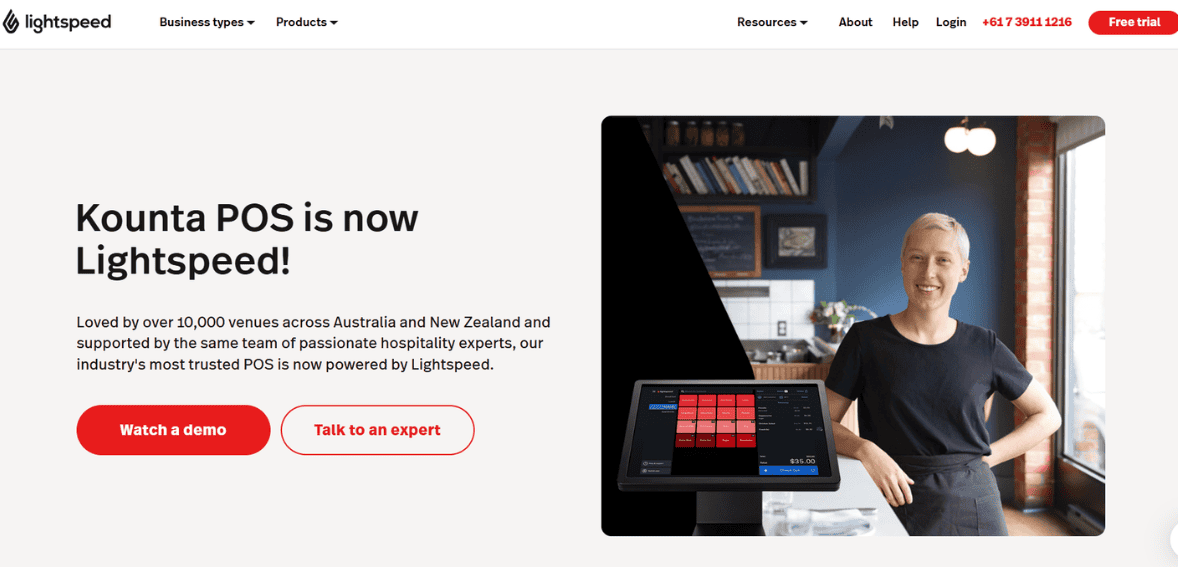
October 2019 saw the purchase by Lightspeed POS Inc.; a publicly-traded company with offices in Canada specializing in cloud commerce platforms; of Kounta Holdings Pty Ltd for about 35.3 million US dollars, through an all-cash and stock transaction. The Kounta brand ceased to exist as such, being merged into Lightspeed, while the product continues to function as Lightspeed Restaurant, targeted at Australian and New Zealand markets. At the same time, when merchants search for a Kounta solution, they look at the Lightspeed Restaurant software. This paper reviews the Kounta solution as originally conceived, and its current iteration in the Lightspeed portfolio, which became the target of an important legal dispute with Tyro Payments in 2023 and 2024.
Company Background and Market Position | Kounta Review
Nick Cloete founded Kounta in 2012 in Sydney, operating from offices in Chippendale, a suburb that had become a hub for Australian technology startups. The company’s mission was articulated as making it easy and cost-effective for merchants to better run, connect, and grow their businesses through a simple yet powerful POS experience. That mission statement reflected a practical orientation: Kounta was not trying to be the most feature-rich POS system on paper but the most operationally effective one in the daily reality of a busy hospitality environment.
The platform gained traction rapidly in the Australian and New Zealand hospitality sector, growing to serve more than 7,000 customer locations across cafes, bars, full-service restaurants, counter-service operations, and boutique hotels by the time of the Lightspeed acquisition in 2019. That growth was generated in a market where hospitality businesses are numerous, competitive, and generally skeptical of technology vendors who do not understand the operational realities of service under pressure.
Kounta generated revenue of approximately 6.4 million US dollars in its fiscal year ending June 30, 2019, which put it at a meaningful but not dominant scale relative to its ambition. Lightspeed’s 35.3 million dollar acquisition price reflected both the strategic value of Kounta’s established Asia-Pacific customer base and its potential as the platform through which Lightspeed would build out its hospitality presence in the region.
Following the acquisition, the Kounta team continued operating from Chippendale with the same personnel who had built the product, which is a positive indicator of platform continuity during a transition that can often see founding team departure and product development disruption. The formal rebrand from Kounta to Lightspeed Restaurant in the Australian market occurred progressively following the acquisition, completing the consolidation of the Kounta identity into the Lightspeed family.
Core POS Capabilities for Hospitality
The Kounta platform was designed around the specific operational demands of hospitality environments, and the core POS capabilities reflect those demands rather than being adapted from a retail-first system. Order management, table management, kitchen communication, payment splitting, tip handling, and fast transaction processing are the functions that a busy cafe or restaurant depends on minute to minute, and Kounta built these as primary features rather than afterthoughts.
Order entry supports all the variations that hospitality service requires: modifications, special requests, course sequencing, and the ability to split items across multiple tables or accounts. The system handles the complexity of a full-service restaurant where orders need to be communicated to multiple kitchen and bar stations simultaneously without creating miscommunication that leads to errors reaching the customer.
Payment acceptance covers all swipes, taps, tips, and splits, reflecting the practical reality that hospitality payment interactions are more varied than standard retail checkouts. A table of four splitting a bill six different ways, with some paying cash, some paying card, and one wanting to add a tip, represents a routine scenario in restaurant service that a poorly designed POS system makes slow and error-prone. Kounta’s payment handling was built to navigate these scenarios quickly.
The system supports multiple payment method types, and its integration with Tyro Payments, a major Australian payment terminal provider for the hospitality sector, was a central part of how Kounta customers processed card transactions. That integration relationship subsequently became the subject of legal dispute, covered in detail in a dedicated section of this review.
Hardware Agnosticism and Device Flexibility
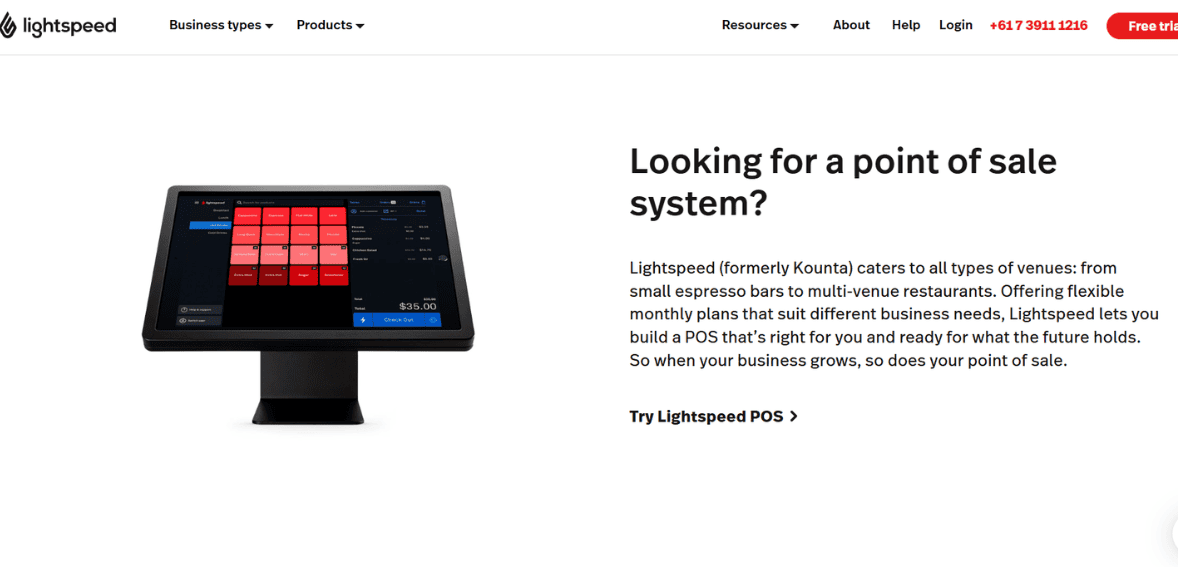
One of Kounta’s most clearly differentiated features at the time of its founding, and one that remained a genuine strength throughout its independent operation, was its hardware-agnostic architecture. Rather than requiring merchants to purchase proprietary hardware, Kounta ran on smartphones, tablets, laptops, and traditional POS equipment that businesses already owned, making it genuinely flexible in a way that many competitors were not.
The practical value of hardware agnosticism for hospitality businesses is considerable. A small cafe that already has an iPad does not need to purchase dedicated POS hardware to get started. A restaurant expanding to a new location can add POS terminals using consumer devices rather than waiting for proprietary hardware procurement and configuration. Staff who are familiar with iOS or Android interfaces require less training to use a POS system running on those platforms than one running on a proprietary operating system with an unfamiliar interface.
This flexibility also enabled Kounta to serve businesses of different sizes and operational configurations without requiring separate product SKUs for different customer types. A single-terminal coffee shop and a multi-station full-service restaurant could both run on Kounta, using whatever hardware combination suited their specific operational layout.
The device flexibility extended to the offline capability, which addressed one of the more practically important concerns for hospitality businesses: what happens when the internet connection drops during a busy service period. Kounta was designed to operate in offline mode, processing transactions locally and syncing data when connectivity was restored, so that a network outage did not stop service. For hospitality businesses where a POS failure during a Saturday evening service has immediate and significant revenue consequences, this offline resilience was a meaningful operational assurance.
Inventory Management and Cost of Goods Control
Beyond the transaction processing layer, Kounta invested in inventory management tools designed specifically for the cost pressures and waste dynamics of hospitality operations. Food and beverage cost management is one of the most operationally significant challenges for cafes and restaurants, where ingredient costs, wastage, over-ordering, and portion inconsistency directly affect profitability in an industry with structurally thin margins.
The inventory tools within Kounta were designed to keep the Cost of Goods Sold in line and eliminate over-ordering, helping kitchens waste less food and consistently meet quality demands. This framing reflects an operational rather than administrative orientation: the goal of inventory management in a hospitality context is not record-keeping for its own sake but active cost control that protects margins and maintains service quality.
Recipe management within the inventory system allowed operators to define the specific ingredients and quantities associated with each menu item, enabling the system to track ingredient usage as orders are placed and identify discrepancies between theoretical and actual consumption. Where actual usage exceeds theoretical, the discrepancy signals either wastage, portioning inconsistency, theft, or data entry errors, each of which has a different operational remedy. Having this visibility without requiring manual stock counts for every reconciliation period is a practical operational advantage for busy hospitality environments.
Real-time sales data alongside inventory tracking allowed operators to connect revenue performance with stock position, enabling smarter purchasing decisions and reducing the likelihood of running out of high-demand items during service periods or carrying excess inventory of slow-moving products. For food and beverage businesses where ingredient freshness is a factor, the cost of both running out and over-ordering is genuine and immediate.
Cloud Architecture and Multi-Location Management
Kounta’s cloud-based architecture was a foundational design choice that shaped both its product capabilities and its competitive positioning relative to legacy on-premise POS systems. Running the POS system on cloud infrastructure rather than local servers meant that software updates were delivered automatically without requiring visits to each terminal location, that data was accessible from any internet-connected device rather than only from the terminal itself, and that multi-location businesses could be managed from a central interface rather than requiring separate administration for each site.
In hospitality establishments operating in multiple locations, having the capacity to centrally configure and manage their systems is a significant advantage in terms of efficiency. Updates on menus, prices, and promotions that otherwise will necessitate manual configurations at each location can now be applied to all locations simultaneously through this cloud system. Operators can have access to up-to-date as well as historical sales data from anywhere at any time as long as they have internet connectivity to check on the performance of all locations for informed decision-making.
Cloud computing also made the deployment process easier. Since operators do not need to install or configure anything on their devices to use the POS, activating new terminals can simply be done by logging into the cloud-based application, making the task easier and faster even when more personnel needed to be accommodated or a new location launched. As far as the Lightspeed company goes post-acquisition, the choice of cloud computing is an excellent match since its own platform operates in a similar manner.
Integrations with Accounting and Business Tools
One of Kounta’s most practically appreciated features among its merchant base was its integration ecosystem, particularly its connection with Xero, the cloud-based accounting software that is widely used by Australian and New Zealand small and medium-sized businesses. The ability to have sales data flow directly from the POS system into the accounting platform, without requiring manual data entry or export-import processes, addressed one of the most time-consuming administrative tasks that hospitality business owners typically manage outside service hours.
The Xero integration allowed end-of-day reconciliation to be largely automated, allowing the necessary transaction information, including information on payments by method and taxes, to feed through seamlessly in an appropriate format into the accounting system, corresponding to the requirements of the reporting period. In the case of smaller cafe and restaurant owners managing their own bookkeeping, such an automation process equates to significant time savings from what would normally be manual transfers of information across the two systems.
In addition to the Xero integration, Kounta offered integration with many different business applications related to hospitality, including loyalty programs, eCommerce functions, staff management tools, and payment terminal integrations, notably the one with Tyro Payments, that would allow seamless integration of the POS system with merchant payment terminals.
The ability to integrate with many other business applications was a competitive advantage that underscored Kounta’s approach to the technological realities in which businesses operate. It made the implementation process less disruptive and, therefore, more beneficial compared to systems that were incompatible with existing tools and required full-scale replacement of the entire technology stack.
Reporting and Business Analytics
Kounta provided real-time and historical sales reporting through its cloud-based dashboard, giving operators visibility into business performance at the level of detail that hospitality management decisions require. Sales by product, category, time period, and location could be viewed from any device with internet access, making the reporting genuinely useful as an operational tool rather than an end-of-month accounting exercise.
The ability to access reporting remotely was a specific feature noted positively in user reviews, reflecting the reality that many hospitality business owners are not physically present at their venue at all times and need visibility into performance from wherever they are. Checking how a Saturday brunch service is tracking against the same period last month, or identifying which menu items are driving most of the revenue during the dinner service, are decisions that benefit from timely data rather than retrospective review.
Sales trend analysis over historical periods allowed operators to identify seasonal patterns, evaluate the impact of menu changes or promotional activity, and make more informed decisions about staffing and purchasing based on expected demand rather than intuition alone. For hospitality businesses where the cost of being over-staffed on a quiet night or under-stocked on a busy one is real and immediate, this data accessibility has direct operational value.
The reporting interface was consistently described by users as intuitive and modern, reflecting Kounta’s design investment in making the back-office experience as clean as the front-of-house interface. A reporting dashboard that hospitality operators find genuinely easy to navigate is more likely to be actually used than one that requires training to interpret.
The Tyro Payments Relationship and Legal Dispute
The relationship between Kounta and Tyro Payments, and the legal dispute that emerged from it, is one of the most significant pieces of context for any merchant evaluating Kounta’s history and understanding the complex ecosystem of relationships that shaped how the platform evolved under Lightspeed ownership.
Tyro Payments is an Australian fintech company and one of the major providers of EFTPOS terminals for hospitality businesses in Australia. Before and for some time after the Lightspeed acquisition, Kounta operated as Tyro’s agent, distributing Tyro’s payment terminals to Kounta’s merchant base as the card acceptance companion to the Kounta POS software. This arrangement created a distribution relationship in which Kounta directed merchants toward Tyro for their payment processing needs.
The legal dispute began in September 2023, when Tyro filed proceedings in the Supreme Court of New South Wales alleging that Kounta had breached its contractual obligations by marketing Lightspeed Payments, a competing payment product, to Tyro’s existing merchant customers. Tyro further alleged that Kounta had imposed additional fees on merchants using the Lightspeed POS software who chose to retain Tyro terminals rather than switching to Lightspeed Payments, effectively creating a financial incentive for merchants to move their payment processing to Lightspeed at the expense of Tyro.
The Supreme Court of NSW found in November 2023 that Kounta had breached its contractual and fiduciary obligations to Tyro, issuing a restraint preventing Kounta from soliciting Tyro merchants to switch to Lightspeed Payments. Kounta filed an appeal in December 2023, but in February 2024 the parties reached a settlement under which Kounta agreed to drop the appeal and pay Tyro ten million dollars in damages. The settlement also maintained the restraint on merchant solicitation until September 2024, applying to Kounta, Lightspeed Commerce, and its New Zealand subsidiary Vend Limited.
For merchants evaluating this history, the dispute illustrates the commercial tensions that can emerge when a POS software company with payment processing ambitions also operates as a distribution agent for a competing payment processor, a structural conflict of interest that the legal outcome validated as a genuine breach rather than a gray area.
Customer Support and User Experience
Kounta offered 24/7 customer support through its platform, with one-on-one onboarding sessions, webinars, demos, videos, and guides as part of its support model. The personalized onboarding approach reflected an understanding that hospitality operators typically do not have dedicated IT staff and need practical, accessible assistance getting a new system operational rather than technical documentation to work through independently.
User feedback from G2 and other review platforms consistently highlighted the platform’s ease of use as a genuine strength, with the interface described as sleek, modern, and intuitive. The observation that Kounta is quick to get started and easy to use, yet powerful enough to run any store, captures the balance the platform sought to achieve between accessibility for non-technical users and capability for complex hospitality operations.
The offline capability received specific positive mentions from hospitality operators for whom network reliability is a practical concern rather than a theoretical one. Knowing that the POS system will continue to function and process transactions if the internet connection drops during a busy service period is a meaningful assurance that reduces the anxiety associated with technology dependence in a high-pressure operational environment.
The areas of negative feedback in user reviews centered on pricing, which some users described as significantly high and subject to cost increases, and on technical support quality, with delayed response times and inadequate resolution of issues cited as specific concerns. These patterns are consistent with broader feedback about Lightspeed’s support experience following the acquisition of multiple POS companies and the integration of their customer bases into a larger support organization.
Pricing and the Lightspeed Transition
Kounta’s pricing as an independent company was competitive within the Australian hospitality POS market, though specific historical rate card details are not extensively documented in publicly available materials. The transition to Lightspeed ownership introduced the Lightspeed pricing framework for the Kounta customer base, which operates on a subscription model with tiered plans based on the number of registers and the feature set required.
Under Lightspeed’s current pricing, the hospitality POS offering that replaced Kounta is structured with monthly subscription fees that increase with additional registers and advanced features. Users in the Kounta and Lightspeed community have noted pricing increases following the acquisition and the transition to the Lightspeed platform, with some merchants expressing that the cost increases were not accompanied by commensurate improvements in feature quality or support.
The Tyro dispute also introduced a specific pricing dimension that is directly relevant to Kounta merchants. The allegation that Kounta imposed additional fees on merchants who retained Tyro terminals rather than switching to Lightspeed Payments suggests that payment processing integration choices carried pricing implications that merchants may not have anticipated when their POS and payment processing relationships were established separately under the previous arrangement.
Merchants evaluating the current Lightspeed Restaurant product in Australia and New Zealand should request a comprehensive written pricing schedule covering subscription fees, per-register costs, payment processing rates if using Lightspeed Payments, and any fees associated with specific integrations or features they plan to use.
Strengths, Limitations, and Who It Is Best For
Kounta, as it was built under Nick Cloete’s leadership, was a genuinely well-designed hospitality POS platform whose strengths reflected deep operational understanding of the cafes, restaurants, and bars it was built to serve. The hardware-agnostic architecture, offline capability, intuitive order management, strong inventory tools, cloud-based multi-location reporting, and Xero integration addressed real and specific operational needs of hospitality businesses in a coherent and well-executed package. The 7,000-plus location customer base built before the Lightspeed acquisition is the most concrete evidence of genuine product-market fit in a market that is not easily fooled by marketing claims.
The limitations in evaluating Kounta today are primarily the result of the Lightspeed acquisition and its aftermath. The Kounta brand no longer operates independently, the product is now Lightspeed Restaurant in the Australian and New Zealand markets, and the experience merchants have is shaped by Lightspeed’s pricing, support infrastructure, and strategic decisions rather than those of the original Kounta team. The Tyro legal dispute and its ten million dollar settlement introduced reputational and commercial complexity that was absent from the independent Kounta story and that is relevant context for merchants in the Australian hospitality market evaluating their payment integration options alongside their POS software choice.
The merchants best positioned to benefit from the Kounta heritage platform, now accessed through Lightspeed Restaurant, are hospitality businesses in Australia and New Zealand that need a cloud-based, device-flexible POS system with strong inventory management, centralized multi-location reporting, and integration with Xero and other Australian business tools. Small to medium-sized cafes, restaurants, bars, and boutique hotels that prioritize ease of use, operational resilience through offline capability, and clean integration with their accounting software over the lowest possible software cost will find the platform’s core capabilities well-matched to their needs.
FAQs
Q1. Is Kounta still available as a standalone product, or has it been fully replaced by Lightspeed Restaurant?
Kounta no longer operates as an independent product or brand. Following Lightspeed POS Inc.’s acquisition of Kounta Holdings Pty Ltd in October 2019 for approximately 35.3 million US dollars, the Kounta platform was progressively integrated into the Lightspeed product family and rebranded as Lightspeed Restaurant in the Australian and New Zealand markets. Merchants who were using Kounta prior to the acquisition have been transitioned to the Lightspeed platform, and new merchants in Australia and New Zealand seeking the hospitality POS capabilities that Kounta was known for will find them under the Lightspeed Restaurant brand.
The core technology and much of the team that built Kounta continued operating from Chippendale following the acquisition, providing some continuity in the product’s development direction, though the commercial and operational decisions are now made within Lightspeed’s global platform context rather than as an independent Australian company.
Q2. What was the Tyro Payments legal dispute about, and what does it mean for merchants who use both Kounta and Tyro?
The Tyro Payments legal dispute arose from Kounta’s conduct as Tyro’s agent after the Lightspeed acquisition. Kounta had an existing contractual relationship with Tyro under which it acted as Tyro’s agent, distributing Tyro payment terminals to its merchant base. Following the acquisition, Kounta began marketing Lightspeed Payments, a competing payment product, to Tyro’s existing merchant customers, and was alleged to have imposed additional fees on merchants using the Lightspeed POS software who chose to retain their Tyro terminals rather than switching to Lightspeed Payments.
The Supreme Court of New South Wales found in November 2023 that Kounta had breached its contractual and fiduciary obligations to Tyro. In February 2024, the parties settled, with Kounta agreeing to pay Tyro ten million dollars in damages and dropping its appeal. For merchants who were using both Kounta POS software and Tyro payment terminals during the period of the dispute, the practical implication was that their payment processing integration choices became subject to commercial pressure from their POS provider in a way that was not transparent at the time.
Merchants in the Australian hospitality market who are evaluating POS and payment terminal combinations should ask specifically about any commercial relationship between their POS software provider and competing payment processors before committing to either component of that combination.
Q3. How does Kounta, now Lightspeed Restaurant, compare to other hospitality POS options in the Australian market?
The hospitality POS market in Australia includes a range of options from global platforms like Square and Toast to locally developed alternatives, and the right choice depends significantly on a business’s specific operational requirements, budget, and existing technology relationships. Lightspeed Restaurant, carrying the Kounta heritage, is strongest for cafes, bars, and full-service restaurants that value device flexibility, offline capability, and clean integration with Xero and Australian business tools. Its multi-location management capabilities make it a practical choice for operators running more than one site who want consolidated reporting from a single interface.
Where it faces competitive pressure is on pricing, where the subscription cost has increased following the Lightspeed transition and some merchants have found the all-in cost higher than alternatives offering comparable core functionality. Merchants evaluating Lightspeed Restaurant against alternatives should compare not just the subscription fee but the total cost including payment processing rates if using Lightspeed Payments, hardware costs, integration fees for specific tools they use, and the support model available at their account tier.
Best Product & Services
Recent Posts