
Ecommpay Review
30
Mar 2026

No Comments
Ecommpay Review
Ecommpay is a global payment service provider that offers businesses a unified platform to manage online transactions, payment processing, and financial operations. As digital commerce continues to expand across regions and industries, payment infrastructure has become a critical component for businesses looking to operate efficiently and scale across markets. Ecommpay positions itself as a solution that simplifies complex payment ecosystems while maintaining flexibility for different business needs. Lets read more about Ecommpay Review.
The platform is designed to support businesses that require multi-currency transactions, diverse payment methods, and seamless customer experiences. It combines payment acceptance, fraud management, and reporting within a single system, which reduces dependency on multiple vendors. This integrated approach can help businesses streamline operations and maintain better visibility over their financial data.
Company Background and Market Position | Ecommpay Review
Ecommpay operates as an international payment solutions provider with a presence across multiple regions, including Europe, Asia, and other global markets. Over time, it has built its position in the fintech ecosystem by focusing on cross-border payment processing and customizable solutions for businesses with complex operational requirements. This approach reflects the increasing demand for payment systems that can handle global transactions efficiently.
The company’s market positioning leans toward mid-sized and enterprise-level businesses rather than very small merchants. Many of its offerings are designed to support higher transaction volumes and more advanced payment workflows, which makes it more suitable for companies that are already operating at scale or planning to expand internationally. This focus allows Ecommpay to provide more tailored solutions, but it can also make the platform feel less straightforward for businesses with simpler needs.
In a competitive market that includes established payment gateways and fintech platforms, Ecommpay differentiates itself through its modular infrastructure and flexibility. Businesses can configure the platform to suit their specific requirements, which is an advantage for those dealing with varied payment scenarios. At the same time, this level of customization requires a certain level of technical understanding, which may not be ideal for every user.
Core Payment Processing Capabilities
At its core, Ecommpay enables businesses to process digital transactions through a centralized and structured system. It manages the entire payment lifecycle, starting from customer checkout to authorization, processing, and final settlement. This end-to-end approach helps businesses maintain consistency in how transactions are handled, reducing the need for multiple disconnected systems.
One of the key strengths of the platform lies in its ability to handle large transaction volumes without compromising performance. For businesses operating in high-demand environments, consistent processing speed and reliability are critical. Ecommpay is built to support such requirements, which makes it suitable for industries where transaction continuity directly impacts revenue and customer satisfaction.
The platform also includes intelligent routing capabilities that aim to improve transaction success rates. By directing payments through the most effective channels based on location, currency, and other factors, businesses can reduce failed transactions and improve overall efficiency. This feature is particularly useful for companies that operate across different regions with varying banking infrastructures.
However, the effectiveness of these capabilities often depends on how well the system is configured. Businesses may need to invest time in optimizing payment flows to fully utilize the platform’s potential. When implemented properly, Ecommpay provides a strong foundation for managing digital payments at scale.
Supported Payment Methods and Global Reach
Ecommpay supports a wide range of payment methods, allowing businesses to cater to diverse customer preferences across different markets. These include major card networks, digital wallets, bank transfers, and a variety of alternative payment methods. This flexibility is essential for businesses that want to provide a smooth checkout experience to customers from different regions.
The platform’s global reach is one of its most significant advantages. It enables businesses to accept payments in multiple currencies and operate across borders without needing separate payment providers for each region. This capability simplifies expansion into new markets and reduces operational complexity for businesses with international customers.
In addition to widely used payment options, Ecommpay also integrates localized payment methods that are specific to certain countries or regions. Offering these options can improve customer trust and increase conversion rates, as users are more likely to complete transactions when familiar payment methods are available.
At the same time, managing such a wide range of payment methods requires careful setup and ongoing monitoring. Businesses need to ensure that the right options are enabled for their target markets. While Ecommpay provides the infrastructure to support global payments, the responsibility of optimizing the payment mix often lies with the business using the platform.
Platform Features and Technology Infrastructure
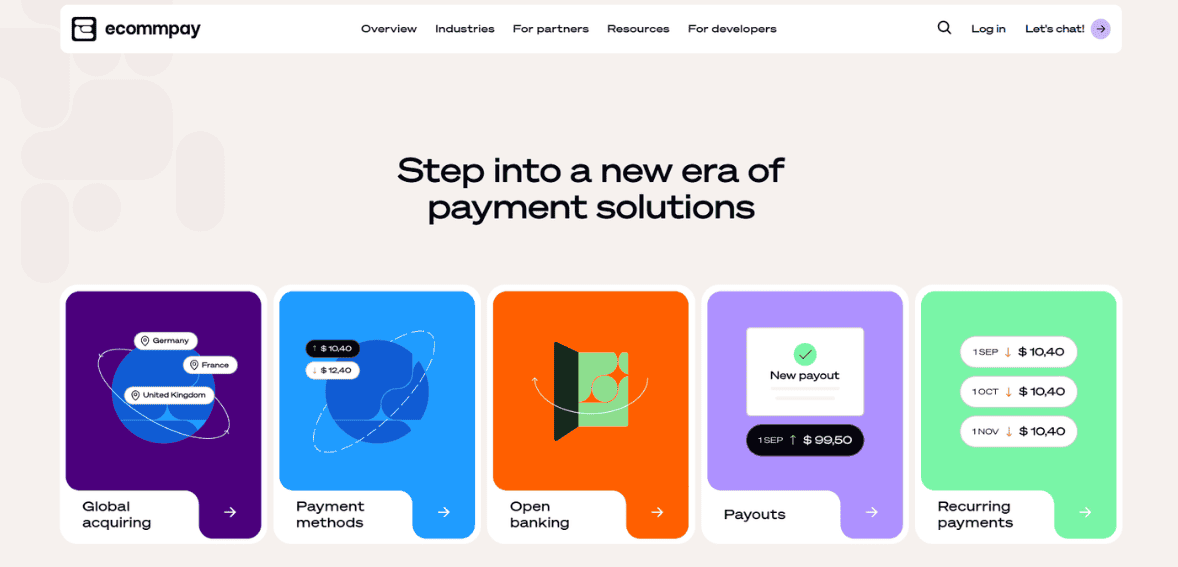
Ecommpay is built on a technology infrastructure that aims to provide flexibility, scalability, and reliability for businesses handling digital transactions. The platform combines multiple functionalities, including payment processing, fraud detection, and reporting, within a unified system. This integrated structure reduces the need for businesses to rely on separate tools for different aspects of payment management.
The platform is designed to be modular, which allows businesses to customize features based on their specific needs. This flexibility is particularly useful for companies operating in complex environments where standard solutions may not be sufficient. Businesses can configure workflows, payment routes, and risk management settings to align with their operational requirements.
From a technical standpoint, the infrastructure is built to support high availability and consistent performance. This is important for businesses that cannot afford downtime or disruptions in their payment systems. The platform’s architecture aims to ensure that transactions are processed smoothly, even during peak usage periods.
However, the same flexibility that makes the platform powerful can also make it more complex to manage. Businesses without dedicated technical teams may find it challenging to fully utilize all features. While the infrastructure is robust, its effectiveness depends on how well it is implemented and maintained over time.
User Interface and Dashboard Experience
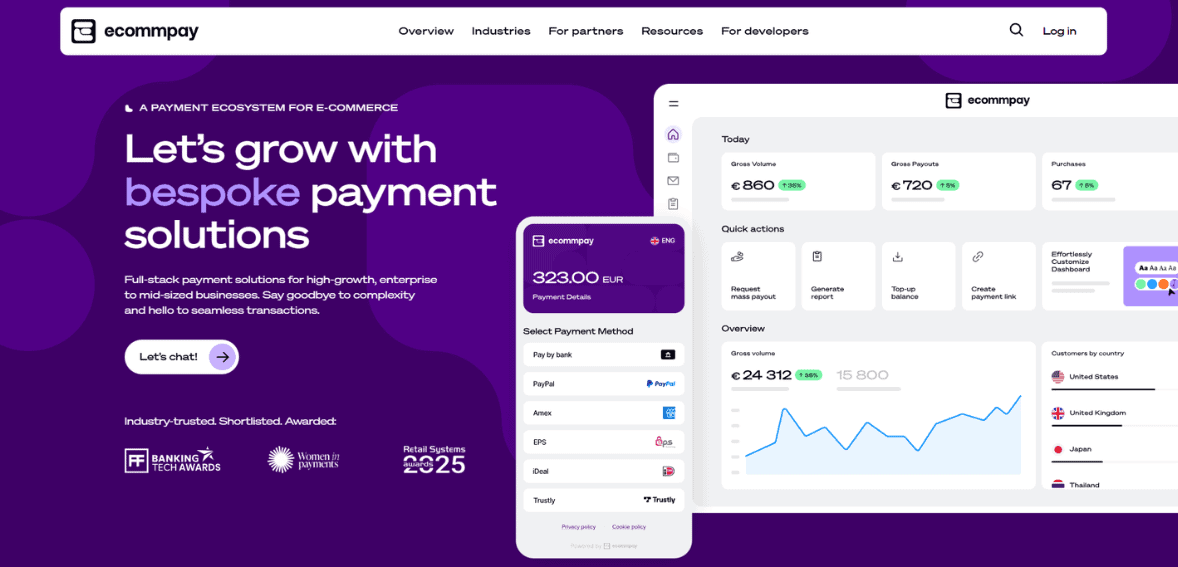
The user interface of Ecommpay is designed to provide businesses with a centralized view of their payment operations. Through the dashboard, users can monitor transactions, access reports, and manage various aspects of their payment processes. Having all this information in one place can improve operational efficiency and decision-making.
The dashboard offers detailed insights into transaction performance, including success rates, payment methods, and regional data. This level of visibility helps businesses identify patterns and optimize their payment strategies. For example, companies can analyze which payment methods perform best in specific markets and adjust their offerings accordingly.
In terms of usability, the interface is functional but may require some time to get familiar with, especially for new users. The range of features available means that the dashboard can feel complex at first. Businesses may need to invest time in training or onboarding to fully understand how to navigate and use the system effectively.
Overall, the dashboard provides valuable tools for managing payments, but its usability largely depends on the user’s level of experience. For businesses that require detailed analytics and control, the interface can be a strong asset, while for simpler use cases, it may feel more advanced than necessary.
Integration Options and Developer Support
Ecommpay provides a range of integration options that allow businesses to connect the platform with their existing systems. These include APIs, SDKs, and pre-built plugins that can be used to integrate payment functionality into websites, mobile applications, and other digital platforms. This flexibility is important for businesses that operate across different channels and require a seamless payment experience.
The platform’s API-driven approach enables developers to customize payment flows and create tailored solutions based on specific business needs. This level of control can be beneficial for companies that want to design unique checkout experiences or integrate payments into complex workflows. It also allows for better alignment with internal systems such as CRM or ERP platforms.
Developer documentation and support play a key role in the integration process. Ecommpay provides technical resources that guide developers through setup and implementation. However, the ease of integration can vary depending on the complexity of the project and the technical expertise available within the business.
For organizations with experienced development teams, the platform offers significant flexibility and customization options. On the other hand, businesses with limited technical resources may find the integration process more demanding. The overall experience depends on how well the available tools and documentation align with the specific requirements of the project.
Security, Compliance, and Risk Management
Security is a critical aspect of any payment platform, and Ecommpay incorporates multiple layers of protection to safeguard transactions and sensitive data. The platform follows industry standards for data security and compliance, which helps ensure that transactions are processed in a secure environment. This is particularly important for businesses handling large volumes of financial data.
Ecommpay includes built-in fraud prevention tools that analyze transaction patterns and identify potential risks. These tools use various parameters to detect suspicious activity, allowing businesses to reduce the likelihood of fraudulent transactions. Effective risk management can help protect both the business and its customers from financial losses.
Compliance with regulatory requirements is another key component of the platform. Operating in multiple regions means adhering to different financial regulations, and Ecommpay aims to meet these standards to support international transactions. This helps businesses navigate complex compliance landscapes without needing to manage every detail independently.
While the platform provides strong security features, businesses still play a role in maintaining a secure environment. Proper configuration and monitoring are essential to ensure that risk management tools function effectively. Overall, Ecommpay offers a solid framework for security and compliance, but its success depends on how it is implemented in practice.
Settlement Process and Payout Management
Ecommpay manages the settlement of transactions by ensuring that funds are transferred from customers to merchants in an organized and timely manner. The settlement process is an important aspect of payment operations, as it directly affects cash flow and financial planning for businesses. The platform aims to provide a structured approach to handling payouts.
The time taken for settlement processes can differ based on various factors such as payment methods, regions, and banking systems. Ecommpay provides insight into these processes, enabling businesses to understand when they can expect to receive payments. This facilitates effective management of business operations.
The platform also includes reconciliation processes, which assist in linking transactions with settlement processes. These processes can be effective for organizations with high transaction volumes. They assist in maintaining accurate financial records for such organizations.
Despite the availability of effective infrastructure for managing settlement processes, businesses may still face challenges in international payments. The complexity in settlement processes can cause issues for businesses. The banking system in different regions can influence the time taken for payouts. Businesses need to understand how settlement processes operate in different regions where they conduct operations.
Pricing Structure and Cost Transparency
Pricing is a key consideration for any payment platform, and Ecommpay’s cost structure can vary depending on factors such as transaction volume, business model, and geographic scope. Unlike some platforms that offer standardized pricing, Ecommpay often provides customized pricing based on individual business requirements. This approach allows for flexibility but can make it harder to compare costs upfront.
The pricing model typically includes transaction fees, processing charges, and potentially additional costs for specific services. Businesses need to carefully review these components to understand the total cost of using the platform. Transparency in pricing is important, especially for companies that operate with tight margins.
Customized pricing can be beneficial for larger businesses that require tailored solutions, as it allows them to negotiate terms that align with their operations. However, smaller businesses may find it more challenging to evaluate whether the pricing is competitive compared to other providers. Overall, Ecommpay’s pricing approach reflects its focus on flexibility and customization. While this can be an advantage in certain scenarios, it also requires businesses to conduct thorough due diligence to ensure that the cost structure aligns with their financial expectations and long-term goals.
Customer Support and Service Quality
Customer support plays a crucial role in the overall experience of using a payment platform. Ecommpay offers support services to assist businesses with technical issues, integration challenges, and operational queries. Having access to reliable support can help minimize disruptions and ensure that payment systems continue to function smoothly.
The quality of support may vary depending on factors such as response times and complexity. For businesses that operate in a time-dependent environment, resolving issues in a timely manner is crucial. Ecommpay provides support through different avenues, thus helping businesses resolve issues that may be arising.
Support is crucial, especially when a business is in the initial stages of integrating the system. At this stage, a business may require support in setting up the system. Support is also crucial when a business is dealing with updates or issues that may be arising.
Despite having a structured support system, the quality of service may vary depending on the needs of the business. For instance, a business that has a complex system may require more support than a business that has a simple system. The quality of service provided by a company is usually a determining factor in how well a business will be able to satisfy a customer.
Industries and Business Use Cases
Ecommpay is designed to serve a variety of industries, including e-commerce, digital services, travel, and other sectors that rely on online transactions. Its ability to handle multiple payment methods and currencies makes it suitable for businesses that operate across different regions and customer segments.
Various industries have specific payment system requirements. This is where the flexibility of Ecommpay can help organizations adjust the platform to their specific requirements. For instance, e-commerce organizations might be focused on improving their checkout experience, while others might be focused on subscription management for digital service providers.
The flexibility of this platform is also beneficial for organizations that are at various stages of growth. Organizations that are venturing into new markets can also use this platform to help manage their transactions. This means that they do not have to develop separate payment systems for various regions.
The suitability of this platform can also depend on the complexity of the business model. Organizations that have simple payment requirements might find this platform too advanced for their needs. On the other hand, organizations that have complex business models can benefit from using this platform. Understanding how this platform can align with specific requirements is crucial in determining its value.
Advantages and Limitations
Ecommpay offers several advantages that make it a strong option for businesses with complex payment requirements. Its ability to support multiple payment methods, handle international transactions, and provide customizable solutions gives it a level of flexibility that is valuable for growing businesses. The integrated approach to payment processing, risk management, and reporting also helps streamline operations.
Another advantage is the scalability of the platform. This is beneficial in the sense that the business can scale up without having to change the payment provider. In addition, the availability of detailed analytics and reporting tools enables the business to make informed decisions concerning the optimization of the payment strategy.
However, there are some disadvantages associated with the Ecommpay platform. One of the disadvantages is the complexity of the platform. This may be a challenge for businesses that are not technically inclined. In other cases, the complexity of the platform may require the business to allocate more resources in order to set up the system, especially if the business is new to the use of complex payment systems.
Another disadvantage is the pricing transparency of the platform. This is in the sense that the customized pricing models of the platform make it hard for the business to compare the prices of the platform with other similar platforms. Overall, the Ecommpay platform is beneficial in the sense that it has the necessary advantages and disadvantages.
Comparison with Other Payment Solutions
When compared to other payment solutions, Ecommpay stands out for its flexibility and focus on customized implementations. Many payment providers offer standardized solutions that are easy to set up but may lack the ability to handle complex requirements. Ecommpay takes a different approach by allowing businesses to tailor the platform to their needs.
In terms of functionality, it competes with established payment gateways that offer similar services, such as multi-currency support and fraud prevention tools. The key difference lies in how these features are delivered. Ecommpay’s modular structure provides more control, while some competitors prioritize simplicity and ease of use.
The choice between Ecommpay and other providers often depends on the specific priorities of the business. Companies that value customization and scalability may find Ecommpay more suitable, while those looking for quick implementation and straightforward pricing may prefer other options. Ultimately, the comparison highlights that there is no one-size-fits-all solution in the payment industry. Each platform has its strengths and trade-offs, and businesses need to evaluate which features align best with their operational goals and technical capabilities.
Final Verdict: Is Ecommpay the Right Choice?
Ecommpay claims itself to be a powerful and flexible payment solution that is built to accommodate the needs of modern-day digital transactions. It is primarily beneficial in terms of international operations and the variety of payment options it provides. It is also beneficial in terms of customization, as it can accommodate the needs of diverse business operations. Therefore, it is more likely to be beneficial for businesses with complex operations.
However, the complexity of the platform in terms of the latest and greatest in the field can also pose a threat in terms of technical knowledge being necessary in order to properly set up the platform. Therefore, it is more likely to be beneficial for businesses with complex operations. In terms of the overall value of the platform, it is likely that the value of the platform would be dependent on the alignment of the platform with the overall goals and strategies of the company.
FAQs
What types of businesses can use Ecommpay?
Ecommpay is generally suited for mid-sized to large businesses that require advanced payment capabilities, especially those operating across multiple regions or handling high transaction volumes.
Does Ecommpay support international payments?
Yes, the platform supports multi-currency transactions and a wide range of global payment methods, making it suitable for businesses with international customers.
How secure is Ecommpay for online transactions?
Ecommpay follows industry-standard security practices and includes fraud prevention tools, but businesses must configure and manage these features properly to ensure optimal protection.
Best Product & Services
Recent Posts