

Loyverse POS Review
By 10topmerchantservices June 15, 2026
Loyverse POS occupies a genuinely distinctive position in the POS software market: it is one of the very few credible, feature-complete POS systems available entirely free of charge for its core functionality. Founded in 2013 and headquartered in Vilnius, Lithuania, with offices in the United States and United Kingdom, Loyverse has built a global following among small business operators in retail, food service, and hospitality who want capable, cloud-based POS software without the monthly subscription fees that most comparable platforms charge from day one. Lets read more about Loyverse POS Review.
The name combines Loyalty and Universe, reflecting the platform’s dual emphasis on customer retention tools alongside standard transaction management. That brand intent is visible in the product: customer loyalty programs are built into the free tier rather than gated behind a paid plan, which is an unusual and genuinely user-friendly design decision that reflects the company’s priorities. The platform serves cafes, restaurants, bars, retail stores, and quick-service establishments across more than 180 countries, with over 700 reviews across major evaluation platforms consistently placing it among the strongest free or low-cost POS options available for small and medium-sized businesses.
Company Background and Market Position | Loyverse POS Review
Loyverse was founded in 2013 in Vilnius, Lithuania, during a period when cloud-based POS software was beginning to displace traditional hardware-dependent cash register systems but the dominant cloud POS providers were still charging monthly fees that made entry-level adoption cost-prohibitive for many small businesses. The company identified a specific and underserved segment: micro-businesses, startups, and small operators in both developed and emerging markets who needed professional-grade POS software but could not justify or afford the recurring subscription costs of the established alternatives.
The freemium model that Loyverse adopted from the beginning was not simply a customer acquisition strategy but a genuine product philosophy: the core POS functionality, including sales processing, basic inventory management, customer loyalty programs, and sales reporting, would be free permanently rather than free for a limited trial period. Add-on capabilities including advanced inventory management, employee management, expanded sales history, and deeper analytics would be available as optional paid modules at prices that remained significantly lower than the all-in subscription cost of competing platforms.
This approach generated a global user base that independent analyst assessments rank Loyverse at approximately twenty-second among POS software products based on available data, reflecting meaningful penetration across a crowded market. The food and beverage industry accounts for 28% of Loyverse reviewers, and small business POS is the most commonly cited use case at 46% of reviewers, confirming that the platform’s adoption reflects its design intent rather than accidental market capture.
The company maintains its Lithuanian headquarters while operating a genuinely global product, with the platform available in multiple languages and payment processor integrations covering providers across North America, Europe, Africa, Australia, and Asia. This geographic breadth distinguishes Loyverse from processors and POS platforms that serve primarily single-market audiences, though it also means that specific features and payment integrations vary by region in ways that merchants should verify for their specific location.
Core POS Capabilities
The core POS application is Loyverse’s most used and most praised product component, and its functionality significantly exceeds what many merchants expect from a free piece of software. Transaction processing covers cash, card, and split payment methods, handling the fundamental POS interactions that every retail and food service environment requires on a daily basis.
The user interface is consistently described across hundreds of independent reviews as intuitive and fast, with a learning curve that many users describe as under an hour from installation to operational competence. For hospitality and retail businesses where staff turnover is relatively high and training time for new employees is a recurring operational cost, the ease of onboarding new users to the POS system has genuine financial value beyond the headline software price.
Offline functionality is a core capability that operates without internet connectivity, storing transactions locally on the device and syncing them when connection is restored. For businesses in locations with unreliable internet, for outdoor market traders, and for any operation where network outages during service would be commercially disruptive, this offline resilience is a practical necessity rather than a convenience feature. Users specifically note this capability as an important factor in their decision to stay with Loyverse rather than switching to a competing platform.
Split payment processing, tip handling, and receipt customization cover the operational nuances that real-world hospitality and retail transactions involve. The split payment feature receives specific positive mentions in user reviews, reflecting how frequently this capability is needed in restaurant and cafe environments where groups commonly divide bills. The kitchen display system and kitchen printer support extend the POS functionality into back-of-house food preparation workflows, connecting front-of-house order entry with kitchen operations without requiring a separate system for each function.
Multi-store management from a single account allows businesses with multiple locations to view and manage their complete operation from one interface, which is a capability that competing platforms at Loyverse’s price point typically either do not offer or charge significantly more to access.
Payment Processing Architecture and Integrations
Loyverse’s approach to payment processing is one of its most practically significant design decisions and a clear differentiator from platforms like Square or Lightspeed that bundle proprietary payment processing with their POS software. Loyverse does not have its own payment processing product. Instead it integrates with independent payment processors and card readers, giving merchants the freedom to choose the payment provider that offers the best rates, hardware, and terms for their specific market and business type.
Supported payment processor integrations include SumUp, PayPal Zettle, Worldpay for Enterprise, Tyro in Australia, Yoco in South Africa, Smartpay in New Zealand, and others depending on geographic availability. This processor-agnostic model means that a cafe in London can integrate SumUp card readers, a restaurant in Sydney can use Tyro terminals, and a retail shop in South Africa can use Yoco, each accessing the same Loyverse POS software while working with the payment provider best suited to their local market.
The advantage that this provides is that the merchant is not bound to the bundled processing rate as determined by the POS provider. They are able to negotiate processing fees separately with the desired payment processor, seek out improved rates based on increasing processing volume, and even switch processors without having to switch out their POS software. For larger volume merchants, who have processing fees that represent a meaningful percentage of their expenses, this could result in considerable savings as compared to a system where the POS and payments are bundled together with a fixed rate that they are unable to negotiate.
The drawback to this approach is that there is less integration between the environment of the payment and the POS systems than is provided in an integrated solution. In effect, two separate sources of transaction data exist, one from the payment terminal and one from the Loyverse POS system, instead of a unified environment like you would find with a proprietary bundled solution. This is an issue that, while small in most cases, is still worth considering when analyzing this option.
Inventory Management: Free and Paid Tiers
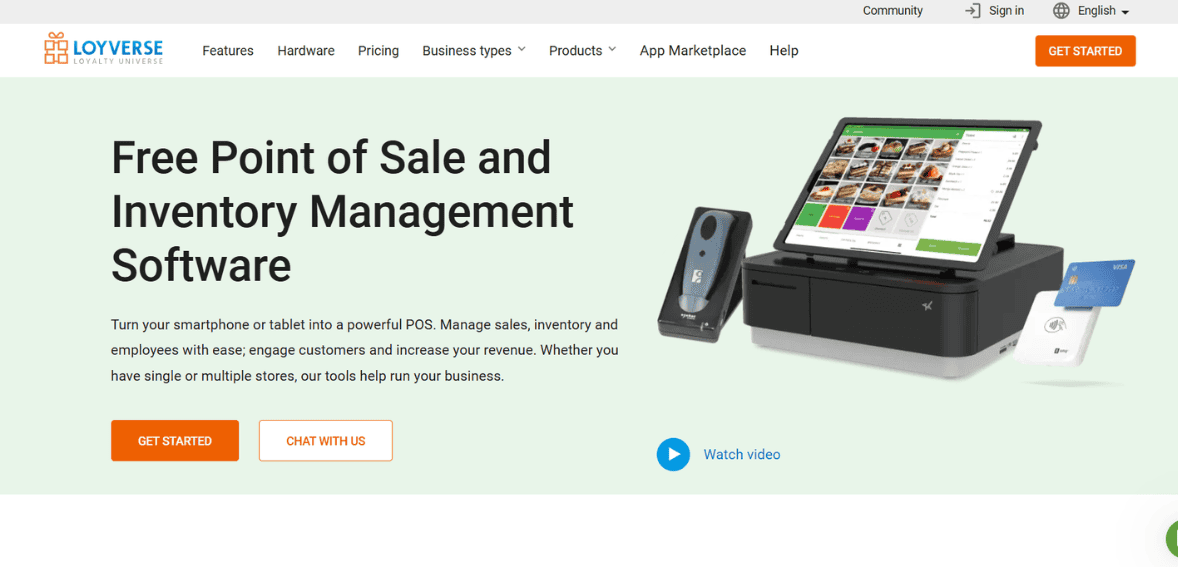
Inventory management is available at two levels within the Loyverse ecosystem, with meaningfully different capabilities between the free basic inventory and the paid Advanced Inventory add-on. The free inventory management included in the core application provides automatic stock level updates with each sale, reducing the risk of overselling and giving merchants real-time visibility into their current stock position without requiring manual count reconciliation after every transaction. For small retailers and food service businesses with relatively simple product catalogs, this automatic tracking covers the essential inventory management requirement.
The Advanced Inventory add-on, priced at 25 dollars per month per store location or 250 dollars annually per location, adds purchase ordering, inventory transfers between locations, and vendor management capabilities. Purchase ordering allows merchants to create and send restock orders directly from within the POS system when stock levels fall below defined thresholds, reducing the risk of running out of high-demand items and eliminating the manual tracking effort involved in managing reorder points separately. For businesses with multiple store locations, inventory transfer management tracks stock movement between sites, maintaining accurate position data across the full operation rather than independently at each location.
The 25 dollars per month per location pricing for Advanced Inventory is significantly below the all-in monthly subscription cost of competing platforms that include comparable inventory capabilities, which means that even a Loyverse merchant who subscribes to every available add-on is typically paying less than they would for a competing platform’s base subscription with similar functionality.
Product catalog management supports variants, enabling retailers selling products with multiple size, color, or style options to manage inventory at the variant level rather than treating each variant as a separate product. Barcode label printing is supported for merchants who need to generate labels for shelf or product identification, and bulk product import via spreadsheet reduces the setup effort for merchants with large catalogs who would otherwise need to enter products manually.
Employee Management and Time Tracking
Employee management is an optional paid add-on priced at 25 dollars per month per store location, covering staff permissions, timecard tracking, and shift management functionality that is absent from the free core application.
The staff permissions system allows business owners to define different levels of access for different employee roles, limiting what each staff member can see and do within the POS system based on their role and responsibilities. This access control is a practical security measure for any business with multiple staff members accessing the POS, preventing unauthorized discounts, refund processing, or access to sensitive financial data by employees whose roles do not require those capabilities.
Timecard and shift tracking within the same system as sales and inventory management connects labor cost data with revenue data in a way that is useful for evaluating staffing efficiency and scheduling decisions. The ability to review which employees processed which transactions, combined with the time they were clocked in, supports both fraud prevention and performance management without requiring a separate HR or scheduling tool.
For very small businesses with one or two employees where the owner is present during most operational hours, the employee management add-on may not provide sufficient additional value to justify the monthly cost. For businesses with larger teams, variable schedules, or where the owner is not always present, the access controls and timecard functionality address genuine operational needs that would otherwise require manual tracking or a separate software investment.
The free tier does not include employee-specific login or permission controls, which means all staff members accessing the POS on the same device share the same level of system access. This is a functional limitation that matters most for businesses where different staff members have different levels of authority for discounts, refunds, and cash handling, and it is worth factoring into the decision about whether the employee management add-on is appropriate for a specific business.
Customer Loyalty Programs
The built-in loyalty program is one of Loyverse’s most frequently praised features and one of the clearest expressions of the platform’s design philosophy. Rather than gatekeeping loyalty functionality behind a paid tier, Loyverse includes a fully functional customer loyalty program in the free core application, enabling merchants to reward repeat customers with points-based incentives from day one without additional cost.
The loyalty program enables merchants to set up the points accumulation ratio, the value of the points accumulated, and the loyalty rewards associated with the points that work for that merchant’s particular enterprise. Customer profile contains the data about purchases of the client along with the loyalty balance allowing merchants to understand clients’ purchasing behavior and make appropriate decisions regarding clients’ involvement.
As shown in many retail and hospitality studies, there are clear indications that the presence of a loyalty program significantly affects customers’ frequency of visits, total spendings at each visit, and retention rate. It is known that customers involved in loyalty programs attend retailers more frequently, make larger transactions, and leave fewer than those who do not use loyalty programs. Availability of such an opportunity for a business owner without any extra expenses related to installing some additional software significantly helps smaller businesses to adopt loyalty programs earlier.
Customer display system is another feature provided to merchants for free together with the core application. This tool displays transaction data along with the accumulated loyalty points to the client on the special display that is located next to the counter.
Reporting and Analytics
Loyverse’s reporting capabilities sit within the free core application at the basic level and extend with the optional paid add-on tiers. The standard reporting dashboard covers daily sales summaries, best-selling products, sales by category, tax collected, payment method breakdown, and shift-level performance, providing the essential financial visibility that small business operators need for daily management and periodic financial review.
The dashboard application, which is free and separate from the POS application itself, provides back-office analytics accessible from any internet-connected device, not just the POS terminal. Business owners who are not always physically present at their store can monitor sales activity, review performance trends, and track inventory position remotely, which is a practical operational capability for the significant proportion of small business owners who manage their operations from multiple locations or partial presence.
The Unlimited Sales History add-on, priced at 5 dollars per month per store location, extends the retention of detailed sales data beyond the default history window. For businesses that need to access granular transaction data for periods longer than the standard retention period, whether for accounting, seasonal comparison, or operational analysis, the 5 dollar monthly cost for extended history retention is likely the most straightforward cost-benefit calculation in Loyverse’s add-on menu.
Where Loyverse’s reporting falls short relative to more expensive platforms is in the area of advanced analytics. Detailed cohort analysis, customer lifetime value modeling, predictive inventory analytics, and customizable report creation are not available within the native reporting environment. Merchants who need this analytical depth either export their data to external tools like Microsoft Excel or Google Sheets, which Loyverse supports, or accept that their reporting will remain at the operational oversight level rather than the strategic analytics level.
Accounting and eCommerce Integrations
The integration ecosystem that Loyverse supports extends the platform’s value beyond the POS environment into the broader business technology stack that small operators typically use for financial management and online sales.
Xero and QuickBooks Online integrations are available through the Loyverse marketplace, connecting POS sales data with the two most widely used small business accounting platforms in the English-speaking market. The accounting integrations, delivered through Amaka as a connector platform, automate the synchronization of sales summaries, payment totals, and tax data into the accounting system, reducing the manual data entry that would otherwise be required for end-of-day reconciliation. For merchants who manage their own bookkeeping, this automation represents a meaningful reduction in the time spent on administrative tasks that generate no direct business value.
eCommerce integrations cover a substantial range of online selling platforms including WooCommerce, Shopify, BigCommerce, Wix, Squarespace, Lazada, and Amazon, with inventory and sales data synchronization connecting in-store and online operations through a unified product catalog. The ability to manage inventory position across both in-store and online channels through a single system prevents the common problem of selling the same item simultaneously in-store and online when only one unit of stock remains.
These eCommerce integrations are delivered through third-party connector applications available in the Loyverse marketplace rather than as native built-in features. The quality and reliability of these connectors varies, and merchants implementing them should verify that the specific connector for their eCommerce platform is actively maintained and that the synchronization behavior matches their operational requirements before relying on it for production inventory management.
Google Sheets and Microsoft Excel export support gives merchants a straightforward path to external data analysis without requiring a dedicated BI tool or accounting integration. For small operators who manage their own analysis in spreadsheets, direct export from the POS system into a familiar format reduces the data manipulation effort required to prepare transaction data for review.
Hardware Compatibility and Physical Setup
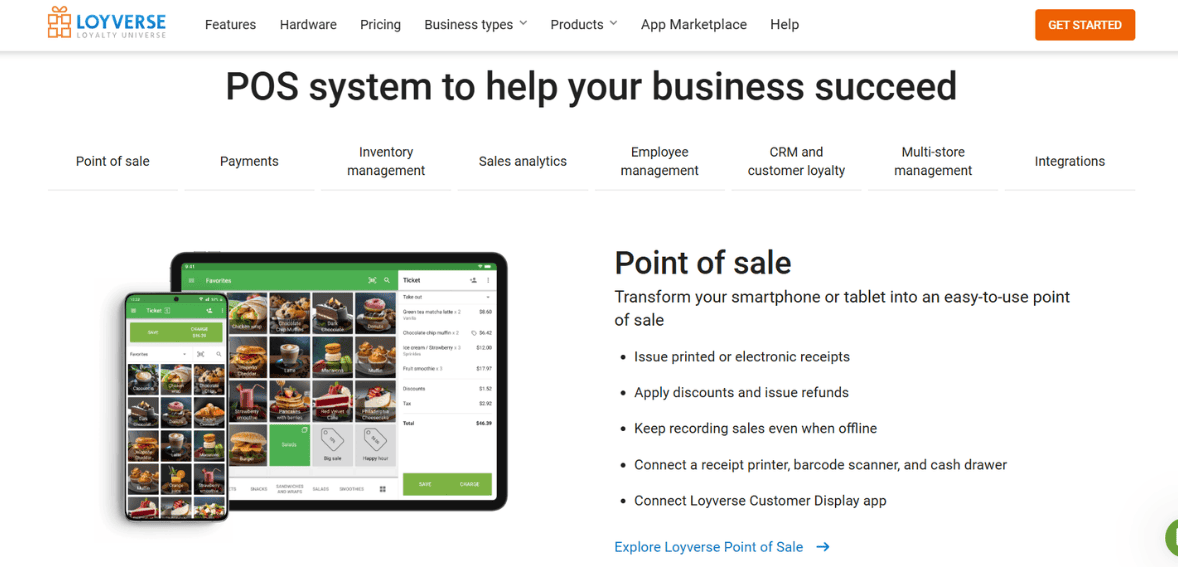
Loyverse’s hardware-agnostic approach to device compatibility is one of its most commercially accessible characteristics, particularly for merchants who are starting a new business and want to minimize initial equipment investment. The POS application runs on iOS and Android devices including smartphones and tablets, meaning merchants can use devices they already own or purchase relatively inexpensive consumer tablets rather than specialized POS hardware.
Supported peripheral hardware for receipt printing, cash drawer management, and barcode scanning covers a range of commonly available models rather than requiring proprietary equipment. This broad peripheral compatibility allows merchants to use hardware they may already own or to source equipment from competitive retail channels rather than through a vendor’s proprietary hardware store at premium pricing.
For accepting card payments, merchants will need to attach their selected payment processor’s card reader to the POS system. The readers that can be attached depend on the payment processing system being used. Users of SumUp, PayPal Zettle and card readers from other processors can expect different setups within the Loyverse application. Merchants should ensure that the hardware they purchase is compatible with the payment processor being used before purchasing any hardware.
A limitation that some users complain about is that Loyverse does not offer a native app for Windows and Mac computers. For one to use Loyverse on his or her computer, he or she needs to install an Android emulator, and this may pose some problems for businesses that wish to use a POS on their computers. iOS users feel that feature updates happen earlier on iOS than they do on Android apps.
Customer Support
Loyverse offers 24/7 live support through chat, with email and help desk support, an extensive knowledge base, FAQ resources, in-person training, and live online sessions available across its support infrastructure. The round-the-clock chat availability is notable for a free software product, where many comparable platforms limit live support to paid tier subscribers.
User feedback across review platforms is consistently positive about support quality, with responses described as fast, helpful, and available when issues arise. Multiple reviewers specifically note that questions are answered within minutes, which reflects a genuine operational standard rather than a theoretical commitment. For a small business owner dealing with a POS issue during service hours, the difference between a response in minutes and a response in hours is commercially significant.
The community forum and knowledge base offer the ability for merchants to access documentation on how to handle routine queries, thus saving on support efforts while offering the users the necessary information to solve problems without having to reach out to anyone else. Documentation quality will have a direct influence on the amount of support work done by the support team, but the consistency of positive support feedback indicates that this model of support has been working well.
There are some limitations of the support model that become evident when dealing with integration with third-party applications. For example, when there is an issue involving an integration with another application, the extent to which Loyverse support can help will depend on whether the error is coming from their software or the third-party application. It is best for the user to contact both support teams when trying to solve problems involving different systems.
Strengths, Limitations, and Who It Is Best For
Loyverse POS is a genuinely excellent product for its target audience, and the consistency of positive feedback across hundreds of independent reviews across multiple platforms reflects real product quality rather than effective marketing. The permanent free core functionality covering POS transactions, basic inventory, customer loyalty, sales reporting, and the dashboard application delivers genuine operational value that many small businesses will find completely sufficient for their needs without ever activating a paid add-on. The hardware agnosticism, offline capability, processor-agnostic payment integration, and intuitive user interface are all genuine strengths that compare favorably to competing free or low-cost alternatives.
The limitations are equally real and worth acknowledging. The add-on cost structure, while low by absolute measure, can feel disproportionate for very small operators, particularly those outside the US where pricing is in dollars and represents a higher local currency equivalent. The absence of a native Windows or Mac desktop application limits the platform for businesses that prefer desktop computing environments.
Advanced reporting and analytics capabilities are limited relative to more expensive platforms, requiring external data export for deeper analysis. The reliance on third-party connector apps for accounting and eCommerce integrations introduces a dependency on the quality and maintenance status of those connectors rather than a natively supported feature. And the absence of a proprietary bundled payment processing product means merchants manage their payment processor relationship separately, which requires slightly more setup and creates a modest reconciliation step absent in tightly integrated alternatives.
The merchants best positioned to benefit from Loyverse are small cafes, restaurants, bars, and retail shops that want professional-grade POS software without monthly subscription fees, startups and new businesses that want to evaluate a complete POS system without financial commitment before deciding on a long-term platform, merchants in emerging markets or regions where the cost of competing platforms is prohibitive, multi-location small businesses that want consolidated management across sites without paying per-location subscription fees for software alone, and any operator whose priority is a clean, fast, and intuitive daily operating experience with enough data visibility to make informed business decisions without requiring enterprise-level analytics.
FAQs
Q1. Is Loyverse POS genuinely free, or does the free plan have limitations that make it impractical for real business use?
The core Loyverse POS application is genuinely free with no time limit, no transaction fee charged by Loyverse, and no requirement to upgrade to a paid plan to continue using the fundamental features. The free tier includes the POS application for transaction processing, basic inventory management with automatic stock updates, the built-in customer loyalty program, sales reporting through the back-office dashboard, kitchen display system support, and the customer-facing display application. These are the features that cover the essential daily operational needs of most small cafes, restaurants, and retail shops.
The paid add-ons, covering advanced inventory with purchase ordering, employee management with permissions and timecards, and extended sales history, address capabilities that some businesses need but many do not. The practical test for whether the free plan is sufficient is whether the included features cover your specific operational requirements, and the honest answer for a significant proportion of Loyverse’s user base is that they do. Merchants who activate all three paid add-ons for a single location pay 55 dollars per month, which remains substantially below the base subscription cost of most competing POS platforms with comparable feature depth.
Q2. How does Loyverse handle payment processing, and is there a processing fee charged by Loyverse itself?
Loyverse does not charge any payment processing fees because it does not process payments itself. The platform is payment processor-agnostic, integrating with independent payment providers including SumUp, PayPal Zettle, Worldpay for Enterprise, Tyro in Australia, Yoco in South Africa, Smartpay in New Zealand, and others depending on geographic availability. Merchants establish their own account with their chosen payment processor, connect that processor’s card reader to the Loyverse application through the integration setup process, and pay the processing fees set by that processor directly. Loyverse receives no share of payment processing revenue.
The practical benefit of this model is that merchants can choose the processor with the best rates for their market, negotiate rates as their volume grows, and change processors without changing their POS software. The trade-off is that the payment data environment and the POS data environment are managed through two separate vendor relationships rather than a single unified system, which creates a minor reconciliation step that would not exist in a bundled POS-plus-payments platform.
Q3. What are the main limitations of Loyverse POS for a business that is growing beyond the small business stage?
Loyverse’s limitations become most relevant as businesses grow in complexity, volume, or operational sophistication beyond the small business segment the platform is designed for. The reporting and analytics capabilities are functional for operational oversight but limited relative to platforms built for growing businesses, and extracting the deeper analytical insight that a scaling business needs requires exporting data to external tools rather than analyzing it natively within Loyverse. The eCommerce integrations are delivered through third-party connectors rather than native integrations, and the quality and reliability of these connectors depends on third-party maintenance rather than Loyverse’s own development priorities.
The absence of advanced features like customer-specific pricing, sophisticated promotion management, multi-currency selling for international businesses, or deep API customization for software integration limits the platform’s adaptability to complex or specialized business models. The per-location add-on pricing model, while cost-effective for one to a few locations, scales linearly with each additional location, which can make the all-in cost competitive with feature-richer alternatives at higher location counts.
Businesses that have grown to the point where these limitations are creating operational friction should evaluate whether a migration to a platform built for higher complexity is warranted, accepting that the free or low-cost entry of Loyverse was genuinely appropriate for their earlier stage but that their current needs may justify the higher cost of a more capable alternative.

Lightspeed Payments Review
By 10topmerchantservices June 10, 2026
Lightspeed Payments is the integrated payment processing service embedded within Lightspeed Commerce’s cloud-based POS ecosystem. Rather than a standalone payment processor competing for merchants independently, Lightspeed Payments is designed to work as the payment layer within Lightspeed’s retail, restaurant, and golf POS platforms, creating a unified commerce experience where the POS software and payment processing share the same data environment, reporting infrastructure, and hardware configuration. Lets read more about Lightspeed Payments Review.
Lightspeed Commerce, Inc. is a Canadian technology company listed on the Toronto Stock Exchange and the New York Stock Exchange under the ticker LSPD, founded in Montreal in 2005 by Dax Dasilva. The company has grown through an aggressive acquisition strategy that brought in Kounta for Australian hospitality market access, Vend for New Zealand retail, ShopKeep for US SMB retail, Ecwid for eCommerce capabilities, and Upserve for restaurant analytics, among others. Lightspeed Payments was introduced as a proprietary payment service to complement and monetize this POS footprint, positioning the company to capture payment revenue from its existing software customer base rather than routing that revenue to third-party processors.
Company Background and Market Position | Lightspeed Payments Review
Lightspeed Commerce began as a retail POS software company and spent its first decade focused on building commerce management tools for small and medium-sized businesses across retail and hospitality. The company’s growth model was built on acquiring complementary software businesses, expanding geographic coverage, and deepening vertical specialization in retail, restaurant, and golf management.
The decision to launch Lightspeed Payments represented a strategic shift: rather than remaining a software business that partnered with payment processors, Lightspeed moved to capture the payment processing revenue generated by its own merchant base. This integrated payments model, where the POS and payments come from the same vendor, follows the pattern established by Square and Toast and reflects the recognition that payment processing margins can substantially increase the revenue per merchant for a POS software company.
Lightspeed Payments launched in the United States and Canada first, with the Australia rollout following through the Kounta subsidiary, which had been acquired in October 2019. The Australian expansion of Lightspeed Payments became legally contentious when Tyro Payments, the fintech whose EFTPOS terminals were used by Kounta merchants, filed proceedings against Kounta in the Supreme Court of New South Wales in September 2023 alleging breach of contract. The court found in Tyro’s favor in November 2023, and a 10 million dollar settlement followed in February 2024.
Today Lightspeed Commerce describes itself as a platform powering businesses in approximately 100 countries, with significant merchant concentrations in the United States, Canada, Australia, New Zealand, the United Kingdom, and continental Europe. Lightspeed Payments is available in the US and Canada, with payment capabilities in other markets delivered through partnerships with local payment providers rather than through the proprietary Lightspeed Payments product directly.
Core Payment Processing Capabilities
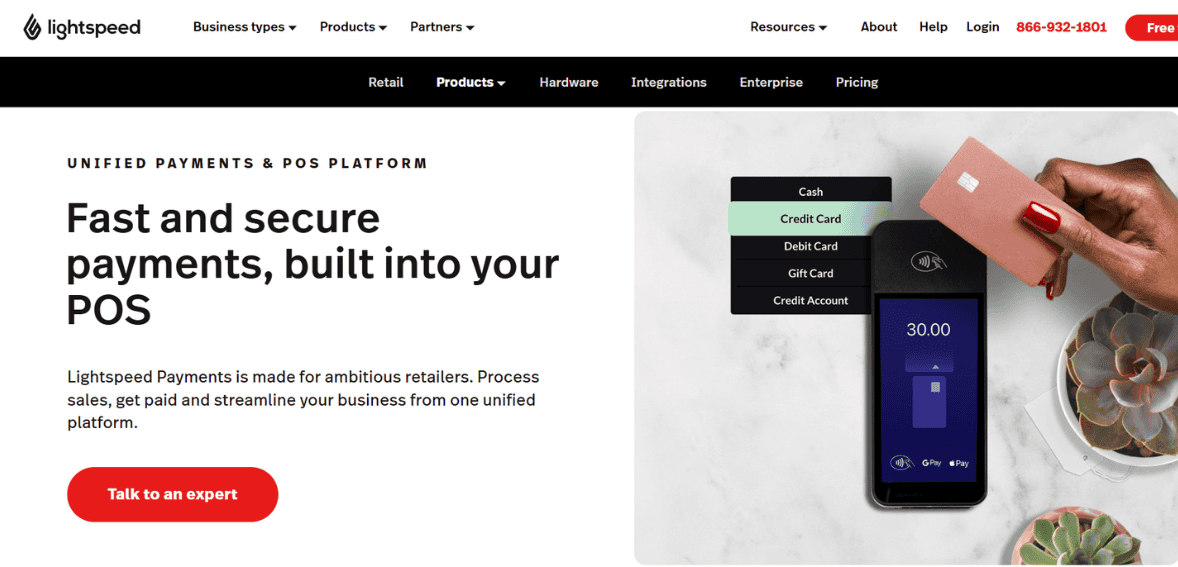
Lightspeed Payments processes credit and debit card transactions across all major card networks including Visa, Mastercard, American Express, and Discover. The service supports all major transaction types: in-person card-present transactions through Lightspeed’s integrated hardware, online transactions through eCommerce integrations, and card-not-present transactions through the virtual terminal functionality.
Methods for accepting payments include the use of the EMV chip card, the magnetic stripe, and contactless NFC payments that cover both the use of contactless cards as well as mobile wallets like Apple Pay and Google Pay. A full range of current consumer payment methods is covered, providing up-to-date support in line with standard customer behavior within the retail and hospitality industry sectors.
The system used for processing payments by Lightspeed Payments is operated by Lightspeed itself and is not licensed from a single third-party provider. This provides the Lightspeed company with increased control over their own process and an opportunity to create a tight integration between payment information and POS system data. The above factor is the only technical benefit associated with having a proprietary payment system as compared to using another vendor’s payment technology.
Lightspeed supports offline payment processing, with transactions being stored until a network is available and processed later when the connection is established again. This feature allows a seamless transaction flow in cases where network reliability is not guaranteed, eliminating the need for additional hardware or manual record-keeping.
Integrated POS and Payments Architecture
The core value proposition of Lightspeed Payments is its integration with Lightspeed’s POS software, and understanding this integration is essential to evaluating whether the payment service is worth its cost relative to alternatives. When payment processing and POS software come from the same vendor, the data generated by each function flows into the same environment without requiring export, import, or reconciliation steps between separate systems.
In practice this means that a sale processed through Lightspeed Payments is simultaneously a transaction record in the payment system and an inventory movement in the POS system, a data entry in the customer’s purchase history, an input to the real-time analytics dashboard, and a revenue figure in the business performance reports. Each of these connections exists automatically rather than requiring manual linking or a custom integration, and the elimination of that manual work is the primary operational benefit of the integrated approach.
For retail businesses, the inventory management integration is particularly valuable. Lightspeed Retail POS includes one of the more sophisticated inventory management systems available in the SMB POS market, covering product variants, bundles, serialized items, purchase ordering, and preloaded product catalogs with more than eight million items through NuORDER integration. When payment processing flows through the same system, inventory adjustments triggered by sales are immediate and automatic rather than dependent on a data sync between separate systems.
For restaurant businesses, the SkyTab-competing Lightspeed Restaurant platform connects table management, order routing, kitchen display communication, and split payment handling through the same integrated environment. Payment splits, tip handling, and course management that require real-time coordination between the POS and the payment system are handled within a single coherent application rather than across two vendor relationships that need to communicate reliably.
Pricing: Transaction Rates and Monthly Fees
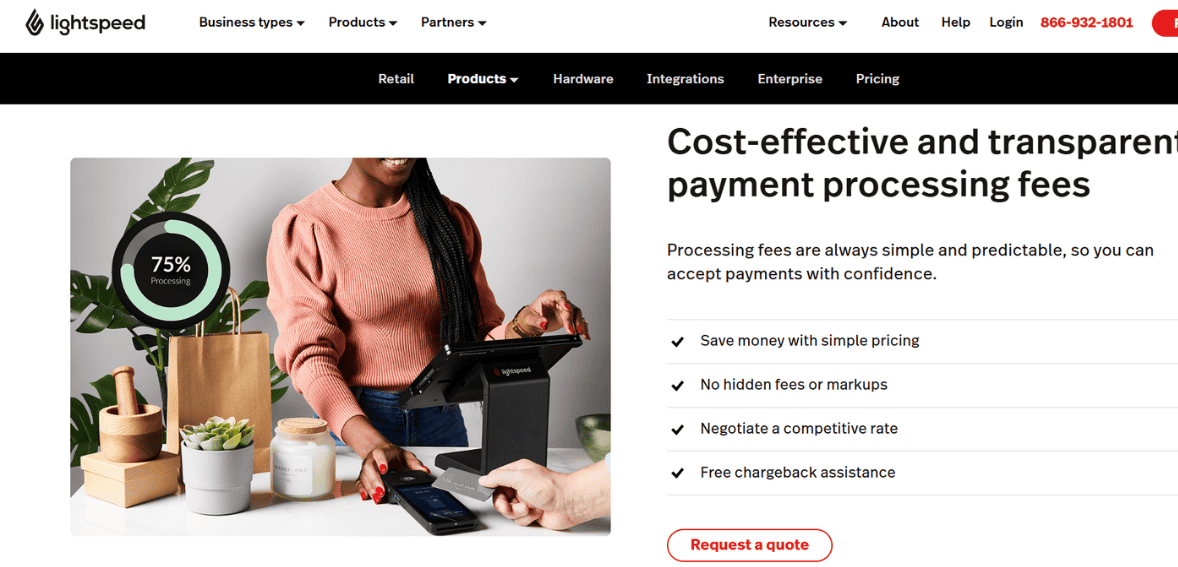
Lightspeed Payments charges a flat rate of 2.6% plus 10 cents per in-person transaction and 2.9% plus 30 cents for online transactions. These rates are straightforward and competitive relative to the market for integrated POS payment processing, sitting in the same range as Square’s flat-rate structure and below the effective rates many merchants pay under tiered pricing arrangements with traditional processors.
The monthly subscription fees for the Lightspeed POS software are separate from the payment processing rates. Lightspeed Retail POS plans start at 109 dollars per month for the Basic plan, 179 dollars for the Core plan, and 339 dollars for the Plus plan, with annual billing offering approximately 20% savings. Restaurant and golf plans are priced separately. These subscription fees are for the POS software and apply regardless of which payment processor is used.
The significant pricing dynamic that merchants need to understand is the third-party processor surcharge. Merchants who choose to use a payment processor other than Lightspeed Payments are charged a substantially higher subscription rate for the POS software, with independent reviewers noting that Lightspeed charges additional monthly fees of up to 400 dollars for using external processors. This structure creates a financial incentive, or depending on perspective a financial penalty, for using a third-party processor rather than Lightspeed Payments, even if the merchant has an existing processor relationship or can negotiate better rates elsewhere.
This third-party processor surcharge is one of the most consistently noted concerns in independent evaluations of Lightspeed. Merchants with high processing volumes who could potentially negotiate better interchange-plus rates with a third-party processor need to model whether the processing fee savings exceed the additional monthly POS software cost before making that decision. For high-volume merchants, the math may favor the third-party processor despite the surcharge. For lower-volume merchants, the flat-rate structure of Lightspeed Payments is likely competitive, and the convenience of the integrated system may justify accepting the flat rate rather than negotiating separately.
Hardware and Terminal Ecosystem
Lightspeed Payments operates through Lightspeed’s integrated hardware ecosystem, which includes iPad-based POS configurations and a range of accessories designed to work within the Lightspeed POS environment. Hardware is ordered through Lightspeed’s online store, with individual product pricing publicly available.
The Mobile Tap V2 card reader, priced at 79 dollars, provides contactless, chip, and swipe card acceptance through a compact device compatible with smartphone and tablet configurations. The Universal Tablet Stand at 89 dollars provides a customer-facing display configuration with a swivel base for transaction review and contactless payment at the counter. Full iPad and desktop hardware kit pricing is quote-based rather than published, reflecting the variable nature of multi-component POS setup costs.
The hardware system is specially designed for Lightspeed systems as opposed to hardware-agnostic. This implies that the merchants will only be able to use the Lightspeed card readers and not any other card readers in conducting transactions through Lightspeed Payments. This restriction in the hardware is a compromise since it ensures that the software and hardware function compatible but at the cost of some restrictions in merchants’ choice of hardware.
There is a provision of the functionality of a customer-facing display that allows for customers to see their transaction details and make payments based on those details as opposed to blindly paying for amounts presented to them. This feature is especially crucial in the hospitality industry since customers might not have had an opportunity to see their bills prior to payment.
Omnichannel and eCommerce Integration
Lightspeed Payments connects in-store and online payment processing within Lightspeed’s unified commerce platform, allowing merchants to manage payments across physical and digital channels through a single integrated environment. The eCommerce capabilities, significantly strengthened through the Ecwid acquisition, allow merchants to sell online with payment processing through Lightspeed Payments, maintaining consistent data flow between in-store and online transactions in the reporting and inventory management systems.
The online transaction processing feature of Lightspeed Payments is applicable to merchants who use Lightspeed eCommerce software, and the 2.9% plus 30 cents online rate applies to card transactions conducted via the eCommerce channel. The relationship between the two inventories online and in-store implies that an item purchased online impacts the inventory record in the same way an item bought at the store does, preventing duplication or inventory mismatch due to lack of synchronization between the two channels.
When it comes to multi-locations, cloud technology adopted by Lightspeed allows for centralizing payment processing and sales activities across various locations through a unified reporting interface. Centralized access to this type of information can provide retailers and restaurant chains with a tangible benefit when analyzing the performance of different stores and managing inventory levels as well as promotions centrally.
Lightspeed Payments, being integrated with the loyalty program capability within the POS, helps to unify the customer experience during purchasing by providing an opportunity for tracking their spending behavior and earning rewards and then redeeming them through the same system used for payment processing, thus avoiding additional scanning of loyalty cards and account lookup procedures at checkout.
Geographic Availability and International Limitations
Lightspeed Payments is available in the United States and Canada only as of 2026. This is a meaningful geographic limitation for merchants operating internationally or evaluating Lightspeed for locations outside North America.
In Australia and New Zealand, Lightspeed’s hospitality merchants use the platform that was formerly Kounta, now branded as Lightspeed Restaurant in those markets. Payment processing in these markets is handled through integrations with local payment providers rather than through the proprietary Lightspeed Payments product, and the specific payment terms, rates, and hardware available differ from the North American offering.
In European markets, Lightspeed serves merchants through its retail and restaurant POS platforms with payment processing handled through regional partnerships. Merchants evaluating Lightspeed for European deployments should ask specifically about the payment options and terms applicable to their country, as they will not be the same as the Lightspeed Payments product available in North America.
For multinational merchants considering Lightspeed for a presence across the US, Canada, and other markets simultaneously, the geographic inconsistency of the payment offering means that the integrated payments experience available in North America may not be replicated in non-North American locations. This is a practical consideration for any business planning international operations within a single POS ecosystem rather than a concern for merchants operating exclusively in North America.
The Tyro Dispute and Australian Market Context
The legal dispute between Tyro Payments and Kounta, Lightspeed’s Australian subsidiary, is relevant context for understanding how Lightspeed Payments was introduced in Australia and what that introduction cost in financial and reputational terms.
Tyro Payments, a major provider of EFTPOS terminals for Australian hospitality businesses, had a contractual agency relationship with Kounta under which Kounta directed its merchants toward Tyro terminals for payment processing. Following the Lightspeed acquisition of Kounta in 2019, Lightspeed developed its own payment processing product and began marketing it to merchants in Australia, including to merchants who were already Tyro customers through their Kounta POS relationship.
Tyro filed proceedings in the Supreme Court of New South Wales in September 2023, alleging that Kounta had breached its contractual non-solicitation obligations to Tyro by marketing the competing Lightspeed Payments service to Tyro’s merchant base. Tyro further alleged that Kounta imposed additional fees on merchants who used the Lightspeed POS software but chose to retain their Tyro payment terminals rather than switching to Lightspeed Payments, effectively creating a financial incentive for merchants to switch payment processors in a direction that benefited Lightspeed at Tyro’s expense.
The Supreme Court of NSW found in Tyro’s favor in November 2023, issuing a restraint preventing Kounta from soliciting Tyro merchants to switch to Lightspeed Payments. Kounta filed an appeal, but in February 2024 the parties settled, with Kounta paying Tyro 10 million dollars in damages, dropping the appeal, and agreeing to a continuing restriction on merchant solicitation until September 2024 applying to Kounta, Lightspeed Commerce, Inc., and Vend Limited.
The outcome of this dispute is directly relevant to Australian merchants evaluating Lightspeed’s payment products. The court finding and settlement confirm that the manner in which Lightspeed Payments was introduced to Australian merchants through the Kounta channel involved conduct that breached contractual obligations and was found by a court to be inappropriate. Merchants should factor this context into their evaluation of how Lightspeed manages its commercial interests in payment processing relationships.
Reporting and Analytics
One of the most genuine strengths of the Lightspeed Payments integration is the unified reporting environment it enables. When payment processing and POS software data share the same infrastructure, the reporting available to merchants reflects their complete business picture rather than requiring separate reports from separate systems to be manually combined.
Real-time analytics across multiple locations and sales channels are accessible through Lightspeed’s dashboard from any internet-connected device. Sales performance by product, category, time period, employee, and location can be viewed alongside payment method breakdown, refund activity, and transaction counts without any additional data integration steps. For multi-location retailers and restaurant groups, this consolidated view supports the operational decision-making that benefits from timely, complete data.
The advanced reporting functionality offered by higher-tier levels of the plan features customer behavior tracking, product performance analysis, as well as periodical comparisons that can help businesses track their seasonal trends and see how certain changes impacted their results. In terms of the link between inventory tracking and sales reporting, users benefit from having visibility into both processes and can make better-informed decisions when it comes to buying stock.
The reporting functionality is often noted in the best reviews because it is considered an extremely useful feature that helps merchants see the true benefits of working with the cloud-based solution, such as convenient access from anywhere using different devices, multi-location management capabilities, and detailed reports that go down to product level. Merchants that worked in the hospitality or retail industry but used different systems for POS and payments before would especially appreciate how streamlined the process became.
Customer Support
Lightspeed offers 24/7 chat support as a standard feature, with phone support and dedicated account management available at higher plan tiers. The breadth of self-service support resources including documentation, onboarding guides, video tutorials, and webinars is consistently noted positively in user reviews, with one independent reviewer describing Lightspeed as a platform where you are certainly not going to feel lost at any point given the volume and quality of available guidance.
The support model reflects Lightspeed’s positioning as a platform for more established small and medium-sized businesses rather than casual or first-time operators. The depth of documentation assumes that users are building a real commerce operation and need substantive guidance on advanced features, not just basic setup instructions. For merchants who value comprehensive self-service resources alongside responsive live support, the Lightspeed support model compares favorably to competitors who provide thinner documentation and rely primarily on phone support.
Where the support experience becomes more complicated is in multi-product deployments that span acquired platforms. Merchants using Lightspeed in markets where the underlying technology came from an acquired company, such as Australia and New Zealand where the Kounta heritage is still present, may encounter some fragmentation in support quality depending on which aspects of their deployment are handled by legacy infrastructure versus the consolidated Lightspeed platform. This is a transitional issue that should diminish as the platform consolidation progresses, but it is worth asking about specifically during the evaluation process.
The back-office setup complexity noted in multiple independent reviews is a fair counterbalance to the positive support feedback. Lightspeed’s feature depth means that initial configuration involves more decisions and steps than simpler POS systems, and merchants who underestimate the setup effort may find the learning curve steeper than expected even with good support resources available.
Strengths, Limitations, and Who It Is Best For
Lightspeed Payments is genuinely strong when evaluated as what it is designed to be: the payment layer within a comprehensive, cloud-based, omnichannel commerce platform for retail and hospitality businesses that have grown beyond the needs of basic POS systems. The flat-rate pricing at 2.6% plus 10 cents in-person and 2.9% plus 30 cents online is competitive for the integrated POS market segment.
The unified data architecture that connects payment processing, inventory management, customer profiles, loyalty, and analytics through a single platform is a real operational advantage that reduces manual reconciliation, improves data quality, and supports better business decisions. The 24/7 support, comprehensive documentation, multi-location management, and omnichannel capabilities are genuine strengths relative to simpler alternatives.
The limitations are equally real and documented. Geographic availability of Lightspeed Payments is limited to the United States and Canada, which constrains its value for merchants with international operations. The third-party processor surcharge of up to 400 dollars per month creates a financially coercive dynamic that reduces merchant flexibility and has been noted critically by independent evaluators. Pricing increases quickly with additional registers, locations, and add-ons, making the total cost of ownership for complex multi-location deployments materially higher than the base plan rates suggest.
The Tyro dispute and its 10 million dollar settlement raises questions about how Lightspeed manages its payment processing commercial interests in markets where existing partnership obligations exist. And for smaller, simpler businesses, the platform’s depth may be more than is needed at a cost that does not match the operational complexity being managed.
The merchants best positioned to benefit from Lightspeed Payments are established small and medium-sized retailers in the US and Canada operating one or more locations with meaningful inventory complexity, hospitality businesses that need a restaurant POS platform with integrated payment processing across table service and counter service environments, multi-location businesses that want consolidated reporting across all sites in a single cloud-based environment, and merchants who value the operational simplicity of a single vendor relationship for POS software and payment processing over the maximum possible pricing flexibility.
FAQs
Q1. Can Lightspeed merchants use a third-party payment processor instead of Lightspeed Payments, and what does that cost?
Yes, Lightspeed merchants can use third-party payment processors with Lightspeed’s POS software, but the financial penalty for doing so is significant. Merchants who choose a processor other than Lightspeed Payments are charged a substantially higher monthly subscription rate for the POS software, with independent reviewers noting additional fees of up to 400 dollars per month compared to the rate available to merchants using Lightspeed Payments.
This surcharge structure means that a merchant considering a third-party processor needs to calculate whether the savings from better negotiated processing rates exceed the additional monthly software cost before making that choice. For high-volume merchants who process significant monthly transaction values, the better rates potentially available through an interchange-plus arrangement with a third-party processor may justify the surcharge.
For lower-volume merchants, the all-in economics typically favor Lightspeed Payments despite the flat rate being potentially above what high-volume merchants could negotiate. Any merchant evaluating this trade-off should model both scenarios at their actual processing volume before deciding.
Q2. Is Lightspeed Payments available in Australia, and what happened with the Tyro Payments legal dispute?
Lightspeed Payments as a proprietary product is available in the United States and Canada only. In Australia and New Zealand, Lightspeed serves merchants through its Lightspeed Restaurant and Lightspeed Retail platforms, which were originally built on the Kounta and Vend technology acquired in 2019, with payment processing handled through local payment provider integrations rather than the proprietary Lightspeed Payments product.
The Tyro Payments legal dispute arose from Lightspeed’s attempt to introduce its own payment service in Australia through the Kounta subsidiary. Tyro, whose EFTPOS terminals were used by Kounta’s merchant base, filed proceedings alleging that Kounta had breached contractual obligations by marketing Lightspeed Payments to Tyro merchants and imposing additional fees on merchants who retained Tyro terminals rather than switching to Lightspeed.
The Supreme Court of NSW found in Tyro’s favor in November 2023, and in February 2024 Kounta settled, paying Tyro 10 million dollars in damages and dropping its appeal. Australian merchants using Lightspeed’s POS platform should ask specifically about the current payment processing options available to them and the terms applicable to each option, understanding that the payment offering in Australia has been shaped by this legal context.
Q3. How does Lightspeed Payments compare to Square for a small retail business choosing between the two?
The comparison between Lightspeed Payments and Square for a small retailer depends heavily on the complexity of the business and the stage of its growth. Square’s key advantages are pricing simplicity, zero monthly software fees for its base plan, broad hardware compatibility, and an onboarding experience designed for businesses at the very beginning of their retail journey.
Lightspeed Payments’ advantages are deeper inventory management, stronger multi-location support, more advanced reporting and analytics, better integration with wholesale ordering platforms like NuORDER, and a platform that scales more naturally to the operational complexity of an established multi-location retailer. For a business just starting out with simple inventory and a single location, Square’s lower total cost and simpler setup make it the more practical starting point.
For a business with meaningful inventory complexity, multiple locations, or the operational sophistication to benefit from Lightspeed’s advanced features, the additional monthly cost of the Lightspeed platform may be justified by the operational efficiency and data quality improvements it enables. The flat processing rates of both platforms are broadly similar, with Lightspeed at 2.6% plus 10 cents in-person and Square at 2.6% plus 10 cents in-person matching almost exactly, meaning the processing cost comparison is not a differentiating factor and the decision is driven by the software capabilities and total monthly cost at the merchant’s specific volume and location count.

Kounta Review
By 10topmerchantservices June 3, 2026
Kounta is an Australian-born cloud-based POS platform built specifically for the hospitality industry. Founded in Sydney in 2012 by Nick Cloete, a former chef who grew frustrated with the inefficiencies he encountered both in restaurant kitchens and in the legacy POS software he worked with afterward, Kounta was built from the ground up to serve cafes, bars, restaurants, boutique hotels, and other hospitality businesses with a modern, device-agnostic, cloud-based alternative to the clunky, hardware-dependent POS systems that dominated the sector at the time. Lets read more about Kounta Review.
The history of the company is important for two reasons: first, the product design reflects some unique priorities which were formed in Cloete as a result of his dual background as a hospitality employee and a developer; second, the Kounta POS was designed to solve the problems that hospitality establishments really faced: offline operation support, hardware flexibility, easy-to-use ordering management, and seamless integration with accounting and payment solutions.
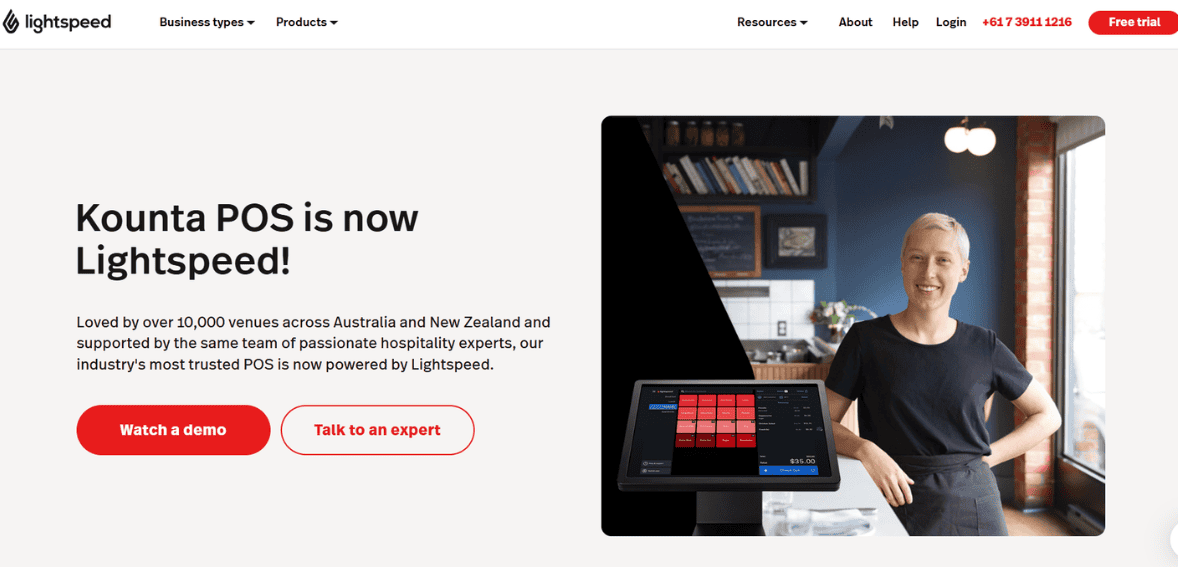
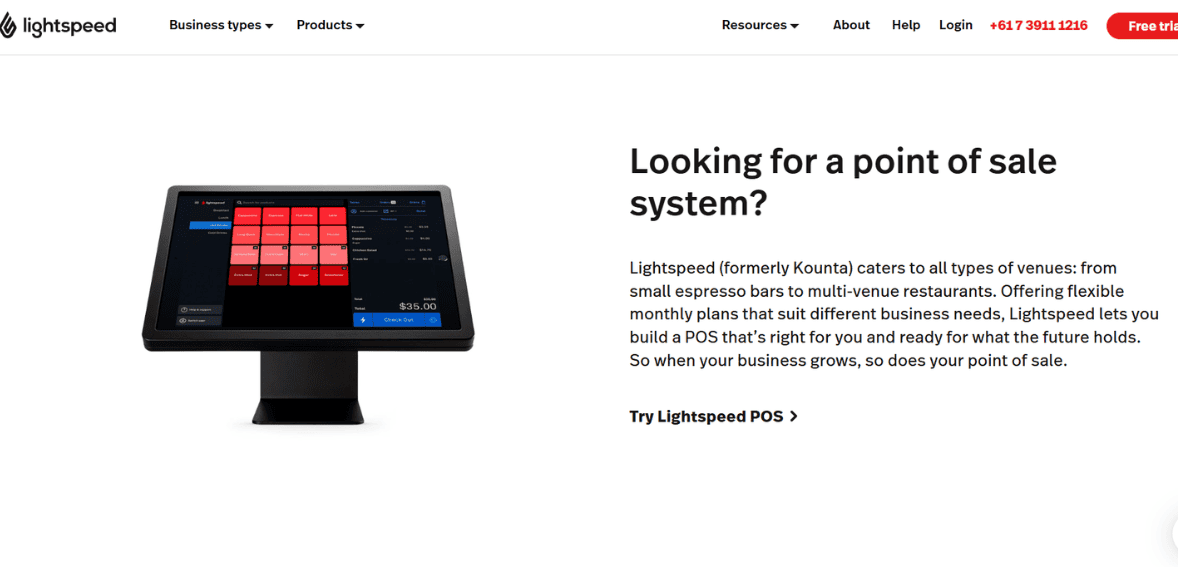
October 2019 saw the purchase by Lightspeed POS Inc.; a publicly-traded company with offices in Canada specializing in cloud commerce platforms; of Kounta Holdings Pty Ltd for about 35.3 million US dollars, through an all-cash and stock transaction. The Kounta brand ceased to exist as such, being merged into Lightspeed, while the product continues to function as Lightspeed Restaurant, targeted at Australian and New Zealand markets. At the same time, when merchants search for a Kounta solution, they look at the Lightspeed Restaurant software. This paper reviews the Kounta solution as originally conceived, and its current iteration in the Lightspeed portfolio, which became the target of an important legal dispute with Tyro Payments in 2023 and 2024.
Company Background and Market Position | Kounta Review
Nick Cloete founded Kounta in 2012 in Sydney, operating from offices in Chippendale, a suburb that had become a hub for Australian technology startups. The company’s mission was articulated as making it easy and cost-effective for merchants to better run, connect, and grow their businesses through a simple yet powerful POS experience. That mission statement reflected a practical orientation: Kounta was not trying to be the most feature-rich POS system on paper but the most operationally effective one in the daily reality of a busy hospitality environment.
The platform gained traction rapidly in the Australian and New Zealand hospitality sector, growing to serve more than 7,000 customer locations across cafes, bars, full-service restaurants, counter-service operations, and boutique hotels by the time of the Lightspeed acquisition in 2019. That growth was generated in a market where hospitality businesses are numerous, competitive, and generally skeptical of technology vendors who do not understand the operational realities of service under pressure.
Kounta generated revenue of approximately 6.4 million US dollars in its fiscal year ending June 30, 2019, which put it at a meaningful but not dominant scale relative to its ambition. Lightspeed’s 35.3 million dollar acquisition price reflected both the strategic value of Kounta’s established Asia-Pacific customer base and its potential as the platform through which Lightspeed would build out its hospitality presence in the region.
Following the acquisition, the Kounta team continued operating from Chippendale with the same personnel who had built the product, which is a positive indicator of platform continuity during a transition that can often see founding team departure and product development disruption. The formal rebrand from Kounta to Lightspeed Restaurant in the Australian market occurred progressively following the acquisition, completing the consolidation of the Kounta identity into the Lightspeed family.
Core POS Capabilities for Hospitality
The Kounta platform was designed around the specific operational demands of hospitality environments, and the core POS capabilities reflect those demands rather than being adapted from a retail-first system. Order management, table management, kitchen communication, payment splitting, tip handling, and fast transaction processing are the functions that a busy cafe or restaurant depends on minute to minute, and Kounta built these as primary features rather than afterthoughts.
Order entry supports all the variations that hospitality service requires: modifications, special requests, course sequencing, and the ability to split items across multiple tables or accounts. The system handles the complexity of a full-service restaurant where orders need to be communicated to multiple kitchen and bar stations simultaneously without creating miscommunication that leads to errors reaching the customer.
Payment acceptance covers all swipes, taps, tips, and splits, reflecting the practical reality that hospitality payment interactions are more varied than standard retail checkouts. A table of four splitting a bill six different ways, with some paying cash, some paying card, and one wanting to add a tip, represents a routine scenario in restaurant service that a poorly designed POS system makes slow and error-prone. Kounta’s payment handling was built to navigate these scenarios quickly.
The system supports multiple payment method types, and its integration with Tyro Payments, a major Australian payment terminal provider for the hospitality sector, was a central part of how Kounta customers processed card transactions. That integration relationship subsequently became the subject of legal dispute, covered in detail in a dedicated section of this review.
Hardware Agnosticism and Device Flexibility
One of Kounta’s most clearly differentiated features at the time of its founding, and one that remained a genuine strength throughout its independent operation, was its hardware-agnostic architecture. Rather than requiring merchants to purchase proprietary hardware, Kounta ran on smartphones, tablets, laptops, and traditional POS equipment that businesses already owned, making it genuinely flexible in a way that many competitors were not.
The practical value of hardware agnosticism for hospitality businesses is considerable. A small cafe that already has an iPad does not need to purchase dedicated POS hardware to get started. A restaurant expanding to a new location can add POS terminals using consumer devices rather than waiting for proprietary hardware procurement and configuration. Staff who are familiar with iOS or Android interfaces require less training to use a POS system running on those platforms than one running on a proprietary operating system with an unfamiliar interface.
This flexibility also enabled Kounta to serve businesses of different sizes and operational configurations without requiring separate product SKUs for different customer types. A single-terminal coffee shop and a multi-station full-service restaurant could both run on Kounta, using whatever hardware combination suited their specific operational layout.
The device flexibility extended to the offline capability, which addressed one of the more practically important concerns for hospitality businesses: what happens when the internet connection drops during a busy service period. Kounta was designed to operate in offline mode, processing transactions locally and syncing data when connectivity was restored, so that a network outage did not stop service. For hospitality businesses where a POS failure during a Saturday evening service has immediate and significant revenue consequences, this offline resilience was a meaningful operational assurance.
Inventory Management and Cost of Goods Control
Beyond the transaction processing layer, Kounta invested in inventory management tools designed specifically for the cost pressures and waste dynamics of hospitality operations. Food and beverage cost management is one of the most operationally significant challenges for cafes and restaurants, where ingredient costs, wastage, over-ordering, and portion inconsistency directly affect profitability in an industry with structurally thin margins.
The inventory tools within Kounta were designed to keep the Cost of Goods Sold in line and eliminate over-ordering, helping kitchens waste less food and consistently meet quality demands. This framing reflects an operational rather than administrative orientation: the goal of inventory management in a hospitality context is not record-keeping for its own sake but active cost control that protects margins and maintains service quality.
Recipe management within the inventory system allowed operators to define the specific ingredients and quantities associated with each menu item, enabling the system to track ingredient usage as orders are placed and identify discrepancies between theoretical and actual consumption. Where actual usage exceeds theoretical, the discrepancy signals either wastage, portioning inconsistency, theft, or data entry errors, each of which has a different operational remedy. Having this visibility without requiring manual stock counts for every reconciliation period is a practical operational advantage for busy hospitality environments.
Real-time sales data alongside inventory tracking allowed operators to connect revenue performance with stock position, enabling smarter purchasing decisions and reducing the likelihood of running out of high-demand items during service periods or carrying excess inventory of slow-moving products. For food and beverage businesses where ingredient freshness is a factor, the cost of both running out and over-ordering is genuine and immediate.
Cloud Architecture and Multi-Location Management
Kounta’s cloud-based architecture was a foundational design choice that shaped both its product capabilities and its competitive positioning relative to legacy on-premise POS systems. Running the POS system on cloud infrastructure rather than local servers meant that software updates were delivered automatically without requiring visits to each terminal location, that data was accessible from any internet-connected device rather than only from the terminal itself, and that multi-location businesses could be managed from a central interface rather than requiring separate administration for each site.
In hospitality establishments operating in multiple locations, having the capacity to centrally configure and manage their systems is a significant advantage in terms of efficiency. Updates on menus, prices, and promotions that otherwise will necessitate manual configurations at each location can now be applied to all locations simultaneously through this cloud system. Operators can have access to up-to-date as well as historical sales data from anywhere at any time as long as they have internet connectivity to check on the performance of all locations for informed decision-making.
Cloud computing also made the deployment process easier. Since operators do not need to install or configure anything on their devices to use the POS, activating new terminals can simply be done by logging into the cloud-based application, making the task easier and faster even when more personnel needed to be accommodated or a new location launched. As far as the Lightspeed company goes post-acquisition, the choice of cloud computing is an excellent match since its own platform operates in a similar manner.
Integrations with Accounting and Business Tools
One of Kounta’s most practically appreciated features among its merchant base was its integration ecosystem, particularly its connection with Xero, the cloud-based accounting software that is widely used by Australian and New Zealand small and medium-sized businesses. The ability to have sales data flow directly from the POS system into the accounting platform, without requiring manual data entry or export-import processes, addressed one of the most time-consuming administrative tasks that hospitality business owners typically manage outside service hours.
The Xero integration allowed end-of-day reconciliation to be largely automated, allowing the necessary transaction information, including information on payments by method and taxes, to feed through seamlessly in an appropriate format into the accounting system, corresponding to the requirements of the reporting period. In the case of smaller cafe and restaurant owners managing their own bookkeeping, such an automation process equates to significant time savings from what would normally be manual transfers of information across the two systems.
In addition to the Xero integration, Kounta offered integration with many different business applications related to hospitality, including loyalty programs, eCommerce functions, staff management tools, and payment terminal integrations, notably the one with Tyro Payments, that would allow seamless integration of the POS system with merchant payment terminals.
The ability to integrate with many other business applications was a competitive advantage that underscored Kounta’s approach to the technological realities in which businesses operate. It made the implementation process less disruptive and, therefore, more beneficial compared to systems that were incompatible with existing tools and required full-scale replacement of the entire technology stack.
Reporting and Business Analytics
Kounta provided real-time and historical sales reporting through its cloud-based dashboard, giving operators visibility into business performance at the level of detail that hospitality management decisions require. Sales by product, category, time period, and location could be viewed from any device with internet access, making the reporting genuinely useful as an operational tool rather than an end-of-month accounting exercise.
The ability to access reporting remotely was a specific feature noted positively in user reviews, reflecting the reality that many hospitality business owners are not physically present at their venue at all times and need visibility into performance from wherever they are. Checking how a Saturday brunch service is tracking against the same period last month, or identifying which menu items are driving most of the revenue during the dinner service, are decisions that benefit from timely data rather than retrospective review.
Sales trend analysis over historical periods allowed operators to identify seasonal patterns, evaluate the impact of menu changes or promotional activity, and make more informed decisions about staffing and purchasing based on expected demand rather than intuition alone. For hospitality businesses where the cost of being over-staffed on a quiet night or under-stocked on a busy one is real and immediate, this data accessibility has direct operational value.
The reporting interface was consistently described by users as intuitive and modern, reflecting Kounta’s design investment in making the back-office experience as clean as the front-of-house interface. A reporting dashboard that hospitality operators find genuinely easy to navigate is more likely to be actually used than one that requires training to interpret.
The Tyro Payments Relationship and Legal Dispute
The relationship between Kounta and Tyro Payments, and the legal dispute that emerged from it, is one of the most significant pieces of context for any merchant evaluating Kounta’s history and understanding the complex ecosystem of relationships that shaped how the platform evolved under Lightspeed ownership.
Tyro Payments is an Australian fintech company and one of the major providers of EFTPOS terminals for hospitality businesses in Australia. Before and for some time after the Lightspeed acquisition, Kounta operated as Tyro’s agent, distributing Tyro’s payment terminals to Kounta’s merchant base as the card acceptance companion to the Kounta POS software. This arrangement created a distribution relationship in which Kounta directed merchants toward Tyro for their payment processing needs.
The legal dispute began in September 2023, when Tyro filed proceedings in the Supreme Court of New South Wales alleging that Kounta had breached its contractual obligations by marketing Lightspeed Payments, a competing payment product, to Tyro’s existing merchant customers. Tyro further alleged that Kounta had imposed additional fees on merchants using the Lightspeed POS software who chose to retain Tyro terminals rather than switching to Lightspeed Payments, effectively creating a financial incentive for merchants to move their payment processing to Lightspeed at the expense of Tyro.
The Supreme Court of NSW found in November 2023 that Kounta had breached its contractual and fiduciary obligations to Tyro, issuing a restraint preventing Kounta from soliciting Tyro merchants to switch to Lightspeed Payments. Kounta filed an appeal in December 2023, but in February 2024 the parties reached a settlement under which Kounta agreed to drop the appeal and pay Tyro ten million dollars in damages. The settlement also maintained the restraint on merchant solicitation until September 2024, applying to Kounta, Lightspeed Commerce, and its New Zealand subsidiary Vend Limited.
For merchants evaluating this history, the dispute illustrates the commercial tensions that can emerge when a POS software company with payment processing ambitions also operates as a distribution agent for a competing payment processor, a structural conflict of interest that the legal outcome validated as a genuine breach rather than a gray area.
Customer Support and User Experience
Kounta offered 24/7 customer support through its platform, with one-on-one onboarding sessions, webinars, demos, videos, and guides as part of its support model. The personalized onboarding approach reflected an understanding that hospitality operators typically do not have dedicated IT staff and need practical, accessible assistance getting a new system operational rather than technical documentation to work through independently.
User feedback from G2 and other review platforms consistently highlighted the platform’s ease of use as a genuine strength, with the interface described as sleek, modern, and intuitive. The observation that Kounta is quick to get started and easy to use, yet powerful enough to run any store, captures the balance the platform sought to achieve between accessibility for non-technical users and capability for complex hospitality operations.
The offline capability received specific positive mentions from hospitality operators for whom network reliability is a practical concern rather than a theoretical one. Knowing that the POS system will continue to function and process transactions if the internet connection drops during a busy service period is a meaningful assurance that reduces the anxiety associated with technology dependence in a high-pressure operational environment.
The areas of negative feedback in user reviews centered on pricing, which some users described as significantly high and subject to cost increases, and on technical support quality, with delayed response times and inadequate resolution of issues cited as specific concerns. These patterns are consistent with broader feedback about Lightspeed’s support experience following the acquisition of multiple POS companies and the integration of their customer bases into a larger support organization.
Pricing and the Lightspeed Transition
Kounta’s pricing as an independent company was competitive within the Australian hospitality POS market, though specific historical rate card details are not extensively documented in publicly available materials. The transition to Lightspeed ownership introduced the Lightspeed pricing framework for the Kounta customer base, which operates on a subscription model with tiered plans based on the number of registers and the feature set required.
Under Lightspeed’s current pricing, the hospitality POS offering that replaced Kounta is structured with monthly subscription fees that increase with additional registers and advanced features. Users in the Kounta and Lightspeed community have noted pricing increases following the acquisition and the transition to the Lightspeed platform, with some merchants expressing that the cost increases were not accompanied by commensurate improvements in feature quality or support.
The Tyro dispute also introduced a specific pricing dimension that is directly relevant to Kounta merchants. The allegation that Kounta imposed additional fees on merchants who retained Tyro terminals rather than switching to Lightspeed Payments suggests that payment processing integration choices carried pricing implications that merchants may not have anticipated when their POS and payment processing relationships were established separately under the previous arrangement.
Merchants evaluating the current Lightspeed Restaurant product in Australia and New Zealand should request a comprehensive written pricing schedule covering subscription fees, per-register costs, payment processing rates if using Lightspeed Payments, and any fees associated with specific integrations or features they plan to use.
Strengths, Limitations, and Who It Is Best For
Kounta, as it was built under Nick Cloete’s leadership, was a genuinely well-designed hospitality POS platform whose strengths reflected deep operational understanding of the cafes, restaurants, and bars it was built to serve. The hardware-agnostic architecture, offline capability, intuitive order management, strong inventory tools, cloud-based multi-location reporting, and Xero integration addressed real and specific operational needs of hospitality businesses in a coherent and well-executed package. The 7,000-plus location customer base built before the Lightspeed acquisition is the most concrete evidence of genuine product-market fit in a market that is not easily fooled by marketing claims.
The limitations in evaluating Kounta today are primarily the result of the Lightspeed acquisition and its aftermath. The Kounta brand no longer operates independently, the product is now Lightspeed Restaurant in the Australian and New Zealand markets, and the experience merchants have is shaped by Lightspeed’s pricing, support infrastructure, and strategic decisions rather than those of the original Kounta team. The Tyro legal dispute and its ten million dollar settlement introduced reputational and commercial complexity that was absent from the independent Kounta story and that is relevant context for merchants in the Australian hospitality market evaluating their payment integration options alongside their POS software choice.
The merchants best positioned to benefit from the Kounta heritage platform, now accessed through Lightspeed Restaurant, are hospitality businesses in Australia and New Zealand that need a cloud-based, device-flexible POS system with strong inventory management, centralized multi-location reporting, and integration with Xero and other Australian business tools. Small to medium-sized cafes, restaurants, bars, and boutique hotels that prioritize ease of use, operational resilience through offline capability, and clean integration with their accounting software over the lowest possible software cost will find the platform’s core capabilities well-matched to their needs.
FAQs
Q1. Is Kounta still available as a standalone product, or has it been fully replaced by Lightspeed Restaurant?
Kounta no longer operates as an independent product or brand. Following Lightspeed POS Inc.’s acquisition of Kounta Holdings Pty Ltd in October 2019 for approximately 35.3 million US dollars, the Kounta platform was progressively integrated into the Lightspeed product family and rebranded as Lightspeed Restaurant in the Australian and New Zealand markets. Merchants who were using Kounta prior to the acquisition have been transitioned to the Lightspeed platform, and new merchants in Australia and New Zealand seeking the hospitality POS capabilities that Kounta was known for will find them under the Lightspeed Restaurant brand.
The core technology and much of the team that built Kounta continued operating from Chippendale following the acquisition, providing some continuity in the product’s development direction, though the commercial and operational decisions are now made within Lightspeed’s global platform context rather than as an independent Australian company.
Q2. What was the Tyro Payments legal dispute about, and what does it mean for merchants who use both Kounta and Tyro?
The Tyro Payments legal dispute arose from Kounta’s conduct as Tyro’s agent after the Lightspeed acquisition. Kounta had an existing contractual relationship with Tyro under which it acted as Tyro’s agent, distributing Tyro payment terminals to its merchant base. Following the acquisition, Kounta began marketing Lightspeed Payments, a competing payment product, to Tyro’s existing merchant customers, and was alleged to have imposed additional fees on merchants using the Lightspeed POS software who chose to retain their Tyro terminals rather than switching to Lightspeed Payments.
The Supreme Court of New South Wales found in November 2023 that Kounta had breached its contractual and fiduciary obligations to Tyro. In February 2024, the parties settled, with Kounta agreeing to pay Tyro ten million dollars in damages and dropping its appeal. For merchants who were using both Kounta POS software and Tyro payment terminals during the period of the dispute, the practical implication was that their payment processing integration choices became subject to commercial pressure from their POS provider in a way that was not transparent at the time.
Merchants in the Australian hospitality market who are evaluating POS and payment terminal combinations should ask specifically about any commercial relationship between their POS software provider and competing payment processors before committing to either component of that combination.
Q3. How does Kounta, now Lightspeed Restaurant, compare to other hospitality POS options in the Australian market?
The hospitality POS market in Australia includes a range of options from global platforms like Square and Toast to locally developed alternatives, and the right choice depends significantly on a business’s specific operational requirements, budget, and existing technology relationships. Lightspeed Restaurant, carrying the Kounta heritage, is strongest for cafes, bars, and full-service restaurants that value device flexibility, offline capability, and clean integration with Xero and Australian business tools. Its multi-location management capabilities make it a practical choice for operators running more than one site who want consolidated reporting from a single interface.
Where it faces competitive pressure is on pricing, where the subscription cost has increased following the Lightspeed transition and some merchants have found the all-in cost higher than alternatives offering comparable core functionality. Merchants evaluating Lightspeed Restaurant against alternatives should compare not just the subscription fee but the total cost including payment processing rates if using Lightspeed Payments, hardware costs, integration fees for specific tools they use, and the support model available at their account tier.

Inovio Payments Review
By 10topmerchantservices May 19, 2026
Inovio Payments occupies a focused and deliberate position in the payment processing landscape: a cloud-based, eCommerce-first payment gateway built specifically for merchants who need global scalability, high-risk industry acceptance, and intelligent authorization optimization. Headquartered in Woodland Hills, California, Inovio operates as a subsidiary of North American Bancard, one of the largest independent sales organizations in the United States, and draws on more than 25 years of payment gateway experience through its predecessor company, Argus Payments. Lets read more about Inovio Payments Review.
The platform was not meant to compete with companies like Square or Stripe for the casual small business merchant looking for the easiest way possible to integrate with card readers. On the other hand, Inovio focuses on an entirely different market; it is geared towards businesses whose operations fit in a more difficult-to-place market segment, merchants who deal with customers from all around the world, software providers requiring flexibility and programmability within their payment gateway, and merchants who have subscription-based businesses requiring complex recurring billing management.
Intelligent transaction routing for better authorization rates, a willingness to support more risky merchant segments turned down by other processors, and global payment infrastructure making it possible for merchants to price and receive payments in nearly any foreign currency and settle in the merchant’s base currency comprise the foundation of Inovio’s value proposition. This review will evaluate the extent of Inovio’s performance on these key aspects as well as shed light on the relationship between Inovio and North American Bancard.
Company Background and Market Position | Inovio Payments Review
Inovio Payments traces its origins to Argus Payments, a payment gateway company founded by Conal Cunningham, who continues to serve as the company’s general manager. Argus Payments built its reputation as a technically capable, eCommerce-focused gateway with particular expertise in card-not-present transactions and international payment processing. The company operated independently until 2014, when North American Bancard acquired it and absorbed it into the NAB ecosystem.
In 2016, North American Bancard rebranded Argus Payments as Inovio, a name and identity that reflected a deliberate repositioning toward technology-forward payment gateway services with an emphasis on intelligent processing and global scalability. The Inovio brand has been consistently invested in since the rebrand, with product development focused on authorization optimization tools, international currency support, developer API quality, and high-risk merchant acceptance.
North American Bancard is a significant processor in the US market, processing billions of dollars in annual transactions across hundreds of thousands of merchant accounts. Its scale provides Inovio with access to processing relationships and acquiring bank connections that a standalone gateway company of similar size would struggle to replicate. It also introduces the considerations that come with any NAB-affiliated relationship, which are covered separately in the pricing and contract sections of this review.
Inovio’s market position is genuinely differentiated from generalist processors. By explicitly targeting card-not-present eCommerce, high-risk merchant categories, international payment acceptance, and subscription billing, the platform competes not against Square or Clover but against specialized gateways like Authorize.net, NMI, and dedicated high-risk processors. Within that competitive set, Inovio’s intelligent routing capabilities and currency breadth are meaningful differentiators worth taking seriously.
Core Payment Gateway Capabilities
Inovio’s core product is a payment gateway, and it is important to be precise about what that means in the context of how the company is positioned. A payment gateway handles the secure transmission and routing of transaction data between a merchant’s website or application and the acquiring bank or processor that actually moves the money. Inovio is the gateway layer, not the acquiring layer, which means merchants engaging with Inovio are working with a technology provider that routes to acquiring relationships rather than a direct acquirer that holds the merchant account itself.
Payment gateway provides credit and debit card processing across all the major card networks, ACH acceptance, and growing acceptance of alternative payment mechanisms such as cryptocurrencies and stablecoins that cater to the increasing consumer need for non-traditional payment options especially in digital commerce scenarios. These include acceptance of all credit cards such as Visa, MasterCard, American Express, Discover, and Diners Club, thus offering full coverage of major credit card networks.
Innovative transaction processing via cloud technology means that the payment gateway operates using Inovio cloud servers as opposed to locally installed hardware or software. This enables the payment gateway to provide enough scalability and redundancy needed by eCommerce merchants that experience unexpected surges in the volume of transactions being handled.
Virtual POS feature enables merchants to process payments via web and telephone without the use of specialized hardware, a capability that is helpful especially for service merchants as well as business-to-business merchants who conduct payment processing away from the typical eCommerce checkout page. Virtual POS provides full card-present transaction capabilities over the web using just a computer and internet connection.
Intelligent Transaction Routing and Transaction Recycling
The most technically distinctive elements of Inovio’s platform are its Intelligent Transaction Routing, Transaction Recycling, and Auto Account Updater capabilities. These three features work together to address one of the most commercially significant problems in eCommerce payment processing: declined transactions that represent lost revenue rather than genuine fraud or cardholder non-payment intent.
Intelligent Transaction Routing directs each transaction through the acquiring path most likely to result in approval, based on real-time data about transaction characteristics, card type, issuing bank behavior, and historical approval patterns across Inovio’s processing network. Rather than routing every transaction through a single acquiring relationship regardless of the likelihood of approval at that specific bank for that specific card type, intelligent routing selects the optimal path dynamically. For merchants in higher-risk categories where decline rates at any single acquirer can be material, the improvement in authorization rates that routing optimization delivers has a direct revenue impact.
Transaction Recycling involves the automatic retrying of a transaction that fails to go through the first time due to a recoverable issue by using alternative routes of transaction authorization. Soft declines are the result of the card being valid and the customer having enough money to pay for a purchase, but the transaction gets denied due to a temporarily or procedurally related issue such as communication failure or a velocity flag. Transaction Recycling uses intelligent means to determine whether or not a decline is recoverable and tries again to capture the missed revenue.
Auto Account Updater solves the particular issue of customers getting new cards as a result of their old cards expiring or their accounts being compromised or closed down. The process entails receiving the new details from the issuing bank through account updating services offered by the card networks and updating the stored token so that recurring billing can be continued uninterrupted. This particular capability allows subscription businesses to save significant amounts of revenue due to lower rates of involuntary churn.
High-Risk Merchant Acceptance
One of Inovio’s most explicit and consistent differentiators from mainstream payment processors is its willingness to serve merchants in higher-risk categories. The platform openly markets to industries that standard processors routinely decline, and it describes its own positioning as designed for higher than standard risk, with more data and experience than other payment processors in managing elevated-risk transaction environments.
Industries that Inovio explicitly serves include adult entertainment, credit repair services, nutraceuticals and dietary supplements, subscription box businesses, travel and vacation services, gaming and gambling-adjacent categories, and other specialty eCommerce sectors that mainstream processors typically exclude from their underwriting criteria. For merchants in these categories who have struggled to find a reliable payment processor willing to maintain a long-term relationship with their business, Inovio’s openness to these sectors is a genuine practical benefit rather than a marketing claim.
The reason high-risk acceptance matters beyond simple eligibility is processing quality. A processor that reluctantly accepts a high-risk merchant but applies generic fraud rules, low processing limits, and standard risk management tools to an account with a fundamentally different risk profile than standard retail will generate excessive false positive declines, account holds, and terminations. Inovio’s claim to bring more data and experience to high-risk processing reflects an understanding that managing these accounts well requires purpose-built tools and risk models calibrated to the specific transaction patterns of each industry type.
Merchants in elevated-risk categories should still approach the onboarding process with clear documentation of their business model, transaction history, and chargeback management practices. Inovio’s willingness to serve high-risk businesses does not mean that any merchant in any category will be approved without review, and the quality of the underwriting conversation will depend significantly on how thoroughly a merchant can demonstrate their approach to managing the risks inherent in their business model.
International Payment Processing and Multi-Currency Support
International payment capability is a core strength of the Inovio platform and one of the areas where it most clearly differentiates from processors whose global coverage is limited to accepting international cards without meaningful currency or routing intelligence behind it.
Inovio supports pricing and transaction acceptance in up to 179 different currencies, allowing merchants to display prices in a customer’s local currency and accept payment in that currency rather than requiring customers to transact in US dollars and absorb the foreign exchange cost and uncertainty on their side. Exchange rates are updated daily based on foreign exchange market conversions, providing current and accurate pricing for international customers without requiring manual rate management by the merchant.
Merchants get settled in their home currency irrespective of the currency used by the buyer, with Inovio converting the currency behind the scenes. In this way, the foreign exchange risk management burden is alleviated for the merchant and, at the same time, provides an international customer with the comfort of viewing and paying the price in their currency.
Inovio’s acquiring network for processing international payments integrates with processors, acquiring banks, and payment service providers from all around the globe. The ability of this network to intelligently route payments through different acquiring banks based on various factors is only possible with the existence of such a network and such a network is exactly what is needed for intelligent routing to be valuable internationally. Different cards will have different best routing scenarios depending on the country they come from, and intelligent routing is only possible if a merchant uses several acquiring networks.
An eCommerce merchant serving international clientele may benefit from local currency pricing, intelligent routing through global acquiring relationships, and reduced friction from using a familiar checkout process in their currency.
Hosted Checkout and Payment Page Options
Inovio offers multiple integration approaches for merchants implementing payment acceptance on their websites or applications, accommodating both technical teams building custom experiences and operators who want a functional, secure checkout without significant development investment.
Hosted checkout pages provide a fully managed checkout environment hosted on Inovio’s PCI-compliant servers. Merchants redirect customers to this hosted page for payment entry, keeping sensitive card data entirely off the merchant’s own systems and dramatically reducing the merchant’s PCI DSS compliance scope. Hosted pages can be configured and customized to reflect the merchant’s branding, maintaining visual continuity with the merchant’s website while the security and compliance infrastructure operates behind it.
For merchants who want to maintain complete control over the checkout experience and embed payment collection within their own application or website, the Gateway API provides full integration flexibility. Developers can build entirely custom payment flows, design their own payment forms, and handle the checkout interaction natively within their own environment, with card data encrypted at the client side before being transmitted to Inovio’s servers. This approach requires the merchant to manage their own PCI compliance for the page rendering the payment form but provides maximum flexibility for checkout design and user experience.
Third-party shopping cart integrations are available for merchants operating on established eCommerce platforms. Inovio integrates with WooCommerce, PrestaShop, and Magento, covering three of the most widely used open-source eCommerce platforms. For merchants already running stores on these platforms, the integration path involves installing the Inovio payment module rather than building a custom integration from scratch, which significantly reduces the technical lift of connecting an existing store to the gateway.
Recurring Billing and Subscription Management
Subscription billing and recurring payment management is a significant focus area for Inovio and one of the platform’s genuinely strong product areas. The subscription billing capability is designed to automate payment collection for businesses operating any model that involves regular charges, whether monthly software subscriptions, membership fees, installment payment plans, or any other recurring revenue structure.
Automated recurring payments eliminate the manual billing effort involved in charging customers on a schedule, reducing the administrative overhead and the risk of missed charges that manual billing creates. Billing intervals are fully configurable, supporting daily, weekly, monthly, and annual charge cycles, as well as custom intervals for businesses whose billing schedules do not conform to standard calendar periods.
Tokenization underpins the subscription billing architecture. Customer card data is replaced with a secure token at the point of initial enrollment, and all subsequent recurring charges are processed against that token rather than the raw card details. This means the merchant never needs to store sensitive card data in their own systems for recurring use, and PCI compliance obligations for stored card data are managed through Inovio’s certified infrastructure rather than the merchant’s own environment.
The combination of subscription billing with Transaction Recycling and Auto Account Updater creates a complete involuntary churn prevention system. Failed charges are retried intelligently, updated card details are applied automatically when cards are replaced, and subscription billing schedules continue without manual intervention or customer friction. For subscription businesses where churn rate directly drives valuation and revenue predictability, having these three capabilities working together through a single integrated system is a genuine operational advantage relative to platforms that require separate tools for each function.
Developer Tools and API Flexibility
For ISVs, developers, and technical teams building payment capabilities into software applications or custom checkout environments, the quality of Inovio’s API and developer tooling is one of the most important evaluation criteria. The platform has invested meaningfully in this area, and the developer experience reflects a genuine understanding of what technical teams need rather than a minimal documentation-only afterthought.
The Gateway API supports flexible integration across any programming language, which eliminates the constraint that language-specific SDKs impose on development teams whose preferred stack is not on a limited supported list. The developer portal at developer.inoviopay.com provides use case-specific documentation organized around common integration scenarios, including accepting payments, setting up recurring billing, connecting CRM systems, processing in multiple currencies, and implementing 3D Secure authentication. Sample code is provided for each use case, reducing the time from initial API exploration to working integration.
The API architecture supports the full payment lifecycle: authorization, capture, void, refund, and recurring charge management are all available through the same API surface, maintaining consistency across payment operations rather than requiring different integration approaches for different transaction types. CRM integration is specifically called out as a supported use case, reflecting an understanding that merchants managing customer relationships through tools like Salesforce or HubSpot benefit from having payment data visible within the same environment as their customer records.
White-label capability is available through Inovio’s partner program, allowing ISVs and platform businesses to embed Inovio’s payment infrastructure behind their own branding. This enables software companies to offer payment processing as a native feature of their platform without merchants needing to be aware of Inovio’s involvement in the background. The partner program is described as a collaboration where the partner controls the direction while Inovio provides the infrastructure, which reflects the embedded payments model that has become central to the SaaS industry.
Security and Fraud Prevention
Security is a foundational element of the Inovio platform, and the company’s approach to payment security covers both the baseline compliance requirements and the operational fraud management tools that merchants in higher-risk categories particularly need.
Inovio holds PCI DSS Level 1 certification, the highest level available, covering its gateway infrastructure and data handling practices. Point-to-point encryption protects card data from the moment it enters the payment system through the point at which it reaches the acquiring processor, ensuring that sensitive data is never transmitted in plain text at any stage of the transaction flow. Tokenization replaces card data with non-sensitive tokens for storage and recurring use, eliminating the risk of stored card data exposure from a merchant-side breach.
3D Secure 2.0 authentication is supported, providing the modern authentication framework that shifts fraud liability away from the merchant for successfully authenticated online transactions. This is particularly relevant for international merchants operating in markets where strong customer authentication is a regulatory requirement, and for any merchant processing high-value online transactions where the additional authentication layer provides meaningful chargeback protection.
The fraud prevention toolset includes merchant-configurable blacklists, address verification options, and velocity rules that identify and block suspicious transaction patterns including brute-force card testing attacks. These configurable rules give merchants the ability to tune fraud protection to their specific risk profile rather than relying on a fixed set of generic rules that may generate excessive false positives for legitimate transactions in their specific industry.
Advanced risk-mitigation tools identify suspicious activity before fraud occurs rather than relying solely on post-transaction chargeback analysis. Automated chargeback management tools assist merchants in navigating the dispute resolution process, which is particularly valuable in higher-risk categories where chargeback rates are structurally elevated and the administrative burden of managing disputes manually is disproportionate.
Pricing Structure and Fees
Pricing at Inovio is not published publicly, which is a consistent point of criticism from merchants who prefer to understand cost structures before entering a sales conversation. All pricing requires direct engagement with the Inovio sales team, and rates are customized based on business type, transaction volume, industry risk profile, and the specific product configuration required.
The absence of public pricing is more understandable in the context of Inovio’s target market than it would be for a generalist processor. High-risk merchants by definition have elevated processing costs that vary significantly by industry category, transaction profile, and chargeback history, and a published rate card would be misleading rather than informative for a merchant base with this level of variation in risk characteristics. International processing also involves currency conversion costs and acquiring relationship fees that vary by market, making a simple published rate structure genuinely inadequate to represent the actual cost for any specific merchant.
Inovio’s parent company, North American Bancard, has received documented criticism for misleading rates and undisclosed fees across its broader merchant services business. Independent payment industry analysts have consistently noted that NAB-affiliated accounts require careful contract review and active statement monitoring to identify fee additions and rate changes that may not have been clearly communicated at signing. Whether this pattern specifically applies to Inovio merchant accounts is less clearly documented given the limited volume of public Inovio complaints, but the NAB relationship is context that merchants should factor into their due diligence.
Early termination fees apply to Inovio accounts, which means merchants should understand the commitment period and exit cost before activating service. The specific ETF amount and contract length should be confirmed in writing during the sales process rather than assumed based on industry averages.
Contract Terms and the North American Bancard Context
Contract terms at Inovio inherit the considerations that come with the North American Bancard relationship, even though Inovio operates with a dedicated sales team and somewhat distinct identity within the NAB ecosystem. Merchants should approach the contract review process with the same rigor they would apply to any NAB-affiliated agreement.
North American Bancard has a documented history of merchant complaints around fee increases applied mid-contract through email notification provisions, monthly minimums that were not clearly disclosed at signup, and cancellation processes that generated disputes about whether proper notice had been given. These patterns are consistent with the standard merchant services industry complaint taxonomy but appear with sufficient regularity in NAB-specific feedback to warrant explicit mention here.
For Inovio specifically, the limited volume of public complaints is partly attributable to the company’s relatively modest name recognition outside the high-risk and eCommerce processor specialist community, and partly to the fact that the 2016 rebrand from Argus Payments reset the complaint history associated with the predecessor brand. The absence of documented complaints should not be interpreted as a guarantee of clean commercial practices, particularly given the NAB parent context.
Merchants signing with Inovio should request the full written agreement before activation, confirm the contract term length, identify the early termination fee and the specific conditions under which it applies, understand the fee change provisions and how much notice is required before a rate increase takes effect, and establish the written cancellation process and required notice period before it becomes necessary to use it.
Reporting and Analytics
Inovio provides a merchant portal with real-time reporting and analytics tools that cover the core operational data requirements for managing payment activity and subscription performance. Real-time transaction data is accessible through the portal with instant alerts deliverable to mobile devices, giving merchants visibility into payment activity as it occurs rather than requiring end-of-day or end-of-period reporting cycles.
Standard reports cover transaction history by date range, payment method, and transaction type. Settlement reporting tracks the flow from authorization through capture and settlement to funding, which is particularly important for merchants who need to reconcile payment data with their accounting systems on a regular basis. Subscription billing reports provide visibility into active plans, billing status, payment success rates, and revenue by subscription tier, which are the operational metrics that subscription business managers need to identify churn risk and revenue trends.
The ability to identify daily, weekly, monthly, and yearly trends through configurable reporting periods is included as a standard feature, allowing merchants to track performance over time and identify seasonal patterns or anomalies without requiring manual data aggregation. For merchants using Inovio’s international currency support, reporting in both transaction currency and settlement currency provides clarity on the foreign exchange conversion applied to each transaction.
Advanced business intelligence capabilities beyond the operational reporting included in the standard portal would require data export to external analytics tools. Inovio’s reporting is designed for payment management rather than comprehensive business analytics, which is appropriate for a payment gateway product but means merchants with sophisticated analytics requirements should evaluate whether the available data export options support their external analytics workflows.
Strengths, Limitations, and Who It Is Best For
Inovio Payments is a technically capable, globally oriented payment gateway with genuine differentiation in three specific areas: intelligent authorization optimization through routing and recycling, meaningful acceptance of higher-risk merchant categories with purpose-built risk management, and comprehensive international currency support that goes beyond simple multi-currency acceptance to genuine global processing optimization. These three capabilities address real and specific merchant problems that many competing gateways handle inadequately, and for merchants whose needs align with these strengths, Inovio is a credible and technically serious option.
The limitations are equally real. Pricing opacity requires direct sales engagement and leaves merchants without the ability to self-serve through the evaluation process. The North American Bancard parent relationship introduces documented concerns about fee transparency and contract management practices that merchants should investigate rather than assume are not applicable to Inovio accounts. The platform is eCommerce and card-not-present focused, meaning merchants who primarily operate physical retail environments will find the hardware and in-store POS capabilities comparatively thin relative to dedicated retail processors.
The merchants best positioned to benefit from Inovio are eCommerce businesses in higher-risk categories that have struggled with mainstream processor rejections or account terminations, subscription and membership businesses that need sophisticated recurring billing management combined with churn prevention tools, online retailers with significant international customer bases who need local currency checkout and global routing optimization, and ISVs and platform developers who need a flexible, white-label gateway with language-agnostic API integration. Standard low-risk retail merchants with simple payment needs will find the platform’s depth exceeds their requirements, and its pricing opacity and parent company considerations create unnecessary friction relative to more straightforward alternatives.
FAQs
Q1. Is Inovio Payments the same as North American Bancard, and what does the NAB relationship mean for merchants?
Inovio Payments is a subsidiary of North American Bancard, one of the largest independent merchant services organizations in the United States. Inovio operates as a distinct brand and product within the NAB ecosystem, with its own dedicated sales team, gateway infrastructure, and customer-facing identity. The company’s predecessor, Argus Payments, was acquired by NAB in 2014 and rebranded as Inovio in 2016.
For merchants, the NAB relationship means that the acquiring infrastructure and some of the contract terms and practices that govern Inovio accounts are influenced by NAB’s broader business practices. NAB has received documented criticism from independent payment industry analysts for fee transparency issues and contract management practices. Merchants evaluating Inovio should conduct thorough contract review, request written confirmation of all fees before signing, and monitor their monthly statements actively, applying the same diligence they would to any NAB-affiliated processor.
Q2. Can Inovio Payments work for a business that has been declined by mainstream processors due to its industry category?
Inovio explicitly positions itself as a solution for merchants in harder-to-place categories and describes its platform as designed for higher than standard risk. Industries that Inovio actively serves include adult entertainment, credit repair, nutraceuticals, travel, subscription businesses with high chargeback exposure, and other categories that mainstream processors like Stripe or Square routinely decline.
Acceptance is not automatic and requires the standard underwriting review, during which merchants will benefit from presenting clear documentation of their business model, their chargeback management practices, and their transaction history. Inovio’s authorization optimization tools, including Intelligent Transaction Routing and Transaction Recycling, are specifically calibrated for higher-risk transaction profiles where decline rates at any single acquirer can be significant, which means the platform is not simply willing to accept these businesses but is technically equipped to serve them more effectively than a standard processor applying generic risk management.
Q3. How does Inovio’s multi-currency support work, and does the merchant need to manage foreign exchange exposure?
Inovio supports pricing and payment acceptance in up to 179 currencies, allowing merchants to display prices and accept transactions in a customer’s local currency without requiring the customer to transact in US dollars. The merchant sets their pricing in the platform at whatever base currency their business operates in, and Inovio applies daily-updated exchange rates to present the equivalent local currency price to international customers at checkout.
When a customer pays in their local currency, Inovio handles the currency conversion through its global acquiring network and settles the equivalent amount in the merchant’s home currency. The merchant receives a single settlement in their native currency regardless of which currencies their international customers paid in, eliminating the foreign exchange management burden from the merchant’s operations.
Exchange rate risk between the time of transaction and the time of settlement exists as it does in any currency conversion arrangement, and merchants with material international revenue who want to manage that exposure precisely should discuss the specific settlement timing and conversion methodology with the Inovio sales team before finalizing their integration.

Reliant Processing Services Review
By 10topmerchantservices May 11, 2026
Reliant Processing Services is the registered ISO and MSP name under which Reliant Merchant Services, Inc. operates as a credit card processing and merchant services provider. Based in Orange County, California, at 1820 W Orangewood Ave, Suite 105, the company is a registered ISO and MSP of Wells Fargo Bank, N.A., with processing infrastructure powered by First Data, now operating as Fiserv following a 2019 merger. The company is locally focused, small in scale by industry standards, and positions itself as a personal, relationship-driven alternative to the large national processors that dominate the market. Lets read more about Reliant Processing Services Review.
The company’s core message is straightforward; over 40 years of combined management experience, transparent pricing with no hidden fees, a free rate analysis for businesses considering switching, and a guarantee that they can save money compared to a merchant’s current processor. It serves local businesses, banks, and financial institutions in the Orange County region and surrounding areas, competing primarily on service quality and cost savings rather than technology depth or enterprise feature sets.
This review takes an honest look at what Reliant Processing Services actually offers, who it is best suited for, what merchants should understand about the underlying infrastructure they would be engaging with, and what due diligence is appropriate before signing up.
Company Background and Market Position | Reliant Processing Services Review
Reliant Processing Services operates as a small, independently owned ISO in the Southern California market. The company markets itself under the Reliant Merchant Services, Inc. brand, with Reliant Processing Services being the formal registered entity used in its Wells Fargo ISO/MSP designation. The distinction matters because merchants who sign up are entering a tri-party relationship: Reliant as the sales and relationship layer, Wells Fargo as the acquiring bank, and First Data (Fiserv) as the backend processor handling actual transaction processing.
This structure is common in the merchant services industry, where many small regional ISOs operate as resellers of larger processor infrastructure. Reliant’s role in this structure is to acquire merchants, provide local relationship management, and serve as the primary point of contact for day-to-day account needs. The actual processing infrastructure, risk management, and settlement functions sit with the backend organizations.
The company describes its management team as carrying over 40 years of combined industry experience and positions itself as a preferred source of credit card processing for local banks and financial institutions in the Orange County area. This local bank referral relationship is a meaningful distribution channel for a regional ISO, as merchants who bank locally and trust their financial institution’s recommendation are more likely to engage with the referred processor without extensive independent due diligence.
Reliant is a small operation with a local focus. Merchants evaluating the company should approach it as a regional boutique ISO rather than a national processor, with the service characteristics, pricing dynamics, and accountability structures that distinction implies.
Core Payment Processing Capabilities
Reliant Processing Services offers the standard suite of payment acceptance capabilities available through its Wells Fargo and First Data infrastructure. Credit and debit card acceptance covers Visa, Mastercard, Discover, and American Express across all major transaction environments. The platform supports in-person card-present transactions through physical terminals, card-not-present transactions through virtual terminals and eCommerce integrations, and mobile payment acceptance through smartphone-based solutions.
ACH and electronic check processing is available, allowing merchants to accept bank transfer payments alongside card transactions. Check guarantee services are also offered, reducing the risk of returned checks by verifying check validity at the point of acceptance and providing coverage for approved transactions that are subsequently dishonored.
Processing via eFunds allows for batch settlements as well as electronic fund distributions, and electronic fund distribution refers to the process through which merchants are paid their transaction funds after each day’s settlement process. The ability to have fast batch settlements is one such feature that is mentioned, in line with the capability of Wells Fargo merchant services in providing merchants next-day funding if they maintain their banking accounts with Wells Fargo.
All possible forms of card acceptance hardware that could be offered via First Data are theoretically possible, from EMV Chip Card Terminals, PIN Pads, Check Readers to contactless card devices. However, the type of hardware provided to any particular merchant will entirely depend upon what is negotiated between Reliant and the merchant themselves.
Point-of-Sale Systems and Hardware
Through its First Data backend relationship, Reliant Processing Services has access to the full Clover product lineup for point-of-sale deployment. Clover is one of the most widely recognized POS platforms in the US small business market, offering a range of hardware from compact card readers to full countertop station configurations, supported by an app marketplace that extends functionality into inventory management, staff scheduling, reporting, and customer engagement.
The availability of Clover through Reliant is a genuine product strength in terms of what the hardware and software platform can do. Clover’s design and usability are well-regarded, and the app ecosystem gives merchants flexibility to build a POS configuration that matches their specific operational needs.
However, there are important considerations around how Clover is obtained and priced through an ISO relationship versus directly through Fiserv or other Clover resellers. Clover hardware prices and the associated monthly software fees can vary considerably depending on the reseller, and merchants who acquire Clover through an ISO like Reliant should verify the purchase price, software fee structure, and what happens to their Clover system if they change processors. Clover devices are tied to the processor through which they were activated, meaning switching processors renders an existing Clover system non-functional with the new provider, creating a hardware cost at exit that should factor into the total cost assessment of the relationship.
Leasing equipment is another choice that may be suggested by ISOs, although it is typically more advantageous for merchants to own their equipment. Long-term non-cancelable leases on equipment have been a major cause of merchant dissatisfaction across the industry, especially in the First Data system, in which First Data Global Leasing has attracted numerous complaints. When evaluating Reliant, merchants should inquire about any equipment leasing arrangements, the total costs involved with leasing the equipment for its entire life cycle, and how they compare to simply buying it.

Virtual Terminal and eCommerce Solutions
Reliant Processing Services supports virtual terminal functionality, which allows merchants to accept payment through any internet-connected computer without dedicated hardware. Virtual terminals are particularly useful for businesses that take phone orders, process mail orders, or handle remote sales where the customer is not physically present. Recurring charges and payment scheduling can be set up through the virtual terminal, making it useful for subscription-based services or installment billing arrangements.
Email invoicing and digital receipt delivery are available through the virtual terminal environment, providing a basic electronic billing capability without requiring a full eCommerce integration. For small service businesses that primarily operate through phone or in-person relationships, the virtual terminal often represents the entirety of their digital payment infrastructure.
eCommerce capabilities can be obtained from the First Data gateway structure, allowing for shopping cart integration, payment gateway access, and pay buttons for merchant online stores. The shopping carts and gateways that work with the services provided by First Data are dependent on the platform offered by First Data itself, not the ISO; therefore, it is imperative that the merchants check the functionality and availability of the software first.
In terms of eCommerce functionality, there are enough eCommerce capabilities offered through Reliant to allow for online sales, but not enough to give it an edge over other eCommerce payment solutions. Merchants looking for eCommerce solutions will most likely benefit more from using specialized eCommerce payment providers compared to the local ISO that is Reliant.
Mobile Payment Solutions
Mobile processing capability is offered through Reliant, enabling merchants to accept card payments through smartphones and tablets using card readers that connect to mobile devices. The solution supports credit and debit card swipe transactions, digital signature capture, and email receipt delivery, covering the functional baseline that most mobile merchants require.
The mobile solution is marketed under the iPay app umbrella through the First Data platform, with iPhone card swipers available as the primary hardware interface. This positions the mobile offering primarily for iOS users, which is a limitation worth noting for any merchant or staff member whose preferred device is Android-based.
When companies conduct most or all of their business in fixed locations, mobile payments serve as an extra feature and not necessarily a crucial one. Field services, market vendors, event operators, and merchants that frequently process transactions without using a fixed location for checkouts will benefit from mobile payments as it enables transaction processing via mobile phones without the use of a fixed terminal.
The support for contactless payments and the acceptance of transactions through NFC can be verified with Reliant as these features will be based on the particular card reader hardware that will be used and whether there are updates made to the mobile app to make it possible to receive tap to pay transactions.
Pricing Structure and the Rate Analysis Process
Reliant Processing Services makes pricing transparency a central part of its marketing, promising straightforward pricing with no hidden fees and a free rate analysis that guarantees merchants will know exactly how much they will save before switching. This positioning is worth examining carefully because the company’s actual pricing is not published on its website, and the rate guarantee is a sales tool rather than a pre-committed price sheet.
The free rate analysis is a standard sales tactic used across the merchant services industry. A Reliant representative reviews a merchant’s current processing statements, identifies areas where costs are higher than necessary, and proposes a competing rate structure that demonstrates potential savings. This can be a genuinely useful exercise for merchants who have not reviewed their processing costs recently and may be paying avoidable fees. However, the rate presented in the analysis is the starting negotiation point for the Reliant relationship, not necessarily the final contracted rate, and merchants should request the full written fee schedule covering all monthly charges, per-transaction fees, batch fees, statement fees, and PCI compliance costs before signing anything.
As an ISO operating under First Data’s processing infrastructure, Reliant has access to interchange-plus pricing for eligible merchants, which is the most transparent and generally cost-competitive pricing model available. Merchants should specifically request interchange-plus pricing rather than accepting a tiered pricing structure, which typically results in higher effective costs by categorizing transactions into broad buckets rather than passing actual interchange costs through at cost.
The claim that the company will save a merchant money is impossible to verify without a specific quote, and merchants should benchmark any Reliant proposal against quotes from at least two other providers before committing.
The Wells Fargo and First Data Relationship
Because Reliant Processing Services is a registered ISO of Wells Fargo Bank powered by First Data, understanding the nature and implications of that infrastructure relationship is important for any merchant evaluating the platform. Reliant is the face of the merchant relationship, but the terms, risk management, and processing infrastructure sit with larger entities that have their own documented histories merchants should be aware of.
Wells Fargo Merchant Services has a documented track record of pricing complaints, with independent payment industry analysts consistently noting that its pricing tends toward the higher end of the market and that its use of tiered and bill-back pricing models can obscure the true transaction cost for merchants who do not scrutinize their statements carefully. A 2016 CFPB action found that Wells Fargo had opened unauthorized consumer accounts to meet internal sales targets, and subsequent internal investigations identified similar practices in the merchant services referral channel. The bank restructured its merchant services referral process following these findings.
First Data, currently operating as Fiserv, is one of the most well-known companies among the payment processors in the world. It is estimated to process around 45 percent of all the credit card transactions that happen in the US. This company has the size and resources that give its customers true reliability and processing capability. But the ISO network of First Data has a reputation of getting many complaints from merchants about the hidden fees, the non-cancelable equipment leasing from First Data Global Leasing, and hard time dealing with canceling processes when merchants leave.
Before entering any contractual agreement with Reliant, merchants should ask for a document that will indicate who takes care of different aspects of the service, whether it is billing, equipment returning, cancellations, chargebacks, etc.
Contract Terms and Merchant Agreements
Reliant Processing Services does not publish its contract terms publicly, which is standard practice in the ISO industry but means merchants must request and review full agreement documentation before committing. The contract terms that apply to any Reliant merchant account are determined by the combination of Reliant’s own service agreement and the underlying Wells Fargo merchant processing agreement, which carries its own terms and conditions.
Wells Fargo merchant services contracts have historically defaulted to three-year terms, though more recent accounts have seen increased flexibility, with some merchants reporting that three-year terms are no longer universally applied. The early termination fee structure at Wells Fargo has been notable: for merchants processing under $1 million annually, the ETF is $500, while for higher-volume merchants it can be $500 plus a multiple of the merchant’s most expensive monthly processing fee. This is a significantly higher potential exit cost than many competing processors charge, and merchants should confirm the specific ETF that applies to their account before signing.
Automatic renewal clauses are common practice and demand a notice of cancellation during a certain time frame prior to the renewal date in order to prevent automatic extension of the agreement for another contractual term period. The notice time frame is supposed to be specified in the agreement and scheduled well in advance. Notice of cancellation should be made via the designated writing procedure mentioned in the agreement and not via making calls exclusively to the sales representative, as oral cancellation notices have been a contentious matter within the industry without proper follow-up.
Merchant account agreement users must pay special attention to provisions regarding equipment, since the Wells Fargo/First Data relationship uses a different contractual arrangement called “First Data Global Leasing.”
Security and PCI Compliance
Through its Wells Fargo and First Data infrastructure, Reliant Processing Services provides access to payment security tools that meet standard industry compliance requirements. PCI DSS compliance support is available, helping merchants navigate the requirements for handling cardholder data securely. EMV chip card acceptance is supported through the terminal hardware available under the platform, which reduces the fraud liability associated with counterfeit card transactions at the POS.
Contactless payment acceptance through NFC-enabled terminals supports Apple Pay, Google Pay, Samsung Pay, and other mobile wallet transactions, reducing friction at checkout for customers who prefer not to handle physical cards. Tokenization and encryption are built into the First Data processing infrastructure, protecting cardholder data during transmission and reducing the sensitive data footprint within the merchant’s own systems.
PCI compliance fees are an area where merchants should request specific information upfront. Wells Fargo has historically not disclosed its PCI compliance fee structure publicly, and some merchants have reported unexpected PCI-related charges appearing on their statements. Requesting written confirmation of all PCI-related fees, including both the monthly compliance fee and any non-compliance penalty that would apply if annual compliance validation is not completed, is important before finalizing the account agreement.
For merchants who process card data in higher-risk environments, such as those with significant card-not-present volume, regular online transactions, or manual card entry, the security tools available through the platform provide a baseline level of protection but may not substitute for additional fraud management tools or a higher-tier PCI assessment process. Merchants in these categories should discuss their specific security requirements with Reliant rather than assuming the standard package addresses their needs.
ACH and Check Processing
In addition to card acceptance, Reliant Processing Services supports ACH payment processing and check-based payment solutions. ACH processing enables merchants to accept direct bank transfers, which carry lower transaction costs than card payments and are particularly valuable for businesses with higher average transaction values or recurring billing relationships where reducing per-transaction costs has a meaningful impact on overall margins.
Electronic check processing allows merchants to accept paper checks at the POS and convert them to electronic transactions for faster clearing, reducing the delay and handling associated with manual check deposit processes. Check guarantee services provide additional protection by verifying the validity of a check at acceptance and offering coverage for approved checks that are subsequently returned, shifting some of the risk of bad checks away from the merchant.
Remote deposit capture, while not explicitly listed on Reliant’s current website, is part of the broader First Data services suite and may be available for merchants who handle significant paper check volume and want to deposit checks electronically without visiting a bank branch. Merchants interested in this capability should ask Reliant specifically whether it is available and what the associated cost structure looks like.
For businesses that manage subscription billing or installment payment plans, recurring ACH capability through the virtual terminal provides a basic automation layer that reduces the manual effort of managing scheduled payments across a customer base.
Customer Support Model
One of Reliant Processing Services’ most explicit differentiators relative to national processors is its emphasis on local, personal customer support. The company markets the ability to reach a real person who knows your account rather than an 800-number call center where each interaction starts from scratch. Merchant testimonials on the company website specifically reference the named account representative, Ryan, who is described as attending to accounts personally and being available during emergencies rather than routing merchants through general support queues.
This high-touch local model has genuine appeal for small businesses whose owners do not want to navigate large corporate support structures and who prefer the accountability of a known individual contact. When that model works well, as described in the testimonial from Natasha Gandhi-Rue citing eight years as a merchant and describing Ryan as a true business partner, it represents a meaningfully better support experience than what large national processors typically deliver.
The limitation of this model is its dependence on individual staff continuity. A local ISO relationship that is highly personalized to one representative creates service risk if that person leaves the organization or the account is transferred. Merchants should ask whether there is a documented succession plan for account management and whether the personal relationship they are building is with Reliant as an organization or with a specific individual whose departure would reset the relationship.
The company states 24/7 customer support availability, though for a small regional ISO this likely means access to the Wells Fargo and First Data support infrastructure for after-hours technical issues rather than direct availability of Reliant’s own team outside business hours. Merchants should clarify the specific support channels and hours that apply to their account.
Reporting and Statement Clarity
Reliant Processing Services promotes easy-to-read statements and reporting as a differentiator, which addresses a genuine pain point in the merchant services industry. Merchant processing statements are notoriously complex, particularly under tiered or bill-back pricing structures, and many merchants do not fully understand what they are paying for on a monthly basis.
The commitment to readable statements and reporting transparency is meaningful if delivered, but the actual clarity of reporting depends heavily on the pricing model applied to the account. Interchange-plus pricing, where each transaction’s cost is itemized as actual interchange plus a fixed markup, is inherently more readable than tiered or bill-back pricing, where transaction costs are bundled into broad categories that obscure the per-transaction economics. Merchants who are offered tiered pricing should be aware that even clearly formatted statements can make it difficult to assess whether the effective processing cost is competitive.
Online account access through the Wells Fargo and First Data platform provides digital transaction reporting, batch summaries, and settlement history. The depth and usability of these reports reflect the underlying platform capabilities rather than anything Reliant has built independently, and the reporting environment is broadly consistent with what other Wells Fargo and First Data ISOs provide.
For merchants who want to monitor their processing costs actively over time, maintaining a simple record of total monthly fees paid as a percentage of total transaction volume provides a useful benchmark that is independent of statement formatting and allows straightforward comparison if they ever evaluate alternative providers.
Strengths, Limitations, and Who It Is Best For
Reliant Processing Services occupies a clear and specific market position: a small, locally focused ISO serving small and medium-sized businesses in the Orange County area and surrounding region, competing on personal service quality and cost savings against larger, more impersonal national processors. The strengths of this model are real. Personal account management, local accessibility, the ability to speak with someone who knows your business rather than a rotating call center team, and a genuine commitment to demonstrating cost savings before asking for a commitment are all attributes that matter considerably to owner-operated small businesses.
The limitations are equally real and directly related to the company’s scale and infrastructure relationships. As a small ISO sitting on top of Wells Fargo and First Data infrastructure, Reliant has limited ability to differentiate on pricing structure or negotiate independently of the terms set by those larger entities. The documented histories of pricing complaints, contract term concerns, and equipment leasing issues associated with the Wells Fargo and First Data ecosystem apply to merchants signing through Reliant, even if Reliant itself is operating with good intentions. Technology depth, developer tooling, eCommerce sophistication, and multi-location enterprise capabilities are not meaningful strengths of this platform.
The merchant best suited to Reliant Processing Services is a locally operating small business in Southern California that values personal service relationships, processes primarily in-person card transactions, does not require sophisticated eCommerce or technology integrations, and wants the assurance of speaking with a local representative who is accountable for their account. Businesses with complex payment needs, high transaction volumes, significant eCommerce operations, or those who need advanced analytics and integration capabilities would be better served by a processor whose infrastructure and feature set are purpose-built for those requirements.
FAQs
Q1. What is the relationship between Reliant Processing Services and Reliant Merchant Services, Inc., and who is actually processing my transactions?
Reliant Processing Services is the registered ISO and MSP name under which Reliant Merchant Services, Inc. conducts its credit card processing business. The entity registered with Wells Fargo Bank, N.A. as an ISO and MSP is Reliant Processing Services, while the operating company that manages merchant relationships is Reliant Merchant Services, Inc.
When you sign up for merchant services through Reliant, your transactions are processed through a three-party infrastructure: Reliant serves as your primary relationship and account management contact, Wells Fargo Bank is the acquiring bank that holds the merchant account, and First Data (now operating as Fiserv following its 2019 acquisition) is the backend processor that handles actual transaction authorization, clearing, and settlement. Understanding this structure is important because billing disputes, account cancellations, and equipment issues may involve any one or more of these three entities, and knowing which to contact for which type of issue can save significant time if a problem arises.
Q2. How should I evaluate the free rate analysis that Reliant offers before switching processors?
The free rate analysis is a useful starting point but should not be treated as the final word on whether switching to Reliant will save your business money. To evaluate it properly, gather your last three to six months of processing statements from your current provider, covering both transaction fees and all monthly charges, and calculate your total effective processing cost as a percentage of total volume processed.
When Reliant presents its analysis and proposed savings, ask for a written quote showing every fee that will apply to your account, including monthly service fees, statement fees, batch fees, PCI compliance fees, and any minimum monthly charges, in addition to the transaction rate. Request that the proposed pricing be on an interchange-plus basis rather than a tiered structure.
Then request a similar written quote from at least one other processor and compare the all-in monthly cost projections at your current processing volume. The rate analysis is designed to make switching look attractive, and independent verification through competitive quotes ensures the savings projection is grounded in a genuinely competitive offer.
Q3. What should I know about equipment when signing up with Reliant Processing Services?
The most important thing to understand about payment equipment through any ISO operating in the First Data ecosystem is the difference between purchasing hardware outright and leasing it through First Data Global Leasing or a similar leasing entity. Purchasing hardware outright involves a one-time cost and leaves you with equipment you own free and clear. Leasing involves monthly payments over a multi-year term that is typically non-cancellable, meaning you are contractually obligated to make every payment regardless of whether you continue using the processor or not.
The total cost of a leased terminal over a standard lease term often significantly exceeds the purchase price of the same hardware. If equipment leasing is presented as part of your Reliant account setup, ask for the total lease cost over the full term and compare it directly to the purchase price of the same device. Additionally, if you are being offered Clover hardware, be aware that Clover devices are locked to the processor through which they were activated. Switching processors after acquiring Clover equipment through Reliant would require new hardware from the incoming processor, adding an equipment cost to any future transition.

FortisPay Review
By 10topmerchantservices May 5, 2026
FortisPay is a payment technology company that has traveled a meaningful distance from its origins as a traditional merchant services provider. Founded in 1998 under the name Cambridge Payment Systems and headquartered in Novi, Michigan, the company rebranded as Fortis Payment Systems before settling on the FortisPay identity it operates under today. Under the leadership of CEO Greg Cohen, Fortis has deliberately repositioned itself away from generalist credit card processing toward a more focused mission: delivering embedded payments for software platforms, ISVs, ERP systems, and mid-market to enterprise businesses. Lets read more about FortisPay Review.
That strategic pivot has been accelerated through a series of acquisitions, including Blue Dog Business Services in 2020, Swype at Work and EpicPay in 2021, Change Merchant Solutions in 2021, and Payment Logistics in 2022. Each acquisition has added vertical-specific expertise, technology capabilities, or geographic reach to the Fortis platform. The company now operates as a registered ISO of Wells Fargo Bank and processes billions of dollars annually across industries including healthcare, hospitality, retail, construction, manufacturing, and professional services.
This review takes a grounded, honest look at what FortisPay actually delivers, covering its technology, verticals, developer tools, pricing, contract terms, and the patterns in merchant feedback that are important context for anyone evaluating the platform.
Company Background and Market Position | FortisPay Review
FortisPay’s evolution over more than two decades reflects a company that has repeatedly refined its identity in response to market conditions and strategic opportunity. The Cambridge Payment Systems origins placed the company in the traditional merchant acquiring space, serving small and medium-sized businesses through standard processing relationships. The subsequent rebrand to Fortis and the accelerated acquisition strategy that followed reflects a deliberate shift toward embedded payments and software platform partnerships.
The acquisition of Payment Logistics in 2022 was particularly strategic. Payment Logistics had spent 19 years building payment technology specifically for specialty retail and hospitality markets, with deep expertise in Oracle Hospitality OPERA and Oracle Retail Xstore integrations. Bringing that capability into Fortis gave the company validated Oracle integration expertise, a credential that carries real weight in enterprise hospitality and retail procurement decisions.
Greg Cohen, who leads the company as CEO, is an experienced payments industry executive whose public commentary at industry events like ETA TRANSACT reflects genuine strategic thinking about the direction of embedded payments and commerce. The leadership team also includes EVP Timmy Nafso and SVP of Product and Innovation Kevin Shamoun, who has represented Fortis on AI and payments technology panels at major industry conferences.
From a market positioning standpoint, Fortis competes primarily in the embedded payments and ISV partnership space, where it goes head-to-head with providers like Stripe, Braintree, and NMI rather than with traditional ISO-based processors. The company explicitly targets software companies, ERP providers, and enterprise platforms that want to embed frictionless payment acceptance into their own products.
Core Payment Processing Capabilities
At its foundation, FortisPay provides full-service payment processing covering credit cards, debit cards, ACH, and eCheck payments across in-store, online, and mobile environments. The platform handles standard authorization, clearing, and settlement workflows, with processing infrastructure backed by Wells Fargo Bank as the acquiring bank.
Credit and debit card acceptance spans all major card networks, with support for EMV chip cards, contactless payments, and magnetic stripe transactions. ACH processing supports both one-time and recurring payments, making it suitable for subscription billing, invoicing, and B2B payment flows where the lower transaction cost of ACH is preferable to card interchange. The distinction between eChecks, which are single-transaction bank transfers, and ACH, which supports recurring use, is maintained within the platform to give merchants appropriate flexibility for different payment scenarios.
Virtual Terminal is one of the features offered in this product, allowing customers to manually take payments via a computer using no additional devices other than just a computer itself. It is especially important for those organizations that provide phone ordering and professional services or need to enter transaction information on an occasional basis.
ACH functionality of the service was positively commented upon by the customers of the solution, highlighting its transparency regarding anticipated settlements. For instance, one of the G2 reviewers mentioned the benefit of knowing when ACH deposits would be made. On the other hand, one of the limitations associated with this service mentioned by the same group of customers is the existence of holds for transactions over $20,000.
Embedded Payments and the ISV Partner Program
The clearest expression of FortisPay’s current strategic identity is its embedded payments offering for independent software vendors and platform companies. This is where the company has invested most aggressively, and it represents the most differentiated part of its value proposition relative to traditional processor competitors.
The ISV partner program allows software companies to embed payment acceptance directly into their platforms, removing the need for their end-customers to manage separate processor relationships. Fortis handles the acquiring, compliance, and processing infrastructure in the background while the ISV’s customers experience payments as a native feature of the software they already use. The partner model also includes revenue-sharing arrangements, allowing ISVs to earn a share of the transaction revenue generated by their embedded payment deployments.
The revenue-sharing aspect of this product is a considerable factor for software providers considering payment partnerships. Instead of only being able to pay for payment functionality, the ISV is able to leverage its payment integration to create another revenue stream for itself. If the software platform is able to generate enough transactions, then this could prove to be quite an economic shift.
Fortis has made efforts to develop formal integrations between its payments system and other enterprise-level software systems in order to add credibility to its payment solution. One such example of this is the Oracle Validated Integration Expertise Certification for both Oracle Hospitality OPERA and Oracle Retail Xstore. This shows that Fortis’ payment integration has been successfully vetted by Oracle to function properly within their software ecosystem.
eveloper Tools and API Infrastructure
For ISVs and developers evaluating FortisPay, the quality of the API and developer tooling is often the deciding factor. Fortis has invested meaningfully in this area, and the developer experience is one of the platform’s recognized strengths.
The Fortis API has been recognized as a Best of Breed system since 2018 across multiple evaluation cycles, reflecting sustained investment in API quality rather than a one-time effort. The developer portal includes a comprehensive set of resources: step-by-step tutorials, full SDK generation, Postman collections for testing, a request inspector, sample code in multiple languages, real-time code consoles that allow in-browser testing, and a team collaboration dashboard. This is a developer environment built with the expectation that teams will be doing serious integration work, not just basic connection testing.
Availability of the full software development kit is an important differentiator. Using an SDK makes it possible to develop custom integration solutions much faster than if only API was available. With the help of the sandbox environment, developers can test their solutions for integration with Stripe ahead of time and prevent mistakes at the production stage.
The end-to-end API onboarding with e-sign and auto-configuration features make the process of merchant onboarding streamlined for ISVs managing hundreds of sub-merchants simultaneously. Such automated infrastructure is crucial for software platforms since it provides them with the ability to onboard customers automatically without having to manually underwrite each merchant account.
An ability to integrate Tap to Pay on iPhone features announced for 2025 is an important benefit for developers as well as ISVs. It allows them to create a solution for accepting payments directly from the iPhone without the need for extra equipment, making it valuable for mobile business owners and the hospitality industry.
Vertical Market Focus and Industry Solutions
One of FortisPay’s clearest differentiators from generalist processors is its depth of focus across specific vertical markets. Rather than building generic payment tools and applying them broadly, Fortis has developed industry-specific solutions and partnerships for healthcare, hospitality, retail, construction, manufacturing, and professional services.
In healthcare, Fortis targets practices that sit between the hospital-scale EHR deployments and basic standalone processors, including chiropractors, mental health clinics, physiotherapists, and specialty medical practices. The platform supports patient payment portals, text-to-pay, mobile payment notifications, and online billing, reflecting the shift in patient payment behavior away from mail-based billing. Integration with healthcare software systems including the Genesis EHR platform has been specifically mentioned in positive user reviews, which validates the depth of these integrations rather than leaving them as theoretical claims.
In the hospitality sector, the Oracle OPERA implementation and collaboration with platforms such as Visual Matrix and Union POS represent actual enterprise-level implementation knowledge. The firm has actively collaborated with Best Western Hotels & Resorts during regional conferences, which is indicative of its strategic focus on lodging in addition to food service offerings.
Regarding construction and manufacturing industries, Fortis has generated sector-focused content and solutions involving AR automation, rapid invoicing to cash cycle, and ERP integration, with Sage Recommended Solutions certification denoting verified integration with Sage ERP software. Such industry-specific initiatives are significant due to the unique payment issues faced by construction and manufacturing industries, especially with respect to lengthy billing periods and retainage.
Payment Gateway and Omnichannel Capabilities
FortisPay’s gateway infrastructure supports omnichannel payment acceptance across in-store, online, mobile, and text-based channels. This breadth of coverage allows businesses to meet customers wherever they prefer to pay without managing separate gateway relationships for different sales channels.
Web payments functionality allows businesses to collect payments at the point of booking or appointment scheduling, which is particularly useful for healthcare practices that want to capture payment information before a visit rather than chasing receivables after the fact. The ability to integrate payment collection into the patient intake or appointment booking workflow has a direct impact on collections rates and cash flow timing.
Text-to-pay and email invoicing extend payment acceptance into asynchronous channels, allowing merchants to send payment links directly to customers who can complete transactions on their own devices without requiring a dedicated app or a specific browser environment. For service businesses managing distributed billing across a customer base, these channels reduce the friction between invoice and payment.
The platform also supports advanced invoicing workflows, including scheduled payments, recurring billing, and installment plans. These capabilities are particularly relevant for businesses in professional services, healthcare, and B2B environments where single-transaction billing models do not reflect how revenue is actually collected.
Fortis Capital, introduced as part of the platform’s expanded commerce suite, provides short-term financing for small businesses and merchants, covering working capital needs for bills, payroll, and inventory with same-day funding availability. This extends Fortis’s role beyond payment acceptance toward broader financial services, following a pattern seen across several payments platforms that have recognized the adjacent opportunity in merchant financing.
Hospitality and Retail Specialization
Fortis’s acquisition of Payment Logistics and its achieved Oracle Validated Integration status have made hospitality and retail among its strongest vertical capabilities. These are not surface-level integrations. The Oracle OPERA integration for hotel property management systems and the Oracle Retail Xstore integration for POS environments reflect deep technical work validated by Oracle’s own review process.
For hotel operators using OPERA as their property management system, having a payment processor that is natively integrated rather than relying on middleware or workarounds reduces both technical risk and day-to-day operational friction. Payment data flows directly between the POS or PMS and the processor without manual intervention, improving reconciliation accuracy and reducing the administrative overhead associated with managing separate systems.
The partnership with Visual Matrix, a hotel operating system provider, further demonstrates Fortis’s investment in the hospitality sector beyond just Oracle-based environments. Covering multiple hotel technology ecosystems rather than a single vendor gives Fortis broader applicability across the diverse landscape of property management tools used by independent hotels and smaller chains.
For retail environments, the Xstore integration supports enterprise retail POS deployments at the scale where Oracle’s tooling is typically found. Fortis has also supported Tap to Pay on iPhone implementations specifically for hospitality environments, citing reduced transaction times and hardware savings for high-volume venues where every second at POS has direct revenue implications.
Pricing Structure and Fees
Pricing at FortisPay follows the pattern common among embedded payments and B2B-focused processors, rates are customized per merchant and not published publicly. This requires direct engagement with the sales team to obtain a quote, which is a standard friction point for merchants who want to compare providers before entering a sales conversation.
Fortis does offer interchange-plus pricing, marketed under the Select+ product name for higher-volume merchants. Interchange-plus is the more transparent and generally more cost-effective pricing model, passing card network costs through at actual interchange rates and adding a fixed processor markup rather than using the opaque tiered pricing approach that many competitors apply.
Known fee data from independent reviews indicates a $75 application fee and a $25 chargeback fee. Contract terms for standard merchant accounts appear to be structured around one-year commitments with an early termination fee of $99 if canceled before the term ends. This is considerably shorter and less financially punitive than the three-year contracts with $495 termination fees common among some competitors, which is a meaningful practical difference for merchants evaluating commitment risk.
Monthly fees apply, though the specific amounts vary by account type and product selection. Some user reviews have noted billing continuing after account closure as a recurring complaint, which is a pattern merchants should guard against by obtaining written confirmation of cancellation and monitoring their bank accounts after exiting. Merchants should request a complete written fee schedule before activation, covering all monthly charges, per-transaction fees, and any fees specific to the features or integrations they plan to use.
Contract Terms and Merchant Agreements
Contract terms at FortisPay appear to be less onerous than those of some competing processors, particularly with respect to term length and early termination fees. The one-year contract term and $99 early termination fee represent a more manageable commitment structure than the multi-year agreements with several-hundred-dollar exit fees that have generated significant controversy at other providers.
However, the acquisition history of Fortis introduces a specific complication that merchants should be aware of. Several reviews from merchants who were originally with Blue Dog Business Services or other acquired brands were transferred to Fortis’s terms without full clarity about the implications of that transition, including fee changes and the application of early termination provisions under a new contract they did not explicitly sign. One reviewer specifically noted that fees increased after the Blue Dog acquisition and that a PCI compliance fee was applied retroactively, creating a dispute about which entity’s contract terms applied.
This transition-related friction is not unusual when a processor is acquired, but it is worth understanding for any merchant engaging with Fortis today: the company may acquire or integrate additional providers going forward, and the terms of any such integration could affect existing merchant accounts. Merchants should specifically ask whether the agreement they sign contains any provisions addressing what happens to contract terms in the event of future acquisitions or rebranding.
Cancellation process clarity is important to establish upfront. Independent reviews indicate that some merchants experienced continued billing after believing they had successfully canceled, making written confirmation of cancellation and post-cancellation bank monitoring essential steps.
Security and Compliance
FortisPay’s security infrastructure covers the standard requirements for modern payment processing and extends them in ways relevant to its enterprise and healthcare client base. The platform is PCI DSS compliant, which is the baseline requirement for any processor handling cardholder data at scale.
Tokenization and encryption are standard features across the transaction lifecycle, ensuring that sensitive payment data is protected both in transit and at rest. For embedded payments deployments where the ISV or software partner is handling payment flows within their own application environment, the security architecture is designed to limit the scope of PCI compliance requirements that fall on the software developer rather than on Fortis, reducing the compliance burden on partner organizations.
For healthcare clients specifically, the combination of PCI compliance with HIPAA-aware payment workflows is an important consideration. While payment processing and protected health information operate under different regulatory frameworks, the integration of payment collection into clinical or patient-facing software requires careful attention to data handling boundaries. Fortis’s published healthcare content acknowledges this complexity, though merchants in regulated healthcare environments should verify the specific compliance posture of any integrated solution with their own compliance team.
The platform also addresses chargeback management, with published guidance around chargeback prevention, dispute resolution, and fraud reduction across its hospitality and retail verticals. The dedicated chargeback support role mentioned in positive user reviews suggests a structured approach to dispute resolution rather than a generic back-office function.
Reporting and Analytics
FortisPay provides reporting and analytics capabilities through its merchant dashboard, which allows businesses to view transaction history, track settlement activity, and generate customized financial reports. The reporting environment has received generally positive feedback in user reviews, with merchants noting that the dashboard is intuitive to navigate and that transaction notifications are timely and informative.
The platform supports real-time transaction monitoring, which is particularly valuable for businesses managing payment activity across multiple locations or payment channels simultaneously. The ability to see payment status as transactions occur rather than waiting for end-of-day reconciliation gives finance teams and operations managers more immediate visibility into cash flow.
For ISV partners, the reporting infrastructure extends into the embedded payments environment, giving software companies visibility into the transaction activity of their own customer base. This consolidated reporting capability supports the revenue-sharing calculations that underpin the ISV partner program and gives platform operators the data they need to manage their payment portfolio actively.
Advanced reporting features including AR aging reports, invoice-to-cash cycle analysis, and integration with ERP reporting environments have been areas of active product development, particularly as Fortis has deepened its relationships with Sage and other ERP platforms. The goal, as expressed in the company’s published content, is to move reconciliation from a backward-looking accounting exercise to a real-time visibility tool integrated into the broader financial management workflow.
Customer Support
Customer support at FortisPay presents a mixed picture that reflects the company’s dual identity: a growing technology platform with enterprise ambitions, and a merchant services provider navigating the service challenges that come with rapid expansion through acquisition.
On the positive side, Trustpilot reviews from verified users in 2025 and 2026 consistently mention specific support representatives by name and describe interactions characterized by genuine knowledge and responsiveness. A chiropractic practice review praised the simplicity of the system and quality of support. A review from a business using Fortis for ACH processing highlighted a support representative who thoroughly explained fee structures and payment options. These are the kinds of specific, named, positive interactions that suggest genuine service quality at the individual level.
The negative side is also documented. Some Trustpilot reviews describe being transferred between subsidiary companies when calling for technical support, with hold times exceeding 40 minutes before being disconnected. One reviewer noted an issue that required dealing with an older processor entity under the Fortis umbrella, suggesting that the integration of acquired businesses into a unified support experience has not been fully completed. This fragmentation is a predictable consequence of rapid acquisition-led growth and is an area the company will need to continue addressing as its portfolio of acquired entities matures.
Merchants engaging with Fortis should establish clear support escalation paths before they need them, understand which entity is responsible for which components of their service, and confirm that there is a single primary contact point for account management rather than relying on routing through multiple subsidiaries.
Strengths, Limitations, and Who It’s Best For
FortisPay is a genuinely capable platform that has made a credible transition from traditional merchant services toward embedded payments leadership. Its API quality, Oracle Validated Integration credentials, vertical-specific depth in healthcare and hospitality, ISV revenue-sharing model, and developer-first tooling are real differentiators that compare favorably against many competitors in the embedded payments space. The one-year contract term and relatively modest early termination fee are practical advantages over processors that demand three-year commitments with significantly higher exit costs.
The limitations are real and worth acknowledging honestly. Pricing transparency requires a sales conversation, which creates friction for merchants who want to self-serve through the evaluation process. Support quality is uneven, with the fragmentation across acquired entities creating inconsistent experiences for merchants who land in different parts of the organization. Continued billing after cancellation appears as a recurring complaint pattern, suggesting that the account closure process requires clearer management. The iOS-only mobile app limits Android users from accessing full mobile payment functionality, which is a gap that narrows the platform’s reach in certain markets.
The merchant most likely to benefit from FortisPay is a software company, ISV, or ERP provider looking for an embedded payments partner with strong API tooling, enterprise integration credentials, and a revenue-sharing model. Mid-market businesses in healthcare, hospitality, construction, or manufacturing that need a processor with genuine vertical expertise rather than a generic acquiring relationship will also find real value. Smaller merchants with simple, standalone payment processing needs may be better served by providers whose offerings are more directly sized to their operational complexity, though FortisPay’s shorter contract terms make evaluation less risky than with some alternatives.
FAQs
Q1. What makes FortisPay different from a standard payment processor, and is it suitable for businesses that are not software companies?
FortisPay’s primary strategic focus is on embedded payments for software platforms and ISVs, which distinguishes it from processors that primarily serve merchants directly. However, the platform also serves mid-market and enterprise businesses directly, particularly in healthcare, hospitality, retail, construction, and manufacturing.
Non-software businesses can benefit from FortisPay’s vertical-specific features, AR automation tools, and omnichannel payment capabilities without needing to be a software company themselves. The platform is best suited for businesses that have meaningful payment complexity, whether that is recurring billing, B2B invoicing, ERP integration, or high-volume transaction environments, rather than businesses with simple, low-volume card acceptance needs.
Q2. How does FortisPay handle the transition for merchants who were previously with one of its acquired companies, such as Blue Dog Business Services?
Merchants who were originally onboarded through an acquired entity, such as Blue Dog Business Services or EpicPay, have in some cases experienced disruption during the transition to FortisPay’s systems, including fee changes and contract term questions. The company has acknowledged these concerns in public responses to reviews and stated that it reaches out to affected merchants through its support team.
Merchants in this situation should request clear documentation of their current contract terms under the Fortis entity, confirm that the pricing and fee structure matches what they agreed to, and establish a direct contact point within FortisPay’s corporate support team rather than relying on legacy contact information from the acquired brand. If there are discrepancies between the original agreement and current billing, those disputes should be raised in writing with a request for formal resolution.
Q3. Is FortisPay a good fit for healthcare practices, and what specific payment features does it offer for that sector?
FortisPay has invested specifically in healthcare payment capabilities and is a credible option for medical practices, particularly those in non-hospital settings such as chiropractic, mental health, physiotherapy, and specialty medical. The platform supports patient payment portals, web payments collected at the point of appointment booking, text-to-pay, and email payment links, covering the digital payment methods that research indicates patients use most and that are associated with faster payment rates.
Integration with healthcare software systems including the Genesis EHR platform provides the embedded payment experience that reduces manual billing steps for practice staff. The revenue-sharing model available to healthcare ISVs also means that practice management software companies can embed Fortis payments and earn revenue from those transactions. Practices should verify that the specific EHR or practice management software they use is supported through a current Fortis integration before committing to the platform.

First American Payment Systems Review
By 10topmerchantservices April 21, 2026
First American Payment Systems is one of the longer-tenured names in American merchant services, founded in 1990 and headquartered in Fort Worth, Texas. For more than three decades, the company built a sizable business providing credit card processing, POS systems, eCommerce tools, and ACH payment solutions to small and medium-sized businesses across the United States. In June 2021, Deluxe Corporation acquired the company for $960 million, and it now operates as First American by Deluxe, sitting within Deluxe’s broader payments segment. Lets read more about First American Payment Systems Review.
Before it was acquired, First American processed more than $40 billion per year of payments on behalf of over 159,000 merchants located in the Americas and Europe. These figures illustrate that the company was quite large-scale indeed. At the same time, First American had quite a few troubles with regulators during its history. The Federal Trade Commission brought a suit against First American and two of its sales affiliates in July 2022 charging the company with fraudulent practices such as undisclosed charges, deceptive cancellations, and forced bank withdrawals. Although First American agreed to pay $4.9 million to the regulator without admitting guilt, the FTC returned over $2.6 million to small businesses in February 2025.
Company Background and Market Position | First American Payment Systems Review
First American Payment Systems was founded in 1990 by Neil Randel, making it one of the older merchant services companies in the United States. Based in Fort Worth, Texas, the company spent over three decades building a diversified payment technology business before its acquisition by Deluxe Corporation in June 2021 for $960 million, a deal that signaled Deluxe’s strategic push into the merchant services market.
Under the Deluxe umbrella, First American operates as First American by Deluxe, retaining its brand identity while benefiting from Deluxe’s distribution network, which includes thousands of financial institution clients and millions of small business customers. The combined payments segment generates over $600 million in annual recurring revenue, placing the entity among the larger players in US merchant services.
The company has historically operated across multiple business names and affiliates, including FirstPay.net, Secur-Chex, FirstAdvantage, Merrimac Capital, and FirstFund ACH. Its distribution network includes independent sales organizations, independent software vendors, and financial institutions. This multi-channel sales model has been a source of both scale and controversy, as the quality of merchant interactions has varied considerably depending on which sales channel was involved.
From a market positioning standpoint, First American targets a broad range of business types including retail, restaurant, healthcare, hospitality, government, and nonprofit sectors. It does not position itself as a niche or industry-specific processor, instead competing as a full-service merchant account provider with in-store, online, and mobile capabilities across verticals.
Core Payment Processing Capabilities
At its foundation, First American Payment Systems provides full-service electronic payment processing, covering credit card and debit card acceptance across all major card networks, as well as ACH and electronic check processing. These capabilities are available across in-store, online, and mobile environments, making it a broadly functional option for merchants with multi-channel sales operations.
Credit and debit card processing supports standard authorization, clearing, and settlement workflows. The platform connects to major backend processors, giving merchants access to reliable transaction infrastructure. ACH processing, offered through the FirstFund ACH division, enables direct bank-to-bank transfers and is particularly useful for businesses handling recurring charges, invoice-based billing, or higher-value B2B transactions.
Another service provided by First American involves the processing of checks offered by its Secur-Chex unit, which provides another payment type option that is still used by many merchant organizations, especially the B2B segment and older consumers. The variety of payments allows First American to have an operational advantage since it would be able to satisfy all payment preferences of merchants using just one provider.
The remote deposit of checks can also be done online without the necessity of traveling to the bank office. This service may be important to companies that have many checks processed each day. For the majority of businesses, there are no problems with basic services provided by this company, which may indicate its experience in the market for more than three decades.
POS Systems and Hardware
First American offers a range of POS solutions targeted at different business types and environments. The product lineup includes the proprietary 1stPayPOS Pro tablet-based system, as well as integrations with the Clover POS platform, which has become one of the most widely recognized POS solutions in the US market.
The 1stPayPOS Pro is a tablet-based system designed to handle payment acceptance, employee time tracking, inventory management, sales reporting, and customer data management. This combination of functions makes it more than a simple payment terminal. For retail and food service businesses that want operational management tools alongside payment processing, the integration of these functions into a single system has practical value.
Clover POS can be purchased independently within the First American product line. The Clover system is quite reputable, featuring an impressive app ecosystem along with a versatile suite of hardware options that range from simple credit card terminals to comprehensive countertop solutions. But merchants need to be cognizant that Clover systems do not interface with other hardware families, thus opting for Clover limits the merchant to their specific hardware lineup.
The software products offered by First American through their Deluxe partner are interoperable with popular hardware systems such as Ingenico, Dejavoo, and PAX. This ensures merchants have more options when it comes to selecting hardware products rather than being restricted to a single hardware provider. Business owners considering POS offerings by First American are encouraged to ask for transparent costs regarding both hardware and software.
Mobile Payment Solutions
For businesses that operate outside fixed locations, First American offers mobile payment capabilities through its 1stPayMobile product. This solution enables merchants to accept credit and debit card payments through a smartphone or tablet, using a card reader that connects to the device. Functionality includes card swipe authorization, digital signature capture, and email receipt delivery, covering the basic requirements most mobile merchants need.
1stPayMobile is designed for types of business operations conducted out of an in-place checkout, such as service providers, event sellers, tradeshow participants, and field businesses. Having the capacity to process card payments on-site versus invoicing clients afterward creates cash flow benefits for this kind of operation.
Contactless card acceptance capabilities are also built into the platform, since accepting payments from contactless cards is no longer a high-end capability, but a basic expectation from the majority of merchants. This means contactless card payments as well as mobile wallets.
Merchants need to use caution with the mobile transaction pricing model since it can vary. As with other aspects of the First American platform, mobile payment pricing is private and cannot be found on public websites and must be acquired from a First American sales person. Questions merchants should ask include any per-transaction fees for mobile payments, monthly minimums on mobile accounts, and the comparison of pricing between in-store and mobile transaction pricing within the same account.
eCommerce and Online Payment Tools
First American provides a range of online payment capabilities through its FirstPay.net gateway and eCommerce integration tools. These allow merchants to accept payments through websites, generate customizable payment pages, and manage online transactions through a virtual terminal environment.
The eCommerce offering includes shopping cart integration, allowing merchants to connect the payment gateway with their existing online store. A customizable payment page builder gives merchants the ability to create branded checkout experiences without requiring extensive custom development. Virtual terminal functionality supports manual transaction entry, useful for phone and mail order businesses that take payment information outside a standard checkout flow.
Recurring billing can be accessed under the eCommerce capabilities offered by the platform, where the merchant will be able to configure automated charging schedules for products that involve monthly subscriptions or installment payments. This applies to any merchant whose business model involves subscription services, allowing such transactions to occur with minimal hassle on their part.
There are development capabilities available through the platform that can facilitate API integrations in cases where a business wants more control over their payments process. As per the platform itself, it is compatible with APIs, along with documentation, sample code/SDKs, and a sandbox. This gives it the ability to cater to needs in terms of technical integration, albeit not as extensive an ecosystem compared to platforms designed from the get-go as development-focused solutions.
Security and Fraud Prevention
First American packages its security capabilities under the 1stPaySecure product umbrella, which covers a range of standard data protection and fraud prevention measures. The security offering includes encryption, tokenization, breach insurance, and PCI compliance assistance, representing a reasonably comprehensive baseline for merchants who need to protect cardholder data across in-store and online environments.
Tokenization replaces sensitive card data with a non-sensitive token at the point of transaction, meaning actual card numbers are not stored in the merchant’s systems or transmitted in plain text. Encryption protects data in transit, reducing interception risk during payment processing. These two measures together represent industry standard practice for modern payment security.
PCI compliance assistance is included as part of the security offering, which is a practical benefit for smaller merchants who may not have dedicated IT or compliance resources. Navigating PCI DSS requirements can be challenging for businesses without payment security expertise, and having processor-level support for the compliance process reduces that burden.
Breach insurance adds an additional layer of financial protection in the event of a data security incident. This is a less common inclusion in standard processing agreements and represents genuine added value, particularly for smaller businesses for whom the financial consequences of a breach could be disproportionately severe.
Fraud detection tools are integrated into the payment security layer, though the specific technical details of these tools are not extensively documented in public-facing materials. Merchants with elevated fraud risk profiles should ask specifically about the rules and monitoring capabilities available before assuming the included tools will meet their requirements.
Gift Cards and Loyalty Programs
First American offers gift card and loyalty program capabilities through its FirstAdvantage product. This is a feature set primarily designed for small to medium-sized businesses that want to offer customers additional incentives to return and spend, without the complexity of enterprise-grade loyalty platforms.
Gift cards give organizations the ability to offer prepaid value cards which can be redeemed later by consumers in order to make future purchases. Gift cards can be considered an already proven way of making money for retail and food service organizations since they help attract customers to stores, introduce new customers to the store, and save margins during discount periods. The fact that gift cards are processed via the same platform as regular payments makes the process of managing these cards much simpler for business owners.
The loyalty module provided in FirstAdvantage gives merchants an opportunity to create various reward schemes to motivate clients’ purchase behavior. Rewards may include any combinations of points, visits, or spending thresholds required by each individual organization. A properly designed loyalty program can help retain customers in local competition.
It should be emphasized that although quite flexible, the loyalty solution provided by FirstAdvantage is not aimed at big enterprises, but rather at small businesses. Therefore, companies with more complicated loyalty program needs, multi-location operations, or higher loyalty transaction volume should think about whether this platform will be sufficient for them or not.
Pricing Structure and Fees
Pricing is one of the most consequential and, in the case of First American, most complicated aspects of evaluating this provider. The company does not publish its pricing publicly, which is common in the merchant services industry but creates a meaningful barrier to comparison shopping for merchants.
From what is available through merchant feedback and independent reviews, First American appears to use a tiered pricing model. Tiered pricing categorizes transactions into qualified, mid-qualified, and non-qualified tiers, with different rates applied to each. This approach can be straightforward to understand initially, but it often results in higher effective costs than interchange-plus pricing, because the processor controls how transactions are categorized and what rates apply to each tier.
Known fee benchmarks from merchant reports include standard contracts that carry either a $95 annual fee or a $25 monthly minimum, variable monthly statement fees of $20 or more, and various additional charges for technical support, batch processing, and gateway services. A three-year contract term appears to be standard, with an early termination fee historically cited at $495.
Next-day funding is available, though this feature carries additional fees. Monthly fee increases for existing customers have also been reported, meaning the rate a merchant agrees to at sign-up may not remain stable over the life of the contract. Merchants should request a complete written breakdown of all fees before signing any agreement, ask specifically about rate adjustment provisions, and understand whether the tiered pricing structure is negotiable.

Contract Terms and Merchant Agreements
Contract terms are an area where First American has attracted significant and documented criticism, and this section warrants particular attention from any merchant considering the platform. Standard merchant agreements appear to involve a three-year contract term with automatic renewal provisions. The $495 early termination fee has been a consistent point of complaint in merchant feedback, and the FTC’s 2022 lawsuit specifically cited the company’s practice of promising easy cancellation during the sales process while burying three-year obligations and exit fees in fine print that was difficult to locate within the online enrollment system.
The FTC complaint also detailed how First American’s online enrollment system allowed merchants to click accept on contracts without requiring them to first click through to review the actual terms. Key contractual provisions, including the three-year commitment, automatic renewal terms, and cancellation fees, were embedded in densely formatted documents accessible only through separate hyperlinks. For merchants with limited English proficiency, whose sales conversations were conducted in their native language while documentation was available only in English, this created a serious informational imbalance.
As part of the FTC settlement, First American agreed to stop obscuring key contract terms, improve the transparency of its cancellation process, and stop making unauthorized withdrawals from merchant bank accounts. Merchants engaging with First American today should verify that these reforms are reflected in their actual agreement, request all contract documents in advance, review them carefully, and confirm in writing what the cancellation process and associated fees involve before activating service.
The FTC Lawsuit and Settlement: What Merchants Need to Know
The 2022 FTC action against First American Payment Systems is not a footnote in this review. It is a material fact that any merchant evaluating this provider should understand in detail. On July 29, 2022, the FTC filed a lawsuit against First American Payment Systems and two of its sales affiliates, Think Point Financial LLC and Eliot Management Group LLC, alleging violations of Section 5 of the FTC Act and the Restore Online Shoppers’ Confidence Act.
The core allegations covered four distinct practice areas: deceptive pricing pitches that promised low or zero monthly fees while concealing subsequent fee increases; an online enrollment system that hid the three-year contract obligation, automatic renewal terms, and cancellation fees; cancellation practices that imposed the $495 exit fee on merchants who had been verbally promised fee-free cancellation; and unauthorized bank withdrawals from merchant accounts even after merchants had revoked consent, in some cases made under different business names to evade stop-payment orders.
First American settled the lawsuit without admitting liability, paying $4.9 million. Of that total, $2.6 million was distributed directly to affected businesses, with the FTC sending checks to 5,588 merchants in February 2025. The settlement also required operational reforms including transparent disclosure of contract terms, a simplified cancellation mechanism, and a prohibition on unauthorized withdrawals.
The company publicly denied the FTC’s characterization of its practices and stated it settled to avoid the cost of prolonged litigation. Merchants should weigh this history in the context of their own due diligence, recognizing that the reforms required under the settlement create a changed operational environment relative to the period covered by the FTC complaint.
Customer Support
Customer support at First American presents a genuinely mixed picture that reflects the gap between institutional capability and on-the-ground experience for individual merchants. The company operates a US-based customer call center available 24/7/365 and has received industry recognition for its call center performance, including awards from the Association of TeleServices International. That level of infrastructure investment is not trivial and reflects a real commitment to support availability.
However, merchant feedback from independent review platforms and the BBB tells a more complicated story. Common complaints include long wait times for complex issues, difficulty resolving billing disputes, and inconsistent communication around fee changes and contract terms. These issues are particularly acute when the underlying problem involves a contractual dispute or an unauthorized charge, where the resolution process requires escalation beyond front-line support staff.
The BBB profile for First American carries extremely low customer ratings despite an A+ or B-level letter grade, which reflects the distinction between how the BBB scores companies on procedural criteria and how actual customers rate their experiences. The volume of customer complaints touching on similar themes, specifically unexpected fees and difficulty canceling services, suggests systemic patterns rather than isolated incidents.
For merchants with straightforward operational questions, the 24/7 availability and generally responsive front-line support can be adequate. For merchants navigating contract disputes, fee discrepancies, or cancellation issues, the support experience is more likely to be frustrating. Prospective merchants should establish a clear escalation path before they need it.
Reporting and Analytics Tools
First American provides online reporting capabilities through its merchant portal, allowing merchants to view statements, track transaction activity, and generate customized reports. Real-time transaction monitoring is available, giving businesses visibility into sales activity as it occurs rather than relying solely on end-of-day or end-of-month summaries.
Standard reporting features include transaction history, settlement reports, and the ability to generate custom reports based on date ranges, transaction types, and other parameters. For most small and medium-sized businesses, this level of reporting covers the daily reconciliation and financial oversight needs they are most likely to encounter in practice.
The Deluxe Payment Platform, introduced following the acquisition, consolidates data from multiple payment products into a centralized merchant and partner portal with a single sign-on access point. This is a useful improvement for merchants using more than one First American or Deluxe payment product, as it reduces the fragmentation of logging into separate systems for different functions.
Where the reporting falls short of more modern platforms is in the area of advanced analytics and business intelligence. Deeper analysis of customer behavior, transaction trends, or revenue forecasting requires exporting data to external tools rather than running that analysis natively within the platform. This is not an unusual limitation for a traditional merchant services provider, but businesses that rely heavily on payment data for strategic decision-making should assess whether the native reporting meets their needs.
Strengths, Limitations, and Who It’s Best For
First American Payment Systems by Deluxe is a large-scale, broadly functional merchant services provider with genuine operational depth. Its omnichannel coverage across in-store, mobile, and online environments, combined with a wide range of supported payment types, makes it technically capable of serving businesses with diverse transaction needs. The security infrastructure, breach insurance inclusion, and 24/7 support availability represent real investments in merchant service quality.
However, the limitations are significant and well-documented. The FTC lawsuit and settlement represent a serious regulatory finding that cannot be treated as minor. Pricing lacks public transparency, tiered pricing models typically cost more than interchange-plus alternatives, and the three-year contract with an early termination fee creates meaningful commitment risk. Merchant feedback consistently identifies unexpected fees, difficult cancellations, and inconsistent support quality as recurring pain points.
Following the Deluxe acquisition, the company has undertaken platform improvements and made operational commitments under the FTC settlement order. Whether these changes have translated into a materially better merchant experience is something prospective customers should assess through direct conversations, careful contract review, and consultation with current or former users before committing.
The merchants best positioned to work with First American by Deluxe are those who need a full-service provider across multiple payment channels, who have the internal capacity to review contracts carefully, negotiate terms, and monitor their billing statements regularly. Businesses that process higher volumes and have leverage in negotiations may be able to secure more favorable terms. Smaller merchants with limited administrative bandwidth, those in early-stage businesses, or those with limited English proficiency should approach the platform with particular caution and, ideally, seek third-party contract review before signing.
FAQs
Q1. Is First American Payment Systems still operating as an independent company, or has it been fully absorbed into Deluxe?
Following Deluxe Corporation’s $960 million acquisition in June 2021, First American Payment Systems continues to operate as a branded entity within Deluxe’s payments segment, now called First American by Deluxe. The company retains its Fort Worth, Texas headquarters and continues to serve merchants under its own brand.
However, the underlying technology infrastructure, distribution, and product development are increasingly integrated with Deluxe’s broader payments platform, including a centralized merchant portal with single sign-on access across Deluxe payment products. Merchants engaging with First American today are effectively entering a relationship with the Deluxe payments organization, and the direction of product development and service standards will be shaped by Deluxe’s strategic priorities going forward.
Q2. What should a merchant do if they believe First American has charged unauthorized fees or made unauthorized withdrawals from their account?
Merchants who experience unauthorized charges should take several immediate steps. First, document all transactions with dates and amounts, and gather any written communications or agreements that address the fees in question. Second, contact First American’s customer service directly and submit a formal written dispute, requesting a response within a specific timeframe. Third, if the charges involve bank account withdrawals, contact your bank immediately to place a stop payment order and report the unauthorized activity. Fourth, if the issue is not resolved, the FTC remains an appropriate reporting body, and the Consumer Financial Protection Bureau also accepts payment processing complaints.
Given the history of the FTC case and the reforms required under the settlement order, merchants have regulatory recourse available to them beyond the company’s internal dispute process.
Q3. How does First American’s pricing compare to more transparent payment processors, and is it negotiable?
First American uses a tiered pricing model, which is generally considered less transparent and often more expensive than interchange-plus pricing used by many competing providers. Tiered pricing groups transactions into rate categories that the processor controls, which can result in a higher portion of transactions being classified at elevated rates. Monthly fees, statement fees, batch fees, and technical support fees add to the overall cost beyond the headline transaction rate. Pricing is not published publicly, meaning merchants must engage with a sales representative to obtain quotes.
It is negotiable, and merchants processing higher volumes typically have more leverage to negotiate lower rates and reduced fees. Before signing, merchants should request an interchange-plus pricing alternative if available, ask for a detailed breakdown of every fee line, and compare the total estimated cost across multiple providers rather than relying on the quoted transaction rate alone.

Exact Payments Review
By 10topmerchantservices April 14, 2026
Exact Payments has quietly carved out a specific and defensible niche in the crowded payment processing industry. Rather than competing head-to-head with generalist processors like Stripe or Square, the company has focused its energy on a narrower but increasingly valuable problem: helping SaaS businesses embed payments directly into their platforms without the costly, time-consuming process of building payment infrastructure from scratch. Lets read more about Exact Payments Review.
Founded in 1999 and headquartered across Scottsdale, Arizona and Vancouver, Canada, Exact Payments has spent over two decades refining its approach to payment technology. In 2020, private holding company Platform Partners LLC acquired a controlling stake, bringing in payments industry veteran Phil Levy as CEO, a move that signaled a sharper strategic focus on the SaaS and embedded payments market.
Today, the platform processes over one billion transactions and more than $150 billion in gross payment volume annually, serving clients that include Cineplex, Allianz, Levi’s, and Carfax. These are not small, experimental deployments; they represent real-world, high-volume payment operations running on Exact’s infrastructure.
Company Background and Market Position | Exact Payments Review
Exact Payments was founded in 1999, making it one of the longer-standing players in the digital payments space; a fact that tends to get overlooked given how much attention goes to newer fintech entrants. The company operated for over two decades building payment technology before a significant ownership change in late 2020, when Platform Partners LLC, a Houston-based private holding company, acquired a controlling interest.
That acquisition brought meaningful leadership changes. Phil Levy was appointed CEO, bringing over 20 years of payments industry experience from companies including Fiserv/First Data, Elavon, Silicon Valley Bank, and Chase Paymentech. Rahul Gupta, another industry veteran with senior roles at Fiserv and RevSpring, joined as Chairman of the Board. The original founders, Peter Fahlman, Brian Archer, and Gersham Meharg, retained equity and continued contributing to software development, operations, compliance, and security.
This leadership structure reflects a company that blends institutional payments knowledge with the technical depth of its founding team. It’s a combination that matters when evaluating whether a payments platform is built on solid fundamentals or assembled quickly to chase market trends.
In terms of market positioning, Exact Payments occupies a focused lane: payment facilitation technology for SaaS businesses. It is not trying to be everything to everyone. Its processor integrations in the US and Canada, including Elavon, Fiserv, Global Payments/TSYS, Chase Canada, and Moneris, give it strong regional coverage while maintaining the reliability that enterprise clients expect. For businesses operating primarily in North America, this network is a practical strength rather than a limitation.
Core Payment Processing Capabilities
At its foundation, Exact Payments handles the essential mechanics of electronic payment processing: transaction authorization, clearing, and settlement. These are the unglamorous but mission-critical functions that every merchant depends on daily, and getting them right consistently matters far more than headline features.
The platform supports credit and debit card processing across major card networks, giving merchants broad coverage for consumer payment preferences. Beyond card payments, Exact payments also supports ACH transactions, a capability that becomes particularly valuable for SaaS platforms managing subscription billing, invoicing, or B2B payment flows. ACH typically carries lower transaction costs than card payments, making it an attractive option for businesses processing high volumes of recurring charges.
What sets apart Exact’s payment processing services is how simplicity outweighs complexity. It is designed for seamless handling of regular payment processes as opposed to complex features that come with added risk. While such an approach may seem simplistic, it is actually what most SaaS companies want as payment processing should run flawlessly in the background and not be at the forefront of their operations.
Exact also boasts 99.99% uptime and transaction processing time of less than one second, which makes for impressive metrics among software companies that suffer user churn in case of failed payments. Such metrics are made possible by the platform’s present client portfolio, which comprises several big players from the entertainment, insurance, retail, and automotive industries. For firms that consider reliable payments to be the bare minimum requirement, Exact can boast strong core payment processing services.
PayFac-as-a-Service: The Core Differentiator
If there is one area where Exact Payments genuinely stands apart from many of its competitors, it is the PayFac-as-a-Service model. Payment facilitation, or “PayFac”, allows a software platform to act as a master merchant, onboarding sub-merchants under its umbrella and processing payments on their behalf. Historically, becoming a PayFac required significant capital investment, compliance overhead, and technical infrastructure. Exact Payments removes most of that barrier.
Through its PayFac-as-a-Service offering, SaaS companies can offer payment acceptance to their own customers without registering as a full Payment Facilitator themselves. Exact handles the compliance, underwriting, risk management, and processor relationships in the background. The SaaS platform gets the benefits, increased product stickiness, a new revenue stream from payment margins, and a better end-user experience, without taking on the full regulatory burden.
Exact claims this model can increase a customer’s lifetime value by up to five times, which is a significant assertion. The logic is sound: when payments are embedded directly into a software workflow, customers are less likely to churn, and platforms earn revenue on every transaction processed. It transforms payments from a cost center into a profit driver.
The onboarding process for sub-merchants is handled through Exact’s Onboarding API. Platforms submit merchant application data programmatically, automated underwriting evaluates the application in near real-time, and a webhook notification confirms approval, meaning new merchants can be live and processing payments within hours rather than days. For SaaS companies scaling their merchant base quickly, this automation is a genuine operational advantage worth taking seriously.
Supported Business Types and Industries
Exact Payments positions itself primarily as a solution for SaaS companies, but the underlying payment infrastructure supports a broad range of business types and industries. Its client list spans entertainment (Cineplex), insurance (Allianz), retail (Levi’s), and automotive data (Carfax), a cross-section that demonstrates the platform’s versatility across different transaction environments and business models.
For SaaS platforms serving vertical markets, think property management software, healthcare scheduling tools, field service applications, or legal practice management systems, Exact’s embedded payments model is particularly well-suited. These platforms often have captive user bases that would benefit from integrated payment acceptance, but the operators lack the resources or expertise to build payment infrastructure independently.
Merchants who have traditional needs when it comes to money transfer solutions may also take advantage of the solution provided by Exact Payments to process cards and ACH payments. It is only fair to note that the service might not be perfect for some types of companies. Specifically, those involved in industries that may be considered risky, like gaming, adult-related services, specific nutraceuticals or firearm sales, might not benefit from this service because the merchant will go through underwriting procedures.
International payment processing, which involves unique requirements from other countries, might not be an option for merchants on this platform. The fact is that Exact Payments relies on North American processors, meaning that the company only serves businesses within the US and Canada. Again, it is nothing extraordinary considering the size of this provider, but it is something that should be taken into account.
API and Developer Tools
For SaaS companies evaluating Exact Payments, the quality of developer tooling is often the most important deciding factor. A payments platform that is difficult to integrate, poorly documented, or unstable under load creates downstream problems that are expensive to fix. Exact’s approach here reflects a genuine investment in the developer experience, though with some caveats worth noting.
The platform offers a modern REST API architecture that covers the full payments lifecycle, from merchant onboarding and payment acceptance through to funding, reconciliation, and reporting. A single API integration is designed to give SaaS platforms access to the complete infrastructure stack, which reduces the technical complexity of managing multiple vendor relationships.
Exact also offers a sandbox full-stack testing environment, where development teams can perform rigorous testing before going into production. This isn’t just an extra offering – a comprehensive sandbox testing environment will drastically lower the chances of payment problems after a launch and give confidence to engineering teams when making iterations. Add an open developer portal and round-the-clock technical support provided by professional developers to the mix, and Exact’s developer offering can be seen as pretty decent compared to its competitors.
Lastly, Exact offers low-code payment forms for platforms looking to add payment functionality with minimal coding effort. This serves as an option for small-scale SaaS providers or companies operating with limited development capabilities. However, if a business needs highly tailored payment functionality or has any other special cases, extensive development work might still be required. Overall, Exact’s developer offerings are good, yet somewhat limited compared to fully developer-centric solutions such as Stripe.
In-Person and Online Payment Solutions
Exact Payments supports payment acceptance across both physical and digital environments, which matters for SaaS platforms whose end-merchants operate in omnichannel settings. The platform covers the standard range of in-person payment methods, chip cards, contactless payments, and magnetic stripe transactions, ensuring compatibility with modern consumer preferences without requiring merchants to retire older hardware immediately.
For online transactions, the platform offers hosted payment pages, ecommerce checkout integrations, and payment gateway connectivity. These tools allow businesses to accept payments through websites and digital platforms without exposing sensitive cardholder data in the process. Tokenization and encryption handle the security layer, keeping compliance obligations manageable for merchants who may not have dedicated security teams.
A virtual POS feature extends payment acceptance to remote or phone-based transactions, which is useful for service businesses, B2B operations, or any merchant that occasionally needs to process a payment outside a standard checkout environment. Payment buttons and invoice-based payment links further expand the range of collection methods available.
Where Exact’s omnichannel coverage becomes particularly valuable is in SaaS contexts where a software platform’s merchants operate across multiple sales channels. A field service software company, for example, might need its users to accept payments in-person at a job site, online through a customer portal, and via invoiced billing, all through a single integrated system. Exact’s infrastructure can support that combination without requiring separate provider relationships. That said, merchants with highly sophisticated in-store POS requirements, such as full inventory management or advanced retail analytics, may find the hardware and POS feature set more functional than feature-rich.
Onboarding and Merchant Account Management
One of the more practical strengths of the Exact Payments platform is the onboarding experience, particularly for SaaS companies managing large numbers of sub-merchants. Traditional payment processor onboarding is notoriously slow, manual reviews, paper-based documentation, and multi-day approval windows are common complaints in the industry. Exact’s approach addresses this directly.
The Onboarding API allows SaaS platforms to submit merchant application data programmatically. Once submitted, Exact’s automated underwriting system evaluates the application and returns a near real-time decision. Upon approval, a webhook notification delivers account credentials, and the merchant is live and ready to process payments, in many cases within the same business day. For platforms scaling their customer base rapidly, this automation eliminates a significant operational bottleneck.
From the point of view of a sub-merchant manager, there are means for controlling merchant operations, managing account statuses, and addressing compliance issues in a more convenient manner. For PayFac arrangements, platform operators take upon themselves some responsibility in regard to how onboarded merchants act.
One of those cases when merchants need to ensure they do their homework is in connection with automation-based decisions and associated underwriting rules and risks levels. Automation makes merchant onboarding very quick, however, in some cases, standardized criteria may not work well, so businesses or sub-merchants that fall into a gray area should contact Exact’s team rather than use the automated process. On the whole, onboarding is really an asset of this solution and a strong competitive advantage because other platforms tend to follow the conventional process to onboard their customers.
Pricing Structure and Fees
Pricing transparency is one of the most common friction points in the payment processing industry, and Exact Payments is not entirely immune to this criticism. Like many B2B payment platforms, Exact does not publish a standard rate card publicly. Pricing is negotiated based on factors including transaction volume, business type, integration model, and the specific processor relationship involved.
For SaaS platforms using the PayFac-as-a-Service model, the revenue dynamic is somewhat different from traditional merchant processing. The SaaS platform earns a margin on transactions processed through its embedded payments integration, essentially taking a share of the payment revenue generated by its own customers. Exact facilitates this revenue-sharing structure, which can make the economics attractive for platforms with sufficient transaction volume.
For merchants using Exact for standard payment processing, pricing models may include interchange-plus structures or tiered pricing depending on the agreement. Interchange-plus is generally more transparent, merchants pay the actual card network cost plus a fixed processor markup, while tiered pricing can simplify billing but sometimes obscures the true cost of specific transaction types.
Merchants and platform operators should request full fee breakdowns before signing agreements. This includes monthly platform fees, per-transaction charges, gateway fees, chargeback fees, and any compliance-related costs. The absence of a public pricing page means that comparison shopping requires direct outreach, which adds friction to the evaluation process. That is a legitimate limitation worth acknowledging, particularly for smaller businesses that want pricing certainty upfront. Working with a knowledgeable account representative who can walk through the full cost structure is the best way to navigate this.
Contract Terms and Merchant Agreements
Contract terms in the payment processing industry deserve careful attention, and Exact Payments is no exception to this general caution. While the platform offers genuine operational value, the legal and commercial terms of any merchant agreement should be reviewed thoroughly, ideally with input from someone familiar with payments contracts, before committing.
Key areas to scrutinize include contract length, automatic renewal clauses, and early termination fees. Some processors lock merchants into multi-year agreements that automatically renew unless the merchant provides written cancellation within a narrow window. Exit fees for breaking these agreements can be material, particularly for businesses with high transaction volumes. Understanding these terms upfront prevents unpleasant surprises later.
For SaaS platforms operating under a PayFac-as-a-Service arrangement, the contractual relationship is more complex than a standard merchant agreement. The platform operator takes on certain responsibilities around sub-merchant compliance and risk management, and the agreement should clearly define what those obligations are and where Exact’s responsibilities begin and end.
One positive aspect is that Exact’s leadership team has deep industry experience, which typically means a more professionally structured onboarding and contracting process than smaller, less established processors. However, professionalism does not automatically mean favorable terms, merchants should still negotiate where possible, particularly around fee caps, termination provisions, and service level commitments. Startups and early-stage SaaS companies in particular should pay close attention to flexibility provisions, since growth trajectories can shift quickly and being locked into unsuitable terms can create avoidable friction.

Security, Compliance, and Fraud Prevention
Security is a non-negotiable baseline for any payment platform, and Exact Payments meets the industry’s highest certification standard: PCI DSS Level 1 Service Provider status. This is the most stringent level of Payment Card Industry Data Security Standard compliance available, and achieving it requires rigorous independent audits, ongoing monitoring, and demonstrated adherence to comprehensive data security controls. For businesses evaluating payment partners, this certification provides meaningful assurance.
Beyond the certification, Exact employs tokenization and encryption as standard data protection mechanisms. Tokenization replaces sensitive cardholder data with non-sensitive tokens, meaning that even if a system is compromised, actual card details are not exposed. Encryption protects data in transit, reducing interception risk during the transmission of payment information.
The platform also supports 3D Secure 2.0, the authentication protocol used to verify cardholder identity during online transactions. This reduces fraud liability for merchants in online environments and improves the authentication experience compared to the original 3D Secure standard, which was often criticized for friction-heavy checkout flows.
Fraud management tools are available through the platform, though the depth of customization varies. Standard transaction monitoring and risk scoring are included, but merchants with highly specific fraud rule requirements, such as those operating in high-ticket or cross-border environments, should evaluate whether the built-in tooling meets their needs or whether additional fraud solutions are required.
Overall, Exact’s security posture is solid and industry-appropriate. It does not cut corners on foundational compliance, which is ultimately what matters most. Businesses in regulated industries or those handling sensitive customer data will find the platform’s security infrastructure adequate for standard operational requirements.
Reporting, Analytics, and Dashboard Features
For merchants and SaaS platform operators, access to clear and timely financial reporting is essential for day-to-day operations, reconciliation, and strategic decision-making. Exact Payments provides a reporting portal that covers the core data needs most businesses encounter regularly, though it is more operationally focused than analytically sophisticated.
Standard reporting features include transaction summaries, settlement reports, and chargeback tracking. These are the bread-and-butter outputs that finance teams and operations managers rely on for daily reconciliation and month-end close processes. The reporting portal is designed to be accessible to non-technical users, which reduces the operational dependency on developer involvement for routine financial oversight.
For SaaS platforms managing multiple sub-merchants, consolidated reporting becomes particularly important. The ability to view payment activity across an entire merchant portfolio, rather than logging into individual accounts, saves significant time and reduces the risk of overlooked discrepancies. Exact’s platform supports this consolidated view, which is a practical advantage for operators managing high sub-merchant counts.
Where the platform’s reporting capability is more limited is in the area of advanced analytics and business intelligence. Deep cohort analysis, revenue forecasting, or customizable analytics dashboards are not the primary focus of Exact’s reporting tools. Businesses that require sophisticated data analysis will likely need to export transaction data into separate BI tools or data warehouses. This is not an unusual limitation for a payments platform, most processors prioritize operational reporting over analytics depth, but it is worth factoring in for data-driven teams. For standard financial tracking and reconciliation, the reporting tools are functional and reliable.
Customer Support and Technical Assistance
Customer support is often where payment platforms reveal their true character. Marketing promises are easy to make; responsive, knowledgeable support during a live payment issue is far harder to deliver consistently. Exact Payments distinguishes itself here by emphasizing technical support staffed by experienced engineers rather than generalist customer service representatives.
The platform offers 24/7 technical support, which is an important commitment for businesses whose payment operations run around the clock. Payment failures at 2am on a weekend are not hypothetical events, they happen, and having access to technically capable support at that moment can make a meaningful difference to both the merchant and their end customers.
For SaaS platforms implementing Exact’s payment integration, post-sale technical support from engineers with deep product knowledge is particularly valuable. Integration projects inevitably encounter edge cases and unexpected behaviors, and the ability to get precise technical guidance, rather than generic troubleshooting scripts, accelerates resolution.
That said, support quality can vary depending on the scale and nature of the client relationship. Large enterprise clients or SaaS platforms with high transaction volumes are likely to receive more dedicated account management attention. Smaller operators may rely more heavily on general support channels, where response times and issue resolution quality can be less consistent. Prospective clients should ask specifically about support SLAs, escalation paths, and what dedicated account management looks like at their expected transaction volume. Onboarding support, the critical period when integration issues are most likely, is reportedly a strength, with Exact’s team described as highly responsive during implementation phases.
Strengths, Limitations, and Who It’s Best For
Exact Payments is a well-constructed platform for a specific and growing use case: helping SaaS companies embed payments into their products and activate a high-margin revenue stream without the complexity of becoming a full Payment Facilitator independently. In that lane, it performs genuinely well. The PayFac-as-a-Service model is coherent, the technical infrastructure is reliable, and the leadership team has the industry experience to navigate the compliance and processor relationships that underpin the whole operation.
The 99.99% uptime commitment, sub-one-second transaction response times, and PCI DSS Level 1 certification represent a serious operational foundation. These are not marketing embellishments, they reflect real infrastructure investment and are corroborated by the caliber of clients the platform serves.
The limitations are real but contextual. Pricing lacks public transparency, which adds friction to the evaluation process. Contract terms require careful review. The reporting and analytics tools serve operational needs well but are not designed for advanced business intelligence. International coverage is limited to the US and Canadian markets, which will not suit every business. And the platform’s depth of customization, while adequate for most SaaS use cases, falls short of what highly specialized or complex deployments might require.
The ideal customer for Exact Payments is a SaaS company operating in a vertical market, property management, healthcare administration, automotive services, entertainment, or similar, that wants to offer embedded payment acceptance to its customers, unlock payment revenue, and do so without building payment infrastructure in-house. For that profile, Exact Payments is a credible, proven option that deserves serious consideration alongside other embedded payments providers.
FAQs
Q1. Is Exact Payments only for SaaS companies, or can traditional merchants use it too?
Exact Payments is primarily designed and marketed for SaaS companies and software platforms looking to embed payment capabilities into their products through a PayFac-as-a-Service model. However, the underlying payment infrastructure also supports traditional merchants needing standard card and ACH processing.
That said, traditional merchants seeking a simple standalone payment processor may find that Exact’s feature set and pricing model are oriented more toward platform operators than individual business owners. It is worth having a direct conversation with Exact’s sales team to clarify whether their offering is the right fit for a non-SaaS use case before proceeding.
Q2. How long does it take to get onboarded and start accepting payments through Exact Payments?
For SaaS platforms using the PayFac-as-a-Service model, Exact’s automated onboarding process is one of its notable strengths. Sub-merchant applications submitted via the Onboarding API are reviewed through an automated underwriting system that delivers near real-time decisions.
In many cases, a newly onboarded sub-merchant can be live and processing payments within the same business day. For the SaaS platform itself, the initial integration timeline depends on technical complexity, but Exact’s REST API, sandbox environment, and 24/7 engineering support are designed to accelerate the implementation process. Straightforward integrations can often be completed within a few weeks.
Q3. Does Exact Payments support international transactions and multiple currencies?
Exact Payments’ current infrastructure and processor partnerships are concentrated in the United States and Canada, covering integrations with Elavon, Fiserv, Global Payments/TSYS, Chase Canada, and Moneris. This makes it a strong choice for North American businesses, but it is not currently positioned as a global payments platform.
Merchants or SaaS platforms with significant transaction volume outside North America, particularly in Europe, Asia-Pacific, or Latin America, should carefully assess whether Exact’s geographic coverage meets their needs. For businesses that anticipate international expansion as part of their growth strategy, it is worth discussing roadmap plans directly with Exact and evaluating whether supplementary payment providers may be required.

EVO Payments Review
By 10topmerchantservices April 5, 2026
Digital payments have become a fundamental part of how modern businesses operate. Whether it is a retail store accepting card payments at a counter or an online brand processing transactions across countries, payment systems now sit at the centre of business operations. What businesses need today is not just the ability to accept payments, but a reliable system that connects customers, banks, and platforms without friction. This is where payment processors come into the picture. Lets read more about EVO Payments Review.
Among the many players in this space, EVO Payments has built a presence as a global payment technology provider. It positions itself as a partner for businesses that want to accept payments across channels while maintaining security and compliance. However, the payment processing industry is highly competitive, and providers often appear similar on the surface. This makes it important to look beyond basic claims and understand how a platform performs in practical use.
What is EVO Payments? | EVO Payments Review
EVO Payments is a payment processing company that provides businesses with the ability to accept and manage electronic transactions. Its services cover a wide range of payment environments, including in-store, online, and mobile channels. At its core, the company connects merchants to financial institutions and card networks, enabling secure and efficient payment processing.
This platform is geared toward catering to companies of various types, ranging from small-time retailers to big organizations that operate across several regions. The platform provides functionality related to accepting payments, managing transactions, reports, and integrating with other applications. Therefore, it serves not only as a means of handling transactions but also in monitoring how businesses receive their income streams.
EVO Payments is a company that acts as an intermediary in the payment system environment. The platform manages communication between the merchant, acquiring banks, and card networks to complete each transaction successfully. This service is important since even the slightest inefficiency in the process of payments will negatively impact customers and businesses.
Even though EVO Payments is described as a solution with scalability and global reach, its true potential is dependent on the above-mentioned capabilities and many others. These aspects should be reviewed to determine the unique features of EVO Payments.
EVO Payments Company Background and Global Presence
EVO Payments has developed its presence over time by focusing on expanding into multiple geographic markets. The company operates across North America and Europe, serving businesses in both developed and emerging payment environments. This international footprint allows it to support merchants that operate across borders and need consistent payment solutions in different regions.
The growth of the company has been influenced by collaborations, mergers, and other expansions within the local market environments. It is worth noting that collaborations with banks and regional payment organizations enable EVO Payments to adjust its services to meet unique regulatory needs and operational considerations. This is crucial since payment processing is not a standard practice across various countries, and local compliance is critical in offering payment processing services.
EVO Payments’ global nature implies that the firm can process payments in different currencies and using multiple payment systems, thus benefiting companies with international clientele. However, its global operations imply that it may face some challenges when delivering its services in some countries due to the complexity associated with cross-border transactions. As such, while EVO Payments aims to serve global companies in terms of payment processing services, businesses should take into account the firm’s ability to deliver services in their local environment.
Key Features of EVO Payments
EVO Payments offers a range of features aimed at covering different aspects of payment processing. These include transaction processing, reporting tools, integration capabilities, and support for multiple payment channels. The platform is designed to handle both simple and complex payment requirements, depending on the size and needs of the business.
Among the most valuable benefits of the platform is the capability of supporting several payment environments within one system. Thus, enterprises can employ the platform not only for in-store payments using POS systems but also for online payments made through payment gateways and even mobile payments. Flexibility in this respect is essential for multi-channel retailers.
The second significant benefit is associated with the reporting and analytical capabilities of the platform. Merchants will be able to analyze their transaction data, measure their performance, and obtain insights relevant for managing finances. Although such features are rather helpful, the level of their development can significantly differ based on certain factors.
It should be also noted that the platform places emphasis on integration. In particular, retailers will be able to integrate with various tools and systems, including e-commerce platforms and accounting software solutions. Nevertheless, some challenges might occur in this regard, depending on the specifics of integration processes.

Payment Processing Capabilities
At its core, EVO Payments is built to handle payment transactions across different channels. It supports card payments, including credit and debit cards, and enables businesses to process transactions both in person and online. This makes it suitable for a wide range of industries, from retail to hospitality and eCommerce.
The ability of the platform to process cross-border payments also proves crucial in supporting companies working with foreign clients. Cross-border payments can be made using several currencies and allow expanding the company’s business to different markets without having to integrate a number of different payment systems. Still, cross-border processing entails certain extra costs.
The speed and effectiveness of transaction processing serve as crucial aspects in choosing the most appropriate payment system for use by the business. Processing delays and failures negatively affect the level of customer satisfaction, and that is why the effectiveness of transactions serves as an important characteristic. However, despite the wide range of functions offered by the platform, the effectiveness of its work might depend on different aspects, including network availability, integration process, and collaboration with local banks.
Supported Payment Methods and Integrations
EVO Payments supports a variety of payment methods to accommodate different customer preferences. These include traditional card payments as well as digital wallets and contactless payment options. As customer expectations continue to evolve, having access to multiple payment methods becomes increasingly important for businesses.
The platform also offers integration with various third-party systems, including eCommerce platforms and business management tools. This allows merchants to connect their payment processing with their existing workflows, reducing manual effort and improving efficiency.
Integration is one of the areas where payment processors can either add value or create friction. A well-integrated system can streamline operations, while a poorly implemented one can lead to delays and errors. EVO Payments provides the tools for integration, but the ease of implementation may vary depending on the technical capabilities of the business.
Businesses should also consider how flexible these integrations are. As operations grow or change, the ability to adapt the payment system becomes important. EVO Payments offers a level of flexibility, but it may require additional configuration or support in more complex setups.
POS Solutions
For businesses that operate in physical locations, POS solutions are an essential part of payment processing. EVO Payments provides POS options that enable merchants to accept card payments at counters or through mobile devices. These solutions are designed to integrate with the overall payment system, allowing transactions to be recorded and managed centrally.
The effectiveness of a POS system depends on its reliability, speed, and ease of use. Staff should be able to process transactions quickly without dealing with technical issues, as delays can affect customer experience. EVO Payments aims to provide stable POS functionality, but the actual performance may depend on the hardware and setup used.
Another important aspect is compatibility with existing business systems. Many businesses rely on inventory management or billing software, and the POS system needs to work seamlessly with these tools. EVO Payments offers integration options, but the level of compatibility can vary. While the POS solutions provided are functional, businesses should evaluate whether they meet their specific operational needs. Factors such as cost, hardware requirements, and support should be considered before making a decision.
eCommerce and Online Payment Solutions
Online payments are a critical component for businesses operating in the digital space. EVO Payments provides payment gateway solutions that allow businesses to accept payments through websites and mobile applications. These solutions are designed to handle different types of transactions, including one-time payments and recurring billing.
The checkout experience plays a significant role in customer satisfaction, and a smooth payment process can reduce cart abandonment rates. EVO Payments aims to provide secure and efficient online transactions, but the overall experience may depend on how well the system is integrated with the business’s website.
Recurring payments are another important feature for subscription-based businesses. EVO Payments supports this functionality, allowing businesses to automate billing processes. This can improve efficiency and reduce manual effort, but it also requires careful setup to avoid errors. While the platform provides the necessary tools for online payments, businesses should assess how user-friendly and reliable the system is in practice. Ease of integration and consistent performance are key factors in determining its effectiveness.
Security, Compliance and Fraud Protection
Security is one of the most critical aspects of payment processing. EVO Payments implements measures such as encryption and compliance with industry standards to protect transaction data. These measures are essential for maintaining trust and ensuring that sensitive information is handled securely.
Compliance with standards such as PCI requirements is a basic expectation in the payments industry. EVO Payments adheres to these standards, which helps reduce the risk of data breaches and fraud. However, compliance alone does not guarantee complete protection, and businesses still need to follow best practices in their own operations.
Fraud prevention tools are also part of the platform’s offering. These tools help identify suspicious transactions and reduce the risk of financial losses. The effectiveness of these tools depends on how they are configured and monitored. While EVO Payments provides a secure environment, businesses should remain proactive in managing their own security practices. Payment processors can reduce risk, but they cannot eliminate it entirely.
Pricing Structure and Fees
Pricing is one of the most important factors when choosing a payment processor. EVO Payments does not always present a fully transparent pricing structure upfront, and costs can vary depending on the business type, transaction volume, and region. This makes it important for businesses to review contracts carefully before committing.
Typical costs may include transaction fees, monthly service charges, and setup fees. Additional charges may apply for features such as cross-border transactions or advanced integrations. Without clear visibility into all costs, businesses may find it difficult to estimate their total expenses.
Another consideration is contract terms. Some payment processors require long-term agreements, which can limit flexibility. Businesses should understand the terms and conditions, including any penalties for early termination. While EVO Payments may offer competitive pricing in some cases, the lack of standardised transparency can be a concern. Businesses should compare it with other providers and ensure they have a clear understanding of all fees involved.
Ease of Use and Onboarding Experience
The onboarding process is an important first step for any payment system. EVO Payments provides support for setting up accounts and integrating its services, but the experience can vary depending on the complexity of the business’s requirements.
For smaller businesses with simpler needs, the setup process may be relatively straightforward. However, larger businesses or those requiring custom integrations may face a more involved onboarding process. This can include technical configuration and coordination with multiple systems.
Ease of use is another key factor. The platform should allow businesses to manage transactions, access reports, and handle operations without excessive effort. While EVO Payments provides the necessary tools, the user interface and overall experience may not always be as intuitive as some newer platforms. Businesses should consider how much time and effort they are willing to invest in setup and ongoing management. A system that is powerful but difficult to use may not deliver the expected benefits.
Customer Support and Service Quality
Customer support plays a crucial role in payment processing, as issues can directly impact business operations. EVO Payments offers support services to assist merchants with technical problems and account-related queries. The quality of support can vary, and response times may depend on the region and type of issue. Some businesses report satisfactory experiences, while others highlight delays or challenges in resolving issues. This inconsistency is something to consider when evaluating the platform.
Availability of support is also important. Businesses operating across different time zones may require assistance outside standard working hours. EVO Payments provides support channels, but the level of accessibility may not always meet expectations. Reliable customer support can make a significant difference in overall experience. Businesses should consider this aspect carefully, especially if they rely heavily on payment systems for daily operations.
Pros and Cons of EVO Payments
EVO Payments offers several advantages, including its global presence, support for multiple payment channels, and ability to handle different transaction types. These features make it a versatile option for businesses that need a comprehensive payment solution.
However, there are also limitations to consider. Pricing transparency is not always clear, and the onboarding process can be complex for some businesses. Customer support experiences can vary, which may affect reliability in critical situations. The platform’s value ultimately depends on how well it aligns with the specific needs of a business. While it provides a broad set of capabilities, it may not be the best fit for every use case.
Who Should Use EVO Payments?
EVO Payments is generally suited for businesses that require multi-channel payment processing and operate across different regions. It can be a good fit for medium to large businesses that need scalable solutions and are comfortable managing more complex systems.
Smaller businesses with simpler needs may find the platform more than they require, especially if they prioritise ease of use and transparent pricing. In such cases, alternative providers with simpler setups may be more suitable. Businesses that value global reach and integration capabilities may benefit from using EVO Payments, provided they are willing to invest time in setup and management.
Final Verdict: Is EVO Payments Worth It?
EVO Payments offers a comprehensive payment processing solution with a strong global presence and a wide range of features. It is capable of handling complex payment requirements and supporting businesses that operate across multiple channels and regions. However, it is not without its challenges. Pricing transparency, onboarding complexity, and varying customer support experiences are factors that businesses should consider carefully. These aspects can influence the overall value of the platform. In conclusion, EVO Payments can be a suitable choice for businesses that need a flexible and scalable payment solution, but it may not be the best option for those looking for simplicity and complete cost clarity. A careful evaluation based on specific business needs is essential before making a decision.
FAQs
Is EVO Payments suitable for small businesses?
EVO Payments can work for small businesses, but it may be more complex than necessary for those with simple payment needs.
What types of payments does EVO Payments support?
It supports card payments, online transactions, mobile payments, and cross-border transactions in multiple currencies.
How does EVO Payments handle security and fraud prevention?
The platform uses encryption, compliance standards, and fraud detection tools to protect transactions, though businesses must also follow their own security practices.

Ecommpay Review
By 10topmerchantservices March 30, 2026
Ecommpay is a global payment service provider that offers businesses a unified platform to manage online transactions, payment processing, and financial operations. As digital commerce continues to expand across regions and industries, payment infrastructure has become a critical component for businesses looking to operate efficiently and scale across markets. Ecommpay positions itself as a solution that simplifies complex payment ecosystems while maintaining flexibility for different business needs. Lets read more about Ecommpay Review.
The platform is designed to support businesses that require multi-currency transactions, diverse payment methods, and seamless customer experiences. It combines payment acceptance, fraud management, and reporting within a single system, which reduces dependency on multiple vendors. This integrated approach can help businesses streamline operations and maintain better visibility over their financial data.
Company Background and Market Position | Ecommpay Review
Ecommpay operates as an international payment solutions provider with a presence across multiple regions, including Europe, Asia, and other global markets. Over time, it has built its position in the fintech ecosystem by focusing on cross-border payment processing and customizable solutions for businesses with complex operational requirements. This approach reflects the increasing demand for payment systems that can handle global transactions efficiently.
The company’s market positioning leans toward mid-sized and enterprise-level businesses rather than very small merchants. Many of its offerings are designed to support higher transaction volumes and more advanced payment workflows, which makes it more suitable for companies that are already operating at scale or planning to expand internationally. This focus allows Ecommpay to provide more tailored solutions, but it can also make the platform feel less straightforward for businesses with simpler needs.
In a competitive market that includes established payment gateways and fintech platforms, Ecommpay differentiates itself through its modular infrastructure and flexibility. Businesses can configure the platform to suit their specific requirements, which is an advantage for those dealing with varied payment scenarios. At the same time, this level of customization requires a certain level of technical understanding, which may not be ideal for every user.
Core Payment Processing Capabilities
At its core, Ecommpay enables businesses to process digital transactions through a centralized and structured system. It manages the entire payment lifecycle, starting from customer checkout to authorization, processing, and final settlement. This end-to-end approach helps businesses maintain consistency in how transactions are handled, reducing the need for multiple disconnected systems.
One of the key strengths of the platform lies in its ability to handle large transaction volumes without compromising performance. For businesses operating in high-demand environments, consistent processing speed and reliability are critical. Ecommpay is built to support such requirements, which makes it suitable for industries where transaction continuity directly impacts revenue and customer satisfaction.
The platform also includes intelligent routing capabilities that aim to improve transaction success rates. By directing payments through the most effective channels based on location, currency, and other factors, businesses can reduce failed transactions and improve overall efficiency. This feature is particularly useful for companies that operate across different regions with varying banking infrastructures.
However, the effectiveness of these capabilities often depends on how well the system is configured. Businesses may need to invest time in optimizing payment flows to fully utilize the platform’s potential. When implemented properly, Ecommpay provides a strong foundation for managing digital payments at scale.
Supported Payment Methods and Global Reach
Ecommpay supports a wide range of payment methods, allowing businesses to cater to diverse customer preferences across different markets. These include major card networks, digital wallets, bank transfers, and a variety of alternative payment methods. This flexibility is essential for businesses that want to provide a smooth checkout experience to customers from different regions.
The platform’s global reach is one of its most significant advantages. It enables businesses to accept payments in multiple currencies and operate across borders without needing separate payment providers for each region. This capability simplifies expansion into new markets and reduces operational complexity for businesses with international customers.
In addition to widely used payment options, Ecommpay also integrates localized payment methods that are specific to certain countries or regions. Offering these options can improve customer trust and increase conversion rates, as users are more likely to complete transactions when familiar payment methods are available.
At the same time, managing such a wide range of payment methods requires careful setup and ongoing monitoring. Businesses need to ensure that the right options are enabled for their target markets. While Ecommpay provides the infrastructure to support global payments, the responsibility of optimizing the payment mix often lies with the business using the platform.
Platform Features and Technology Infrastructure
Ecommpay is built on a technology infrastructure that aims to provide flexibility, scalability, and reliability for businesses handling digital transactions. The platform combines multiple functionalities, including payment processing, fraud detection, and reporting, within a unified system. This integrated structure reduces the need for businesses to rely on separate tools for different aspects of payment management.
The platform is designed to be modular, which allows businesses to customize features based on their specific needs. This flexibility is particularly useful for companies operating in complex environments where standard solutions may not be sufficient. Businesses can configure workflows, payment routes, and risk management settings to align with their operational requirements.
From a technical standpoint, the infrastructure is built to support high availability and consistent performance. This is important for businesses that cannot afford downtime or disruptions in their payment systems. The platform’s architecture aims to ensure that transactions are processed smoothly, even during peak usage periods.
However, the same flexibility that makes the platform powerful can also make it more complex to manage. Businesses without dedicated technical teams may find it challenging to fully utilize all features. While the infrastructure is robust, its effectiveness depends on how well it is implemented and maintained over time.
User Interface and Dashboard Experience
The user interface of Ecommpay is designed to provide businesses with a centralized view of their payment operations. Through the dashboard, users can monitor transactions, access reports, and manage various aspects of their payment processes. Having all this information in one place can improve operational efficiency and decision-making.
The dashboard offers detailed insights into transaction performance, including success rates, payment methods, and regional data. This level of visibility helps businesses identify patterns and optimize their payment strategies. For example, companies can analyze which payment methods perform best in specific markets and adjust their offerings accordingly.
In terms of usability, the interface is functional but may require some time to get familiar with, especially for new users. The range of features available means that the dashboard can feel complex at first. Businesses may need to invest time in training or onboarding to fully understand how to navigate and use the system effectively.
Overall, the dashboard provides valuable tools for managing payments, but its usability largely depends on the user’s level of experience. For businesses that require detailed analytics and control, the interface can be a strong asset, while for simpler use cases, it may feel more advanced than necessary.
Integration Options and Developer Support
Ecommpay provides a range of integration options that allow businesses to connect the platform with their existing systems. These include APIs, SDKs, and pre-built plugins that can be used to integrate payment functionality into websites, mobile applications, and other digital platforms. This flexibility is important for businesses that operate across different channels and require a seamless payment experience.
The platform’s API-driven approach enables developers to customize payment flows and create tailored solutions based on specific business needs. This level of control can be beneficial for companies that want to design unique checkout experiences or integrate payments into complex workflows. It also allows for better alignment with internal systems such as CRM or ERP platforms.
Developer documentation and support play a key role in the integration process. Ecommpay provides technical resources that guide developers through setup and implementation. However, the ease of integration can vary depending on the complexity of the project and the technical expertise available within the business.
For organizations with experienced development teams, the platform offers significant flexibility and customization options. On the other hand, businesses with limited technical resources may find the integration process more demanding. The overall experience depends on how well the available tools and documentation align with the specific requirements of the project.
Security, Compliance, and Risk Management
Security is a critical aspect of any payment platform, and Ecommpay incorporates multiple layers of protection to safeguard transactions and sensitive data. The platform follows industry standards for data security and compliance, which helps ensure that transactions are processed in a secure environment. This is particularly important for businesses handling large volumes of financial data.
Ecommpay includes built-in fraud prevention tools that analyze transaction patterns and identify potential risks. These tools use various parameters to detect suspicious activity, allowing businesses to reduce the likelihood of fraudulent transactions. Effective risk management can help protect both the business and its customers from financial losses.
Compliance with regulatory requirements is another key component of the platform. Operating in multiple regions means adhering to different financial regulations, and Ecommpay aims to meet these standards to support international transactions. This helps businesses navigate complex compliance landscapes without needing to manage every detail independently.
While the platform provides strong security features, businesses still play a role in maintaining a secure environment. Proper configuration and monitoring are essential to ensure that risk management tools function effectively. Overall, Ecommpay offers a solid framework for security and compliance, but its success depends on how it is implemented in practice.
Settlement Process and Payout Management
Ecommpay manages the settlement of transactions by ensuring that funds are transferred from customers to merchants in an organized and timely manner. The settlement process is an important aspect of payment operations, as it directly affects cash flow and financial planning for businesses. The platform aims to provide a structured approach to handling payouts.
The time taken for settlement processes can differ based on various factors such as payment methods, regions, and banking systems. Ecommpay provides insight into these processes, enabling businesses to understand when they can expect to receive payments. This facilitates effective management of business operations.
The platform also includes reconciliation processes, which assist in linking transactions with settlement processes. These processes can be effective for organizations with high transaction volumes. They assist in maintaining accurate financial records for such organizations.
Despite the availability of effective infrastructure for managing settlement processes, businesses may still face challenges in international payments. The complexity in settlement processes can cause issues for businesses. The banking system in different regions can influence the time taken for payouts. Businesses need to understand how settlement processes operate in different regions where they conduct operations.
Pricing Structure and Cost Transparency
Pricing is a key consideration for any payment platform, and Ecommpay’s cost structure can vary depending on factors such as transaction volume, business model, and geographic scope. Unlike some platforms that offer standardized pricing, Ecommpay often provides customized pricing based on individual business requirements. This approach allows for flexibility but can make it harder to compare costs upfront.
The pricing model typically includes transaction fees, processing charges, and potentially additional costs for specific services. Businesses need to carefully review these components to understand the total cost of using the platform. Transparency in pricing is important, especially for companies that operate with tight margins.
Customized pricing can be beneficial for larger businesses that require tailored solutions, as it allows them to negotiate terms that align with their operations. However, smaller businesses may find it more challenging to evaluate whether the pricing is competitive compared to other providers. Overall, Ecommpay’s pricing approach reflects its focus on flexibility and customization. While this can be an advantage in certain scenarios, it also requires businesses to conduct thorough due diligence to ensure that the cost structure aligns with their financial expectations and long-term goals.
Customer Support and Service Quality
Customer support plays a crucial role in the overall experience of using a payment platform. Ecommpay offers support services to assist businesses with technical issues, integration challenges, and operational queries. Having access to reliable support can help minimize disruptions and ensure that payment systems continue to function smoothly.
The quality of support may vary depending on factors such as response times and complexity. For businesses that operate in a time-dependent environment, resolving issues in a timely manner is crucial. Ecommpay provides support through different avenues, thus helping businesses resolve issues that may be arising.
Support is crucial, especially when a business is in the initial stages of integrating the system. At this stage, a business may require support in setting up the system. Support is also crucial when a business is dealing with updates or issues that may be arising.
Despite having a structured support system, the quality of service may vary depending on the needs of the business. For instance, a business that has a complex system may require more support than a business that has a simple system. The quality of service provided by a company is usually a determining factor in how well a business will be able to satisfy a customer.
Industries and Business Use Cases
Ecommpay is designed to serve a variety of industries, including e-commerce, digital services, travel, and other sectors that rely on online transactions. Its ability to handle multiple payment methods and currencies makes it suitable for businesses that operate across different regions and customer segments.
Various industries have specific payment system requirements. This is where the flexibility of Ecommpay can help organizations adjust the platform to their specific requirements. For instance, e-commerce organizations might be focused on improving their checkout experience, while others might be focused on subscription management for digital service providers.
The flexibility of this platform is also beneficial for organizations that are at various stages of growth. Organizations that are venturing into new markets can also use this platform to help manage their transactions. This means that they do not have to develop separate payment systems for various regions.
The suitability of this platform can also depend on the complexity of the business model. Organizations that have simple payment requirements might find this platform too advanced for their needs. On the other hand, organizations that have complex business models can benefit from using this platform. Understanding how this platform can align with specific requirements is crucial in determining its value.
Advantages and Limitations
Ecommpay offers several advantages that make it a strong option for businesses with complex payment requirements. Its ability to support multiple payment methods, handle international transactions, and provide customizable solutions gives it a level of flexibility that is valuable for growing businesses. The integrated approach to payment processing, risk management, and reporting also helps streamline operations.
Another advantage is the scalability of the platform. This is beneficial in the sense that the business can scale up without having to change the payment provider. In addition, the availability of detailed analytics and reporting tools enables the business to make informed decisions concerning the optimization of the payment strategy.
However, there are some disadvantages associated with the Ecommpay platform. One of the disadvantages is the complexity of the platform. This may be a challenge for businesses that are not technically inclined. In other cases, the complexity of the platform may require the business to allocate more resources in order to set up the system, especially if the business is new to the use of complex payment systems.
Another disadvantage is the pricing transparency of the platform. This is in the sense that the customized pricing models of the platform make it hard for the business to compare the prices of the platform with other similar platforms. Overall, the Ecommpay platform is beneficial in the sense that it has the necessary advantages and disadvantages.
Comparison with Other Payment Solutions
When compared to other payment solutions, Ecommpay stands out for its flexibility and focus on customized implementations. Many payment providers offer standardized solutions that are easy to set up but may lack the ability to handle complex requirements. Ecommpay takes a different approach by allowing businesses to tailor the platform to their needs.
In terms of functionality, it competes with established payment gateways that offer similar services, such as multi-currency support and fraud prevention tools. The key difference lies in how these features are delivered. Ecommpay’s modular structure provides more control, while some competitors prioritize simplicity and ease of use.
The choice between Ecommpay and other providers often depends on the specific priorities of the business. Companies that value customization and scalability may find Ecommpay more suitable, while those looking for quick implementation and straightforward pricing may prefer other options. Ultimately, the comparison highlights that there is no one-size-fits-all solution in the payment industry. Each platform has its strengths and trade-offs, and businesses need to evaluate which features align best with their operational goals and technical capabilities.
Final Verdict: Is Ecommpay the Right Choice?
Ecommpay claims itself to be a powerful and flexible payment solution that is built to accommodate the needs of modern-day digital transactions. It is primarily beneficial in terms of international operations and the variety of payment options it provides. It is also beneficial in terms of customization, as it can accommodate the needs of diverse business operations. Therefore, it is more likely to be beneficial for businesses with complex operations.
However, the complexity of the platform in terms of the latest and greatest in the field can also pose a threat in terms of technical knowledge being necessary in order to properly set up the platform. Therefore, it is more likely to be beneficial for businesses with complex operations. In terms of the overall value of the platform, it is likely that the value of the platform would be dependent on the alignment of the platform with the overall goals and strategies of the company.
FAQs
What types of businesses can use Ecommpay?
Ecommpay is generally suited for mid-sized to large businesses that require advanced payment capabilities, especially those operating across multiple regions or handling high transaction volumes.
Does Ecommpay support international payments?
Yes, the platform supports multi-currency transactions and a wide range of global payment methods, making it suitable for businesses with international customers.
How secure is Ecommpay for online transactions?
Ecommpay follows industry-standard security practices and includes fraud prevention tools, but businesses must configure and manage these features properly to ensure optimal protection.