

BillingTree Review
By 10topmerchantservices January 4, 2026
BillingTree positions itself as a payment technology platform built for organizations that need structure, compliance, and reliability rather than quick setup or impulse-based payments. Instead of focusing on high-volume retail or ecommerce transactions, the platform is designed for businesses that manage recurring obligations, regulated payments, or large volumes of invoice-driven collections. This positioning immediately sets it apart from many mainstream payment processors that prioritize speed and simplicity over operational control. Lets read more about BillingTree Review.
At its core, BillingTree focuses on helping organizations centralize payments while maintaining a strong emphasis on security, transparency, and regulatory alignment. The platform supports multiple payment channels and is often used by entities that must adhere to strict internal policies or external compliance requirements. This makes it relevant for industries where payment failures, data issues, or audit gaps can have serious consequences.
Rather than acting as a standalone checkout solution, BillingTree functions more as an infrastructure layer within a broader financial workflow. Its tools are built to support finance teams, compliance officers, and operations managers just as much as they support customers making payments. This approach can feel heavier than lightweight payment apps, but it is intentional and often necessary for its target users.
Overall, BillingTree serves organizations that value predictability, documentation, and risk management over fast onboarding or consumer-focused features. For businesses operating in structured environments, this focus can be a significant advantage.
Core Payment Processing Capabilities | BillingTree Review
BillingTree provides support for multiple payment methods, including credit and debit cards, ACH transfers, and electronic checks. These options allow organizations to offer flexibility to payers while maintaining consistent back-end controls. The platform is designed to handle both one-time and recurring transactions, making it suitable for billing cycles that extend over months or years.
One of the notable aspects of BillingTree’s processing approach is its suitability for scheduled and installment-based payments. Rather than emphasizing spontaneous checkout flows, it supports predictable payment timelines aligned with invoices, statements, or service agreements. This is particularly useful for organizations that manage fixed payment obligations or long-term accounts.
ACH processing is a key component of the platform and is often favored by businesses that need lower processing costs or that manage recurring payments at scale. Electronic check functionality further expands payment access for customers who prefer bank-based transfers over card transactions.
BillingTree’s processing tools are integrated into broader workflows rather than functioning as isolated transaction points. This allows payment data to feed into reporting, reconciliation, and compliance systems with fewer gaps. While the platform may not offer the instant gratification of consumer-focused payment tools, its processing capabilities prioritize reliability, accuracy, and consistency, which are essential for regulated or high-accountability environments.
Focus on Compliance, Security, and Risk Management
Compliance and risk management are central to BillingTree’s value proposition. The platform is designed for organizations that operate under regulatory scrutiny and cannot afford lapses in data protection or payment governance. Rather than treating compliance as an add-on, BillingTree embeds it into payment workflows and system design.
Security measures are structured to protect sensitive payment data and reduce exposure to fraud or unauthorized access. This includes adherence to industry standards for payment data handling and secure transaction processing. For organizations subject to audits or internal controls, this structured approach can simplify oversight and documentation.
BillingTree also supports tools and processes that reduce operational risk. Features related to transaction monitoring, access controls, and audit trails help organizations maintain visibility into who initiated payments, when they occurred, and how they were processed. This is particularly valuable for businesses where multiple teams or departments interact with the payment system.
While this compliance-first mindset may introduce additional steps compared to lighter payment solutions, it aligns well with organizations that prioritize long-term stability and accountability. For businesses operating in regulated sectors or handling sensitive customer data, BillingTree’s security and risk management focus can be a key differentiator rather than a limitation.
Billing and Invoicing Tools
BillingTree’s billing and invoicing tools are designed to support structured, repeatable payment workflows rather than ad-hoc billing. The platform allows organizations to generate invoices aligned with payment schedules, account structures, or service agreements. This makes it well suited for businesses that rely on formal billing processes.
Automation plays a meaningful role in reducing manual effort. Invoices can be scheduled, tracked, and linked directly to payment options, allowing customers to complete payments without additional administrative steps. This integration helps reduce delays caused by disconnected billing and payment systems.
BillingTree’s invoicing approach emphasizes accuracy and consistency. Rather than offering extensive customization for design aesthetics, it focuses on ensuring billing data is clear, traceable, and aligned with internal records. For organizations handling large volumes of invoices, this can reduce errors and reconciliation challenges.
The platform also supports payment reminders and recurring billing cycles, which are critical for maintaining cash flow in structured payment environments. These tools help organizations maintain discipline without creating unnecessary friction for customers. Overall, BillingTree’s billing and invoicing tools may feel less flexible than consumer-focused platforms, but they are built for operational reliability. For businesses where billing accuracy and audit readiness matter, this approach provides tangible value.
Payment Portals and Customer Experience
BillingTree offers hosted payment portals designed to provide customers with secure, straightforward access to payment options. These portals are built with usability in mind, but they prioritize clarity and security over visual customization or marketing-driven design elements. From a customer perspective, the portals are functional and focused. Users can view outstanding balances, select payment methods, and complete transactions without navigating complex workflows. This simplicity reduces confusion and minimizes errors during the payment process.
Customization options are typically geared toward branding consistency and functional requirements rather than full design freedom. For many organizations, this strikes a balance between professionalism and operational control. The portals are accessible across devices, allowing customers to make payments from desktops or mobile devices as needed.
BillingTree’s approach to customer experience emphasizes trust and predictability. Rather than encouraging impulse payments, the portals support deliberate, informed transactions aligned with billing statements or agreements. This is particularly appropriate for industries where payments are tied to contractual obligations or recurring services. While these portals may not appeal to businesses seeking highly branded or promotional checkout experiences, they are well suited for organizations that prioritize clarity, security, and reliability for their customers.
Integration Options and API Access
BillingTree offers integration options designed to fit into existing enterprise systems rather than replacing them. The platform supports connectivity with accounting software, customer management systems, and other internal tools that organizations rely on to manage finances and operations. API access plays an important role in enabling customization and scalability. Organizations with development resources can use APIs to build tailored payment workflows, automate data exchange, or integrate BillingTree into proprietary systems. This flexibility allows the platform to adapt to complex operational requirements.
Unlike plug-and-play payment tools aimed at small businesses, BillingTree’s integration approach assumes a more technical environment. Setup may require coordination between finance, IT, and operations teams, but this upfront effort can lead to tighter system alignment over time. Integrations also support better reporting and reconciliation by ensuring payment data flows consistently across platforms. This reduces manual exports, duplicate data entry, and reconciliation delays. Overall, BillingTree’s integration capabilities are best suited for organizations that value long-term system cohesion over rapid deployment. For businesses willing to invest in proper setup, these tools can support more efficient and controlled payment ecosystems.
Reporting, Analytics, and Transaction Visibility
BillingTree provides reporting tools designed to give organizations a clear view of payment activity across accounts and time periods. These reports support operational monitoring, reconciliation, and compliance reviews without requiring extensive manual intervention.
Transaction visibility is a key strength. Users can track payments, identify trends, and investigate discrepancies with detailed records that link transactions back to invoices or customer accounts. This level of detail is particularly important for organizations subject to audits or internal financial reviews. Reporting tools are typically structured rather than exploratory. Instead of advanced visualization or predictive analytics, the focus is on accuracy, completeness, and traceability. This aligns well with finance teams that need dependable data rather than experimental insights.
Export options and system integrations allow reports to be shared across departments or incorporated into broader financial workflows. This supports collaboration between accounting, operations, and compliance teams. While the analytics capabilities may feel conservative compared to modern business intelligence tools, they serve the core needs of BillingTree’s target users. For organizations prioritizing dependable reporting over advanced data exploration, these tools offer practical and reliable support.

Industry Use Cases and Target Business Types
BillingTree is commonly used by organizations that manage structured, recurring, or regulated payments. These include sectors such as healthcare administration, utilities, education services, and government-adjacent operations. The platform’s design reflects the needs of these environments rather than consumer retail. These organizations often manage large account volumes, long-term payment arrangements, and strict compliance requirements. BillingTree’s tools support these needs by emphasizing consistency, auditability, and controlled access.
Rather than tailoring features to a single industry, BillingTree provides a flexible framework that can be adapted to different operational models. This allows it to serve diverse organizations with similar payment challenges. Businesses that rely on impulse purchases, rapid checkout flows, or heavy marketing integration may find BillingTree less aligned with their goals. Its strengths lie in payment governance rather than conversion optimization. For organizations that view payments as part of a broader administrative process rather than a sales channel, BillingTree’s industry fit is strong and clearly defined.
User Interface and Ease of Use
The BillingTree interface is designed with functional clarity rather than visual flair. Dashboards present essential information in an organized manner, allowing users to access payment data, reports, and administrative tools without unnecessary complexity. Navigation is straightforward, though the learning curve may be steeper for users accustomed to lightweight payment apps. This is largely due to the platform’s breadth of controls and settings, which reflect its enterprise-oriented design.
Administrative users benefit from structured menus and role-based access, which help maintain internal controls. Customer-facing interfaces are simpler, focusing on payment completion rather than account management complexity. While the interface may not feel modern in a consumer sense, it is practical and reliable. For organizations prioritizing operational clarity over aesthetics, this design choice supports daily use without distraction. Overall, BillingTree’s usability aligns with its target audience. It favors consistency and control over experimentation and visual customization.
Pricing Structure and Cost Transparency
BillingTree usually adjusts its pricing model to match the size, transaction volume, and complexity of operations of an organization. Instead of providing flat rate pricing, the charges depend on the usage patterns and service requirements. This method can make it difficult to estimate the upfront cost, especially for smaller organizations. However, it enables pricing to be based on actual operational needs instead of imposing generic fees. This structure often fits better with budgeting and forecasting for bigger or regulated organizations.
Expenses are associated with specific services and volumes rather than sudden transaction spikes that are hard to predict. Although BillingTree may not be the cheapest option for simple payment needs, its pricing reflects the added value of compliance, reporting, and support infrastructure. Cost transparency becomes better when an organization interacts directly with the platform and clearly defines its requirements. For companies that want predictable, service-based pricing rather than transaction-only fees, this model can be a good compromise.
Customer Support and Account Management
BillingTree positions itself as a customer support and account management centric service provider rather than a self service platform. Usually, organizations engage with dedicated contacts during the onboarding phase and throughout their journey, which facilitates the alignment of the platform with internal workflows. The support channels are generally direct communication options that enable organizations to resolve technical or operational issues quickly. It is especially significant for businesses whose payment disruptions can lead to serious consequences.
BillingTree, instead of giving instant chat support to end users, concentrates on fixing administrative and system level issues. This is consistent with its enterprise focus and the requirements of its typical customers. Account management support can help in system configuration, reporting setup, and compliance considerations. This continued relationship can be beneficial to organizations with changing payment needs. Although this support model might seem heavier than app-based platforms, it is very compatible with organizations that prioritize stability and long term partnership over transactional support interactions.
Scalability and Long-Term Suitability
BillingTree aims to support a surge in transaction volume, account intricacy, and regulatory requirements. Its organized layout enables entities to grow their payment operations without having to revamp their core workflows. When companies prosper, the platform is still capable of handling more users, accounts, and integrations without significant inconvenience. Therefore, it is a good fit for entities that are either planning extended growth or increased operational complexity.
The term “scalability” is also relevant for the areas of compliance and reporting. In case of changes in regulatory requirements, the focus on documentation and controls by BillingTree can be a source of comfort to organizations. Nonetheless, scalability has its drawbacks. The platform might be deemed as overkill by small organizations or those having straightforward payment requirements. Its full potential is unlocked when there is operational complexity. For those businesses that are on the lookout for a payment system infrastructure that will last rather than a temporary solution, BillingTree is the answer in terms of stability and reliability.
Strengths and Potential Limitations
BillingTree’s strengths lie in its focus on compliance, structured workflows, and operational reliability. These features make it well suited for regulated or process-driven organizations. Its limitations stem from the same focus. Businesses seeking fast setup, low-cost entry, or consumer-centric payment experiences may find the platform less appealing. The learning curve and integration effort may also deter smaller teams without dedicated technical or finance resources. Ultimately, BillingTree trades simplicity for control. For the right organizations, this tradeoff is justified.
Final Verdict: Who BillingTree Is Best Suited For
BillingTree is best suited for organizations that view payments as part of a regulated or mission-critical operation. Its tools support reliability, accountability, and long-term stability rather than rapid experimentation. Businesses operating in structured environments will likely find its approach well aligned with their needs.
FAQs
What types of businesses benefit most from BillingTree?
Organizations with recurring, regulated, or high-accountability payment requirements benefit the most from BillingTree’s structured approach.
Does BillingTree support both card and ACH payments?
Yes, the platform supports card payments, ACH transfers, and electronic checks to accommodate different payer preferences.
Is BillingTree suitable for organizations with complex compliance needs?
BillingTree is specifically designed to support organizations that must meet strict compliance, security, and reporting requirements.

Bank of America Merchant Services Review
By 10topmerchantservices December 30, 2025
Bank of America Merchant Services operates as part of Bank of America’s broader business banking ecosystem rather than as an independent fintech processor. This structure strongly influences how the service works, who it suits best, and what merchants should realistically expect. Instead of prioritizing speed or minimal setup, the platform focuses on stability, compliance, and long-term merchant relationships. Lets read more about Bank of America Merchant Services Review.
At a fundamental level, the service allows businesses to accept card payments across physical locations, online stores, and mobile environments. It supports standard credit and debit card processing alongside digital wallets and contactless payments. Merchants also gain access to reporting tools, risk management features, and settlement services designed to align closely with banking operations.
One of the defining characteristics of this service is its conservative and structured approach. Account approval, onboarding, and pricing discussions typically involve direct interaction with a representative rather than instant self-service enrollment. For some businesses, this feels reassuring, especially those that value predictability and institutional support. For others, especially smaller merchants or startups, this approach may feel slower and less transparent compared to modern software-first processors.
Overall, Bank of America Merchant Services positions itself as a dependable, bank-aligned payment solution rather than an innovation-driven platform. It is designed for businesses that prefer financial consistency, regulatory oversight, and integrated banking over rapid deployment or simplified pricing structures.
Types of Businesses Bank of America Merchant Services Is Designed For
Bank of America Merchant Services is primarily built for businesses that operate at a stable or growing scale rather than those just starting out. Its structure and approval process tend to align better with established merchants that have predictable transaction volumes, clear operating histories, and long-term processing needs.
Retail stores, professional service firms, restaurants, and franchise operations often find the platform suitable, especially when they operate multiple locations or maintain steady monthly revenue. Mid-sized businesses that require formal reporting, consistent settlement schedules, and structured account management are also well aligned with how the service is designed.
Larger organizations and enterprises tend to benefit the most. These businesses often appreciate centralized reporting, customized pricing discussions, and deeper alignment with banking services such as treasury management or cash flow tools. The platform’s scalability supports businesses that process higher volumes without needing frequent account adjustments.
Smaller businesses, sole proprietors, and startups can still use the service, but the experience may feel more complex than necessary. Requirements such as underwriting reviews, documentation, and contractual terms can be more demanding compared to lightweight processors aimed at micro-merchants.
In practical terms, this service works best for businesses that value reliability and long-term consistency over flexibility or rapid setup. Merchants that expect to grow gradually and maintain stable processing volumes are more likely to feel comfortable with the platform’s structure.
Payment Processing Capabilities and Accepted Payment Types | Bank of America Merchant Services Review
Bank of America Merchant Services understands and facilitates various payment options to meet contemporary consumer demands. They accept all major forms of credit and debit cards as well as contactless payment services. This allows merchants to handle all forms of transactions, both offline and online, with few restrictions.
Handling for mobile payments is integrated to enable payment processing via popular tap-and-pay payment options. Such is especially important for business merchants in the retail as well as service industry, with consumers choosing faster, touch-and-pay payments. It can also be used for card-present transactions via the use of EMV-enabled terminals.
The service offers the following payment options that are convenient for merchants when making online and remote payments. These options include card-not-present transactions that allow merchants to process payments using websites, virtual terminals, or invoicing systems.
Although the number of payment types is very comprehensive, the system is not emphasizing customization and experimental payment methods. Companies that seek unique payment solutions, speed in rolling out features, and innovative checkout processes may appreciate that this system takes a conservative approach.
Bank of America Merchant Services, overall, brings a known and stable payment processing option rather than an experimental new way of accepting payments. The service is oriented towards stability, compatibility, and universality of payment acceptance, rather than flexibility and customizability of point of sale.
Point-of-Sale and Hardware Options
Bank of America offers hardware solutions through Bank of America Merchant Services that mainly consider durability, compliance, and functionality, but not necessarily aesthetics and complex softwares. There are solutions available like countertop terminals, wireless card readers, and standard point-of-sale solutions that cater to the retail and service industry.
Most of these hardware solutions are EMV compliant, as well as contactless, which provides compatibility with the current standard of security and convenience. Since these are multi-shift and high volume, these terminals are suited for merchants who value functionality over customization. Hardware can be bought or leased, depending on the agreement reached. Leasing may help in reducing the costs incurred, but it may also lead to incurring higher aggregate costs in the long run, meaning the merchant should understand the agreement well before engaging in it.
The system does not function like mobile POS solutions which incorporate robust inventory, analytical, or marketing capabilities right into the terminal software. Businesses looking for integrated POS solutions would require additional solutions or integrations. Essentially, the hardware approach focuses on the reliability of transaction processing as opposed to the capabilities of point-of-sale management. This would be ideal in situations whereby the business already uses other operational systems.
Online and Ecommerce Payment Solutions
Bank of America Merchant Services offers web payment solutions that can be easily utilized to facilitate business entities that wish to conduct their sales through the online payment system. The merchant service allows customers to make payments through hosted checkout pages, virtual terminals, and payment gateways that support various web payment platforms.
The system offers secured card-not-present transactions and fraud and charge-back protection. These security and fraud protection tools are very useful when businesses are switching from offline to online operations or have offline and online sales operations simultaneously.
Options for customization are more function-oriented and less flexible. A company can provide an easy way to make a payment, but it might be less flexible and less custom-friendly as a solution for a developer or a rapidly growing e-commerce business. For existing businesses, which focus on stability and not experimentation, their ecommerce solution is adequate. It enables merchants to have an online presence and does not require any third-party payment provider.
Nonetheless, if their business focuses extensively on ecommerce growth, subscription business models, and internationalization, they might just not get much use out of this platform. This platform will provide the best experience if online payments represent a supplementary business process in their existing business models.
Pricing Structure and Fee Transparency
Pricing within Bank of America Merchant Services is not presented as a standardized, self-serve model. Instead, costs are typically discussed during onboarding or sales conversations, with pricing influenced by transaction volume, business type, and risk profile.
Most accounts use an interchange-plus pricing structure, which separates interchange fees from processor markups. While this model can be cost-effective for some businesses, the lack of upfront published rates makes comparison shopping more difficult. Merchants should expect monthly account fees, processing fees, and potential additional charges for services such as PCI compliance, equipment, or chargeback handling. These costs vary depending on the agreement and account setup.
Transparency depends heavily on the clarity of the initial discussion and contract review. Businesses that take the time to fully understand fees are less likely to be surprised later. Overall, pricing can be competitive for higher-volume businesses but may not be ideal for smaller merchants seeking simplicity or predictable flat rates.
Contract Terms and Account Commitments
Bank of America Merchant Services typically operates under formal contracts rather than month-to-month arrangements. These contracts may include multi-year commitments, auto-renewal clauses, and early termination fees.
For businesses planning long-term processing relationships, this structure can provide stability and negotiated pricing. However, businesses with changing needs or uncertain growth trajectories may find the commitments restrictive. Early termination fees can increase the cost of switching providers, making it important for merchants to review contract length and exit terms carefully. The service is best suited for businesses confident in their processing needs and comfortable committing to a structured agreement rather than maintaining flexibility.
Settlement Speed and Funding Timeframes
Settlement schedules with Bank of America Merchant Services are generally predictable but not aggressively fast. Funds are typically deposited within standard timeframes rather than offering instant or same-day settlement by default. Businesses using Bank of America for banking may experience smoother reconciliation and fewer funding delays. However, merchants prioritizing immediate access to funds may find faster options elsewhere. Funding reliability is a strength, even if speed is not the main focus.
Security, Fraud Prevention, and Compliance Tools
Security is a core strength of Bank of America Merchant Services. The platform supports PCI compliance, EMV standards, and fraud monitoring tools designed to reduce risk and protect cardholder data. Chargeback management and dispute handling are integrated into the system, giving merchants visibility into transaction issues. These features are especially valuable for businesses with higher transaction volumes or regulatory exposure. The emphasis on compliance makes the platform well-suited for risk-averse businesses.
Reporting, Analytics, and Business Insights
The reporting tools provided focus on transaction accuracy, reconciliation, and financial clarity rather than advanced analytics. Merchants can track sales, review settlements, and export data for accounting purposes. While the tools are reliable, they may feel basic to businesses seeking real-time insights or predictive analytics. The reporting system prioritizes dependability over innovation.
Integration with Bank of America Banking Services
One of the platform’s strongest advantages is its integration with Bank of America business accounts. Merchants can align payment processing with banking, cash management, and treasury tools. This integration simplifies daily operations for businesses already using Bank of America services, reducing administrative friction.
Customer Support and Account Management Experience
Support is typically structured through dedicated representatives and formal service channels. Businesses may appreciate having assigned contacts, though response times can vary. The experience favors larger or established merchants over micro-businesses needing immediate assistance.
Pros of Bank of America Merchant Services
One of the most meaningful strengths of Bank of America Merchant Services is its deep integration with traditional banking infrastructure. For businesses already using Bank of America for business checking or treasury services, this alignment simplifies reconciliation, settlement tracking, and overall cash flow management. Payments and banking do not operate as separate systems, which reduces administrative friction for accounting teams.
Another advantage is institutional reliability. The platform benefits from the operational discipline, compliance standards, and risk controls expected from a large U.S. bank. Businesses processing higher volumes or operating in regulated industries may find comfort in this conservative, risk-aware approach.
The service also offers scalability without frequent restructuring. Merchants that grow steadily can often remain on the same platform without needing to migrate systems, renegotiate technical setups, or retrain staff. This long-term continuity appeals to multi-location businesses and enterprises.
Security is another notable strength. Robust PCI compliance support, EMV standards, and fraud monitoring tools are built into the service. While these features may not be flashy, they are reliable and well-suited for businesses prioritizing transaction integrity over experimentation. Overall, the platform performs best for businesses that value stability, predictability, and banking alignment more than speed or flexibility.
Cons and Practical Limitations to Consider
The most common limitation cited by merchants is limited pricing transparency. Rates and fees are usually discussed during sales conversations rather than published upfront, which makes quick comparisons difficult. Businesses that prefer flat-rate or fully visible pricing may find this frustrating. Contract commitments are another concern. Multi-year agreements, auto-renewal clauses, and early termination fees reduce flexibility. For businesses with uncertain growth plans or changing sales models, these terms can feel restrictive.
The onboarding process is also more formal and slower than modern fintech processors. Documentation requirements and underwriting reviews may delay activation, particularly for new or smaller businesses. From a technology perspective, the platform feels functionally solid but not innovative. Reporting tools are reliable but basic, and POS or ecommerce tools lack the agility seen in software-first payment platforms. Merchants seeking rapid feature development or advanced customization may feel limited.
Finally, customer support quality can vary. While dedicated account management exists, response speed and accessibility may not always match the expectations of small businesses needing immediate resolution.
Overall Verdict and Who Should Consider This Service
Bank of America Merchant Services is best viewed as a bank-first merchant processing solution, not a fintech disruptor. Its strengths lie in financial stability, compliance rigor, and seamless integration with Bank of America’s broader business services.
The platform is well suited for established businesses, mid-sized companies, and enterprises that prioritize reliability, structured reporting, and long-term consistency over flexibility. Merchants with predictable volumes, traditional operating models, and existing Bank of America relationships are likely to experience the most value.
However, very small businesses, startups, and fast-scaling ecommerce brands may find the service less appealing. Slower onboarding, contractual commitments, and limited pricing visibility can become obstacles for merchants seeking speed, simplicity, or experimentation. In short, Bank of America Merchant Services is a safe, dependable choice for businesses that value stability and institutional support, but it may not be the right fit for those who prioritize agility, transparency, or rapid innovation.
FAQs
Is Bank of America Merchant Services suitable for small businesses?
It can work for small businesses with stable revenue, but the structure may feel complex for early-stage merchants.
How transparent is pricing?
Pricing is discussed during onboarding rather than publicly listed, requiring careful review.
Does it support both in-store and online payments?
Yes, the platform supports both environments with consistent processing tools.

BancCard Review
By 10topmerchantservices December 24, 2025
BancCard is a U.S. based merchant services provider that enables businesses to accept credit and debit card payments across multiple sales channels. Its primary function is payment processing rather than full-scale business management software. The company focuses on providing merchant accounts, payment terminals, and backend processing support for businesses that rely on electronic transactions. Lets read more about BancCard Review.
BancCard mainly collaborates with small and medium sized enterprises, but it can also accommodate large merchants based on the type of the industry and the volume of processing. Typical scenarios are retail stores, restaurants, professional service providers, and businesses that accept payments both in, person and remotely. BancCard might also be a source of funds for certain higher risk industries; however, approval terms are generally set by underwriting.
The company is functioning on a traditional merchant account model as opposed to a self, service, flat, rate kind of model. In other words, the pricing, the contract terms, and the feature access can be different from one merchant to another. Although this arrangement offers the possibility of customization, it also puts more merchants in the position of having to fully understand the agreement before signing as they take on the greatest part of the responsibility.
BancCard is a perfect match for businesses which require the support of a dedicated team for payment processing and are willing to go through a more traditional onboarding process. Merchants who are in search of highly standardized pricing or instant online sign up might feel that the process is not as efficient. In general, BancCard is the right choice for businesses that prioritize account, level support and do not mind having upfront discussions about the terms and costs.
BancCard’s Payment Processing Capabilities | BancCard Review
BancCard supports a range of payment processing options designed to cover both card-present and card-not-present transactions. Businesses can accept major credit and debit cards, including Visa, Mastercard, American Express, and Discover. Processing is available for in-store purchases, phone orders, and online transactions, depending on the merchant’s setup.
For brick-and-mortar businesses, BancCard enables traditional swipe, chip, and contactless payments through compatible terminals. Contactless support allows customers to pay using mobile wallets such as Apple Pay and Google Pay, which has become increasingly important for customer convenience and checkout speed.
Card-not-present transactions are supported through virtual terminals and e-commerce integrations. This makes BancCard viable for service-based businesses that take payments over the phone or send invoices, as well as businesses that operate partially or fully online. However, the exact features available may depend on the merchant’s risk profile and processing needs.
One consideration is that BancCard’s processing environment is not positioned as a plug-and-play solution. Merchants may need assistance during setup, particularly when integrating online payment tools or configuring fraud controls. This can be beneficial for businesses that want guidance but less appealing for those seeking instant deployment.
Overall, BancCard’s payment processing capabilities are broad and functional, covering most standard business requirements without attempting to compete with advanced fintech platforms focused on automation or developer-first tools.
POS Systems and Hardware Options
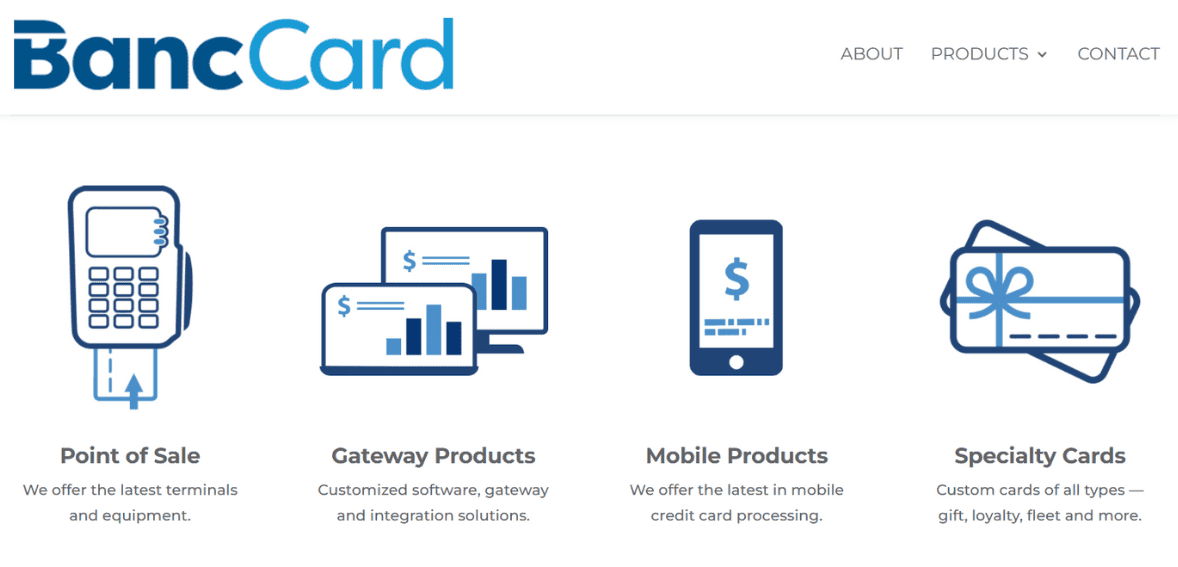
BancCard presents a selection of point of sale hardware alternatives that can facilitate in-store transactions. Typically, these are countertop terminals, mobile card readers, and wireless devices intended for businesses that require checkout flexibility. The availability of hardware may depend on merchant needs, location, and processing volume.
The terminals made available are to a large extent capable of supporting EMV chip cards, contactless payments, and magnetic stripe transactions. Thus, the company ensures compliance with the latest payment security standards and at the same time, customers are given the opportunity to use the most recent payment methods. There are also some devices that may allow the user to print the receipt, leave a tip, and view simple transaction reports directly from the terminal.
BancCard does not consider itself as a provider of proprietary POS software. Rather, it concentrates on payment acceptance hardware rather than on a fully integrated POS ecosystem that comes with inventory, employee management, or CRM tools. In the case of businesses which are already using a separate POS system, compatibility may be available, however, integration details should be confirmed beforehand.
There is not always a standard of hardware costs and leasing options, which is why merchants should find out whether the equipment is purchased outright, rented, or bundled into a long term agreement. Leasing agreements, in particular, can become costly over time if one is not fully aware of the terms. In summary, BancCard’s hardware offerings are practical and functional, but businesses seeking advanced POS features or deep software integrations may need to supplement BancCard’s tools with third-party solutions.
E-commerce and Virtual Terminal Solutions
BancCard supports e-commerce payments and remote transaction processing through virtual terminals and online payment gateways. These tools allow businesses to accept payments without a physical card reader, making them suitable for service providers, phone-based sales, and online merchants.
A virtual terminal allows a merchant to enter card information manually via a secure online interface. This method is typically used for invoicing, mail orders, or customers paying over the phone. Although a virtual terminal is a viable option, it is often accompanied by higher processing fees because of the increased risk of fraud. Therefore, merchants should take this into account when deciding on their pricing strategy.
For online sales, BancCard is able to integrate with some e-commerce platforms or offer hosted payment pages. The degree of customization and support for integration may change, and businesses with complex online requirements should check compatibility first before making a decision. BancCards e-commerce tools are mostly meant for typical scenarios rather than heavily customized checkout flows.
Security features like encryption and tokenization are usually implemented to secure cardholder data during online transactions. However, merchants must also ensure PCI compliance and take care of customer data according to the rules. In short, BancCards solutions for e-commerce and virtual terminals are enough to facilitate online payments. They may not have the same level of flexibility as developer centric platforms, but they are dependable options for businesses that want a simple way to remotely accept payments.
ricing Structure and Fee Transparency
BancCard does not advertise a single, universal pricing model. Instead, pricing is typically customized based on the merchant’s industry, transaction volume, and risk profile. Merchants may be offered interchange-plus pricing, tiered pricing, or other negotiated rate structures depending on their account setup.
This flexibility can be beneficial for established businesses with predictable volumes, as it may allow for more competitive rates compared to flat-fee processors. However, it also means pricing transparency is not immediate. Merchants must carefully review their rate sheets and fee disclosures to understand the true cost of processing. Common fees may include monthly account fees, PCI compliance fees, statement fees, and transaction-related charges. Some fees may not be obvious during initial discussions, making it important to ask for a full breakdown in writing.
Because pricing is negotiated, different merchants may have very different experiences with BancCard’s cost structure. This makes it difficult to generalize whether BancCard is inexpensive or costly without reviewing a specific agreement. Overall, BancCard’s pricing approach rewards due diligence. Businesses willing to review contracts carefully and ask detailed questions may find reasonable value, while those expecting simple, published pricing may find the process less straightforward.
Contract Lengths, Early Termination, and Hidden Costs
BancCard typically operates under standard merchant services contracts, which often include multi-year terms. Contract lengths may range from one to several years, with auto-renewal clauses that extend the agreement unless canceled within a specific notice period.
Early termination fees are a common concern with traditional processors, and BancCard contracts may include such fees depending on the agreement. These fees can be flat-rate or variable, sometimes tied to remaining months on the contract. Merchants should confirm the exact terms before signing. Other potential costs may include equipment leasing obligations, annual compliance fees, or minimum processing requirements. These charges may not impact every merchant, but they can significantly affect overall cost if overlooked.
Auto-renewal clauses are particularly important to understand, as missing a cancellation window can lock a business into an additional term. Merchants should note deadlines and cancellation procedures clearly. In summary, BancCard’s contract structure reflects traditional merchant service practices. Businesses that value flexibility or short-term commitments should review terms carefully, while those comfortable with longer agreements may find the structure manageable if pricing is competitive.
Security, PCI Compliance, and Fraud Prevention
BancCard provides standard security features designed to protect cardholder data and reduce fraud risk. These typically include encryption of transaction data and support for EMV and contactless payment standards, which help reduce counterfeit card fraud. PCI compliance support is generally offered, though merchants remain responsible for completing required questionnaires and maintaining compliance. BancCard may provide guidance or tools to assist with this process, but failure to comply can result in additional fees.
For online and card-not-present transactions, fraud prevention tools such as address verification and CVV checks may be available. The effectiveness of these tools depends on configuration and merchant usage rather than automation alone. BancCard’s security approach is practical rather than cutting-edge. It focuses on meeting industry standards rather than offering advanced AI-driven fraud detection. This is sufficient for many businesses but may not meet the needs of high-volume e-commerce merchants facing sophisticated fraud risks. Overall, BancCard offers a solid baseline of security and compliance features, but merchants with higher risk exposure may need additional third-party fraud tools.
Funding Speed and Settlement Timelines
BancCard offers standard settlement timelines consistent with traditional processors. Most merchants can expect funds to be deposited within one to two business days, depending on transaction type and bank relationships. Same-day or next-day funding options may be available for qualifying merchants, though these services can come with additional fees or requirements. Funding speed often depends on account history, processing volume, and risk assessment.
Delays can occur in cases of chargebacks, unusual transaction activity, or compliance reviews. Merchants should be aware that reserve requirements may apply in certain situations, temporarily holding a portion of funds. Compared to fintech processors that emphasize instant payouts, BancCard’s funding model is more conservative. This can enhance stability but may not suit businesses that rely on immediate cash flow. In general, funding reliability is more consistent than exceptionally fast. Businesses with predictable cash flow needs may find BancCard’s settlement timelines acceptable.
Customer Support and Account Management
BancCard provides customer support through traditional channels such as phone and email. Some merchants may also receive a dedicated account manager, particularly for higher-volume accounts. The onboarding experience can involve direct communication with support staff, which may help businesses navigate setup and compliance requirements. This hands-on approach can be valuable for merchants unfamiliar with payment processing. However, support quality may vary depending on account size and assigned representatives. Smaller merchants may experience longer response times compared to larger accounts.
BancCard does not emphasize self-service tools or extensive online knowledge bases. Businesses that prefer human assistance may appreciate this, while those seeking instant self-help options may find it limiting. Overall, customer support is functional and relationship-driven, aligning with BancCard’s traditional service model.
Reporting, Analytics, and Merchant Dashboards
BancCard provides merchants with access to transaction reports and account statements through an online portal. These tools allow businesses to track sales activity, settlements, and fees. Reporting capabilities are generally focused on financial reconciliation rather than business analytics. Merchants can review daily batches, monthly statements, and transaction histories, but advanced insights are limited. The dashboard is designed for clarity rather than customization. Businesses seeking detailed performance metrics or visual analytics may need external tools. For many small and mid-sized businesses, the reporting is sufficient for accounting and bookkeeping purposes. Larger businesses may require more robust analytics integrations. Overall, BancCard’s reporting tools are practical but basic, prioritizing accuracy over advanced data insights.
BancCard for High-Risk and Regulated Industries
BancCard may support certain high-risk or regulated industries, though approval is subject to underwriting review. Terms for these merchants often differ from standard accounts. Higher processing fees, rolling reserves, or stricter compliance requirements may apply. Businesses in regulated sectors should expect additional documentation requests. BancCard’s willingness to review higher-risk applications can be beneficial for merchants with limited options, but conditions may be more restrictive. Transparency during underwriting is important, as terms may change based on risk assessment. Overall, BancCard can be an option for some higher-risk businesses, but expectations should be set realistically.
Pros of Using BancCard
BancCard offers customized merchant accounts, broad payment acceptance, and traditional account-level support. It supports both in-store and remote transactions and provides reliable settlement timelines. The availability of human support and negotiable pricing can be advantageous for established businesses.
Cons and Potential Limitations
Lack of published pricing, long-term contracts, and potential termination fees are key drawbacks. Reporting tools are basic, and setup may require more effort. Merchants seeking simplicity or instant onboarding may find limitations.
Is BancCard the Right Payment Processor for Your Business
BancCard is best suited for businesses comfortable with traditional merchant services and negotiated agreements. It may appeal to merchants who value stability and support over automation. Businesses seeking flexibility, short contracts, or transparent flat pricing may want to compare alternatives.
FAQs
Does BancCard require a long-term contract
Many BancCard agreements include multi-year terms, though specifics vary. Merchants should review contract length and cancellation terms carefully.
Can BancCard support both in-store and online payments
Yes, BancCard supports card-present, virtual terminal, and e-commerce transactions depending on account setup.
Is BancCard suitable for small businesses and startups
It can be, but startups should carefully review fees and contract commitments to ensure alignment with early-stage needs.

Aurora Payments Review
By 10topmerchantservices December 18, 2025
Aurora Payments is a company that offers payment services in an industry full of competitors and clients with high demands of reliability, transparency, and flexibility. Digital payments keep on spreading in the worlds of in-store, online, and mobile, and as a result, providers like Aurora are looking for ways to make accepting and managing transactions easier for businesses without the need for them to be in a rigid system. This review is an unbiased and detailed examination of Aurora Payments with the sole aim of assisting merchants to get a clear understanding of what the platform can do for them and where it might be the right or wrong fit. Lets read more about Aurora Payments Review.
Aurora Payments, at least in theory, is a company aiming to be seen as a single entity that offers full-service payment processing for any business, regardless of size and industry. In fact, instead of narrowing down to serve a single group, the company seems to put more emphasis on the tailor-able payment solutions that are able to keep up with a business’s developmental stages. Besides the typical card-present transactions, digital payments are also covered by the company as there are back-office tools to make the daily operations even more effortless for merchants.
Most of the time, the deciding factor of the payment processor for a business is not the impressive features but rather the stability, transparency, and long-term control over expenses. Aurora Payments is in agreement with these words by coming up with a solution which includes the usual processing services and the optional tools and integrations. Although being a facilitator of payment processing in a traditional manner, the company’s strategy hints at a try to modernize the functionality while keeping the merchant service structures familiar.
This review digs deep into the workings of Aurora Payments from many perspectives, such as the features, pricing, contracts, security, and merchant experience. The objective here is definitely not to be the mouthpiece of the platform but to shed some light on how Aurora Payments really works and which types of businesses can be the biggest beneficiaries from the services offered.
Company Background and Market Presence | Aurora Payments Review
Aurora Payments is part of the broader merchant services ecosystem that includes processors, independent sales organizations, and technology partners working together to deliver payment capabilities to businesses. Over time, the company has developed a presence by offering payment solutions that align with established industry standards rather than experimental or unproven models. This can appeal to merchants who prefer stability over rapid innovation.
The company’s structure reflects a common approach in the payments industry, where processing capabilities are supported through backend networks and banking relationships. Aurora Payments focuses primarily on delivering merchant-facing services such as account setup, hardware provisioning, customer support, and ongoing account management. Its market presence appears to be strongest among small to mid-sized businesses that value direct support and customizable setups.
Rather than operating as a purely self-serve platform, Aurora Payments maintains a more consultative model. This allows merchants to discuss pricing structures, hardware needs, and service options before onboarding. While this approach can lead to more tailored solutions, it may also mean that the experience varies depending on the representative or partner involved in the setup process.
In terms of reputation, Aurora Payments generally aligns with industry norms rather than standing out as a disruptor. This positioning may not attract merchants looking for cutting-edge fintech tools, but it does appeal to those who prioritize reliability and familiar payment workflows. Its steady market presence suggests a focus on long-term merchant relationships rather than rapid customer acquisition at scale.
Core Payment Processing Capabilities
Aurora Payments is the company that provides the basic payment processing services to businesses that are most likely required to operate efficiently. What they offer includes the ability to accept credit and debit card transactions in both card-present and card-not-present environments. The support for EMV chip card as well as for magnetic stripe transactions ensures compliance with the latest payment standards, at the same time, it maintains compatibility with the older systems where it is necessary.
The authorization and settlement processes are on industry-standard timelines. Transactions are usually batched and settled within the expected funding windows. Aurora, although not advertising itself solely on the basis of speed, seems to be consistent in its processing reliability with the demand merchants get from the established providers. This reliability that is usually more vital than slight improvements in the settlement speed is of particular importance to those businesses which are cash flow predictable ones.
With the help of the system, there is also support for recurring billing, and manual transaction entry via virtual terminals, i.e., the platform is good for service-based businesses as well as those that are partially offline. Such functionalities lessen the requirement of different payment systems and grant merchants the privilege to centralize the management of transactions.
Aurora Payments is not a company significantly distinguishing itself by using proprietary processing technology. Its power rather resides in providing a stable, well-integrated processing experience. Less surprises and a shorter learning curve during onboarding is what it means for merchants. The advanced automation-seeking business along with those who are looking for real-time settlement tools may consider the core processing features as quite standard; however, there are many merchants who appreciate this simple approach. Aurora Payments concentrates on rendering reliable transaction processing which is in line with the daily operational needs and not on offering experimental features which might not be applicable to all industries.
Supported Payment Methods and Acceptance Types
Aurora Payments supports a broad range of payment methods designed to accommodate modern consumer preferences. Major credit and debit card networks are accepted, ensuring compatibility with most customer payment behaviors. This baseline coverage is essential for businesses operating in both retail and service environments. Contactless payments, including tap-to-pay transactions, are supported through compatible hardware. This allows merchants to accommodate customers who prefer faster checkout experiences using contactless cards or mobile wallets. While mobile wallet acceptance has become standard across the industry, its inclusion remains important for maintaining competitive parity.
In addition to in-person transactions, Aurora Payments enables card-not-present acceptance through online gateways and virtual terminals. This flexibility is particularly useful for businesses that operate across multiple channels, such as combining storefront sales with phone or online orders. By supporting multiple acceptance types under one account, Aurora reduces operational complexity. Alternative payment methods, such as ACH or electronic checks, may be available depending on merchant qualification and configuration. These options can benefit businesses handling higher transaction values or recurring payments where card fees may be less cost-effective.
Overall, Aurora Payments offers a payment acceptance range that aligns with mainstream merchant expectations. While it may not aggressively expand into emerging payment trends, its coverage is sufficient for most traditional and hybrid business models. This balanced approach prioritizes reliability and broad usability over niche or experimental payment methods.
Point-of-Sale and Hardware Options
Aurora Payments offers a variety of point-of-sale and hardware options designed to suit different business environments. Merchants can choose from countertop terminals, mobile card readers, and integrated POS systems depending on their operational needs. This flexibility allows businesses to tailor their setup rather than conforming to a single hardware ecosystem. Countertop terminals are typically favored by retail and hospitality businesses that require stable, fixed checkout stations. These devices support EMV, contactless payments, and PIN debit transactions. For mobile or service-based businesses, wireless and mobile card readers offer greater flexibility without sacrificing core functionality.
Aurora Payments also supports POS systems that integrate payment processing with inventory management, reporting, and customer data tools. While these systems may not be proprietary, their compatibility with Aurora’s processing services allows merchants to select software that aligns with their workflow. Hardware pricing and leasing options vary based on configuration and provider arrangements. Merchants are encouraged to review hardware costs carefully, as equipment expenses can significantly impact long-term processing costs. Transparency in this area often depends on the clarity of the initial sales discussion.
Overall, Aurora Payments provides hardware options that meet standard business requirements. The platform does not attempt to lock merchants into exclusive devices, which can be advantageous for businesses seeking flexibility. However, merchants should ensure that chosen hardware supports future growth and evolving payment technologies.
Online, Mobile, and Virtual Payment Tools
Aurora Payments supports online and remote payment acceptance through a combination of payment gateways, virtual terminals, and invoicing tools. These features are essential for businesses that operate beyond traditional in-store environments or that offer remote services. Virtual terminals allow merchants to manually enter card details for phone or mail orders. This capability is particularly useful for professional services, healthcare providers, and B2B businesses that rely on invoicing or delayed payments. While manual entry typically incurs higher processing fees, its availability adds operational flexibility.
For eCommerce businesses, Aurora Payments offers gateway integrations that enable secure online checkout experiences. These gateways support standard features such as tokenization, hosted payment pages, and basic fraud prevention tools. Integration options may vary depending on the website platform and developer resources available. Mobile payment tools further extend Aurora’s reach by allowing merchants to accept payments through smartphones or tablets. This is beneficial for businesses that operate at events, job sites, or customer locations. Mobile tools generally mirror the functionality of traditional terminals, providing consistency across transaction environments.
While Aurora Payments’ digital tools may not rival those of specialized eCommerce platforms, they provide sufficient functionality for many businesses. The emphasis remains on reliability and ease of use rather than advanced customization or developer-centric features.
Industry Focus and Business Types Served
Aurora Payments serves a wide range of industries, reflecting its generalist approach to payment processing. Retail businesses, restaurants, service providers, and professional firms commonly fall within its target market. This broad focus allows Aurora to accommodate diverse transaction patterns and operational requirements. Service-based businesses benefit from features such as invoicing, virtual terminals, and recurring billing. Retail and hospitality merchants gain access to POS systems and hardware that support high transaction volumes and quick checkout experiences. B2B merchants may also find value in alternative payment methods and reporting tools.
Aurora Payments does not appear to specialize heavily in high-risk industries. While this can limit its appeal to certain business types, it also contributes to more predictable pricing and underwriting processes. Merchants operating in regulated or higher-risk sectors may need to confirm eligibility before onboarding. The platform’s flexibility makes it suitable for small to mid-sized businesses seeking straightforward payment solutions. Larger enterprises with complex integration needs may require additional customization or enterprise-level support. Overall, Aurora Payments is best suited for businesses that value adaptability and traditional payment structures. Its industry coverage reflects a focus on stability rather than aggressive expansion into niche markets.
Pricing Structure and Fee Transparency
Aurora Payments typically offers pricing structures that align with standard industry models, such as interchange-plus or tiered pricing. The specific pricing arrangement often depends on the merchant’s business type, transaction volume, and risk profile. This customized approach allows flexibility but requires careful review during onboarding. Interchange-plus pricing is generally favored for its transparency, as it separates card network fees from processor markup. Tiered pricing, while simpler to understand upfront, can obscure actual costs and lead to higher effective rates for some merchants. Aurora Payments may offer either model depending on the account setup.
Additional fees can include monthly service charges, statement fees, PCI compliance fees, and equipment costs. Merchants should request a full fee schedule to avoid surprises. Transparency at this stage is critical for long-term satisfaction. Aurora Payments does not heavily advertise flat-rate pricing, which may deter very small businesses seeking predictable costs. However, for established merchants, customized pricing can result in more competitive rates over time. Overall, pricing transparency depends largely on communication during the sales process. Merchants who take time to understand fee structures are more likely to benefit from Aurora’s pricing flexibility.
Contract Terms, Commitments, and Flexibility
Contract terms with Aurora Payments can vary based on the agreement and sales channel. Some merchants may encounter multi-year contracts, while others may have month-to-month options. Understanding contract length and renewal clauses is essential before signing. Early termination fees may apply in certain agreements. These fees can significantly impact costs if a business decides to switch providers. Merchants should confirm termination terms and request written clarification. Auto-renewal clauses are common in the industry and may be present in Aurora Payments contracts.
Awareness of renewal timelines helps merchants avoid unintended extensions. Aurora Payments’ flexibility depends largely on negotiation and merchant profile. Businesses with higher volumes may have greater leverage when discussing contract terms. Overall, contract structures appear consistent with industry norms. Merchants who prioritize flexibility should address contract details early in the onboarding process.
Security, Compliance, and Risk Management
Security is a core component of Aurora Payments’ service offering. The platform supports PCI DSS compliance requirements, helping merchants protect cardholder data and reduce risk exposure. Compliance tools may include tokenization and secure data handling practices. Fraud prevention tools are available to help merchants manage chargebacks and unauthorized transactions. These tools vary by payment channel and may include address verification and CVV checks for online transactions. Aurora Payments also provides guidance on best practices for maintaining compliance. While compliance ultimately remains the merchant’s responsibility, processor support can reduce complexity.
Chargeback management support helps merchants respond to disputes efficiently. This includes access to reporting tools and documentation resources. Overall, Aurora Payments’ security measures align with industry standards. While not positioned as a cybersecurity innovator, its approach prioritizes proven safeguards and regulatory compliance.
Reporting, Analytics, and Merchant Dashboard
Aurora Payments offers reporting tools that provide visibility into transaction activity, settlements, and fees. These tools are accessible through a merchant dashboard designed for daily operational use. Reports typically include transaction summaries, batch details, and funding timelines. This information helps merchants reconcile accounts and monitor cash flow. Analytics features may be more functional than advanced. While they provide essential insights, businesses seeking deep data analysis may require third-party tools. The dashboard’s usability depends on system configuration. Most merchants find it sufficient for routine monitoring and reporting. Overall, Aurora’s reporting tools support operational clarity rather than strategic analytics. This suits many small to mid-sized businesses.
Customer Support and Merchant Experience
Customer support is a critical factor in merchant satisfaction. Aurora Payments offers support through phone and email channels, with availability depending on service agreements. Onboarding support helps merchants configure hardware and software. The quality of this experience can vary based on representative involvement. Ongoing support is generally focused on resolving technical issues, billing questions, and account updates. Response times may vary. Merchants who value direct communication may appreciate Aurora’s consultative approach. However, those expecting self-serve tools may find support interactions more frequent. Overall, the merchant experience is shaped by personal interaction rather than automation.
Pros of Using Aurora Payments
Aurora Payments offers flexible solutions suitable for various business types. Its consultative sales model allows customization. The platform supports multiple payment environments, including in-store, online, and mobile. Hardware flexibility is another strength. Security and compliance support aligns with industry expectations. Reporting tools provide essential visibility. Aurora’s focus on stability appeals to businesses seeking long-term relationships rather than rapid experimentation.
Cons and Potential Limitations
Pricing transparency depends on sales discussions, which may concern some merchants. Contracts can include long-term commitments. Advanced analytics and developer tools are limited compared to fintech-focused platforms. High-risk businesses may face eligibility restrictions. Support quality can vary depending on account management. Small businesses may find pricing less predictable than flat-rate alternatives.
Frequently Asked Questions
What types of businesses are best suited for Aurora Payments?
Aurora Payments works best for small to mid-sized businesses that value flexibility, traditional processing models, and consultative support.
Does Aurora Payments require long-term contracts?
Contract terms vary. Some agreements include multi-year commitments, so merchants should review terms carefully.
How does Aurora Payments compare to other processors?
Aurora Payments focuses on stability and customization rather than disruptive pricing or advanced fintech features.

American Express Payment Solutions Review
By 10topmerchantservices December 14, 2025
American Express Payment Solutions refer to the company’s suite of services that allow businesses to accept American Express cards across physical, online, and mobile payment environments. Unlike many payment processors that act primarily as intermediaries, American Express operates a closed-loop network where it maintains relationships with both cardholders and merchants. This structure influences how payments are authorized, settled, and supported. Lets read more about American Express Payment Solutions Review.
For merchants, American Express payment solutions are not designed to replace an existing processor in most cases but rather to complement it by enabling acceptance of Amex cardholders. These cardholders often represent a different customer segment focused on premium services, business travel, or higher discretionary spending. The platform is typically positioned as a value-driven acceptance option rather than a low-cost payment solution. Fees tend to reflect this positioning, balancing higher transaction costs against potential benefits such as larger average ticket sizes, reputable brand association, and access to cardmember-focused programs.
Core Payment Processing Capabilities | American Express Payment Solutions Review
When businesses process American Express payments, they can accept Amex credit and charge cards for sales, whether customers are shopping in a physical store or online. These transactions actually flow quite differently from typical open-loop networks. The reason is simple: American Express uniquely acts as both the card issuer and the network operator. This setup often simplifies specific parts of the authorization and settlement process, and it helps standardize policies across all merchants.
In physical locations, American Express transactions integrate into existing point-of-sale systems through compatible terminals, provided the merchant is enrolled for acceptance. For online transactions, Amex integrates into payment gateways and digital checkout systems, allowing customers to use their cards similarly to other major brands. Authorization responses are typically fast and consistent, benefiting from the closed-loop model. Merchants also gain access to standardized dispute and chargeback processes, which may differ in structure but are generally well-documented.
However, American Express does not attempt to compete as a full-service processor for all payment types. It does not replace debit processing, alternative payment methods, or local bank transfers. Instead, its core capability remains focused on enabling Amex card usage reliably and securely. For businesses deciding whether to add American Express, the key consideration is not technical functionality, which is generally solid, but whether their customer base includes enough Amex cardholders to justify acceptance.
Types of Businesses Best Suited for American Express
American Express payment solutions tend to align best with businesses that serve customers who value rewards, travel benefits, or premium experiences. This commonly includes businesses in hospitality, dining, travel services, professional consulting, healthcare, and luxury retail. Enterprise-level merchants and B2B service providers also frequently benefit from Amex acceptance due to corporate card usage. Small businesses can also find value, particularly if they operate in urban areas, serve international travelers, or cater to higher-income demographics. In these cases, refusing Amex may unintentionally create friction at checkout or signal limited payment flexibility.
But for businesses with tight margins, very price-sensitive clients, or many small transactions, those associated fees can be hard to swallow. Think about convenience stores, discount retailers, or places that primarily deal in cash; they generally don’t see much benefit from taking Amex. On the flip side, online businesses selling professional services, subscriptions, or high-value items often find a real advantage. The American Express brand, after all, often brings a certain level of trust, especially with international and corporate buyers. Honestly, American Express payment solutions are best seen as a calculated move, not a universal requirement. Businesses that truly understand their customer base, average transaction values, and brand identity are the ones most likely to profit from accepting it.
Merchant Account Structure and Setup Process
Accepting American Express typically requires merchants to establish a direct relationship with the company, separate from their primary payment processor in many cases. This onboarding process involves submitting business documentation, banking details, and compliance information for review. Approval timelines vary depending on business size, risk profile, and geographic location. Established businesses with clear operational histories often move through approval relatively smoothly, while newer or higher-risk businesses may face additional review steps.
Once approved, merchants receive access credentials and guidelines on enabling acceptance across their sales channels. Integration often requires coordination with existing payment processors or gateways to ensure American Express is properly configured at the terminal or checkout level. One benefit of the American Express model is clarity in terms of account ownership. Merchants generally deal directly with Amex for settlement and disputes related to Amex transactions, which can reduce ambiguity in responsibility. However, the separate account structure can also add administrative complexity. Businesses must reconcile American Express settlements independently from other card brands and manage reporting across systems. For companies with limited accounting resources, this is an important consideration during setup.
Transaction Fees and Pricing Model
American Express pricing has traditionally been higher than that of many other card networks, and this remains a central consideration for merchants. Fees are generally structured as a percentage of each transaction, though negotiated rates may apply for larger or enterprise-level businesses. The pricing reflects factors such as cardmember rewards funding, fraud protection infrastructure, and the demographics of Amex cardholders. From a cost perspective, American Express is rarely the lowest-priced option and should not be evaluated purely on transaction fees alone.
If your business enjoys high margins or customers who consistently spend more, those steeper processing costs might not be a big deal. They often get balanced out by bigger sales or simply happier customers. However, for other businesses, especially those selling low-margin items, the expense could easily swallow any upside. Generally, pricing is pretty clear, and most merchants know the fees beforehand. Still, things can change based on the card type, where the transaction happens, and whatever deals were struck. To truly figure out the cost, businesses really ought to look at the overall effect on their revenue, not just the processing fee itself. That key difference usually decides if taking American Express is actually worth it financially.
American Express Cards and Customer Spending Power
One of the primary reasons businesses choose to accept American Express is the spending behavior of its cardholders. Historically, Amex users tend to spend more per transaction and show higher loyalty to merchants that accept their preferred card. Many cardholders use American Express for business expenses, travel, dining, and professional services. This often translates into fewer price-sensitive purchasing decisions and a greater focus on service quality.
For merchants, this can lead to increased average order values and repeat business. In some sectors, Amex acceptance may even influence where customers choose to shop, especially for planned purchases. That said, higher spending power does not guarantee higher profits. Businesses must still account for processing costs and determine whether increased revenue translates into sustainable margins. American Express acceptance works best when aligned with a customer experience strategy rather than as a standalone payment decision. Merchants that understand their audience are more likely to benefit from the cardholder profile Amex attracts.
Point of Sale and Hardware Compatibility
American Express does not require proprietary hardware, which makes it relatively easy for merchants to enable acceptance across existing POS systems. Most modern terminals that support EMV and contactless payments can process Amex cards once properly configured. Merchants must ensure their terminals and software providers are certified to handle American Express transactions. This often involves activating Amex acceptance within the POS system rather than purchasing new equipment.
Mobile payment environments, including tablets and handheld terminals, also support Amex acceptance in most cases, making it suitable for on-the-go businesses or service professionals. From a flexibility standpoint, this hardware-agnostic approach is a strength. Merchants retain freedom of choice when upgrading or switching POS providers. However, setup discrepancies can arise depending on the processor or POS software in use. Businesses should confirm compatibility early to avoid delays or incomplete payment acceptance at launch.
Online Payments and E-Commerce Support
American Express integrates smoothly into most major e-commerce platforms through supported payment gateways. Customers can use their cards at checkout just as they would other credit cards, benefiting from secure authorization and familiar user flows. For subscription billing and recurring payments, Amex generally performs reliably, appealing to SaaS businesses and service providers that bill monthly or annually. Businesses can also support tokenization and secure card storage through compliant gateways.
When you’re a merchant, getting Amex set up really depends on your current technology. Good news: plenty of popular platforms already include Amex support right away. If you’ve got a custom setup, though, you might need a bit more development work. American Express also lets customers pay with mobile wallets and contactless online options, which is great because everyone expects that these days. The features are solid, but here’s a tip: always check your conversion data. You want to make sure Amex actually appeals to your customers, instead of just assuming everyone wants to use it.
Security Standards and Fraud Protection Measures
Security is a core component of American Express payment solutions. Transactions comply with PCI DSS requirements and benefit from encryption, tokenization, and real-time monitoring capabilities. The closed-loop network structure allows American Express to analyze transaction patterns across its entire ecosystem, which can enhance fraud detection accuracy. Merchants also receive support in managing disputes and chargebacks involving Amex cardholders.
Fraud liability depends on transaction type and compliance with security standards, such as EMV or secure e-commerce protocols. Merchants that follow best practices generally experience predictable dispute outcomes. While no system eliminates fraud risk entirely, American Express maintains a reputation for proactive monitoring and cardholder protection. This emphasis can indirectly benefit merchants by reducing fraudulent transaction exposure. For businesses operating in higher-risk environments, security strength may be a meaningful deciding factor in accepting American Express.
Reporting, Insights, and Business Analytics
American Express provides merchants with reporting tools that focus on transaction visibility, settlement tracking, and chargeback management. Reports are typically accessible through merchant portals or integrated dashboards. Transaction-level data allows businesses to monitor Amex-specific performance independently from other card brands. This can be especially useful for analyzing customer behavior, average spend, and repeat usage patterns.
While reporting is clear and reliable, it is not designed as a full analytics or business intelligence platform. Most merchants will still rely on their primary POS or accounting software for holistic financial insights. The value of Amex reporting lies in clarity rather than depth. Businesses gain transparency into payouts, fees, and disputes without unnecessary complexity. For larger merchants, data can be integrated into internal systems to support forecasting and reconciliation processes.
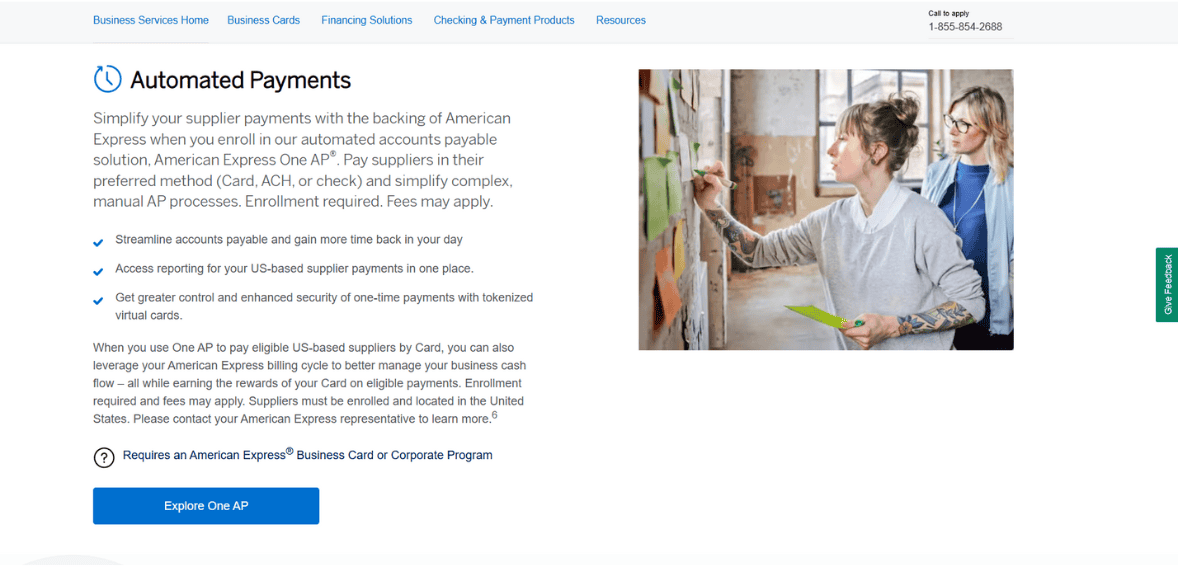
Funding Timelines and Settlement Process
American Express settlement timelines differ slightly from traditional processors due to the direct relationship model. Funds are typically deposited according to defined schedules, which merchants can review during onboarding. While settlement speed is generally reliable, it may not always be as fast as next-day funding offered by some processors. Businesses with tight cash flow cycles should factor this into their decision-making.
Consistency is a huge plus here. Once things are set up, business owners know exactly when their money will hit the bank, making planning a breeze. Of course, keeping Amex separate from other card brands can make things clearer. But, fair warning, it does mean an extra step when you’re balancing the books. Honestly, when your funds arrive usually isn’t the biggest headache. Still, always consider it carefully with your daily cash flow.
Customer Support and Merchant Assistance
American Express offers dedicated merchant support for account management, disputes, and technical questions. Support channels typically include phone, online resources, and documentation portals. Merchant assistance tends to be structured and policy-driven, reflecting the company’s scale and regulatory obligations. While this ensures consistency, it may feel less flexible for smaller businesses. Dispute resolution support is particularly structured, helping merchants understand timelines and documentation requirements clearly. Educational resources are available, though they focus more on compliance and procedures than marketing guidance. Overall, support quality is dependable, though not always personalized in the way smaller processors might offer.
International Acceptance and Global Reach
American Express has strong international recognition, though acceptance varies by region. Businesses operating in tourist-heavy or international markets often benefit from offering Amex as a payment option. Cross-border transactions may involve currency conversion and additional fees, which merchants should review carefully.
For global enterprises, Amex’s consistent policies can simplify international payment acceptance across locations. Smaller businesses should evaluate whether international customers represent a meaningful portion of sales before prioritizing acceptance. Global reach is a strength, but demand depends heavily on customer demographics.
Strengths and Limitations of American Express Payment Solutions
American Express payment solutions offer strong brand recognition, reliable security, and access to a valuable customer segment. For businesses aligned with its cardholder base, acceptance can enhance customer satisfaction and transaction value. However, higher processing costs, separate settlement processes, and administrative complexity may limit appeal for some businesses. The platform works best as a strategic addition rather than a default requirement. Merchants who assess fit carefully are more likely to benefit. American Express is not a universal solution, but in the right context, it remains a meaningful payment option.
FAQs
Is American Express Payment Solutions suitable for small businesses?
It can be suitable if a small business serves customers who actively use Amex cards and has margins that can absorb higher processing costs.
Does accepting American Express increase revenue potential?
In some cases, yes, as Amex cardholders may spend more per transaction, but this depends on customer profile and business type.
How does American Express compare to other payment processors?
American Express focuses on card brand acceptance rather than acting as a full-service processor, making it best used alongside existing payment solutions rather than as a replacement.

Alpha Card Services Review
By 10topmerchantservices December 9, 2025
Alpha Card Services has been a stable provider in the merchant services market for a long time and is still offering the combined payment processing, POS systems, payroll support, business financing, and customer engagement tools to its clients. The company has evolved from solely a payment processor to a business solutions partner, providing a more complete package of services for small and medium-sized merchants in the retail, hospitality, and service sectors over the years. Lets read more about Alpha Card Services Review.
This development is in line with the industry-wide change that is happening, where merchant service companies are looking to offer bundled solutions that decrease the need for multiple vendors. Although the company’s reputation is based on the company’s experience and a diversified product portfolio, just like with any other service provider, the real test is to understand how these solutions perform, how they fit different business models, and what limitations matter for decision-makers.
This review is intended to provide a clear, in-depth, and impartial view of Alpha Card Services through the breakdown of its major capabilities and the subtle details that affect the operational value. By analyzing the pros and cons of each category, businesses will be able to decide whether this platform accommodates their payment, administration, and customer-facing needs. The intention is not to promote or criticize but to provide a realistic image of the company so that merchants can assess the compatibility based on their workflow, budget, and long-term expectations.
Core Merchant Processing Capabilities | Alpha Card Services Review
Alpha Card Services essentially offers the key hardware and software components for people to be able to accept credit and debit card payments. Their processing services cover the usage of countertop terminals, mobile acceptance, online transactions, and recurring billing. It also seems that the whole instrument is built to facilitate the four major card networks, i.e., Visa, Mastercard, Discover, and American Express. This will enable businesses to operate the payment flow in less hard ways under one provider. The exactness and uptime are the two features that the firm highlights and these are very important to any merchant whose revenue flow is highly dependent on these processing activities.
On the other hand, Alpha Card Services tries to differentiate through bundled software and extra support that smaller providers may not offer, albeit core features are standard in the industry. Though pricing transparency can be different from merchant categories and sales volumes, which is a typical situation in the payment processing industry, businesses wanting predictable monthly costs usually take it as a disadvantage.
Apart from that, the processing experience is usually efficient and the processors can be readily used across the different industries that range from quick-service venues to professional services. Most merchants will find the tools adequate for daily operations, though the ultimate value depends on contract terms and additional fees. If any such businesses are out there that need deeply customized setups, integrations, or enterprise-level processing, then the platform will probably seem basic to them. But it offers the fundamental capabilities needed to maintain efficient payment acceptance for small and mid-sized companies.
POS Systems and In-Store Payment Tools
Alpha Card Services offers a range of POS solutions designed to help brick-and-mortar businesses streamline checkout, manage inventory and monitor sales performance. The company typically provides tablet-based systems, programmable terminals and industry-specific POS tools for restaurants and retail stores. These systems allow businesses to process transactions, manage menus, track staff performance and generate reports, giving merchants more control over daily operations. The POS interface is generally straightforward, designed to reduce the learning curve for employees, which is helpful for high-turnover businesses. One benefit is that merchants can integrate payments directly into the POS, reducing manual entry and minimizing errors. However, the system may not offer the same level of customization or high-end analytics that larger enterprise POS providers deliver.
Additionally, hardware costs and contractual commitments may influence overall value, especially for smaller businesses trying to control upfront investments. Still, for many standard retail or hospitality environments, Alpha Card Services provides a balanced combination of ease of use, essential features and payment integration. Businesses that require highly tailored workflows or advanced industry-specific modules may need to evaluate alternative POS vendors, but for straightforward in-store payment management the system is practical and reliable.
Online and Mobile Payment Solutions
In response to the increasing demand for digital commerce, Alpha Card Services offers online payment gateways, virtual terminals and mobile payment solutions. These tools enable businesses to accept payments through their website, over the phone or on the go using mobile card readers or app-based systems. The virtual terminal is especially useful for service providers or office-based businesses that need to process payments without physical cards. The online gateway supports standard eCommerce functions, recurring billing and secure checkout, allowing merchants to integrate payments into existing websites or shopping carts.
Mobile processing tools benefit field-service providers and businesses attending events or offering delivery. While the digital offering covers the essentials, it may not provide the advanced developer-friendly features or extensive API flexibility that larger payment platforms offer. Still, for small and mid-sized businesses looking for straightforward online acceptance, the system is functional and secure. Another point to consider is pricing transparency, as some digital tools may come with additional monthly or per-transaction costs depending on usage. Overall, Alpha Card Services provides a complete basic toolkit for online and mobile payments, making it a versatile choice for merchants expanding beyond physical locations.
Payroll Services and Business Management Tools
Alpha Card Services extends beyond payment processing by offering payroll services, tax filing support and HR management tools. This diversification is meant to help businesses streamline administrative burdens by keeping financial and operational services under one provider. The payroll system handles employee payments, benefits management, deductions and compliance tasks. Many small businesses find value in consolidating payroll with payment services, especially when they want a simplified approach without adopting a complex HR platform. The system tends to work well for straightforward payroll needs but may not include advanced workforce management or deep HR analytics that larger platforms specialize in.
The integration between payroll and merchant services can also reduce administrative effort for businesses that prefer centralized support. However, the effectiveness largely depends on the complexity of the business’s staffing structure and whether the tools meet industry-specific needs. As an add-on, payroll provides convenience, but businesses should thoroughly evaluate pricing, contract terms and the depth of features before fully committing. For many small and mid-sized merchants, the offering provides adequate functionality and the benefit of having a single point of contact for support across different operational areas.
Gift and Loyalty Card Programs
Alpha Card Services includes gift and loyalty card programs to help businesses retain customers and encourage repeat visits. These programs allow merchants to design custom-branded gift cards and implement reward systems that track customer activity and incentivize spending. Gift cards remain a strong revenue generator for many retail and service-based businesses, while loyalty programs help deepen customer engagement. The system provided by Alpha Card Services enables merchants to issue cards, track balances, manage points and analyze program performance through dashboards. These tools can strengthen customer retention strategies, especially for restaurants, salons and boutique retailers.
The offerings are functional and straightforward, though they may lack the advanced segmentation or behavioral analytics found in specialized loyalty platforms. For businesses that want a simple system without complex setup, Alpha Card Services provides a usable option that supports core engagement needs. Merchants with more sophisticated marketing strategies may require additional software, but for everyday loyalty management and branded gift card issuance, the service delivers solid baseline functionality.
Cash Advance and Business Funding Options
Alpha Card Services offers merchant cash advance solutions designed to provide short-term working capital for businesses with fluctuating cash flow. These advances allow merchants to receive a lump sum upfront in exchange for a portion of future credit card sales. This type of funding is attractive to businesses that may not qualify for traditional loans due to credit score or documentation challenges. The primary benefit is speed and ease of access, as approvals are typically faster with fewer requirements. However, merchant cash advances often involve higher costs compared to conventional financing, and repayment structures may impact cash flow during slower months.
Alpha Card Services positions this offering as a flexible option for meeting urgent business needs, such as inventory purchases, repairs or expansion. While the service fulfills that purpose, businesses should approach it with caution and fully understand factor rates, repayment terms and long-term cost implications. For merchants who prioritize speed over cost, the funding can be useful, but those seeking economical financing alternatives may find better options through traditional lenders or SBA-backed programs. The cash advance product is neither inherently good nor bad but situational, depending on urgency, revenue patterns and financial discipline.

Security, Compliance and Fraud Prevention Tools
Security is a critical element of payment processing, and Alpha Card Services incorporates several tools to maintain PCI compliance, protect cardholder data and reduce fraud risks. The company provides encrypted terminals, secure gateways, tokenization and support for PCI-DSS requirements. These measures help merchants maintain secure transactions while minimizing vulnerabilities that could lead to chargebacks or data compromise. Fraud monitoring tools assist businesses in identifying suspicious activity early, though the sophistication of these tools may vary depending on the product package selected. For many small and mid-sized merchants, the built-in safeguards are sufficient for everyday operations, especially when combined with proper internal practices.
Larger or high-risk businesses may require more advanced fraud tools, which could necessitate external platforms. The company’s emphasis on compliance guidance is valuable for merchants unfamiliar with regulatory expectations, as staying up to date with data-security standards can be challenging without support. While Alpha Card Services provides solid baseline protection, businesses should evaluate whether their industry requires higher-level controls before fully relying on the system. Overall, the platform addresses fundamental security needs and supports merchants in maintaining responsible payment environments.
Reporting Dashboards and Analytics Features
Reporting and analytics play a significant role in helping businesses track performance, identify trends and make informed decisions. Alpha Card Services provides dashboards that summarize transactions, revenue, customer activity and general operational metrics. These tools enable merchants to monitor day-to-day results and access data that supports forecasting and strategic planning. While the reports are practical and easy to understand, they may not offer the advanced granularity or predictive analytics available in specialized data platforms. Still, for small and mid-sized merchants, the available insights are generally sufficient to track sales patterns, monitor peak hours or identify underperforming products.
The dashboards typically integrate with POS systems and online gateways, allowing a unified view of payments across channels. Some merchants may wish for deeper inventory tracking or multi-location analytics, but the reporting tools cover core needs effectively. In evaluating these features, the system stands as a balanced solution that supports operational visibility without overwhelming users with complex data structures. For businesses wanting clarity without advanced technical demands, the reporting suite offers practical and accessible insights.
Integrations and Compatibility with Third-Party Systems
Alpha Card Services integrates with a variety of third-party systems, including accounting software, shopping carts, POS tools and inventory platforms. These integrations help businesses create smoother workflows by reducing manual data entry and syncing payment information automatically. Compatibility with widely used systems is beneficial for merchants who already use established platforms and prefer not to overhaul their operations. While the integration ecosystem is functional, it may not be as extensive or API-driven as larger enterprise payment providers. Businesses requiring fully customizable integrations or complex multi-system environments may find limitations.
However, for standard small and mid-sized setups, the available compatibility generally supports essential needs such as syncing sales data, managing online store transactions or reconciling accounting activity. Merchants should confirm integration details beforehand to ensure their existing software is supported. Overall, the system provides reasonable connectivity for common business tools, allowing smoother operations without requiring significant restructuring.
Pricing Structure and Contract Terms
Pricing is one of the most important evaluation points for any merchant services provider. Alpha Card Services uses a traditional contract model that may involve multi-year terms, early termination fees and variable rate structures depending on merchant category, transaction volume and equipment needs. While this approach is common in the industry, it may not appeal to businesses seeking month-to-month flexibility or transparent flat-rate pricing. Merchants must pay close attention to interchange rates, monthly fees, PCI compliance fees and hardware costs, as these elements collectively determine the total cost of ownership. The company offers competitive rates in some categories, but variance across industries makes it important for businesses to request detailed quotes.
A key consideration is whether the long-term contract aligns with the business’s growth plans. Merchants should also review cancellation terms carefully, especially if they anticipate changes in POS systems or payment methods. The pricing structure is neither overly restrictive nor overly flexible; it falls in the traditional mid-range of merchant service agreements. Transparency and clarity depend on the sales agent and the specific package selected, making due diligence essential.
Customer Support, Training and Resources
Customer support is a significant component of merchant satisfaction, and Alpha Card Services provides assistance through phone, email and dedicated service teams. Their support offerings include onboarding guidance, troubleshooting help, hardware installation assistance and general account management. For many merchants, having a single provider for payments, POS and payroll simplifies the support experience, as issues can be addressed without contacting multiple vendors. Support quality can vary based on the nature of the issue, and some merchants may wish for extended hours or faster resolution times.
Training resources such as documentation, how-to guides and setup support help reduce onboarding challenges. The company aims to make learning its systems accessible for employees, especially for POS and payment tools. While the support structure is functional and reliable for most users, merchants requiring highly specialized or rapid technical escalation may find some limitations. Overall, the support level is consistent with typical mid-tier merchant service providers, offering a mix of practical guidance and general troubleshooting.
Pros of Using Alpha Card Services
Alpha Card Services offers a wide range of bundled solutions that appeal to merchants wanting a centralized provider for payments, POS, payroll and customer engagement. The depth of services makes it easier for small and mid-sized businesses to consolidate operations without juggling multiple companies. Their POS systems are simple to use, the online tools are reliable for basic eCommerce needs and the loyalty programs add value for businesses focused on customer retention.
The availability of payroll services is a convenient add-on that helps streamline administrative tasks. Security and compliance features support safe operations, and reporting tools offer clear insights for everyday decision making. The company’s longevity and diversified product offering create a sense of stability for merchants seeking an established provider. For many businesses, the biggest advantage is convenience and the ability to manage multiple business functions through one partner.
Cons and Limitations to Consider
While Alpha Card Services provides essential solutions, there are limitations worth considering before committing. The pricing model may lack transparency, especially for merchants unfamiliar with interchange-plus structures or multi-year contracts. Early termination fees can be a concern for businesses seeking operational flexibility. Some tools, such as advanced analytics or specialized POS features, may not match the depth of competitors focused solely on those categories. Integration options, while adequate, may not satisfy businesses with complex software ecosystems.
The merchant cash advance offering also requires careful evaluation due to potential cost implications. Support quality varies depending on issue type, and businesses with demanding technical needs may desire more robust service options. Alpha Card Services offers a solid foundation, but merchants must ensure the platform aligns with their growth plans, budget structure and operational requirements.
Conclusion
Alpha Card Services delivers a broad collection of merchant services, payment tools and administrative solutions tailored primarily for small and mid-sized businesses. Its strength lies in providing multiple business functions under one provider, which can simplify management and reduce operational complexity. While the platform performs well for everyday payment processing and basic POS or online needs, merchants must carefully evaluate contract terms, pricing structure and the level of customization required. The service is best suited for businesses seeking practicality and consolidation rather than advanced or highly specialized features. By weighing the pros and cons outlined throughout this review, merchants can make a well-informed decision about whether Alpha Card Services fits their long-term business strategy.
FAQs
1. Is Alpha Card Services suitable for small businesses?
Yes, its bundled services, simple POS tools and basic online payment systems make it accessible for small and mid-sized merchants, though pricing terms should be reviewed carefully.
2. Does Alpha Card Services require long-term contracts?
The company typically uses multi-year contracts with early termination fees, so merchants should review the terms thoroughly before signing.
3. What types of businesses benefit most from Alpha Card Services?
Retail shops, restaurants, salons and service-based businesses often benefit the most, especially if they prefer having payments, POS and payroll managed by a single provider.

Allied Payment Network Review
By 10topmerchantservices December 3, 2025
Allied Payment Network is a digital payments provider that focuses heavily on payment enablement for financial institutions, lenders, and businesses that want a reliable and modern system for bill payments, money transfers, and real time transactions. Although the company is not as widely recognized among consumer facing brands, it has built a strong niche in providing back end infrastructure for banks and credit unions. The idea behind Allied Payment Network is simple. Many financial institutions struggle with creating smooth and consumer friendly payment experiences. Traditional banking infrastructure is often slow or fragmented, partly because legacy systems were not built for modern payment flows. Lets read more about Allied Payment Network Review.
Allied Payment Network serves to bridge that technical gap. It gives banks and other organizations a plug in platform that simplifies bill payments, digital wallet style transfers, mobile banking transactions, and customer account access. The company positions itself as a partner rather than a generic software vendor. It works within the operational structure of financial organizations rather than forcing them to adopt rigid technology frameworks.
Given how payment trends have changed in the last decade, digital financial services now prioritize speed, flexibility, and security. Allied Payment Network was developed to support this shift. It is particularly relevant for community banks and credit unions that want enterprise grade payment systems but do not have the budget or bandwidth to build them in house. This combination of specialization and focus on financial institutions has made Allied Payment Network a notable player in the digital payments sector.
Platform Overview and Core Value Proposition | Allied Payment Network Review
The core value of Allied Payment Network lies in providing a platform that makes payment engagement simpler for both financial institutions and their customers. Many banks still use outdated or fragmented systems for digital transactions, which can lead to poor customer experience, slower processing, and higher operational complexity. Allied Payment Network aims to deliver a more direct way of connecting customers with payment services. Instead of piecing together different software tools, banks can rely on a single technology platform that handles multiple payment flows.
From a business perspective, the platform is designed around convenience, security, and comprehensive connectivity. Allied Payment Network brings together digital bill payments, electronic transfers, mobile payments, and financial engagement features into a central system. This helps reduce technical overhead and gives financial institutions more control over how payments are managed. Rather than simply offering another payment app, Allied Payment Network operates in the background to improve reliability and reduce friction in financial transactions.
The platform is built with the intention of supporting different digital channels. Many customers no longer interact with banks in a traditional branch based manner. They expect mobile first access and faster transaction handling. Allied Payment Network provides the infrastructure needed to support these expectations. The system is not limited to a particular customer segment and can serve both consumer and business payment needs. The platform’s value can be understood as helping financial organizations modernize without massive restructuring of their existing architecture.
Payments Ecosystem and Supported Use Cases
Allied Payment Network supports several types of payment activity and is designed to fit into different business environments. Rather than being limited to one specific transaction category, it can support a broad range of payment flows such as bill payment, account to account transfers, and peer to peer payments. These services are especially valuable for banks and credit unions that want to expand their digital offerings without developing their own systems from scratch.
A key part of the platform is flexibility. It can support payments for utilities, subscriptions, loan repayments, retail purchases, or general money transfers. This allows it to work across varied industries and customer demands. The platform is also suited for digital and mobile first users because it integrates with financial apps and online banking portals. Mobile adoption continues to accelerate and the platform’s use cases reflect this trend.
Allied Payment Network enables different transaction scenarios. Customers can make recurring or one time payments. They can manage payment information from a centralized location. Businesses and banks can automate parts of the payment processes and reduce manual intervention. The platform is built to serve the growing need for fast and seamless financial engagement between institutions and their customers.
Use cases also extend to businesses that want to improve operational efficiency. For example, loan servicing companies, financial lenders, and insurance providers can all streamline recurring transactions. The platform supports a wide variety of business models and helps bring consistency and reliability to digital payment operations.
Digital and Mobile Banking Solutions
Mobile banking adoption has been one of the major shifts in financial services. The demand for real time access and instant transaction capabilities has led many banks to focus on delivering a robust mobile experience. Allied Payment Network is designed with this mobile centered approach in mind. It helps financial institutions deliver mobile payment features without building them in house.
The platform integrates directly with mobile banking environments and enables users to perform key functions from their smartphone. Transactions include bill payments, account transfers, balance management, and other financial activities. This accessibility is important for customers who expect immediate responses and flexibility. Since many banking users now rely on mobile devices as their primary banking channel, platforms like Allied Payment Network are becoming necessary for institutions to stay competitive.
The platform also supports online banking experiences for users who prefer desktop usage. It connects digital channels seamlessly to reduce friction between various transaction points. One goal for financial organizations is to build a consistent user experience across channels and Allied Payment Network is positioned to support this.
Mobile security is a central element and Allied Payment Network adopts authentication and encryption mechanisms to protect mobile transactions. These safeguards are important because users trust financial institutions to secure sensitive information. The platform’s digital and mobile focus is one of its defining qualities and helps it stay relevant in a competitive market. Mobile based banking is expected to grow and Allied Payment Network aligns with that direction.
Bill Pay Services and Capabilities
Bill payment services are one of the core features of Allied Payment Network. It offers a centralized platform where customers can pay recurring or one time bills in a simple and efficient manner. The system supports payment scheduling, automated payments, and reminders. This helps reduce the complexity of managing multiple payment sources or due dates.
For banks and financial organizations, bill payment capabilities add value because they improve customer engagement. If users can pay household bills or manage financial obligations through a banking portal, they are more likely to continue using that service. It also helps reduce customer frustration because manual payment processes or outdated systems can cause delays or errors.
The bill pay feature is not limited to one type of utility or expense. It can support diverse categories such as loans, insurance, utilities, subscriptions, or local services. This flexibility is beneficial for customers who prefer a consolidated financial dashboard rather than using multiple third party applications.
Financial institutions benefit as well. Automated bill pay services can reduce call center activity, improve delinquency management, and support better financial planning. The experience for the end user can be improved through features such as payment notifications, account linking, and transaction history.
The platform’s bill pay service is built around the goal of making payment management simple and centralized. Since payment behavior is shifting to digital and remote channels, having a reliable and secure bill pay service is valuable for both financial institutions and users. It is one of the core strengths of the platform and a major driver of its adoption.
Real-Time Payments Infrastructure
Real time payments are becoming an industry standard as customers expect faster settlement times and more transparent financial transactions. Allied Payment Network supports real time payment capabilities through its digital infrastructure. This helps reduce delays and enhances user satisfaction. Customers no longer want to wait for batch settlements or traditional clearing cycles and Allied Payment Network supports that shift.
The platform provides faster payment execution and confirmation. This can help financial institutions offer competitive services in an increasingly digital market. Real time payments also open doors for new business models such as instant disbursements, quick loan payouts, and immediate bill processing. These features are important for both consumer and business environments.
Operational advantages are worth noting. Real time systems reduce back office workloads and improve transaction accuracy. Financial organizations can track payments more easily and reconcile accounts faster. This simplifies financial reporting and reduces risk associated with slower settlement frameworks.
In addition to speed, security plays a central role. Real time payments require strong authentication, transaction monitoring, and fraud controls. Allied Payment Network incorporates these elements into its infrastructure to protect user transactions and maintain compliance with financial regulations.
Real time payments are likely to become the foundation for future financial systems rather than an optional feature. Allied Payment Network has positioned itself to support this transition for organizations that want to modernize payment operations. Faster settlement and better data synchronization can improve business efficiency and customer experience.
P2P and A2A Transfer Features
Peer to peer and account to account transfers are increasingly common thanks to digital banking platforms. Allied Payment Network supports these transaction types and enables users to move money between accounts with minimal friction. These features are valuable for customers who want a convenient and fast way to transfer money, either for personal use or business transactions.
The platform focuses on flexibility and ease of use. Users can transfer money within the same financial institution or across different accounts. This is helpful for routine financial tasks such as paying family members, splitting bills, or moving funds between checking and savings accounts. Traditional transfer methods can be slow or require manual verification steps. The platform helps streamline these activities.
From a business perspective, P2P and A2A transfers reduce dependence on branch visits and manual processing. Customers expect more efficient digital solutions, and Allied Payment Network supports institutions that want to offer these services. This is particularly important for smaller banks and credit unions that want to compete with larger financial organizations.
Security remains an important factor in P2P transfers. The platform includes authentication, transaction validation, and monitoring systems to reduce risk. Reliability and transparency are essential for money transfer features and Allied Payment Network is designed with these priorities in mind.
Overall, the P2P and A2A transfer capabilities offer a simple and consistent experience for users. Digital finance is moving toward instant transfers and the platform aligns with those expectations. It supports both personal and business payment needs in an accessible and secure way.
APIs, Integrations, and Technology Stack
Allied Payment Network focuses on integration and interoperability rather than requiring organizations to replace existing systems. This approach is based on using APIs and a modular architecture that allows the platform to plug into different environments. Financial institutions often have legacy systems that are difficult to modify. The platform is built to work within those constraints.
APIs allow organizations to expand their payment capabilities without expensive infrastructure changes. They can connect directly to back end systems and support real time data flow. The technology stack also supports scalability. As payment volumes increase, the platform is designed to handle higher transaction loads without significant performance degradation.
Integrations extend beyond core banking environments. The platform supports connections with accounting tools, customer portals, mobile interfaces, and payment gateways. This versatility is helpful for institutions that want to introduce new products or services without major redevelopment.
Security forms a critical layer of the platform architecture. Authentication, encryption, and fraud detection tools are integrated into the underlying system design. Financial institutions need to trust that the payment infrastructure will keep customer data secure.
Another advantage of the modular design is faster deployment. Banks can activate solutions in stages based on business need. It allows financial institutions to introduce new payment capabilities without restructuring their entire technology ecosystem. The focus on interoperability and API driven development makes the platform appealing for organizations looking to scale or evolve their digital strategy.
Customer Experience and User Interface
Customer experience is one of the central strengths of Allied Payment Network. Modern banking customers expect clean interfaces, smooth workflows, and intuitive digital tools. The platform aims to provide a consistent user experience through its interface and design philosophy. One aim is to simplify tasks that users perform most often. Payment screens are designed to be clear and manageable, whether the user is paying bills or transferring funds.
The platform also offers mobile friendly layouts. Users can easily navigate their accounts, schedule payments, and track activity. Consistency across devices is an advantage because customers may switch between desktop and mobile platforms. Allied Payment Network attempts to keep the visual and functional aspects aligned across channels.
For financial institutions, a good user experience helps build customer confidence and reduces support requests. If the system is confusing or overly complex, users will likely seek assistance or abandon digital banking tools altogether. By focusing on usability, Allied Payment Network supports customer retention and engagement.
The interface is not overloaded with unnecessary features. It prioritizes clarity and functional design. This is important because digital finance platforms can sometimes become cluttered with excessive options. The platform also includes helpful features such as transaction history, reminders, and alerts.
Overall, the customer experience offered by Allied Payment Network is focused on accessibility and ease of use. The platform aims to strike a balance between functionality and simplicity while supporting a wide range of financial activities.
Compliance, Security, and Risk Controls
Security and compliance are essential elements in any financial system. Allied Payment Network is designed to meet regulatory and industry standards related to data protection, fraud prevention, and transaction security. The platform incorporates security features such as encryption, authentication protocols, and real time monitoring.
Financial institutions must comply with regulations such as PCI requirements and other industry guidelines. The platform is built to help organizations maintain compliance without developing their own security frameworks. This is particularly valuable for banks and credit unions that may not have extensive internal cybersecurity resources.
Fraud prevention tools are an important part of the system. The platform can detect suspicious activity and manage transaction monitoring. It allows financial organizations to respond quickly and reduce the risk associated with fraudulent activity. Security controls also extend to user authentication and account management.
Compliance also includes auditability. Financial organizations need transparency and traceability for regulatory reporting. Allied Payment Network supports audit logs and historical data access. This allows organizations to maintain oversight and respond to compliance requirements.
Given the importance of cybersecurity in the financial industry, having a platform that incorporates risk management features is valuable. Security is not treated as an optional layer but as a core element of the system architecture. These controls help ensure that sensitive financial data is protected and that financial institutions can meet regulatory expectations.
Implementation and Onboarding for Businesses
Implementation and onboarding are often the most challenging parts of introducing a new payment platform. Allied Payment Network is designed to reduce complexity through integration support, documentation, and deployment frameworks. The platform works with existing systems instead of forcing organizations to build new ones. This approach makes onboarding more manageable for institutions that have limited IT resources.
The implementation process typically involves connecting APIs, configuring system settings, and testing payment flows. Allied Payment Network offers support to help reduce technical barriers. This can include assistance with integrating digital channels, setting up payment infrastructure, and enabling security controls.
Businesses benefit from a structured onboarding process because it allows them to scale gradually. They can activate certain payment capabilities and add more features over time. The platform is designed to avoid a complete overhaul of existing systems. This minimizes risk and helps reduce downtime.
Training and support during implementation are also important. Financial institutions need to educate staff and configure operational processes. The platform provides tools and resources to support these needs.
Implementation reflects one of the platform’s strengths. It offers a predictable and scalable method for introducing payment technology into existing environments. Organizations can adopt the system while maintaining continuity in their existing operations. This helps reduce uncertainty and accelerates the transformation process.

ustomer Support and Service Model
Customer support is a key element in digital payment platforms. Allied Payment Network provides support services to help financial institutions resolve technical issues and optimize their payment operations. This includes assistance with integration, troubleshooting, and ongoing maintenance.
Support availability is particularly important for financial organizations with limited internal IT departments. Allied Payment Network offers multi channel support systems, including live assistance and resource documentation. These tools help organizations ensure that their payment infrastructure remains stable and secure.
The service model also includes consultation and advisory support. Rather than simply providing software, Allied Payment Network works with clients to help them improve digital payment services. This collaborative approach is beneficial for organizations that want more than a transactional vendor relationship.
Customer support extends beyond the initial onboarding phase. It includes updates, maintenance, and improvements over time. This helps organizations adapt to changes in payment trends and regulatory requirements. The platform’s service model is designed to support business continuity and reduce operational risks.
Financial organizations rely heavily on dependable support. Issues in payment systems can affect customer experience and operational performance. Allied Payment Network’s customer service capabilities help reduce the likelihood of disruptions and support long term reliability of the platform.
Pros and Cons of Allied Payment Network
Like any digital payment solution, Allied Payment Network has strengths and limitations. Its primary advantages include modularity, integration capabilities, real time payment support, and strong bill payment features. It has a focused approach to serving financial institutions that want to modernize their payment systems.
The platform also offers flexibility. It integrates well with existing systems and reduces the need for complete infrastructure redesign. This is valuable for institutions that want a scalable and adaptable technological foundation. Security capabilities, compliance support, and user experience are also strengths.
There are potential drawbacks. Allied Payment Network operates primarily in the financial services sector. Institutions outside that space may find the platform less relevant. Pricing information is not always openly available and may require consultation. This is common in enterprise software, but it can make cost evaluation more difficult for smaller organizations.
Feature sets are designed for specific industry needs. While this specialization is a strength, it may limit applicability for organizations seeking broader payment platforms. Customization and integration may also require technical expertise depending on the organization’s existing systems.
Overall, Allied Payment Network provides a strong digital payment solution for banks and financial organizations that want an upgrade path without replacing existing infrastructure. It performs well in its primary focus areas and offers a reliable way to modernize digital payment capabilities.
Pricing and Deployment Options
Pricing is often an important factor in selecting a digital payment platform. Allied Payment Network’s pricing structure is typically based on consultation rather than publicly posted rates. This is common in enterprise software because pricing depends on factors such as transaction volume, integration requirements, and business scale.
Financial organizations benefit from customized pricing models because they can pay for features and capabilities that match their operational needs. The platform can be deployed in different formats depending on the institution’s digital maturity and existing technology environment. This flexibility allows organizations to scale payment services without overpaying for unnecessary features.
Deployment options include integrations with existing core systems, cloud based implementations, and support for hybrid environments. Institutions can choose the model that aligns with their technical requirements and compliance restrictions. The flexible deployment is one of the platform’s advantages and helps organizations reduce infrastructure investment.
While consultation based pricing offers flexibility, it may also create uncertainty for smaller institutions. Some may prefer more transparent cost structures. Organizations evaluating Allied Payment Network should consider the relationship between cost, scalability, and feature usage.
Overall, the platform provides adaptable pricing and deployment options that fit various business sizes. Financial organizations should evaluate their transaction needs and integration requirements to determine the most suitable configuration. The pricing model is not one size fits all but offers customization that reflects business priorities.
Best Fit Use Cases: Who Should Use It
The platform is best suited for financial institutions that want to modernize their digital payment systems without extensive redevelopment. Banks and credit unions are among the primary users because the platform supports internal systems and customer facing tools. Lending companies and insurance providers can also benefit from its payment and bill management features.
Organizations that require real time payments and P2P transfers will find the technology useful. The platform helps enable fast money movement in a secure environment. This is important for customers who expect immediate financial access. Businesses that want integrated bill payment capabilities can also benefit from the platform.
Companies that need to reduce operational costs and increase efficiency are well aligned with Allied Payment Network. The platform reduces reliance on manual processes and supports digital transformation. Institutions that have limited internal IT resources can take advantage of its implementation and support model.
Allied Payment Network is not restricted to large organizations. Smaller financial institutions can use it to compete more effectively with larger banks. The platform can scale based on usage and business requirements.
Organizations that prioritize digital customer experience and security will find the platform valuable. It supports key payment workflows and helps improve financial engagement. Overall, Allied Payment Network is a solution for businesses that want modern digital payments, scalability, and strong customer engagement capabilities.
Final Verdict
Allied Payment Network delivers a specialized and effective payment solution for financial organizations. It focuses on key elements of digital payments, including bill payment, P2P transfers, and real time settlement. The platform is designed to simplify digital workflows and support growth for financial institutions that want to modernize.
Its core strengths include flexibility, integration options, customer focused design, and strong security features. The platform takes into account the operational challenges that financial organizations face and offers solutions that match those needs. It offers a reliable pathway to digital transformation without requiring full reconstruction of existing systems.
The platform also comes with some limitations. Pricing transparency is limited and may require consultation. The specialized focus may not appeal to businesses outside the financial ecosystem. Integration can still require technical knowledge depending on the organization’s system environment.
Overall, Allied Payment Network is a robust platform for institutions seeking a modern and scalable payment solution. Its real time payment capabilities, mobile banking support, and flexible architecture make it a strong contender in the digital payments space. For organizations that value customer experience, security, and scalability, it can be a reliable and future ready payment infrastructure partner.
Frequently Asked Questions
What types of businesses benefit most from Allied Payment Network?
The platform is best suited for banks, credit unions, lenders, and financial service providers that want reliable digital payment systems. It supports mobile banking, bill pay, real time payments, and account transfers that benefit institutions focused on customer experience.
Is Allied Payment Network secure for processing payments?
Security is one of the platform’s major strengths. It incorporates authentication, encryption, and fraud monitoring tools designed for financial institutions. These safeguards help reduce risk and maintain regulatory compliance.
How easy is it to integrate Allied Payment Network?
Integration is supported through APIs and modular deployment options. The platform can plug into existing systems and scale gradually. While technical expertise may still be needed, the platform is designed to simplify onboarding and support smooth implementation.

Zotapay Review
By 10topmerchantservices November 26, 2025
Zotapay is a global payment service provider designed to help businesses accept and send payments across multiple regions through a single integration. It operates as an aggregated payment platform that connects merchants with a wide network of acquirers, local payment providers, and financial institutions. This model allows the company to offer a broad range of payment methods while reducing the operational complexity that typically comes with cross border commerce. Over time, Zotapay has positioned itself as a reliable option for businesses aiming to reach emerging markets where traditional card acceptance may be limited or where customer payment behaviors vary significantly. Lets read more about Zotapay Review.
The platform focuses on enabling frictionless international transactions while also supporting regional businesses that need broader payment access. Its value lies in simplifying multi market expansion, centralizing settlement flows, and providing tools for secure and streamlined payment processing. Zotapay operates under regulated environments and follows strict compliance frameworks, which makes it suitable for industries needing in depth verification. However, this also means its onboarding requirements can be detailed and dependent on a merchant’s risk profile.
Ultimately, Zotapay functions as a bridge between merchants and various payment partners. It aims to remove barriers linked to regional restrictions, fragmented settlement processes, and limited payment coverage. While it offers an efficient pathway into diverse markets, its effectiveness depends on merchant needs, available local partners, and industry suitability.
How Zotapay’s Aggregated Payment Model Works | Zotapay Review
Zotapay uses an aggregated model that links merchants to multiple payment partners through a single integration. Instead of connecting separately to several acquirers, banks, and payment channels, merchants integrate once with Zotapay’s API. The platform then routes transactions through suitable local partners depending on the customer’s region, preferred payment method, or compliance rules. This setup helps merchants navigate diverse payment ecosystems, especially in markets where financial infrastructure or card penetration is limited.
The aggregated model enables Zotapay to offer a wide range of payment solutions without requiring merchants to manage individual partner relationships. For companies expanding into emerging markets, this shortens implementation time and reduces administrative complexity. It also allows Zotapay to adjust payment routing internally without needing new integration work from the merchant side. However, because the model depends on third party providers, performance and approval rates may vary across regions.
Merchants using the platform access local acquiring, card processing, bank transfers, and alternative payment methods through a unified workflow. The model also simplifies reporting and reconciliation since all payment activity passes through a centralized system. While this approach improves efficiency, it may reduce the level of control merchants have over specific acquiring agreements or settlement terms.
Zotapay’s aggregated model is beneficial for businesses seeking broad coverage without managing multiple integrations. It works best for merchants who value convenience and global access over highly customized acquirer level setups.
Supported Payment Methods Across Regions
Zotapay supports an extensive list of payment methods suitable for diverse markets. The platform covers traditional card networks such as Visa and Mastercard, but its core strength lies in alternative payment options commonly used across Asia, Latin America, Africa, and Eastern Europe. These include local bank transfers, regional online banking channels, eWallets, digital vouchers, and cash based online payment tools.
In markets where card penetration is low or consumer behavior favors non card payments, this diversity helps merchants increase transaction acceptance. Local payment methods often enable faster settlement and reduce the friction associated with international card processing. They also accommodate customers who prefer digital bank transfers or local payment apps over global card brands.
The specific payment methods available to a merchant depend on factors such as business location, customer geography, and risk classification. Since Zotapay operates through various partners, the list of supported payment options may evolve as new partnerships form or regulatory environments shift.
While this flexibility is an advantage, merchants must assess which payment methods align with their audience before finalizing integration. Some methods work better for certain industries or regions. Overall, Zotapay offers strong multi region payment coverage suitable for businesses targeting wider online audiences.
Cross Border Payment Capabilities and Regional Reach
Zotapay supports cross border operations through its network of payment partners in multiple regions. It is particularly strong in areas where alternative payment methods dominate or where financial systems require localized infrastructure. These regions include parts of Asia Pacific, Latin America, Eastern Europe, and Africa. By partnering with local institutions, Zotapay facilitates compliant and region specific payment routing.
The platform offers multi currency acceptance, international settlement options, and localized routing based on customer location. Merchants can accept payments in one currency and settle in another, subject to agreements with acquiring partners. This is helpful for global businesses aiming to centralize operations even when serving customers in different markets.
Regional reach allows merchants to expand without establishing individual relationships with local banks or navigating complex regulatory environments. However, because each region has unique financial rules, service availability may differ. In tightly regulated markets, operational consistency may require ongoing adjustments to partner integrations.
Zotapay’s cross border capabilities make it valuable for merchants seeking international expansion, although performance depends on regional connectivity and local partner infrastructure. It offers strong coverage for growth oriented businesses but requires clarity on which markets and currencies are supported during onboarding.
Merchant Onboarding and Compliance Requirements
Zotapay has a detailed onboarding process that emphasizes regulatory compliance and risk evaluation. Merchants must submit business documentation including KYC and KYB details, shareholder information, financial records, and descriptions of their business model. High risk sectors or merchants with complex structures may undergo deeper examination.
The review process helps Zotapay evaluate merchant suitability based on industry risk, regulatory expectations, and partner requirements. Industries involving higher fraud exposure, chargeback rates, or regulatory scrutiny may require additional documentation. As a result, onboarding timelines vary depending on the nature of the business.
Compliance is central to Zotapay’s operations. The platform aligns with AML guidelines, global financial regulations, and regional licensing standards. Merchants must follow these rules to operate through Zotapay’s network. Some industries may face restrictions depending on acquiring partner policies, making early eligibility discussions important.
Despite the thorough process, onboarding provides clarity regarding supported payment methods, settlement options, and operational boundaries for each business. This helps merchants plan their setup accurately. While detailed, the onboarding framework ensures transparency and regulatory alignment from the start.
Payment Processing Workflows and Technology Stack
Zotapay’s technology framework enables streamlined transaction routing, authorization, reconciliation, and settlement. Merchants integrate through APIs that allow payments to be processed seamlessly across websites, apps, and online platforms. Once integrated, transaction routing occurs internally, directing payments to appropriate partners based on customer location and payment type.
The workflow includes authorization checks, fraud filtering, routing logic, and settlement management. Automated rules support improved approval rates by matching each transaction to the most suitable local partner. Fraud prevention tools operate in real time to detect suspicious activity and reduce risks associated with chargebacks or unauthorized payments.
The system also supports automated settlement batching, which ensures timely fund movement according to merchant agreements. Developers benefit from clear API documentation, sandbox environments, and structured testing procedures that help validate payment flows before launch.
While the technology offers scalability and consistency, its performance depends partly on partner infrastructure in each region. Some payment methods or markets may experience varying approval rates or settlement speeds. Nevertheless, the stack is suitable for businesses needing broad payment coverage without managing multiple direct integrations.
Security Standards and Regulatory Compliance
Security is a core element of Zotapay’s operating framework. The platform complies with PCI DSS requirements, ensuring that cardholder data is encrypted and handled securely throughout the payment lifecycle. Additional protections include tokenization, secure transmission protocols, and strict data storage controls to limit exposure to internal or external threats.
Zotapay also monitors transactions continuously to identify unusual activity and prevent fraud. AML and KYC checks support compliance with local and international regulatory standards. These safeguards help build trust with financial partners and ensure that merchants maintain strong operational integrity.
Because the company works across multiple jurisdictions, it must follow regional financial regulations that can vary widely. This requires ongoing alignment with local compliance rules, especially in markets with stringent data protection or financial oversight laws. As a result, merchants benefit from a regulated payment environment but must also meet strict onboarding and operational requirements.
Zotapay’s compliance approach ensures that sensitive data is protected and that transactions meet industry standards. This emphasis on regulation makes the platform reliable but also requires merchants to maintain consistent transparency and adherence to compliance expectations.
Dashboard, Reporting, and Analytics Features
Zotapay provides a merchant dashboard that enables real time visibility into payment performance. The interface consolidates transaction data from various acquiring partners, allowing businesses to monitor activity across all connected markets. Through the dashboard, merchants can view successful transactions, declined payments, refunds, and chargeback activity.
Reporting tools include downloadable transaction histories, settlement summaries, reconciliation files, and currency specific breakdowns. These help businesses maintain financial clarity when handling high volumes or operating across multiple markets. Filters allow merchants to analyze performance by region, payment method, or time period.
Analytics features provide insights into customer behavior, approval rates, and payment trends. This helps businesses refine their checkout flows or adjust payment method priorities. Because the platform aggregates data from multiple partners, the dashboard reduces the complexity typically associated with multi region reporting.
The depth of available reporting may vary depending on the data supplied by acquiring partners. In some markets, partners may offer limited transparency in specific metrics. For merchants needing advanced analytics, external tools may be used alongside Zotapay’s reporting system.
Overall, the dashboard offers a practical and unified way to track payment operations, providing clarity and operational control for businesses handling cross border transactions.
Merchant Management Tools and Customization Options
Zotapay offers various tools that help merchants manage checkout flows and integrate payment capabilities. These include hosted payment pages, embedded forms, payment widgets, and customizable elements that allow businesses to maintain brand consistency. Hosted pages reduce PCI obligations, while embedded solutions provide more control over the customer experience.
Merchants can customize branding, layout, and form elements depending on the integration method they choose. Payment widgets offer simplified deployment for businesses that do not require full API customization. These options accommodate different levels of technical expertise and business requirements.
Additional management tools include dispute handling interfaces, user permission controls, and resources for reconciliation. Developers gain access to integration documentation, sandbox setups, and test environments to refine payment flows before going live.
Customization depth varies by integration level. Hosted solutions prioritize simplicity, while API based integrations support more advanced configurations. Overall, Zotapay’s tools balance flexibility with usability, catering to both small businesses and enterprises looking for structured control over their payment processes.
Payouts, Mass Payments, and Global Disbursement Tools
Zotapay enables merchants to send payouts across various regions through its aggregated partner network. Businesses can make single disbursements or manage bulk payouts for activities such as commissions, refunds, partner settlements, or operational payments. The platform supports multiple currencies depending on regional availability.
Payouts are initiated and tracked through the merchant dashboard, which provides information about transaction status, settlement timelines, and currency movement. The system includes verification checks to align with AML and compliance standards. This ensures that payouts remain secure and compliant with local financial regulations.
The mass payment feature simplifies large scale operations for businesses handling frequent or repetitive disbursements. However, availability varies based on regional partners and the industry type of the merchant. Settlement times may also differ depending on the recipient’s geographic location.
Merchants should confirm payout capabilities during onboarding to understand currency options, timelines, and any region specific restrictions. Overall, Zotapay’s payout tools support global operational needs but rely on partner infrastructure for final delivery and performance.
Industry Fit and Suitable Business Types
Zotapay works with a wide range of industries, especially businesses that require cross border payment access or alternative payment coverage. It is well suited for eCommerce platforms, digital services, subscription businesses, marketplaces, and companies operating in regions with evolving payment landscapes.
The platform can support higher risk industries depending on underwriting outcomes. Eligibility depends on industry regulations, risk exposure, and partner policies. Merchants in sensitive sectors may need to undergo additional review before approval.
Zotapay is particularly useful for merchants targeting markets where bank transfers, digital wallets, and local payment apps are preferred over cards. Businesses seeking centralized reporting across multiple countries also benefit from the platform’s aggregated structure.
However, companies that require specialized acquiring setups or extremely granular control over routing may find the aggregated model less flexible. For them, direct acquirer relationships might offer more customization. For most businesses that prioritize accessibility and multi region reach, Zotapay provides a balanced and scalable solution.
Pricing Structure and Cost Transparency
Zotapay’s pricing varies based on industry type, risk level, payment methods, and regional settlement structures. Because the platform works through multiple acquiring partners, its pricing is not fixed and is usually customized for each merchant. Common costs include per transaction fees, currency conversion charges, cross border fees, and additional charges for certain payment methods.
Some merchants may also encounter setup or integration fees depending on the complexity of their payment workflow. High risk categories typically face higher pricing due to increased compliance and chargeback exposure. Regional partners may influence pricing depending on local regulatory costs or infrastructure.
Merchants should request detailed pricing during onboarding to understand how fees apply across different markets and payment methods. Transparent communication helps avoid unexpected costs, especially for businesses operating in regions with dynamic financial rules.
While Zotapay can offer competitive rates relative to its coverage, businesses seeking fixed pricing models may need to adapt to the variability of its aggregated structure. Each merchant’s final pricing depends heavily on their industry, volume, and geographic distribution.
Customer Support, Technical Assistance, and Service Quality
Zotapay offers support through account managers, technical specialists, and documentation resources. Merchants receive assistance during onboarding to understand payment coverage, integration steps, and compliance expectations. Technical support helps resolve integration challenges and optimize transaction routing.
Support levels may vary depending on the merchant’s size, industry, and transaction volume. Businesses operating across multiple regions often rely on dedicated account managers to coordinate communication with acquiring partners. Clear documentation helps developers work through integration requirements independently.
Response times and issue resolution speeds depend on the service agreement established during onboarding. Merchants with time sensitive operations should clarify support expectations to ensure proper alignment.
Overall, Zotapay’s support framework is practical and helpful for both technical and operational needs. Its effectiveness depends partly on coordination with regional partners and the complexity of the merchant’s setup.
Pros and Cons of Using Zotapay
Zotapay provides strong advantages for merchants needing access to alternative payment methods and emerging markets. Its aggregated model simplifies global expansion by connecting businesses to multiple acquiring partners through a single integration. The platform also offers centralized reporting, payouts, and settlement tools, making it easier to manage multi region operations.
Security and compliance standards are well established, giving merchants a structured environment for handling sensitive payments. The focus on regulated operations provides reliability, especially for businesses that require strict data protection.
However, the aggregated model has limitations. Performance may vary depending on partner infrastructure in each region. Merchants may have less control over specific acquiring agreements, and pricing can differ widely based on partner fees. Onboarding may be detailed, particularly for higher risk industries.
Zotapay is ideal for businesses prioritizing global reach, alternative payments, and simplified integrations. It may not be the best fit for merchants seeking highly customized acquiring setups or fully standardized pricing.
FAQs
1. Is Zotapay suitable for high risk merchant categories?
Zotapay supports various industries, including some high risk categories, but approval depends on underwriting and partner policies. Suitability varies by region and business type.
2. What types of payments does Zotapay support?
Zotapay offers card payments, bank transfers, alternative payment methods, eWallets, and region specific solutions. Availability depends on the merchant’s industry and target markets.
3. Can Zotapay handle global payouts?
Yes. Zotapay supports single and bulk payouts in multiple currencies, although settlement times and availability depend on regional partners.

Zift Solutions Review
By 10topmerchantservices November 19, 2025
Zift Solutions is a partner relationship management and channel marketing platform that helps companies manage, enable and measure their partner ecosystems. It combines campaign execution, lead management, onboarding and performance analytics into one place. Businesses that sell through distributors, resellers or service partners often struggle to maintain brand consistency and track engagement across multiple channels. Zift Solutions was built to solve that problem by automating communication, marketing and reporting between vendors and their partners. Lets read more about Zift Solutions Review.
This review will give you an in-depth look at the platform’s usability, performance and value. We’ll provide an unbiased view of how Zift Solutions works in real-world partner programs and how it compares to others in the same category. We’ll cover features, integration, pricing and implementation and look at the pros and cons. By the end you’ll know if Zift Solutions fits your channel management goals and what resources you’ll need to get it up and running.
Company Background and Market Position | Zift Solutions Review
Founded in 2006 in North Carolina, Zift Solutions started as a marketing automation company and then expanded into a full partner relationship management suite. Over nearly two decades it has grown with the growth of indirect sales models and the need for unified partner engagement systems. Today it serves clients in technology, manufacturing, telecommunications and professional services.
Zift Solutions focuses on enterprises and mid-sized companies that have large reseller or distributor networks. Its position in the market comes from integrating three historically separate functions: partner relationship management, through-channel marketing automation and partner enablement training. This holistic approach sets it apart from vendors that only specialize in one of those areas.
It competes with Impartner, Allbound and Channeltivity. Its longevity in the market gives it credibility with large companies that value maturity, data security and scalability. Smaller companies may find it too complex but Zift Solutions is a leader for enterprises looking to professionalise and digitise their channel operations.
Platform Overview and Core Modules
Zift Solutions unifies several modules that collectively cover every phase of partner management. The Partner Relationship Management component handles recruitment, onboarding, certification, and performance tracking. Vendors can define tiers, assign targets, and monitor partner compliance through a central dashboard.
The Through-Channel Marketing Automation module lets partners launch vendor-approved campaigns using customizable templates for email, landing pages, and social media. Vendors maintain brand control while giving partners the flexibility to localize content. The system’s asset library and co-branding tools simplify marketing alignment across regions.
Partner Enablement features include a built-in learning management system where vendors can host training materials, product updates, and certification courses. Meanwhile, the Analytics suite consolidates data from all activities to display sales pipeline growth, engagement scores, and campaign performance. Each module integrates tightly with the rest, creating a closed feedback loop between marketing, sales, and partner enablement. For companies that depend on distributed networks, this consolidation helps reduce redundancy and ensures consistent communication with partners worldwide.
Integration Capabilities
Integration is key to any platform and Zift Solutions does well here. It connects to major customer-relationship-management systems like Salesforce and Microsoft Dynamics, marketing-automation tools like HubSpot and Marketo, and many analytics and collaboration tools. These integrations allow data to flow across departments and give a single view of partner performance.
The platform has application-programming interfaces and prebuilt connectors to reduce manual data entry. When set up correctly, lead information captured by partners flows automatically into the vendor’s CRM so marketing and sales are transparent. This reduces lead assignment and follow-up delays.
But integration projects can be complex. Large organizations with multiple legacy systems may need professional services during setup. Zift Solutions offers implementation support but internal IT involvement is required to avoid mismatched data or duplicate records. Once integrations are stable, you get a synchronized environment where partner activity ties directly to measurable revenue outcomes.
User Experience and Design
The Zift Solutions interface is designed to accommodate two audiences: vendor administrators and external partners. Vendors manage programs, approve campaigns, and track metrics from a dashboard that consolidates key data points. Partners log in through a portal to access campaigns, register deals, and complete training.
The design emphasizes clarity, though the platform’s breadth can make first-time use slightly challenging. Once familiar, users appreciate the organized layout and direct navigation. Campaign creation tools use drag-and-drop editing, and dashboards visualize engagement statistics in charts rather than spreadsheets.
Feedback from long-term users highlights reliability and visual consistency as strong points. The main criticism involves occasional latency when generating complex reports. Overall, Zift Solutions balances depth with usability. Vendors that invest in proper onboarding and user education usually achieve high adoption rates among their partners.

Performance and Reliability
Zift Solutions performs consistently across global deployments. Its cloud infrastructure supports high data volumes and concurrent users, allowing vendors to run campaigns across hundreds of partner accounts without system slowdowns. The platform’s data-synchronization features ensure that lead and campaign information remains current across integrated systems.
While routine performance is stable, users have noted that heavy analytical queries can slow processing. These issues are typically minor and improve after optimizing filters or database settings. Reliability is reinforced through periodic updates and data-security measures such as role-based access and encryption.
The platform’s uptime record meets enterprise expectations, which is essential for organizations that rely on continuous partner engagement. Regular maintenance schedules are communicated in advance, minimizing disruption. Zift Solutions demonstrates the reliability needed for large-scale partner operations where downtime could impact sales cycles.
Pricing and Licensing
Zift Solutions uses a subscription model tailored to each client’s size and configuration. Pricing depends on the number of partners, modules deployed, and customization level. The company provides quotes on request rather than publishing standard tiers, reflecting its enterprise-focus. Typical contracts include licensing fees, implementation costs, and training. Integration with complex CRMs or additional regions can influence pricing. Although the total investment is significant, organizations often view it as justified by efficiency gains and reduced manual effort.
For smaller firms, the cost can be a barrier. Mid-sized businesses can mitigate this by adopting modules gradually, starting with PRM or TCMA before adding analytics or training. Evaluating the total cost of ownership, including internal resource commitments, helps determine whether the long-term return offsets initial spending. Transparency during negotiation is recommended so that budgeting aligns with deployment scope.
Strengths and Competitive Advantages
Zift Solutions’ primary strength lies in unifying partner relationship management and marketing automation into a single ecosystem. This integration eliminates silos and creates visibility across the partner journey. Vendors benefit from having one source of truth for partner data, campaign outcomes, and sales contributions.
Another advantage is scalability. The platform supports multi-language, multi-currency, and multi-region configurations, making it suitable for global enterprises. Its analytics dashboards allow users to measure partner engagement and pipeline progress in real time.
Zift Solutions also stands out for its partner enablement features. The learning-management tools foster continuous education and certification, leading to higher partner competence and loyalty. Combined with its mature data-security practices and flexible architecture, these capabilities make it one of the most robust options in the partner-management space.
Limitations and Challenges
Despite its comprehensive scope, Zift Solutions is not without drawbacks. The complexity of its modules can be overwhelming during early stages of deployment. Organizations without prior experience in partner automation may require extensive onboarding and change management. The platform’s pricing structure positions it primarily for enterprises, leaving smaller businesses searching for lighter alternatives. Users have also mentioned occasional interface lag when running extensive data reports or using older browsers.
Another limitation involves the learning curve for administrators. Because of the number of available settings and customization options, system configuration demands attention to detail. These challenges do not diminish the platform’s power but underline the need for clear implementation planning and dedicated internal ownership.
Comparison with Alternatives
Zift Solutions competes with Impartner, Allbound, 360insights, and Channeltivity, among others. Compared with these, Zift focuses more on combining marketing automation with partner management, whereas others may emphasize simplicity or rapid setup. Impartner often appeals to organizations seeking quick deployment, while Allbound attracts teams that prioritize visual storytelling and partner engagement.
Zift Solutions distinguishes itself through the depth of its analytics and workflow customization. For enterprises managing global partner programs, it offers more control than lighter platforms. However, this depth comes with longer implementation time and higher cost.
In head-to-head evaluations, Zift typically ranks highly for functionality but moderately for ease of use. Companies should weigh their needs carefully. If advanced analytics and scalability are priorities, Zift Solutions is a strong candidate; if rapid rollout and minimal training are critical, smaller platforms may suffice.
Implementation Best Practices
Deploying Zift Solutions successfully requires a clear strategy. Organizations should begin by mapping their partner-program objectives, including lead-management processes, campaign goals, and training expectations. This ensures the configuration aligns with business priorities. Assigning internal administrators or “super users” is vital. They act as liaisons between the vendor’s implementation team and internal departments. Early integration with CRM systems prevents data duplication and establishes consistent reporting standards.
Training both internal staff and partners is equally important. Zift Solutions offers support materials, but internal workshops accelerate adoption. After launch, continuous monitoring and feedback collection help refine workflows. Viewing implementation as an ongoing process rather than a one-time event increases long-term success and return on investment.
Future Outlook and Innovation
Zift Solutions continues to evolve in response to changing channel dynamics. The company has shown interest in leveraging artificial intelligence for predictive analytics, helping vendors anticipate partner performance and adjust incentives. Integration with business-intelligence tools is also likely to expand, giving enterprises deeper insights into market trends.
The rise of hybrid sales models makes through-channel marketing automation increasingly valuable. Zift’s long experience gives it a strong foundation to capture this growth. Its focus on data privacy and compliance aligns with the stricter regulations affecting global operations.
In the future, simplifying user experience will be essential to attract mid-market organizations. If Zift Solutions can streamline onboarding without losing its enterprise-level depth, it may broaden its appeal across industries and regions that are still digitizing partner operations.
Summary and Final Verdict
Zift Solutions delivers one of the most complete ecosystems for managing channel partners. Its combination of PRM, TCMA, learning management, and analytics provides full visibility into partner performance and marketing impact. The platform is robust, secure, and proven across global enterprises. Its primary strengths are scalability, integration flexibility, and data-driven insight. The main challenges are implementation complexity and cost, which can deter smaller users. Once configured, however, Zift Solutions significantly improves operational efficiency and partner alignment. In conclusion, Zift Solutions suits medium-to-large organizations seeking structured, measurable, and automated partner management. It is a long-term investment that rewards disciplined rollout and continuous optimization, making it a benchmark solution in the PRM and through-channel-marketing category.
FAQs
Who benefits most from Zift Solutions?
The platform is ideal for enterprises and established mid-sized firms that manage large, multi-tier partner programs requiring coordinated marketing and reporting.
How difficult is implementation?
Implementation demands planning, technical coordination, and training. With vendor support and internal ownership, deployment becomes manageable and delivers measurable efficiency once stabilized.
What distinguishes Zift Solutions from competitors?
Its breadth of integrated modules, strong analytics, and global scalability set it apart. While competitors may offer faster onboarding, Zift Solutions excels in depth, flexibility, and enterprise-level governance.

Zenith Payments Review
By 10topmerchantservices November 17, 2025
Zenith Payments is an Australia-based financial services company that operates in the dynamic and fast-changing payments industry. Over the years, it has built a diversified portfolio of payment and prepaid card solutions that cater to both businesses and consumers. The company’s role as a bridge between merchants, institutions, and end users has made it an integral player in the broader shift toward digital and cash-free transactions. While many global players dominate the conversation in fintech, Zenith Payments stands out as a home-grown organization that continues to expand its services and partnerships. Lets read more about Zenith Payments Review.
Company Background and Market Position | Zenith Payments Review
Zenith Payments is an Australian owned and operated financial services company that operates across multiple industries. It started with prepaid card solutions and has since expanded to a full suite of digital payment services. Being based in Australia gives it a strong regulatory and operational foundation in a mature payments market that values compliance and innovation. Over time Zenith has diversified into consumer payments, B2B solutions and gift card management, as the fintech landscape has evolved.
It’s a mid-tier company: not as big as the global payment processors but well established in its domestic market. Zenith uses its knowledge of regional requirements and local customer behaviour to deliver practical solutions. In a world where the big players often ignore the smaller markets, Zenith’s approach gives it agility and focus. But with limited public financial data and client reviews it’s hard to determine market share or client retention rates.
Core Products and Service Offerings
Zenith Payments offers a mix of financial products designed to address both everyday and enterprise-level payment needs. Its flagship services include prepaid card programs, gift card platforms, and digital payment solutions for businesses. These products allow users to manage funds securely, distribute payments efficiently, and control spending through customizable digital systems. The prepaid segment remains one of Zenith’s strongest verticals, supporting applications such as corporate rewards, incentive programs, and expense management.
The company also extends services that facilitate online and in-store payments, integrating with businesses that require multi-channel acceptance. It provides specialized solutions for industries like travel, retail, education, and membership organizations. Additionally, Zenith manages branded card programs for several well-known Australian companies, helping them strengthen customer loyalty and streamline disbursement processes. While details on transaction fees or specific integrations are not always publicly disclosed, the company’s broad product scope indicates a commitment to meeting varied client demands across the payments spectrum.
Technology and Innovation
Technology is the backbone of Zenith Payments. The company is at the forefront of payment innovation, focused on security, reliability and integration. Its technology supports large scale prepaid programs and digital transactions and is payment industry standards compliant. The systems are designed for transaction accuracy, user authentication and fraud prevention; all the hallmarks of modern financial technology.
Innovation at Zenith comes from adaptation. Instead of competing with global giants on scale, it differentiates through tailored services and partnerships that solve local problems. Its use of real time transaction monitoring, integration APIs and digital wallet features shows it’s aligned to evolving consumer expectations. But with limited public documentation on its proprietary technology stack or software partners it’s hard to verify. Overall Zenith’s tech focus is pragmatic; improving existing payment mechanisms rather than reinventing them. This balance of innovation and reliability allows the company to serve multiple industries.
Industries and Use Cases
Zenith Payments works across many industries with solutions for individuals and businesses. Retailers, travel companies, educational institutions and event organisers are some of our main client segments. For example in retail our gift card and prepaid systems help businesses manage loyalty and promotional campaigns. In the corporate world our cards are used for employee incentives, reimbursement management and controlled spend tracking.
Another key use case is in the not for profit and education sectors where our prepaid and digital payment systems allow for structured fund disbursement. The flexibility of our solutions means they can be customised to fit any operational model. Unlike narrow focused payment processors Zenith’s multi industry capability gives us a broader revenue stream. But operating across many industries can also dilute brand specialism. To maintain long term credibility Zenith must continue to develop solutions that address the specific compliance and workflow needs of each sector.
Geographic Reach and Expansion
Zenith Payments operates primarily from Australia, which serves as both its base and strongest market. The Australian payments ecosystem is known for its high regulatory standards and digital adoption rates, allowing Zenith to innovate within a supportive environment. While the company’s primary footprint remains domestic, there are indications that its services extend to international prepaid programs and partnerships, particularly in Asia-Pacific markets.
However, Zenith’s international reach appears relatively limited compared to global payment providers. This narrower geographic scope allows the company to maintain tight quality control but may restrict growth potential outside Australia. Expansion into other English-speaking or regional markets could increase competitiveness and economies of scale. Future opportunities may include cross-border prepaid solutions, merchant services integration, or collaborations with fintech startups abroad. The key challenge lies in balancing local expertise with the resources needed to expand internationally while maintaining regulatory compliance across jurisdictions.
Customer Experience and Support
Customer experience plays a significant role in any payment processor’s reputation, and Zenith Payments has built its services around convenience and reliability. Its digital portals, prepaid card dashboards, and client support channels are designed to streamline user interaction. The onboarding process for prepaid programs and business accounts typically emphasizes ease of setup, reflecting the company’s focus on user-friendly design.
That said, there is limited public data on customer feedback or independent reviews. Major review platforms do not yet feature detailed testimonials for Zenith Payments, making it difficult to assess satisfaction levels across various user groups. This absence of public commentary may reflect either a stable service record with low complaint volume or simply limited digital visibility. Regardless, transparent engagement with users; through published performance metrics or client case summaries; could further enhance trust. From an operational standpoint, Zenith’s focus on managed services implies a personalized support model, which is an advantage for small and medium businesses seeking responsiveness over automation.
Pricing and Value Proposition
Publicly available information on Zenith Payments’ pricing structure is limited, as the company tends to operate through customized agreements rather than one-size-fits-all packages. This approach is common among B2B payment providers, where costs depend on factors such as transaction volume, card issuance requirements, and integration complexity. Zenith’s value proposition lies not in being the cheapest provider, but in delivering convenience, compliance, and flexibility tailored to each client’s operational model.
In assessing value, businesses often look beyond simple transaction fees to the total service ecosystem. Zenith’s integrated offerings; from prepaid card issuance to digital payment processing; reduce the need for multiple vendors, which can simplify operations. However, the lack of transparent online pricing may deter small enterprises seeking upfront cost clarity. To strengthen its competitive stance, Zenith could benefit from publishing at least indicative pricing tiers or average cost models. Overall, the company’s value appears rooted in reliability and adaptability rather than aggressive pricing.
Strengths and Differentiators
Zenith Payments’ primary strength lies in its diversification. Unlike many payment companies that focus solely on merchant processing, Zenith covers both prepaid financial solutions and enterprise disbursement services. This versatility allows it to cater to a wide range of clients; from corporations and universities to retail brands and individual users. Another key differentiator is its local expertise within the Australian market, which helps it navigate complex financial regulations efficiently.
Being privately owned also offers strategic flexibility. Zenith can make long-term product decisions without the short-term pressure of public investors. Its focus on compliance and customer-specific program design adds credibility within a market that demands security and trust. However, to fully leverage these advantages, Zenith must continue to improve brand recognition through transparent communication and thought leadership. The combination of a broad solution suite and a stable operating environment gives Zenith a solid foundation for sustainable growth if it continues aligning technology with user needs.
Weaknesses and Risks
Despite its solid operational base, Zenith Payments faces certain limitations that could affect scalability and competitiveness. The most significant challenge is visibility. Compared to multinational payment processors, Zenith maintains a lower online presence and fewer publicly available performance metrics. This opacity makes it difficult for potential clients to benchmark its reliability or cost efficiency.
Another area of concern lies in global expansion. While the Australian market is mature, growth opportunities within it are finite. Without a strong international strategy, Zenith may face saturation domestically. The company’s heavy focus on prepaid products, while profitable, also exposes it to regulatory fluctuations and evolving consumer behavior toward digital wallets and embedded finance. Additionally, the lack of transparent client feedback means prospective users must rely on direct consultations rather than peer validation. Addressing these factors through clearer communication, customer education, and digital engagement could mitigate future risks and strengthen market trust.
Security and Compliance
Security and regulatory compliance are non-negotiable in the payments industry, and Zenith Payments emphasizes both as part of its operational framework. While detailed documentation is not publicly available, it is reasonable to assume adherence to standard financial regulations applicable in Australia, including data protection, anti-money laundering, and payment card security protocols. Compliance with PCI DSS standards or their equivalents ensures that customer data is encrypted and transactions remain secure.
The company’s focus on prepaid and corporate programs necessitates additional safeguards for fund custody and reporting. Transparency in audit practices and adherence to Australian financial regulations are likely priorities. However, to bolster trust, Zenith could publish more explicit details about its compliance certifications or third-party audits. For businesses evaluating potential partners, the degree of documented security assurance often influences the final decision. In an era of cyber threats and evolving digital risks, Zenith’s reputation for secure and compliant systems forms one of its most essential pillars.
Future Outlook and Strategy
The future for Zenith Payments appears cautiously optimistic. The global payments industry continues to evolve rapidly, driven by digitization, embedded finance, and real-time transaction capabilities. Zenith’s established foothold in prepaid and card-based systems positions it to expand into these emerging domains. Its experience managing complex disbursement networks could easily evolve into broader fintech services, such as digital wallet integrations or API-based corporate payout platforms.
For continued relevance, Zenith will likely need to invest in analytics, automation, and open banking compatibility. Partnerships with banks, fintech startups, or large merchants could accelerate growth and technology adoption. Strategic expansion beyond Australia; especially into Asia-Pacific economies with similar regulatory frameworks; would further strengthen its market position. However, the success of this strategy depends on resource allocation, regulatory compliance, and maintaining the trust of existing clients while scaling. Zenith’s steady and measured approach to innovation suggests it aims for sustainable growth rather than rapid disruption.
Conclusion and Recommendation
Zenith Payments represents a mature, diversified, and dependable presence within the Australian financial technology landscape. Its combination of prepaid, corporate, and consumer-focused services makes it versatile enough to serve a variety of sectors. The company’s localized understanding, private ownership structure, and emphasis on compliance are valuable assets in an industry that demands both agility and integrity. However, Zenith’s low public visibility, limited transparency in pricing, and unclear global strategy highlight opportunities for improvement.
Expanding international presence, sharing verifiable performance metrics, and increasing customer engagement could further strengthen its brand. For small and medium-sized organizations in Australia seeking tailored, compliant payment and prepaid solutions, Zenith Payments appears to be a credible partner. For global enterprises or those requiring deep data transparency, further evaluation may be needed. Overall, Zenith delivers solid, secure, and adaptable solutions; its continued growth will depend on how well it communicates and scales these strengths.
Frequently Asked Questions
Q1. What types of businesses is Zenith Payments best suited for?
Zenith Payments is ideal for businesses and institutions that require prepaid card programs, incentive platforms, or custom payment solutions. It serves sectors such as retail, travel, education, and corporate services, offering tools that simplify disbursements, rewards, and fund management without requiring extensive infrastructure investment.
Q2. Does Zenith Payments publish its pricing or transaction fees online?
No, detailed pricing information is not available publicly. Zenith typically provides customized quotes based on client size, transaction volume, and program complexity. Prospective clients are encouraged to contact the company directly to receive a tailored proposal reflecting their operational needs.
Q3. Is Zenith Payments expanding beyond Australia?
Zenith’s core operations remain concentrated in Australia, but the company has shown potential interest in extending services regionally within Asia-Pacific. Its scalable technology and diverse service model could support gradual international growth, provided it maintains compliance with global regulatory standards.