
Datacap Systems Review
23
Mar 2026

No Comments
Datacap Systems Review
Datacap Systems is a payment integration technology provider that operates behind the scenes of many digital payment environments. Unlike traditional payment processors that directly handle transactions between merchants and banks, Datacap focuses on simplifying how software applications connect with payment devices and gateways. Its primary role is to act as a bridge between business software, POS systems, and multiple payment processors, allowing transactions to flow smoothly without requiring custom integrations for each setup. Lets read more about Datacap Systems Review.
Over time, the payment ecosystem has become increasingly fragmented, with businesses needing to support various devices, processors, and payment methods simultaneously. Datacap addresses this complexity by offering middleware solutions that unify these connections. Instead of building separate integrations for every payment processor or terminal, businesses can rely on Datacap’s platform to handle those connections centrally. This significantly reduces development effort and ongoing maintenance.
From a market standpoint, Datacap occupies a niche but essential position. It does not compete directly with payment processors or fintech apps but instead enhances their usability for businesses and developers. Its value lies in enabling flexibility and scalability in payment systems, especially for organizations that need consistent payment experiences across multiple environments. As digital payments continue to evolve, platforms like Datacap become increasingly relevant for managing complexity efficiently.
What Datacap Systems Offers at a Glance | Datacap Systems Review
Datacap Systems primarily offers payment integration solutions that simplify the connection between business applications and payment processing infrastructure. Its core offerings revolve around middleware products that enable communication between POS systems, payment terminals, and processors. This allows businesses to process transactions without needing to manage separate integrations for each hardware or software combination.
At a high level, Datacap provides tools that support both card-present and card-not-present transactions. It also enables businesses to accept various payment types, including credit cards, debit cards, EMV chip cards, and contactless payments. The platform is designed to work across multiple environments, including retail stores, healthcare facilities, and service-based businesses, making it versatile in its application.
One of the defining aspects of Datacap’s offering is its processor-agnostic approach. Businesses are not locked into a single payment processor and can switch or support multiple processors as needed. This flexibility can be valuable for companies that want to negotiate better rates or expand into different regions. Additionally, Datacap supports a wide range of payment devices, which helps businesses avoid being tied to specific hardware vendors.
Overall, the platform is positioned as an enabler rather than a direct service provider. It does not replace payment processors but enhances how businesses interact with them. This makes it particularly useful for software companies and enterprises that require scalable and adaptable payment integration solutions.
Understanding Datacap’s Payment Integration Technology
Datacap’s core strength lies in its ability to simplify complex payment integrations through a middleware-based architecture. Instead of requiring direct connections between software applications and each payment processor or device, Datacap acts as an intermediary layer that standardizes communication. This means that once a business integrates with Datacap, it can connect to multiple processors and devices without additional development work.
The technology works by creating a unified interface that handles transaction requests and responses. When a payment is initiated, the business application sends the request to Datacap’s system, which then routes it to the appropriate processor or device. This abstraction removes the need for developers to understand the technical specifics of each processor’s API or hardware protocol.
Another important aspect of Datacap’s integration technology is its support for both local and cloud-based environments. Businesses can choose how they want to deploy the system based on their operational needs. This flexibility allows organizations to maintain control over their payment infrastructure while still benefiting from centralized management.
While the concept of middleware is not new, Datacap’s implementation focuses on reducing integration time and improving reliability. By handling much of the complexity internally, it allows developers to focus on building core business features rather than managing payment logic. However, the effectiveness of this approach can depend on how well it aligns with a company’s existing systems and technical capabilities.
Key Features That Define Datacap Systems
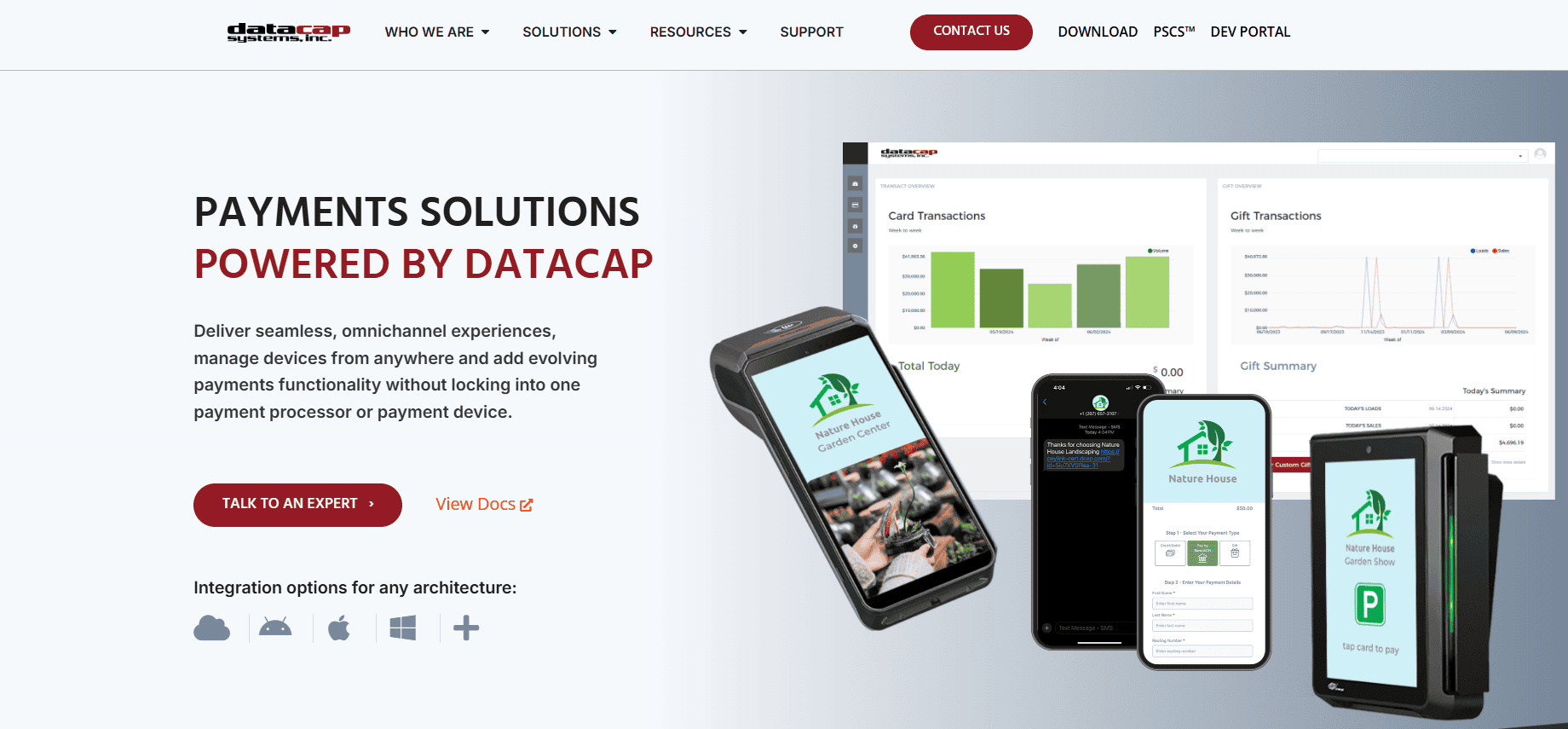
Datacap Systems includes a range of features designed to make payment integration more efficient and adaptable. One of its most notable features is its ability to support multiple payment channels within a single platform. Businesses can handle in-store, online, and mobile payments without needing separate integration frameworks, which helps maintain consistency across customer touchpoints.
Another important feature is device compatibility. Datacap supports a wide variety of payment terminals and hardware devices, allowing businesses to choose equipment that fits their needs rather than being restricted to a specific vendor. This flexibility can be particularly useful for organizations that operate across multiple locations with different hardware requirements.
Security is also a key component of the platform. Datacap incorporates encryption and tokenization features to protect sensitive payment data during transactions. These measures help reduce the risk of data breaches and support compliance with industry standards. Additionally, the platform offers transaction management capabilities that allow businesses to monitor and control payment activity in real time.
While these features provide clear benefits, it is important to note that their value depends on how they are implemented within a business’s existing systems. Some organizations may require additional customization to fully leverage these capabilities. Overall, Datacap’s feature set is focused on flexibility and scalability rather than offering a one-size-fits-all solution.
Supported Payment Methods and Devices
Datacap Systems is designed to support a broad range of payment methods, reflecting the diverse ways customers prefer to pay today. It enables businesses to process traditional credit and debit card transactions, as well as newer methods such as EMV chip payments and contactless transactions. This ensures compatibility with modern payment expectations while maintaining support for legacy systems.
In addition to card-present transactions, Datacap also facilitates card-not-present payments, which are commonly used in online and phone-based transactions. This dual capability allows businesses to operate across both physical and digital channels without needing separate payment systems. The ability to handle multiple payment types within a single platform can simplify operations and reduce fragmentation.
When it comes to hardware, Datacap supports a wide range of payment devices from different manufacturers. This includes countertop terminals, mobile card readers, and integrated POS systems. By not being tied to a specific hardware provider, businesses have more freedom to select devices based on cost, functionality, and user experience.
However, compatibility can vary depending on the specific processor and device combination being used. Businesses may need to verify that their preferred hardware is fully supported within their chosen configuration. Overall, Datacap’s broad support for payment methods and devices is one of its strengths, particularly for organizations that require flexibility in their payment infrastructure.
Datacap’s Approach to Security and Compliance
Security is a critical aspect of any payment system, and Datacap Systems addresses this through a combination of encryption, tokenization, and compliance support. These measures are designed to protect sensitive cardholder data during transactions and reduce the risk of unauthorized access. By handling much of the security logic within its platform, Datacap helps businesses maintain a safer payment environment.
One of the key elements of its security approach is tokenization, which replaces sensitive card data with a unique identifier that can be used for future transactions. This reduces the amount of sensitive information stored within business systems, lowering the potential impact of data breaches. Encryption is also used to secure data as it moves between devices, applications, and processors.
Datacap supports compliance with industry standards such as PCI DSS, which is essential for any business handling payment data. While the platform can assist with compliance, it does not eliminate the need for businesses to follow best practices in their own systems. Security is a shared responsibility, and organizations must ensure that their internal processes align with compliance requirements.
Overall, Datacap provides a solid foundation for secure payment processing, but its effectiveness depends on how well it is implemented and managed. Businesses should view it as part of a broader security strategy rather than a standalone solution.
Benefits of Using Datacap for Businesses
One of the primary benefits of using Datacap Systems is the reduction in integration complexity. By providing a unified interface for multiple payment processors and devices, it eliminates the need for businesses to build and maintain separate integrations. This can save time and resources, particularly for companies with limited development capacity.
Another advantage is flexibility. Businesses are not locked into a single processor or hardware provider, which allows them to adapt to changing needs or negotiate better terms. This can be particularly valuable in industries where payment requirements vary across locations or customer segments. The ability to support multiple payment methods also enhances the overall customer experience.
Scalability is another key benefit. As businesses grow, their payment infrastructure needs to expand accordingly. Datacap’s architecture allows for this growth without requiring significant changes to the underlying system. This makes it a suitable option for organizations that anticipate future expansion.
However, these benefits come with certain trade-offs. The platform may require initial setup and configuration that can be complex for some users. Additionally, businesses must ensure that their internal systems are compatible with Datacap’s approach. While it offers clear advantages, it may not be the best fit for every organization.
Industries That Benefit Most from Datacap Systems
Datacap Systems is particularly useful for industries that rely on flexible and scalable payment solutions. Retail businesses are one of the primary beneficiaries, as they often need to manage multiple payment devices and processors across different locations. Datacap’s ability to unify these systems can simplify operations and improve consistency.
Healthcare is another sector where Datacap is commonly used. Payment processes in healthcare environments can be complex, involving both in-person and remote transactions. Datacap helps streamline these processes by providing a consistent integration layer that supports various payment methods and compliance requirements.
Hospitality and service-based industries also benefit from Datacap’s capabilities. These businesses often need to handle payments in different contexts, such as front desk transactions, online bookings, and mobile payments. Having a single platform to manage these interactions can improve efficiency and reduce errors.
Software providers and SaaS companies are another key user group. By integrating Datacap into their applications, they can offer payment functionality to their customers without building it from scratch. While the platform is versatile, its suitability depends on the specific needs and scale of the business.
Integration Flexibility and Developer Experience
Datacap Systems is designed with developers in mind, offering tools and frameworks that simplify the integration process. Its middleware approach allows developers to connect their applications to multiple payment processors through a single integration. This reduces the need to learn and manage different APIs for each processor.
The platform provides documentation and development resources to guide implementation. While these resources can be helpful, the overall experience may vary depending on the developer’s familiarity with payment systems. For teams with prior experience, Datacap can significantly speed up development. For others, there may be a learning curve.
Flexibility is a key aspect of the developer experience. Datacap supports different deployment models, including local and cloud-based setups, which allows developers to choose the approach that best fits their application. This adaptability can be valuable for businesses with unique technical requirements.
However, integration is not entirely plug-and-play. Developers may need to invest time in understanding how Datacap interacts with their existing systems. While it simplifies many aspects of payment integration, it still requires careful planning and implementation. Overall, the platform offers a balanced combination of flexibility and functionality for development teams.
Compatibility with POS Systems and Software Platforms
Datacap Systems is built to integrate with a wide range of POS systems and business software platforms. This compatibility is one of its core strengths, as it allows businesses to incorporate payment functionality without replacing their existing systems. By acting as a middleware layer, Datacap enables communication between software applications and payment devices.
The platform has the ability to integrate with both legacy and modern POS systems. This is vital, especially for businesses that have invested heavily in legacy systems. It ensures that the business does not have to spend more money on system overhauls. It also has the ability to integrate with software applications, thus making it applicable for a wide range of purposes.
Although the compatibility of Datacap’s system is good, it does not mean that it can work with all POS systems or software. Businesses have the obligation of checking if the system they are using or the software they have acquired can work with Datacap. It might require some level of customization, which might take longer.
Datacap’s compatibility makes it a viable option for businesses looking to enhance their payment systems. It has the ability to work with existing systems, which makes it a great option. However, businesses have the obligation of checking the compatibility of the system.
Pricing Structure and Cost Considerations
Datacap Systems does not follow a simple, transparent pricing model that is easily accessible to all users. Instead, its pricing typically depends on factors such as the type of integration, the number of devices, and the specific services required. This means that businesses often need to request a quote to understand the full cost.
The cost may include licensing fees, set-up fees, and support fees. In some cases, the cost may be high, especially for small businesses. However, this may not be the case for large businesses, as they will benefit from the simplicity of integration and flexibility.
It is also vital to consider indirect costs. Businesses will need to consider the resources used in developing Datacap. These will include training and system changes, which will affect the cost. Businesses will need to consider the cost of ownership.
The fact that Datacap does not provide transparent pricing is a disadvantage. However, this gives Datacap the advantage of providing custom solutions. This will be suitable for businesses with complex needs. However, this will not be suitable for businesses with simple needs.
Pros and Cons of Datacap Systems
Datacap Systems offers several advantages, particularly in terms of flexibility and integration efficiency. Its ability to connect multiple payment processors and devices through a single interface can significantly reduce development effort. This makes it a strong option for businesses that require scalable payment solutions across different environments.
Another positive aspect is its support for a wide range of payment methods and hardware. This allows businesses to adapt to changing customer preferences without being restricted by their payment infrastructure. The platform’s focus on security and compliance also adds to its reliability.
However, there are also some limitations to consider. The initial setup can be complex, especially for businesses without dedicated technical resources. The lack of transparent pricing may also be a concern for some organizations. Additionally, while the platform is flexible, it may require customization to fully meet specific needs.
Overall, Datacap provides a robust solution for payment integration, but it is not without its challenges. Businesses should carefully evaluate both the benefits and drawbacks before making a decision.
Datacap Systems vs Other Payment Integration Solutions
When comparing Datacap Systems to other options for payment integration, Datacap Systems stands out because of its focus on middleware. Other options provide direct payment processing services, while Datacap Systems provides services for connection and integration. This makes Datacap Systems more attractive to businesses that require more flexibility rather than just a bundled service.
Functionality-wise, Datacap Systems is comparable to other options for payment integration. However, Datacap Systems stands out because it is processor-agnostic, which makes it more attractive to businesses that require more control over their payment strategies and costs.
On the other hand, other options for payment integration are more attractive because they provide more user-friendly interfaces and easier setup procedures. Businesses that require more ease of use rather than flexibility may prefer other options for payment integration. Other options also provide more transparent pricing structures, which makes them more attractive to businesses.
In conclusion, Datacap Systems is just another option for payment integration, and its suitability for a business would depend on the requirements and needs of that business. However, for businesses that require more flexibility and scalability in their payment integration options, Datacap Systems would be a good choice.
Is Datacap Systems the Right Choice for Your Business?
Determining whether Datacap Systems is the right choice depends on several factors, including the size of the business, its technical capabilities, and its payment requirements. For organizations that need to manage multiple payment processors and devices, Datacap can provide a streamlined and scalable solution.
Businesses with in-house development teams are more likely to benefit from Datacap’s flexibility. They can leverage its integration capabilities to build customized payment experiences that align with their specific needs. For these organizations, the initial setup effort may be justified by long-term efficiency gains.
Smaller businesses or those with limited technical resources may find the platform more challenging to implement. In such cases, simpler payment solutions with built-in processing may be more practical. It is important to consider both the short-term and long-term implications of adopting a platform like Datacap.
Overall, Datacap is best suited for businesses that prioritize flexibility and scalability over simplicity. It offers significant advantages for the right use case but may not be the ideal solution for every organization.
Conclusion: Final Verdict on Datacap Systems
Datacap Systems provides a unique approach to payment integration by focusing on flexibility and interoperability rather than direct payment processing. Its middleware-based architecture simplifies the connection between software applications, payment devices, and processors, making it a valuable tool for businesses with complex payment needs. The platform offers several clear benefits, including reduced integration complexity, support for multiple payment methods, and scalability.
However, these advantages come with certain challenges, such as implementation complexity and less transparent pricing. Businesses must weigh these factors carefully when considering adoption. Overall, Datacap Systems is a strong option for organizations that require adaptable and scalable payment solutions. It may not be the simplest choice, but for the right use case, it can provide significant long-term value.
FAQs
Q1: What makes Datacap Systems different from traditional payment processors?
Datacap does not process payments directly but acts as a middleware layer that connects business software with payment processors and devices. This allows for more flexible integrations.
Q2: Does Datacap support multiple payment processors and gateways?
Yes, Datacap is processor-agnostic, meaning it can connect to multiple payment processors, giving businesses more flexibility in choosing providers.
Q3: Is Datacap Systems suitable for small businesses or only enterprises?
While it can be used by small businesses, it is generally more suitable for mid-sized to large organizations with complex payment integration needs and technical resources.
Best Product & Services
Recent Posts